Silicone keypad manufacturing involves several molding methods, and each process provides different advantages in terms of design flexibility, precision, production efficiency, and cost. The most commonly used methods include compression molding, liquid silicone rubber (LSR) injection molding, transfer molding, and silicone overmolding.
This article explains how these molding processes work, their advantages, and how to select the right method for different silicone keypad applications.
Compression Molding for Silicone Keypads
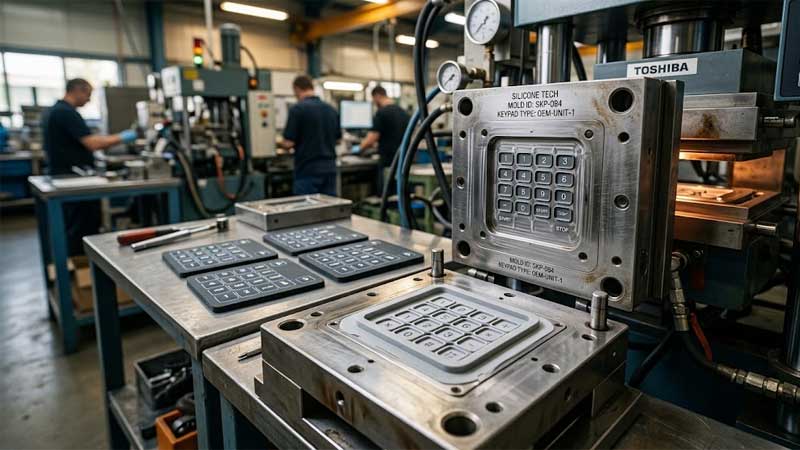
Compression molding is the most widely used manufacturing method for custom silicone keypads. It typically uses HCR (High Consistency Rubber) silicone, where silicone material is placed into a heated mold cavity and formed under controlled pressure and temperature.
Due to its flexibility, reliable performance, and balanced tooling investment, compression molding is commonly used for industrial control panels, remote controls, medical equipment, automotive buttons, and electronic interfaces.
How Compression Molding Works
The compression molding process generally includes four main stages:
- Silicone material preparation
Silicone compounds are selected according to product requirements, including hardness, temperature resistance, color, chemical resistance, and operating environment. The material formulation directly affects elasticity, durability, and long-term performance.
- Mold loading
Pre-cut silicone material is accurately placed into the custom mold cavity. The material quantity and placement affect cavity filling, flash control, and final product consistency.
- Heat and pressure curing
The mold applies heat and pressure to shape the silicone into the required keypad structure. During this stage, the silicone forms functional features such as keytops, elastic webs, support structures, and conductive pill areas.
- Deflashing and inspection
After curing, excess silicone flash is removed. The finished keypads are inspected for dimensions, appearance, tactile response, and electrical contact performance before shipment.
Advantages of Compression Molding
Flexible Design Capability
One of the main advantages of compression molding is its flexibility for customized silicone keypad designs. The process supports different silicone hardness levels, colors, surface finishes, conductive carbon pills, and backlight structures.
This flexibility allows engineers to optimize the keypad according to application requirements. For example, industrial equipment may require stronger tactile feedback and higher durability, while consumer electronics may focus more on appearance and user experience.
Reliable Tactile Performance Through Structural Control
The tactile response of a silicone keypad is mainly determined by the interaction between silicone material properties and internal geometry. Compression molding allows engineers to control important structural elements such as web thickness, diaphragm geometry, key travel distance, and conductive pill positioning.
These factors directly influence tactile performance, including actuation force, snap ratio, return force, and button response consistency. Proper structural design helps create a predictable pressing experience while reducing stress concentration during repeated operation.
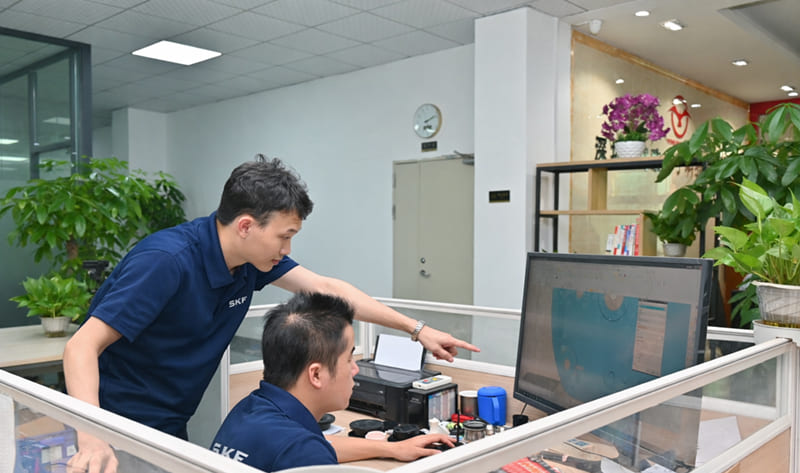
At SKF, engineers review keypad structures during the DFM stage to optimize silicone hardness, web design, and mold structure before tooling development. By evaluating these factors early, SKF helps customers reduce the risk of inconsistent button feel, electrical contact issues, and premature wear.
Cost-Effective Solution for Customized Projects
Compared with LSR injection molding, compression molding generally requires lower tooling investment. This makes it suitable for many customized silicone keypad projects with medium production volumes.
However, tooling quality has a direct impact on product consistency. SKF evaluates mold design factors such as parting lines, venting, flash control, and critical dimensions during the development stage to improve production stability before mass manufacturing.
LSR Injection Molding for Silicone Keypads
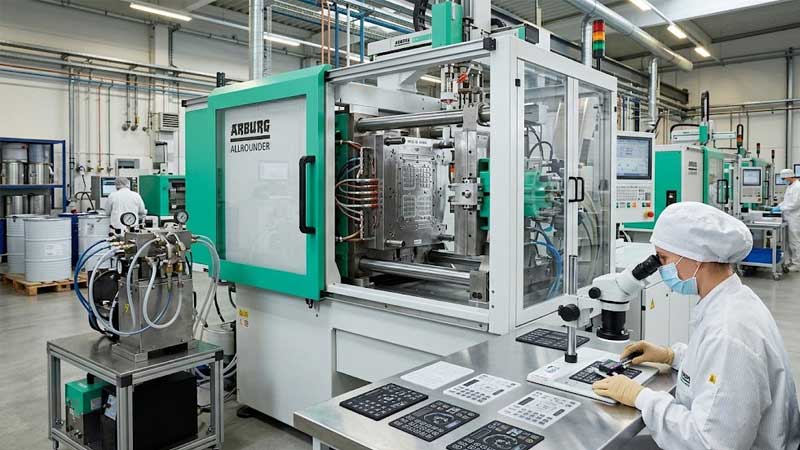
Liquid Silicone Rubber (LSR) injection molding is an advanced manufacturing method used for silicone keypads requiring high precision, automation, and consistent production quality.
Unlike compression molding, which uses solid silicone materials, LSR injection molding uses two-component liquid silicone materials that are automatically mixed and injected into a closed mold.
How LSR Injection Molding Works
The LSR molding process includes:
- Material mixing
Two liquid silicone components are mixed at a controlled ratio before entering the injection system.
- Precision injection
The mixed silicone material is injected into accurately designed mold cavities.
- Thermal curing
The mold applies controlled heat to cure the silicone and form the final keypad structure.
- Automated demolding
Finished parts are removed through automated systems, improving production efficiency and consistency.
Advantages of LSR Injection Molding
High Precision for Complex Structures
LSR injection molding provides excellent dimensional accuracy and is suitable for silicone keypads with thin walls, small buttons, and complex geometries.
This makes it suitable for applications where repeatability is critical, including medical devices, automotive controls, wearable electronics, and precision consumer products.
Efficient High-Volume Production
Because LSR molding uses automated material handling and injection systems, it provides stable cycle times and consistent quality during large-scale production.
The process is especially valuable when customers require:
- High annual production volumes
- Tight dimensional tolerances
- Complex keypad structures
- Reduced variation between production batches
However, LSR injection molding usually requires higher equipment investment and more complex tooling compared with compression molding. Therefore, the process selection should consider production volume, product requirements, and expected return on tooling investment.
Compression Molding vs LSR Injection Molding for Silicone Keypads
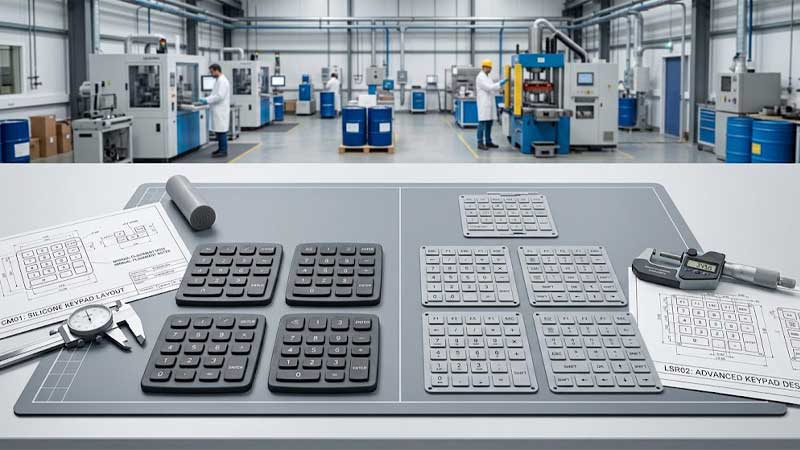
Compression molding and LSR injection molding are the two primary manufacturing methods used for silicone keypad production. The choice depends on product requirements rather than simply selecting the more advanced process.
| Feature | Compression Molding | LSR Injection Molding |
| Silicone Material | HCR / HTV Silicone | Liquid Silicone Rubber |
| Production Volume | Medium to High | High |
| Automation Level | Medium | High |
| Tooling Investment | Lower | Higher |
| Dimensional Accuracy | Good | Excellent |
| Complex Structures | Good | Excellent |
| Suitable Applications | Customized keypads, industrial controls, remote controls | Medical devices, automotive electronics, precision products |
Compression molding is often selected when customization flexibility and tooling cost are important considerations. LSR injection molding becomes more suitable when customers require higher automation, tighter tolerances, or large-volume production.
At SKF, engineers evaluate product drawings, 3D models, operating conditions, tactile requirements, and production expectations before recommending the appropriate molding method.
Transfer Molding for Silicone Keypads
Transfer molding is a specialized silicone molding process that combines characteristics of compression molding and injection molding.
During the process, silicone material is placed into a transfer chamber and pushed into closed mold cavities through pressure. This improves material distribution and provides better filling control for certain complex structures.
Transfer molding can be considered for silicone keypad designs that require improved consistency, detailed structures, or specific sealing performance.
Although it is less common than compression molding and LSR injection molding, it remains an option for applications where traditional molding methods cannot achieve the required design results.
Silicone Overmolding and Multi-Material Keypad Manufacturing
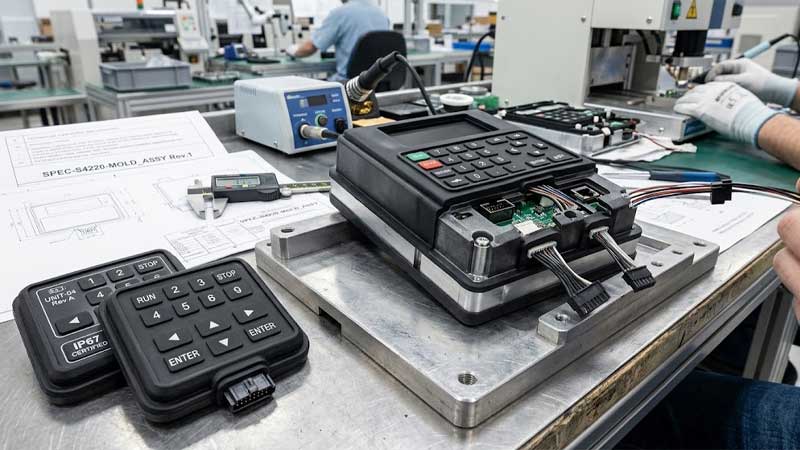
Some silicone keypad applications require integration with plastic, metal, or electronic components. Silicone overmolding provides a way to combine different materials into one functional assembly.
Silicone Overmolding Applications
By molding silicone directly over another component, manufacturers can improve product integration, waterproof performance, and mechanical stability.
Common applications include:
- Automotive control buttons
- Industrial control panels
- Waterproof electronic interfaces
- Wearable device components
For these designs, SKF evaluates material compatibility, bonding performance, and assembly requirements during the development process to ensure reliable integration between silicone and other materials.
Multi-Color Silicone Molding
Multi-color silicone molding allows different silicone colors or materials to be combined within one keypad structure.
This process is commonly used for:
- Color-coded control buttons
- Backlit silicone keypads
- Visual identification areas
Because multiple materials must be accurately positioned during production, mold design and process control are critical for maintaining clean color separation and consistent product performance.
Silicone Keypad Molding Methods Comparison
| Molding Method | Material | Production Volume | Precision | Tooling Cost | Suitable Applications |
| Compression Molding | HCR Silicone | Medium-High | Good | Low-Medium | Industrial controls, remote controls, medical buttons |
| LSR Injection Molding | Liquid Silicone Rubber | High | Excellent | High | Medical devices, automotive electronics, precision applications |
| Transfer Molding | HCR Silicone | Medium | Good | Medium | Complex structures and specialized keypad designs |
| Silicone Overmolding | Silicone + Plastic/Metal Components | Medium-High | Good | Medium-High | Waterproof and integrated assemblies |
| Multi-Color Molding | Multiple Silicone Materials | Medium | Good | Higher | Backlit and visual control keypads |
Factors That Affect Silicone Keypad Molding Selection
Choosing the right molding method requires evaluating several engineering and manufacturing factors.
Production Volume
Production quantity has a major influence on process selection. Compression molding is suitable for many customized projects because it provides flexible tooling options and reasonable manufacturing costs. LSR injection molding is more suitable for high-volume applications where automation and repeatability are essential.
Product Structure and Complexity
The keypad structure determines how much molding precision is required. Designs with thin walls, miniature buttons, or complex geometries may benefit from LSR injection molding. Projects requiring different tactile characteristics, colors, or surface treatments may be better suited for compression molding.
Tactile and Electrical Requirements
Silicone keypads must provide reliable mechanical feedback and stable electrical contact. Important design considerations include actuation force, key travel, snap ratio, conductive pill placement, and web structure.
At SKF, engineers analyze these requirements during product development and provide recommendations for silicone material selection, mold structure, and manufacturing process selection.
Surface and Functional Requirements
Additional features can also affect molding decisions. For example, backlit keypads may require specific silicone structures for light transmission, while waterproof designs may require overmolding or sealing solutions.
Secondary Processes After Silicone Keypad Molding
After molding, silicone keypads often require additional processes to achieve final appearance and functionality.
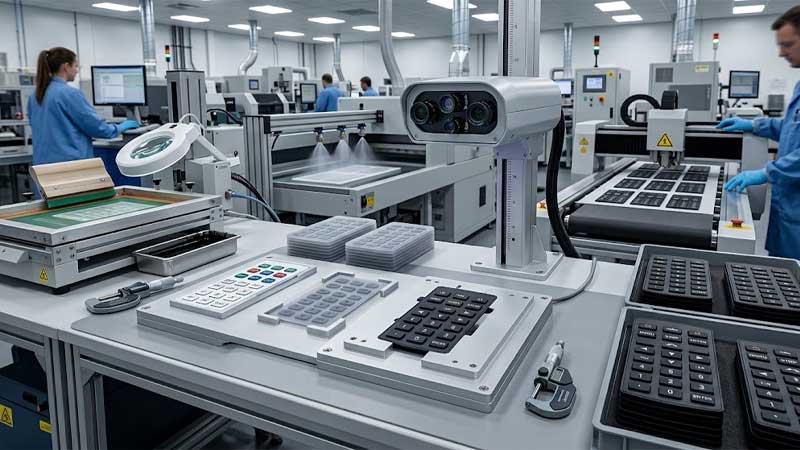
Common secondary processes include screen printing, laser etching, PU coating, epoxy coating, and backlighting assembly.
These processes add functions such as printed legends, protective surfaces, light transmission areas, and improved environmental resistance.
SKF provides complete silicone keypad manufacturing services, including molding, secondary processing, and assembly support for customized applications.
Frequently Asked Questions
What is the most common molding method for silicone keypads?
Compression molding is the most common method because it provides a strong balance between customization flexibility, performance, and tooling cost.
Is LSR injection molding better than compression molding?
Not always. LSR injection molding provides higher precision and automation, while compression molding offers greater flexibility and lower tooling investment for many customized projects.
Which silicone keypad molding method is suitable for high-volume production?
LSR injection molding is often selected for high-volume production because it provides automated manufacturing and consistent dimensional control.
Can silicone keypads be combined with plastic or metal components?
Yes. Silicone overmolding is commonly used when products require waterproof protection, improved mechanical support, or integrated assemblies.
Conclusion
Selecting the right silicone keypad molding method is essential for achieving reliable performance, consistent quality, and cost-effective manufacturing. Compression molding remains the most widely used solution for customized silicone keypads, while LSR injection molding provides advanced capabilities for high-precision and high-volume applications.
SKF supports customers with silicone keypad design review, DFM analysis, tooling development, compression molding, LSR injection molding, conductive contact design, surface finishing, and assembly services. With experience in tactile optimization and customized silicone manufacturing, SKF helps customers develop reliable keypad solutions for industrial, medical, automotive, and electronic applications.