
Precision Manufacturing
Reliable Silicone Keypads for Telecommunication Devices Systems
Precise tactile feedback
Durable materials for high-frequency use
Dust and water protection
Customizable layouts and color options
Challenges in Telecommunication Devices Interfaces
We design silicone keypads based on measurable engineering parameters, not guesswork.
High-Frequency Operation Wear
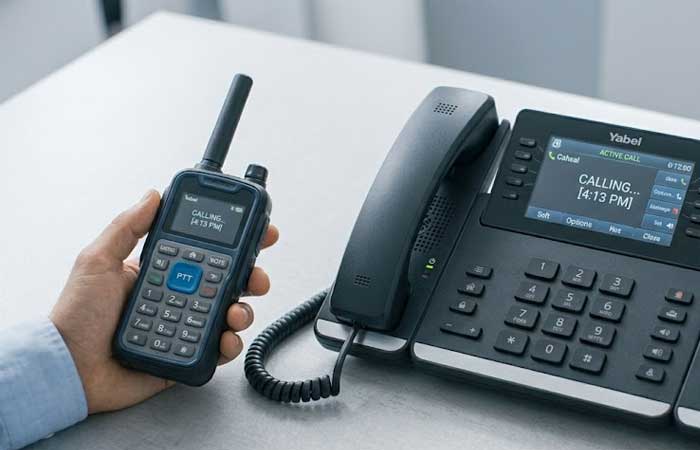
Devices like VoIP phones and two-way radios are used constantly. Frequent pressing can wear down buttons and reduce tactile feedback, affecting long-term usability.
Environmental Exposure
Interfaces often face humidity, dust, or outdoor conditions. Debris and moisture can accumulate, reducing reliability and increasing maintenance needs.
Complex Key Layouts
Multiple functions in limited space create compact layouts, which may confuse users, cause accidental presses, and slow operation in critical situations.
Usability with Gloves or Protective Gear
In industrial or field operations, gloves can make standard keys hard to press accurately, raising the risk of input errors.
Engineered Silicone Keypad Solutions for Telecommunication Applications
Sector 01
Long-Lasting Tactile Performance
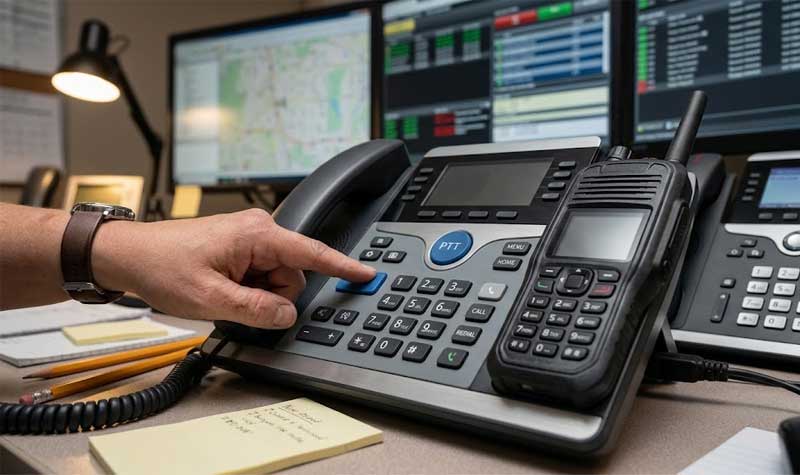
- Maintains consistent tactile feedback even under frequent operation of VoIP phones, two-way radios, or base station panels.
- Reduces key wear over time, ensuring reliability in high-traffic or mission-critical communication environments.
- Engineered silicone materials withstand repeated compression without deformation, preserving key shape and response.
Sector 02
Environmental Resistance
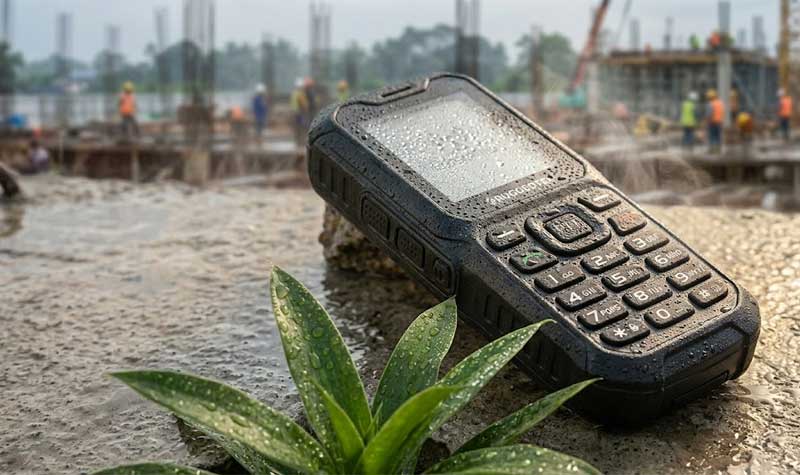
- Designed to operate reliably in dust-prone, humid, or outdoor conditions.
- Silicone surface resists moisture and particle accumulation, minimizing maintenance and operational downtime.
- Stable material properties ensure keypad functionality across temperature variations, from cold storage to hot field conditions.

Sector 03
Optimized Layout for Complex Functions
- Supports compact multi-function key arrangements without compromising user accuracy.
- Customizable key size, spacing, and shape improve input efficiency and reduce accidental presses.
- Ergonomic design ensures intuitive use for both novice and professional operators.
Sector 04
Glove-Friendly Design
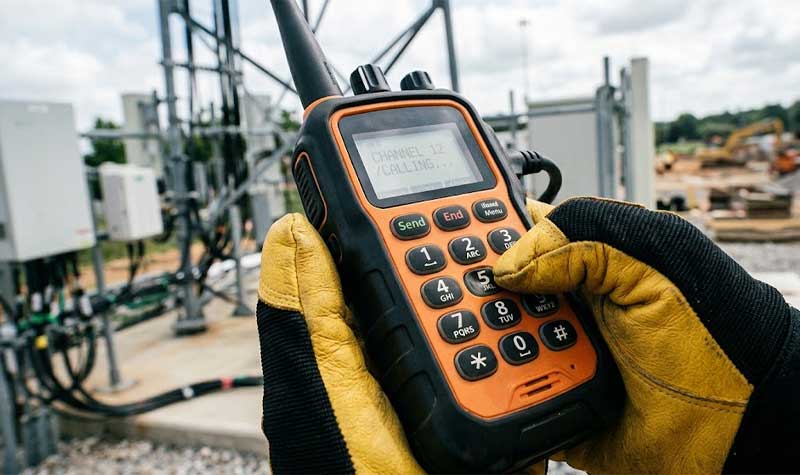
- Keys engineered for operation with gloves or protective gear commonly used in industrial and field applications.
- Maintains tactile feedback and responsiveness for precise input even under safety constraints.
- Reduces input errors and improves workflow efficiency in critical communication scenarios.
Sector 05
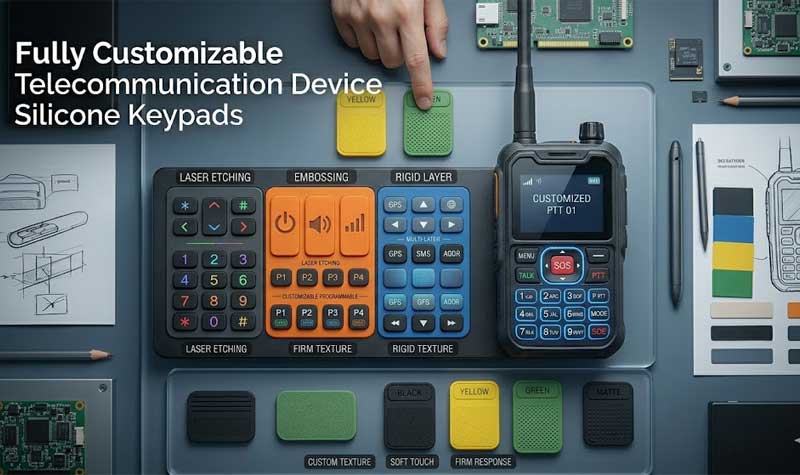
Fully Customizable Appearance and Functionality
- Wide range of silicone hardness, colors, and textures to match device aesthetics and branding.
- Laser etching, embossing, or backlighting options provide clear key identification and enhanced visibility.
- Flexible design options allow integration with specialized functions, from programmable keys to multi-layer interfaces.
Typical Telecommunication Applications
VoIP and Office Communication Devices
Two-Way Radios and Wireless Communication Devices
Base Station and Network Control Panels
Mobile Network and Field Equipment
Technical Specifications for Telecommunication Silicone Keypads
| Property (Attribute) | Standard Telecomm Value | Engineering Significance |
| Base Material | High-Elasticity Silicone Rubber | Ensures fast snap-back and consistent tactile response. |
| Contact Resistance | < 100 Ohms (Carbon Pill) | Optimized for low-voltage signal transmission in digital circuits. |
| Actuation Life | 3,000,000 to 5,000,000 Cycles | Rated for high-frequency use in call centers or control hubs. |
| Tactile Ratio | 40% – 60% (High Snap) | Provides a crisp “click” feel essential for rapid dialing/typing. |
| Surface Coating | PU or Epoxy Hard-coat | Protects alphanumeric legends from heavy oil and friction wear. |
| Ingress Protection | IP65 Equivalent | Sealed surface prevents dust and moisture from entering the PCB. |
| Graphic Process | Multi-color Screen Print / Laser Etch | High-definition legends for complex functional icons. |
| Color Consistency | Delta E < 1.0 | Critical for matching brand colors on mass-produced global hardware. |
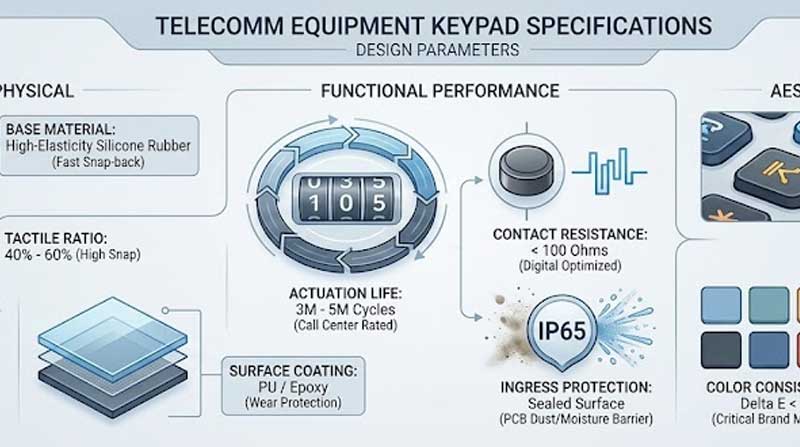
All parameters can be customized based on your equipment design and user interaction requirements.
Custom Telecommunication Silicone Keypad Design Options
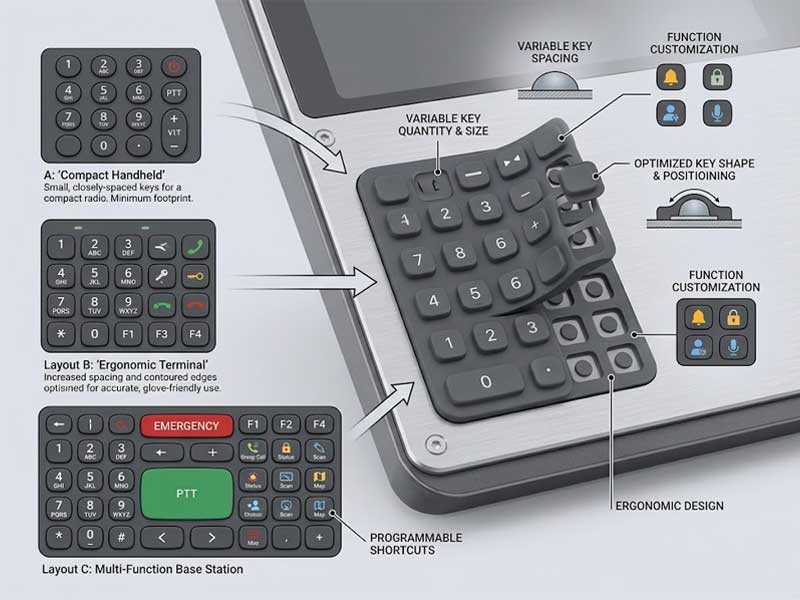
- Design key quantity, size, and spacing to fit specific device panels, from compact handheld radios to multi-function base station consoles.
- Include specialized function keys for features like push-to-talk, programmable shortcuts, and emergency controls.
- Optimize key shape and positioning for ergonomic use, ensuring accurate input and consistent tactile feedback.
- Select silicone hardness to balance tactile responsiveness and durability under frequent operation.
- Choose colors, translucency, or surface finishes to match device aesthetics or improve visibility in low-light conditions.
- Apply surface textures, embossing, or soft-touch coatings for improved grip, comfort, and user experience.
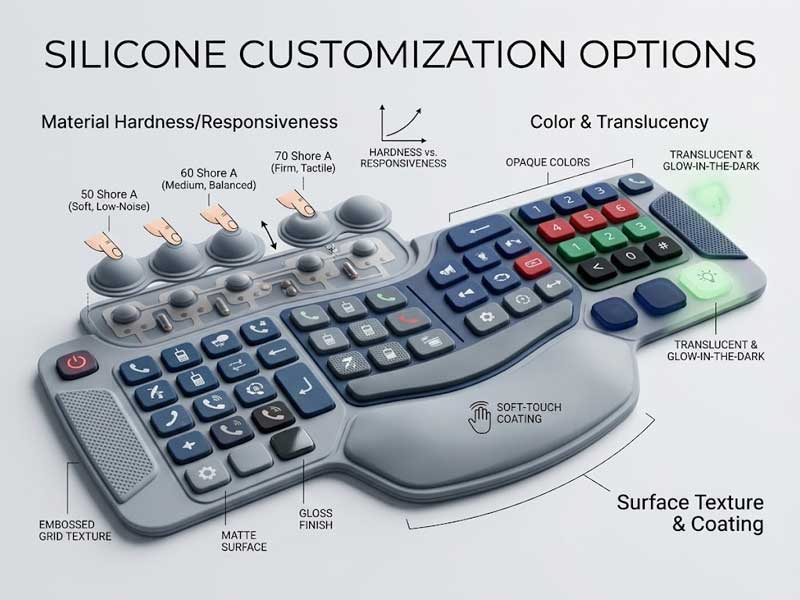
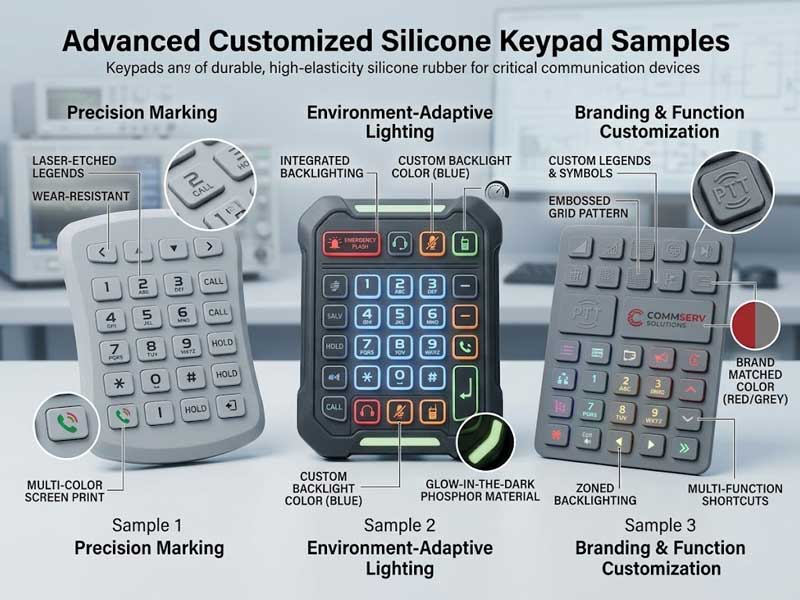
- Add laser-etched, printed, or embossed legends for precise labeling of keys, resistant to wear and fading.
- Integrate backlighting or glow-in-the-dark elements to support operation in dark or low-light environments.
- Customize legends, symbols, and backlight colors to match branding and functional requirements of the device.
Telecommunication Devices Silicone Keypad Manufacturing
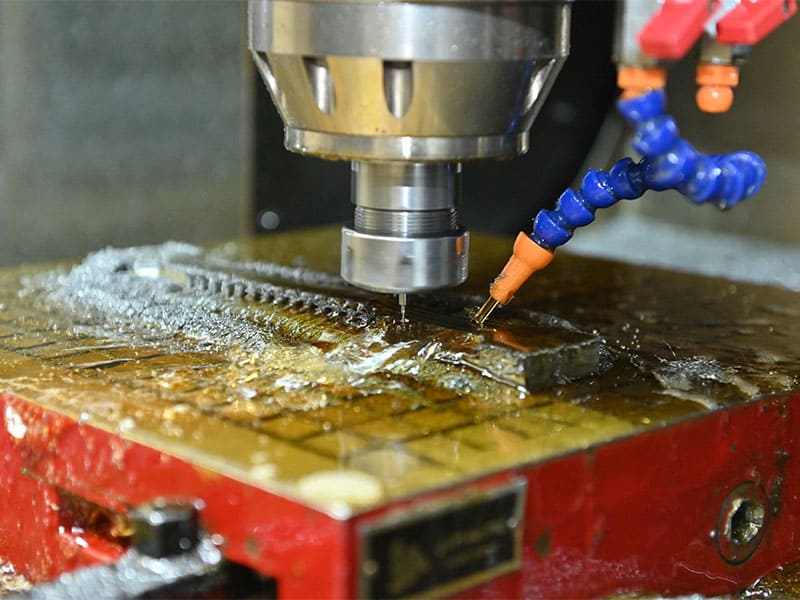
STEP 1: Molding
High-consistency rubber compression for base geometry.
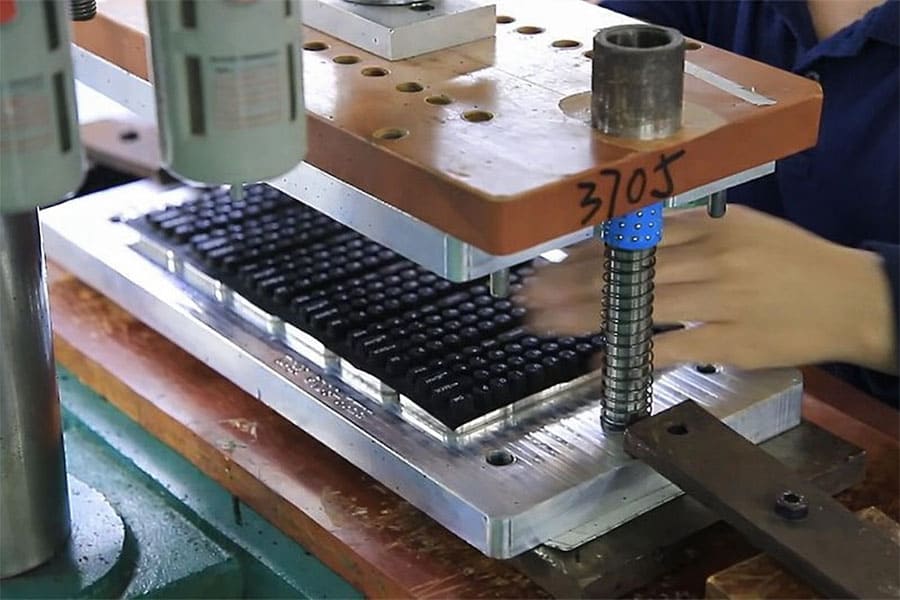
STEP 2:Etching
Laser removal of opaque spray for legend clarity.
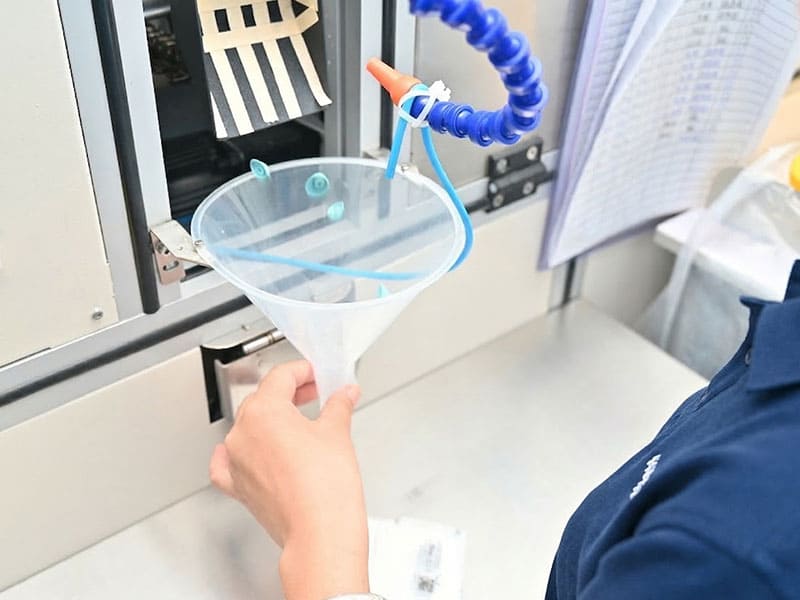
STEP 3:Inspection
Optical check for uniformity and icons.
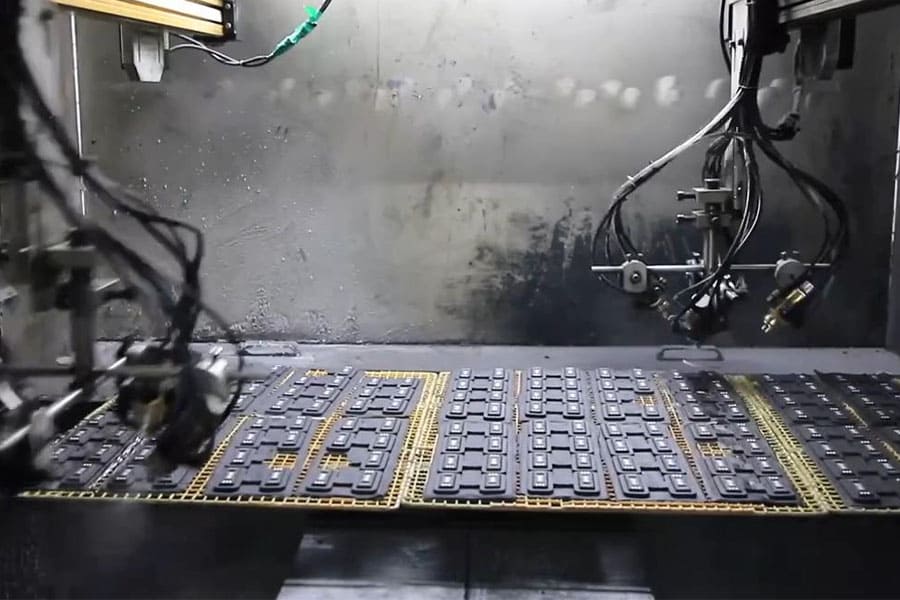
STEP 4:Coating
PU or UV protective layers for abrasion resistance.
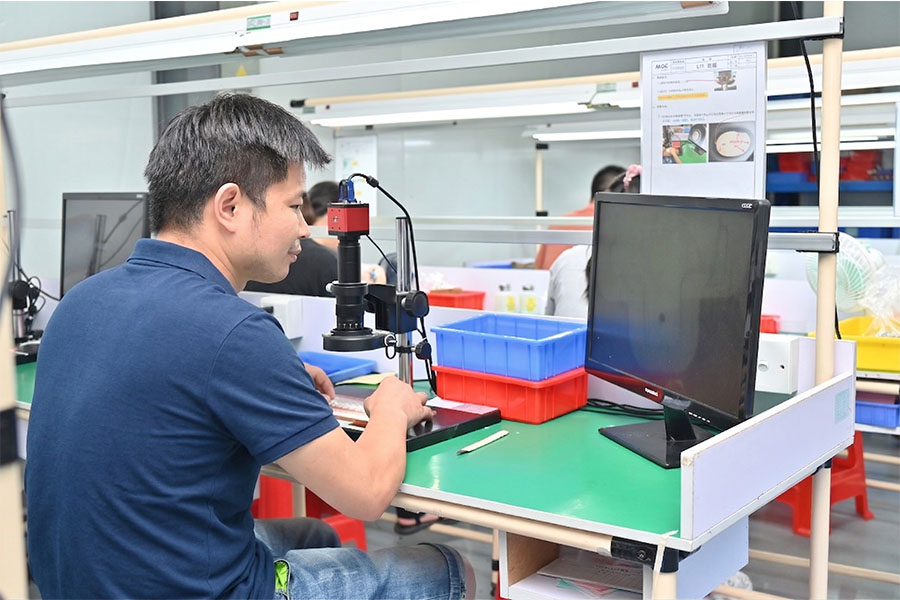
STEP 5:Quality Control
Final functional audit and ISO standard approval.
Frequently Asked Questions
What types of telecommunication devices can benefit from silicone keypads?
Can the keypads be customized for specific layouts or functions?
Are these keypads suitable for harsh environments?
Can the keypads be operated while wearing gloves?
What customization options are available for appearance and markings?