
Manufacturing custom silicone keypads since 2012

Laboratory Equipment Silicone Keypad Manufacturer

Custom silicone keypads for laboratory instruments, analytical equipment, testing systems and scientific devices. Engineered for precise input control, chemical-resistant environments, repeated operation and reliable PCB integration.

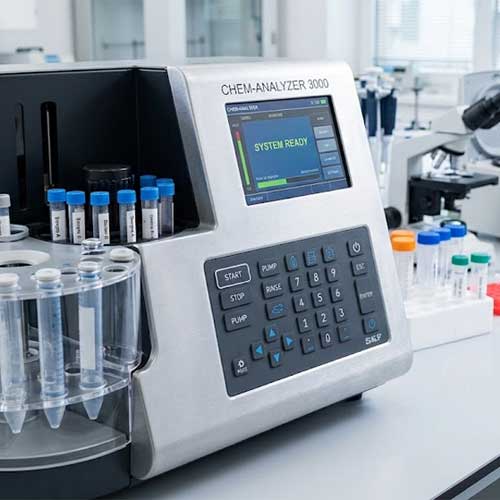
An analytical instrument featuring a custom laboratory equipment silicone keypad on a modern lab bench with vials and microscopes 3

What Are Laboratory Equipment Silicone Keypads?

laboratory equipment silicone keypads are flexible control interfaces molded from silicone rubber that allow operators to enter commands, adjust settings and control scientific instruments through tactile buttons connected to electronic circuits. Custom laboratory silicone keypads are developed around your instrument design, including button layout, tactile force, conductive contact structure, sealing requirements, surface graphics and assembly method.

SKF develops silicone keypads for laboratory equipment manufacturers, instrument developers and automation companies that require reliable human-machine interfaces in controlled and demanding environments. Each project starts with application review, including operating frequency, cleaning conditions, environmental exposure, PCB connection and user feedback requirements.

Laboratory Equipment Silicone Keypad Manufacturing at a Glance

Project Development

From prototype review to mass production, SKF supports keypad design evaluation, tooling development, sampling and production validation.

Instrument Integration

Keypad structures are designed around PCB layouts, conductive pill positions, button spacing and mechanical installation requirements.

Material Performance

Silicone compounds can be selected for repeated operation, temperature variation, chemical exposure resistance and long-term flexibility.

OEM Production Support

We provide custom colors, graphic printing, laser marking, packaging and export support for laboratory equipment projects.

Who We Manufacture Laboratory Equipment Silicone Keypads For

Laboratory instruments require more than basic button functionality. The keypad must match the equipment design, operating environment and user workflow.

A scientist operates a laboratory equipment silicone keypad on a spectrophotometer during liquid sample testing in a laboratory

Analytical Instrument Manufacturers

Develop silicone keypads for analytical devices where operators need accurate input control during testing, measurement and calibration processes. Button layout, tactile response and visual identification are reviewed together because laboratory users often operate equipment while monitoring test results or sample conditions.
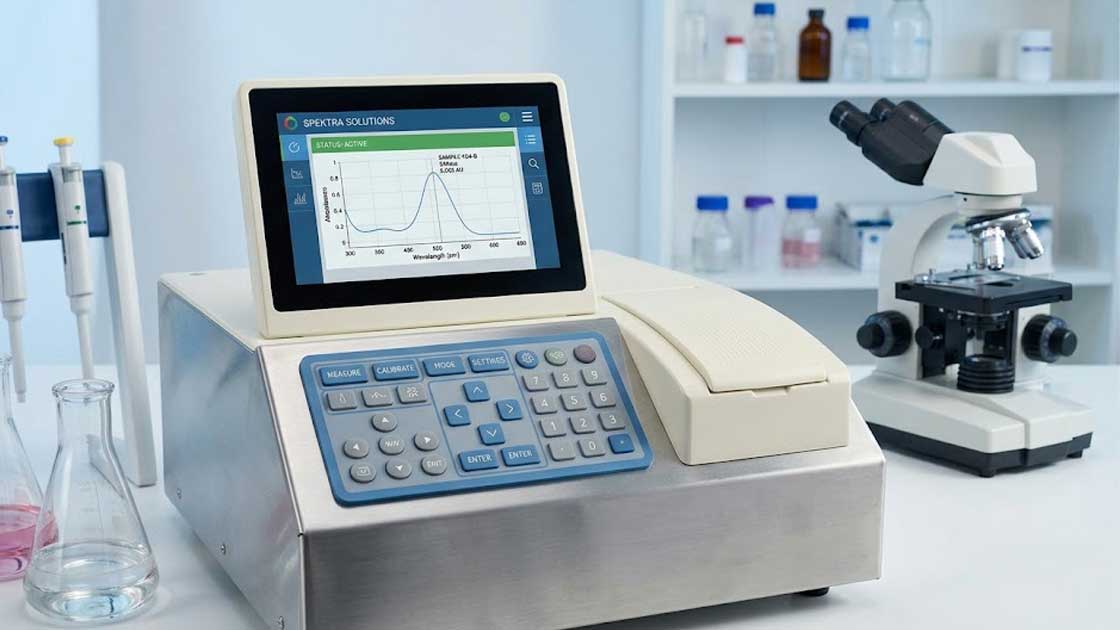
A benchtop scientific instrument featuring a custom laboratory equipment silicone keypad on a workstation near a microscope

Scientific Equipment Brands

Support OEM and private-label scientific equipment brands with customized keypad solutions for new instrument platforms. SKF helps evaluate silicone hardness, button geometry and conductive contact design before tooling to reduce adjustment cycles during sampling.
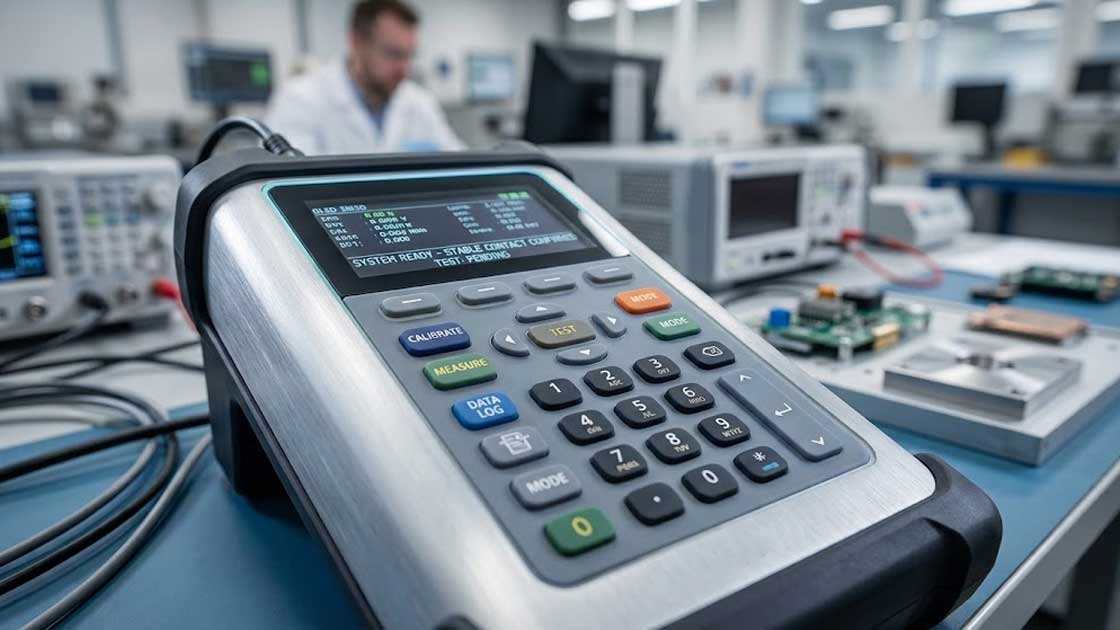
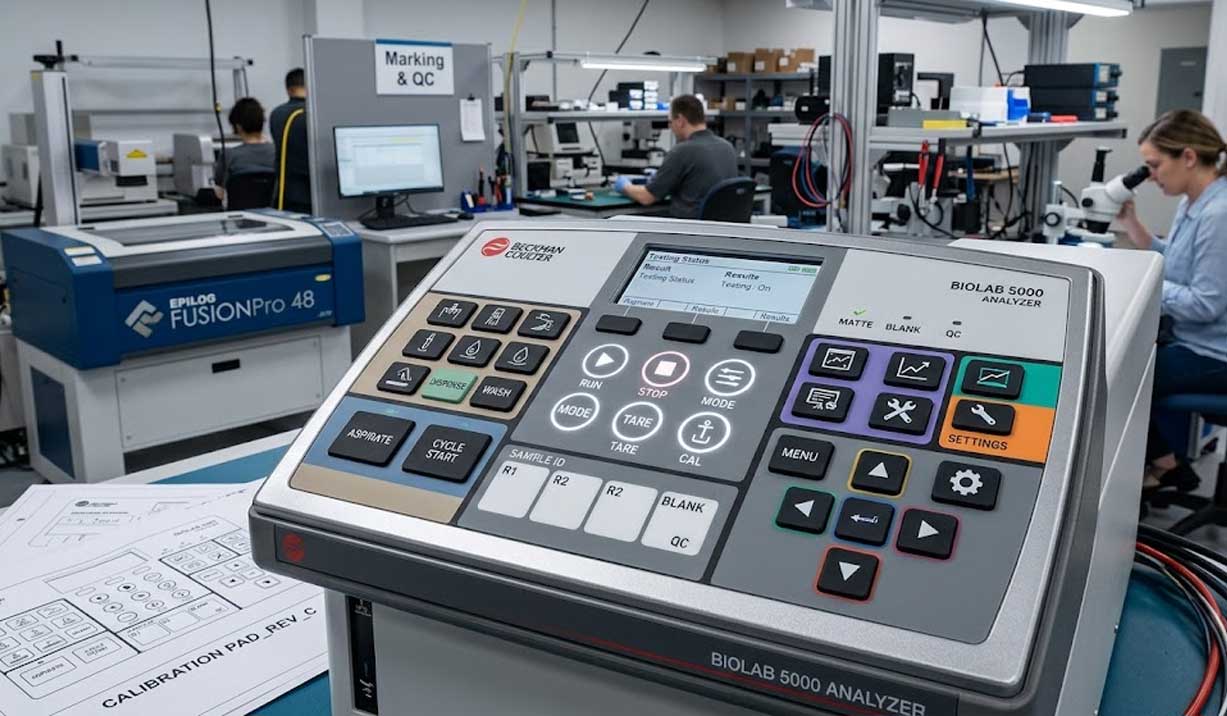
A close up view of a benchtop testing instrument with a laboratory equipment silicone keypad in a quality control environment

Testing and Measurement Equipment Companies

Create durable interfaces for testing equipment used in laboratories, quality control departments and research environments. Consistent actuation force and stable electrical contact are important because repeated operation can affect user experience and measurement workflows.
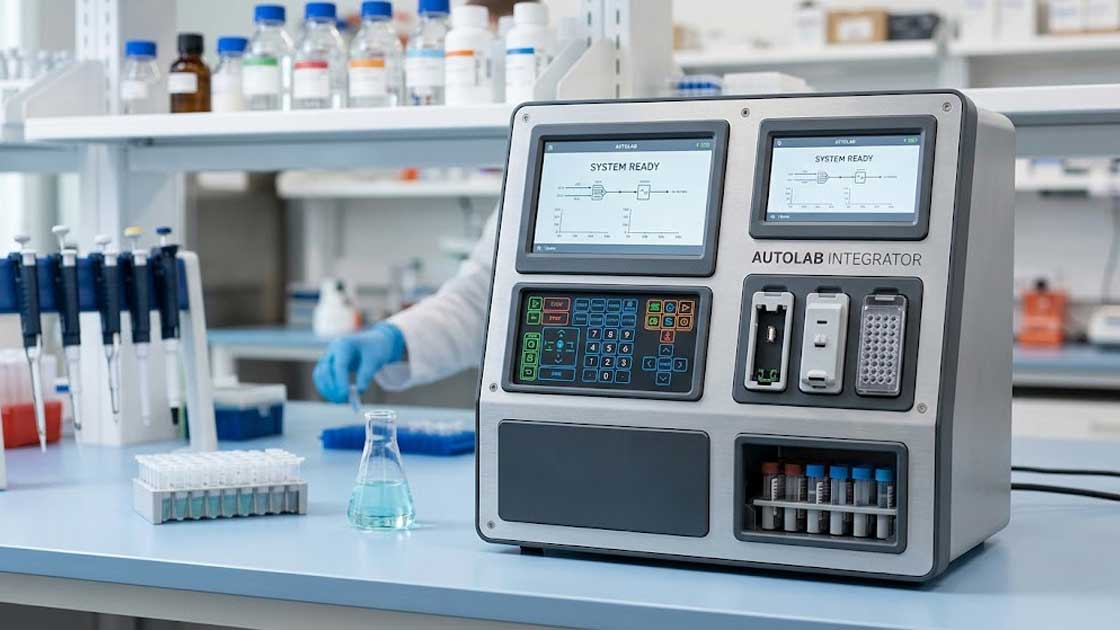
An automated laboratory system with an integrated laboratory equipment silicone keypad unit on a clean workbench

Laboratory Automation System Integrators

Develop keypad components for automated laboratory systems, control units and specialized equipment interfaces. The keypad structure is reviewed with the enclosure, PCB position and installation method to ensure smooth assembly.
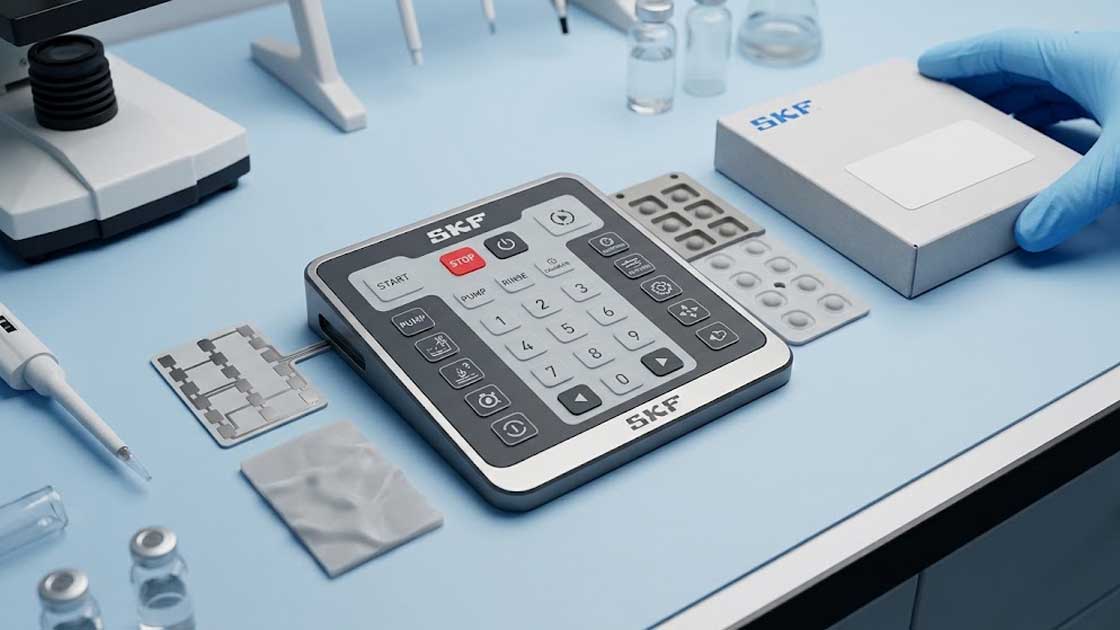
A high angle photo shows an SKF laboratory equipment silicone keypad and its internal components on a blue benchtop with a microscope pipette and vials

Equipment Distributors and OEM Suppliers

Provide customized silicone keypad solutions for companies that need replacement parts, new product development or branded instrument interfaces. Different market requirements can affect material documentation, labeling and packaging decisions.
Laboratory Equipment Silicone Keypad Types We Can Develop

Laboratory Equipment Silicone Keypad Customization

Custom laboratory keypad projects begin with the instrument structure, operating environment and user requirements.

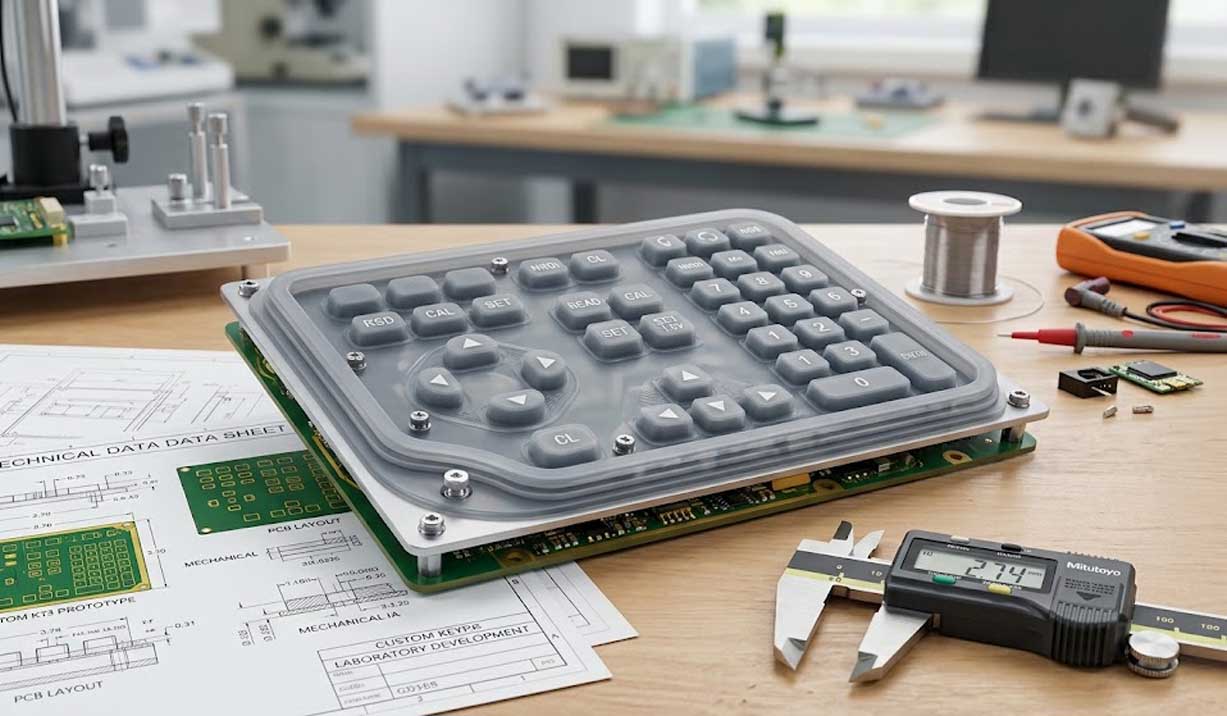
Laboratory Equipment Silicone Keypad prototype displayed on an engineering workbench alongside CAD drawings and a digital caliper

We design silicone keypad structures around your equipment housing, PCB layout and button operation requirements.

Available options include:

  • Custom button layouts
  • Different button heights
  • Multiple key arrangements
  • Integrated sealing structures
  • Custom mounting features
  • Flexible or reinforced silicone structures
  • PCB alignment features
  • Conductive pill positioning

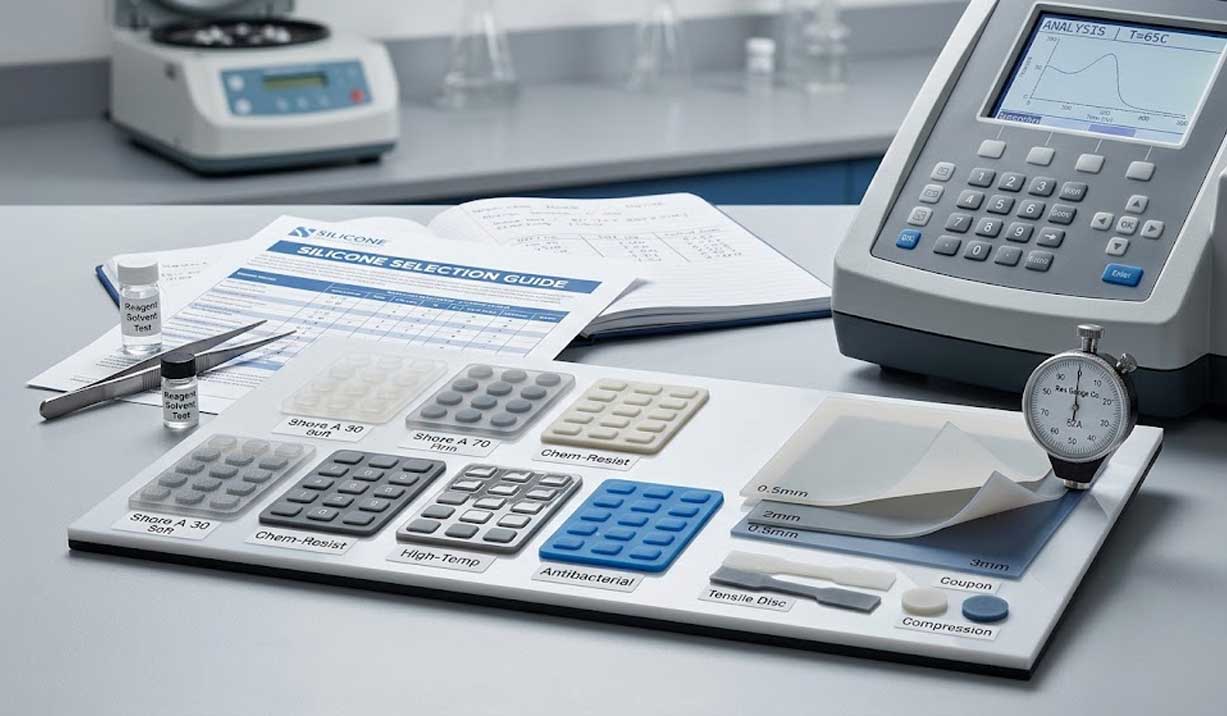
Laboratory Equipment Silicone Keypad samples displayed with material testing tools beside a scientific instrument control panel

We select silicone materials according to operating conditions, cleaning requirements and expected service life.

Available options include:

  • Different silicone hardness levels
  • High-temperature silicone compounds
  • Chemical-resistant formulations
  • Low-compression-set materials
  • Custom color compounds
  • Conductive silicone components
  • Material documentation for target markets

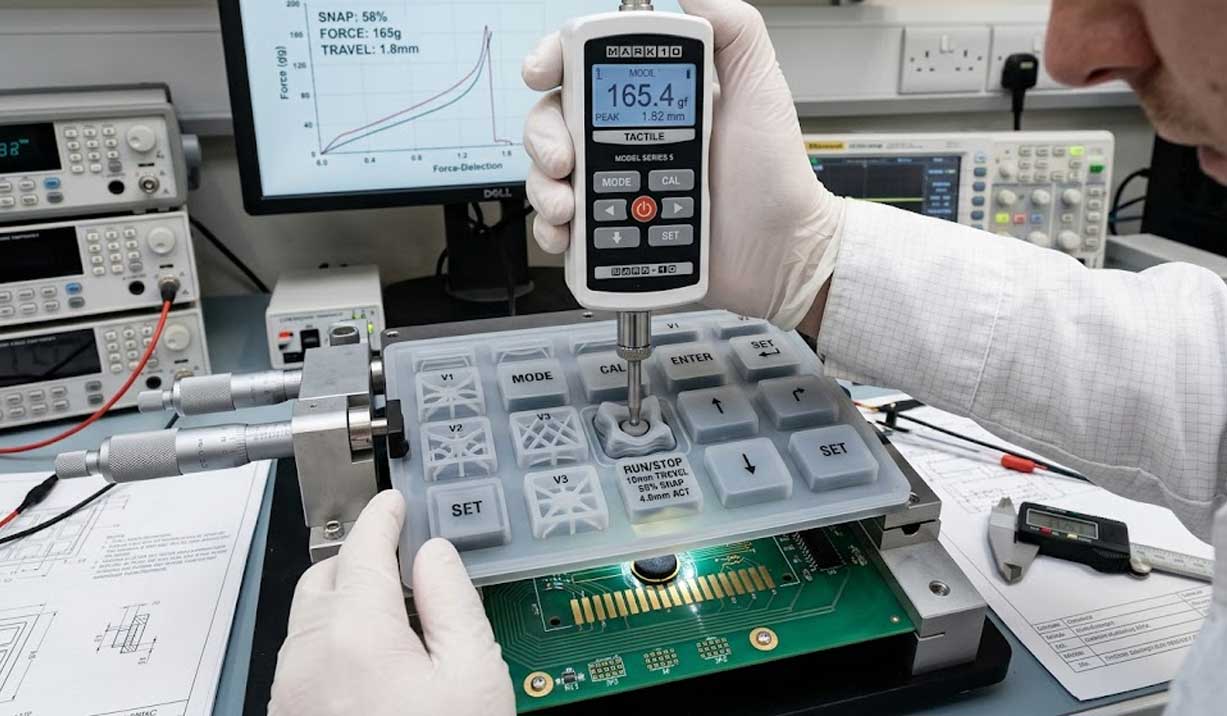
An engineer measures button actuation force on a laboratory equipment silicone keypad using a digital force gauge in a testing lab

We optimize tactile performance based on operator feedback and equipment requirements.

Available options include:

  • Custom actuation force
  • Different snap ratios
  • Adjustable web thickness
  • Modified diaphragm structures
  • Short or long key travel
  • Soft or firm button response
  • Tactile feedback optimization

A custom laboratory equipment silicone keypad with printed icons is installed on a scientific analyzer control panel

We develop surface finishes and markings for laboratory instrument identification and daily operation.

Available options include:

  • Screen printing
  • Laser etching
  • Protective coatings
  • Matte surfaces
  • Glossy surfaces
  • Custom symbols
  • Multiple color graphics
  • Wear-resistant markings

Send Your Keypad Design for Evaluation

Share your keypad drawing, PCB layout, button requirements or existing sample.

SKF will review the structure, tactile requirements, conductive contact design and material options to recommend a suitable manufacturing solution for your laboratory equipment application.

How to Specify a Better Laboratory Equipment Silicone Keypad

A laboratory silicone keypad should be specified according to the instrument function, operator interaction and working environment. Appearance alone does not determine keypad performance. The internal structure, tactile response and electrical contact design directly affect long-term reliability.

Key specification factors include:

  • Button Layout — The keypad arrangement should match the instrument interface, operator workflow and available panel space.
  • Actuation Force — The pressing force should balance comfortable operation with clear feedback, especially for instruments requiring frequent parameter adjustment.
  • Key Travel — The travel distance affects tactile feeling and prevents accidental activation during operation.
  • Snap Ratio — The relationship between actuation force and contact force influences how quickly the button returns after activation.
  • Conductive Contact Design — Carbon pills, printed conductive layers or other contact methods must match PCB requirements.
  • Sealing Structure — The silicone web and surrounding structure should protect internal components from dust, moisture and cleaning exposure.
  • Material Selection — Silicone hardness, compression set and chemical resistance should match the laboratory environment.

During DFM review, SKF evaluates the diaphragm geometry, web thickness and conductive pill position together. A keypad may achieve the required actuation force during testing but still feel inconsistent if the web structure does not provide stable snap action across all buttons.

Full specification guide

How to Specify a Better Laboratory Equipment Silicone Keypad — tactile force, snap ratio, conductive contacts, sealing design and material selection.

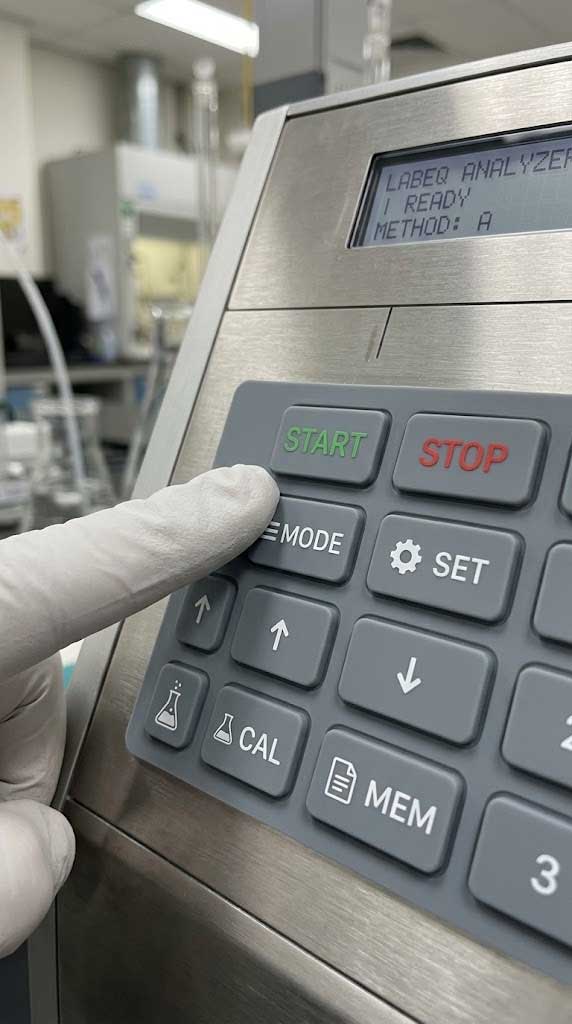
A gloved finger presses a button on a laboratory equipment silicone keypad installed on a stainless steel instrument panel

Laboratory Equipment Silicone Keypad Logo and Graphic Options

Laboratory equipment interfaces often require clear symbols, durable markings and easy identification during repeated operation.

SKF provides different graphic solutions according to the operating environment and product requirements.

Screen Printing

Suitable for symbols, numbers and functional markings that require clear visual identification.

Laser Etching

Creates permanent markings by removing surface silicone layers to expose contrast colors. This method is suitable for applications requiring long-term symbol durability.

Backlight Graphics

Designed for instruments requiring visible operation in low-light laboratory environments. The graphic layer, silicone thickness and light transmission area are evaluated together.

Protective Coatings

Additional surface treatments can improve resistance against repeated cleaning and daily handling. The coating choice depends on the chemical exposure and operating requirements.

Laboratory Equipment Silicone Keypad Material and Performance Options

Laboratory instruments operate in controlled environments, but their keypads still need stable performance under repeated use, cleaning procedures and temperature changes. SKF selects silicone materials according to the instrument requirements rather than using one standard compound for every application.

Supports environments where keypad surfaces contact laboratory cleaning agents.

Laboratory equipment may require frequent wiping with disinfectants or cleaning solutions. Silicone formulation, surface treatment and protective layers should be selected according to the actual chemical exposure.

Material compatibility should be reviewed before production because different chemicals may affect silicone properties differently.

Maintains flexibility under changing laboratory conditions.

Silicone rubber can operate across wide temperature ranges, making it suitable for laboratory equipment used in climate-controlled rooms, testing environments and analytical systems.

The final temperature capability depends on the selected compound, thickness and application requirements.

Creates consistent feedback during repeated operation.

The tactile response of laboratory keypads depends on several structural factors, including:

  • Silicone hardness
  • Web thickness
  • Diaphragm design
  • Button geometry
  • Snap ratio
  • Contact structure

SKF validates tactile performance during sampling because small structural changes can significantly affect the operator experience.

Ensures stable switching with electronic control systems.

Silicone keypads commonly use conductive carbon pills or other conductive structures to connect with PCB contacts.

The conductive pill position is critical. A small offset can increase contact resistance or create uneven switching across multiple buttons.

During engineering review, SKF checks:

  • Pill diameter
  • Pill height
  • Contact location
  • Compression distance
  • PCB alignment

Supports laboratory hygiene requirements.

Laboratory equipment users often clean surfaces regularly. The keypad surface should maintain appearance and function after repeated cleaning cycles.

Material selection, printing method and surface treatment should be considered together to reduce premature wear.

How Laboratory Equipment Silicone Keypads Are Manufactured

Engineers review CAD designs and prototypes for a laboratory equipment silicone keypad during a technical project evaluation meeting

Requirement Review

Every project begins with understanding the instrument application and operating requirements. SKF reviews the equipment type, button quantity, operating frequency, PCB interface, installation space, environmental conditions, cleaning requirements and documentation needs before starting development. This evaluation helps engineers understand how the keypad will be integrated into the laboratory instrument rather than focusing only on external appearance. By reviewing the complete application at the early stage, potential issues related to assembly, operation and long-term performance can be identified before tooling development.
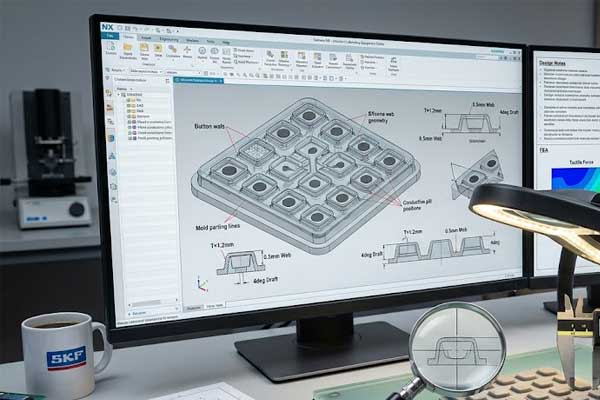
laboratory equipment silicone keypad 3D CAD structural model on a computer screen

DFM and Structure Evaluation

Before mold development, SKF engineers review the silicone keypad structure through detailed DFM analysis. Important design factors include button wall thickness, web geometry, diaphragm shape, draft design, parting line location and conductive pill positioning. Laboratory equipment keypads often contain multiple small buttons within limited panel space. Insufficient clearance between buttons can result in inconsistent tactile feedback, interference during operation or difficulties during demolding. SKF evaluates the relationship between structural design and molding feasibility to improve production stability and button performance.
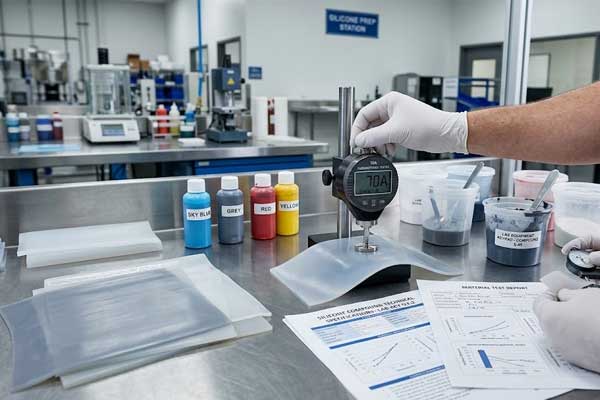
An engineer tests the hardness of raw silicone material for laboratory equipment silicone keypad manufacturing on a stainless steel workbench

Silicone Compound Preparation

The approved silicone material is prepared according to the required hardness, color and performance targets. Material selection is based on the actual laboratory application, including Shore hardness requirements, compression set performance, temperature range, chemical exposure conditions and surface finish requirements. Different laboratory instruments may have different operating environments. SKF selects suitable silicone compounds to achieve the required flexibility, durability and resistance while maintaining consistent tactile performance throughout the product lifespan.
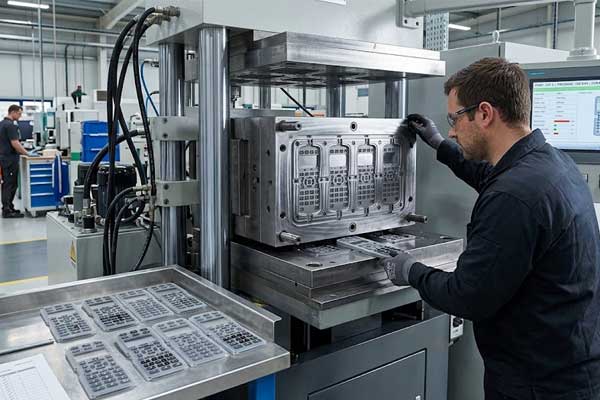
A technician operates a compression molding machine to produce a laboratory equipment silicone keypad in a factory setting

Silicone Molding

The silicone compound is molded using the appropriate production process based on the keypad structure and project requirements. Compression molding is commonly used for silicone keypads because it supports complex rubber structures, conductive pill integration and stable production quality. During molding, SKF controls key parameters including mold temperature, pressure, curing time and material characteristics. Proper process control helps maintain dimensional accuracy, surface quality and consistent button performance across production batches.
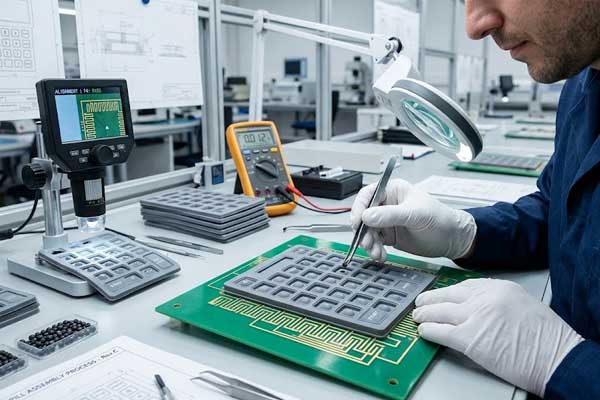
A technician uses tweezers to position conductive carbon pills on the back of a laboratory equipment silicone keypad

Conductive Contact Assembly

After molding, conductive elements are installed according to the approved design. Carbon pills must be positioned accurately because electrical switching performance depends on contact alignment, compression distance and PCB connection accuracy. SKF verifies conductive pill placement during production inspection to reduce the risk of intermittent contact, unstable switching or inconsistent electrical performance. The relationship between the silicone structure and electronic interface is carefully controlled to ensure reliable operation in laboratory equipment.
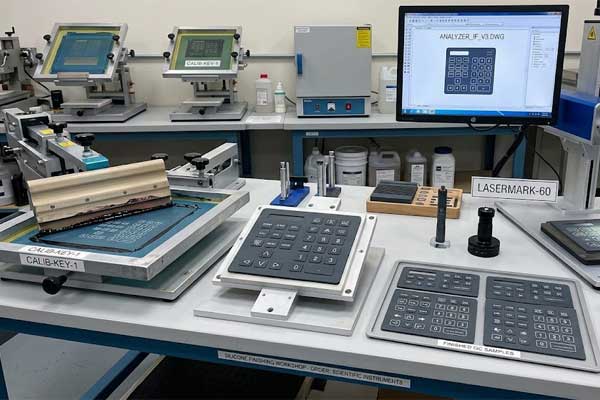
Printed laboratory equipment silicone keypad samples rest on a workshop desk between screen printing and laser marking tools

Surface Processing

After molding and assembly, surface processing is completed according to the approved artwork and sample reference. Processes may include graphic printing, laser marking, protective coating and other finishing treatments. Surface processing is not only related to appearance but also affects long-term identification and usability. SKF evaluates graphic placement, printing coverage and surface durability to ensure that symbols and markings remain clear during repeated operation and cleaning procedures.
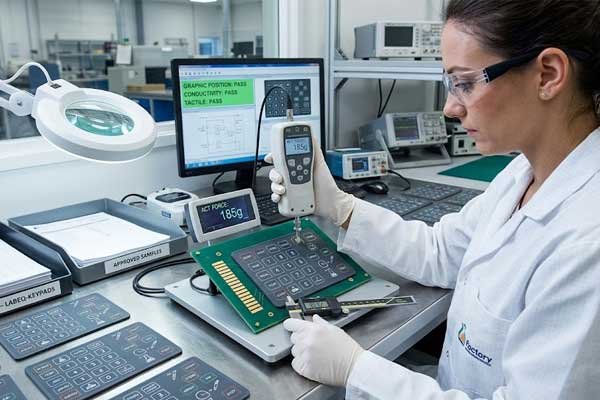
A quality engineer inspects a laboratory equipment silicone keypad using testing instruments in a factory control lab

Functional and Appearance Inspection

Finished silicone keypads are inspected according to approved samples, drawings and technical specifications. Quality verification covers button appearance, graphic position, tactile response, conductive contact performance, dimensions and surface quality. SKF checks both visual and functional performance because laboratory equipment interfaces require consistent operation as well as accurate appearance. Tactile testing and electrical inspection help confirm that each keypad meets the expected performance requirements before shipment.
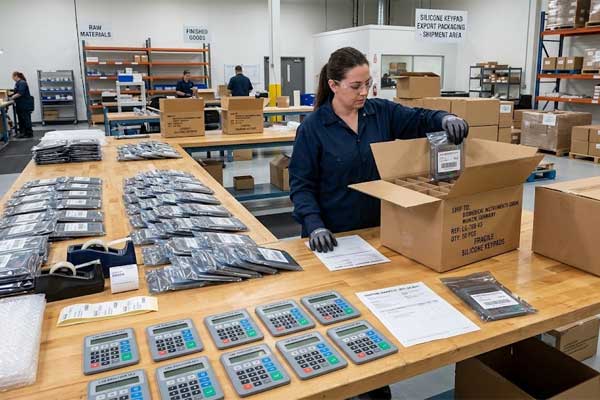
A worker packs bagged laboratory equipment silicone keypad parts into shipping cartons on a factory packing table

Packaging and Shipment

After final inspection, products are counted, protected and packed according to customer requirements. Packaging solutions can include individual bags, protective layers, carton labels and custom packaging instructions. SKF prepares packaging based on the customer's assembly process and transportation requirements. Proper protection helps prevent deformation, surface damage or contamination during shipping, ensuring that laboratory equipment manufacturers receive components ready for integration.

Laboratory Equipment Silicone Keypad Quality Control

Quality control for laboratory equipment silicone keypads requires more than checking the silicone appearance. The keypad must maintain consistent tactile response, reliable electrical switching, accurate graphics and stable dimensions throughout production.

SKF controls each project according to the approved sample, technical specifications and application requirements.

AQL 2.5 / 4.0 Standard Inspection

Final inspection can follow agreed sampling standards:

AQL 2.5

Critical and Major Defects

AQL 4.0

Minor Visual Defects

Additional inspection requirements can be applied according to customer specifications.

The approved sample becomes the production reference for:

  • Button layout
  • Overall dimensions
  • Silicone color
  • Graphic position
  • Surface finish
  • Tactile response
  • Conductive contact position
  • Packaging requirements

For silicone keypads, the sample is especially important because small structural differences may change the pressing feeling. SKF uses the approved sample as the physical reference during production verification.

Before molding, incoming silicone materials and related components are reviewed.

Inspection may include:

  • Silicone compound confirmation
  • Color consistency
  • Material documentation
  • Conductive pill specifications
  • Printing materials
  • Coating materials

Material selection must match the intended laboratory environment. A compound suitable for general electronic products may not provide the same performance under repeated cleaning or chemical exposure.

Production checks are performed during molding and assembly.

The process review includes:

  • Mold filling condition
  • Surface defects
  • Flash control
  • Button structure
  • Conductive pill placement
  • Graphic alignment
  • Assembly compatibility

One common keypad manufacturing issue is uneven tactile force between buttons. SKF reviews web structure and molding consistency because even small variations in silicone thickness can affect button response.

Finished keypads are checked for:

  • Tears
  • Surface contamination
  • Excessive flash
  • Missing graphics
  • Printing defects
  • Laser marking issues
  • Color variation
  • Surface damage

Functional verification focuses on the actual keypad operation.

Testing may include:

  • Button activation
  • Conductive switching
  • Contact stability
  • Button return performance
  • Tactile consistency
  • PCB compatibility

For laboratory instruments, electrical reliability is critical because intermittent switching can interrupt testing procedures or operator workflows.

Measurements are checked against approved drawings.

Inspection may include:

  • Overall keypad dimensions
  • Button height
  • Button spacing
  • Mounting features
  • Conductive pill location
  • Silicone thickness

Before shipment, SKF verifies:

  • Product quantity
  • Individual protection
  • Labels
  • Carton marks
  • Customer packaging requirements

Laboratory equipment components often require careful protection because deformation during transportation can affect assembly accuracy.

Typical Laboratory Equipment Silicone Keypad Specifications

SpecificationTypical Reference
ProductCustom laboratory equipment silicone keypad
ApplicationsLaboratory instruments, analytical equipment, testing systems, scientific devices and control interfaces
MaterialSilicone rubber, selected according to performance requirements
Hardness range30–70 Shore A
Temperature range-40°C to 200°C depending on silicone compound
Button typeStandard buttons, tactile buttons, integrated keypad structures
Contact methodCarbon pills, conductive contacts or customer-specified solutions
Tactile forceCustom according to operating requirements
Key travelDesigned according to user feedback and instrument structure
Snap ratioOptimized according to tactile response requirements
Surface optionsMatte, glossy, laser etched, printed or coated surfaces
Graphic methodsScreen printing, laser marking, protective coating and custom graphics
Backlight optionAvailable for light-transmitting keypad designs
Sealing structureCustom silicone web and enclosure interface design
ColorStandard silicone colors or custom color matching
Manufacturing processSilicone compression molding with secondary processing
AssemblyConductive pill assembly and customer-specific integration
InspectionAppearance, dimensions, tactile performance and electrical testing
DocumentationAvailable according to selected material and market requirements
OEM / ODMAvailable

Final specifications depend on keypad structure, silicone compound, PCB design, application environment and approved sample.

Why Work with SKF for Laboratory Equipment Silicone Keypads

Silicone Keypad Manufacturing Experience

SKF specializes in custom silicone keypad development for electronic interfaces requiring reliable tactile operation and long service life.

Our engineers support projects from early design review through tooling, sampling, production and export delivery.

Engineering Review Before Tooling

Laboratory equipment keypads often look simple but contain many design decisions.

Before tooling, SKF reviews:

  • Button geometry
  • Web structure
  • Conductive pill location
  • PCB contact position
  • Installation method
  • Required tactile performance

This prevents problems such as unstable switching, inconsistent button feeling or difficult assembly after production.

Tooling and Manufacturing Capability

Our production process covers:

  • Silicone mold development
  • Compression molding
  • Conductive contact assembly
  • Printing
  • Laser processing
  • Inspection
  • Packaging

Each process is coordinated around the approved keypad design.

Tactile Performance Validation

A laboratory instrument keypad is part of the user interface.

SKF evaluates tactile performance because operators rely on clear feedback during repeated adjustments and parameter input.

The actuation force, travel distance and snap behavior are reviewed together instead of adjusting only one value.

Sample-Based Production Control

Mass production starts after sample approval.

The approved sample defines:

  • Appearance
  • Button response
  • Graphics
  • Dimensions
  • Electrical contact performance

This reduces variation between prototype approval and production batches.

Export Support for Global Equipment Manufacturers

SKF supports international customers with:

  • Technical communication
  • Production updates
  • Packaging coordination
  • Documentation support
  • Shipment preparation

Projects can be developed for customers in North America, Europe and other global markets.

Laboratory Equipment Silicone Keypad FAQ

The MOQ depends on keypad structure, tooling requirements, material selection and production volume.

Existing designs with minor customization may require a lower quantity, while fully customized keypads with new tooling usually require a higher production commitment.

SKF reviews the project details before confirming the suitable MOQ.

Yes.

SKF can review PCB dimensions, contact locations and switching requirements during development.

The conductive pill position, button structure and mounting features are adjusted according to the electronic interface.

Tactile feedback depends on the complete silicone structure.

SKF adjusts:

  • Silicone hardness
  • Web thickness
  • Diaphragm geometry
  • Button height
  • Snap ratio
  • Key travel

Changing only the silicone hardness usually cannot achieve the required tactile performance.

Silicone materials can provide good resistance to many environmental conditions, but compatibility depends on the actual chemicals, concentration, exposure time and selected compound.

The material should be evaluated according to the cleaning process used in the instrument application.

Yes.

SKF supports:

  • Screen printing
  • Laser etching
  • Custom graphics
  • Multi-color markings
  • Backlight symbols

Artwork should be reviewed together with button movement and surface requirements.

Yes.

Backlit designs require coordination between silicone thickness, light transmission areas, graphic layers and electronic lighting components.

The structure is reviewed during development to achieve uniform illumination.

There is no single hardness suitable for every application.

The selection depends on button size, required pressing force, tactile feeling, operating frequency and installation structure.

SKF evaluates hardness together with the web design and diaphragm structure.

Conductive pill performance depends on correct positioning, compression and PCB contact design.

SKF reviews:

  • Pill diameter
  • Pill location
  • Contact pressure
  • Compression distance
  • PCB alignment

These factors help maintain stable electrical switching.

Available documentation depends on the selected silicone material, additives, printing materials and destination market.

SKF confirms applicable documents according to the specific project requirements.

Please provide:

  • Equipment type
  • Keypad drawing or 3D file
  • Button quantity
  • PCB contact information
  • Required tactile feeling
  • Silicone color
  • Graphic requirements
  • Expected annual quantity
  • Packaging requirements
  • Target market
  • Required documentation

Ask for a quote

Fill out the form below, and we will be in touch shortly.

询盘表单