Manufacturing reliable silicone keypad solutions for industrial control panels since 2012

Industrial Control Panel Silicone Keypad Manufacturer

Custom industrial control panel silicone keypads engineered for machine interfaces, automation equipment and industrial control systems. SKF provides silicone molding, conductive contact integration, tactile optimization, graphic processing and OEM/ODM manufacturing support.

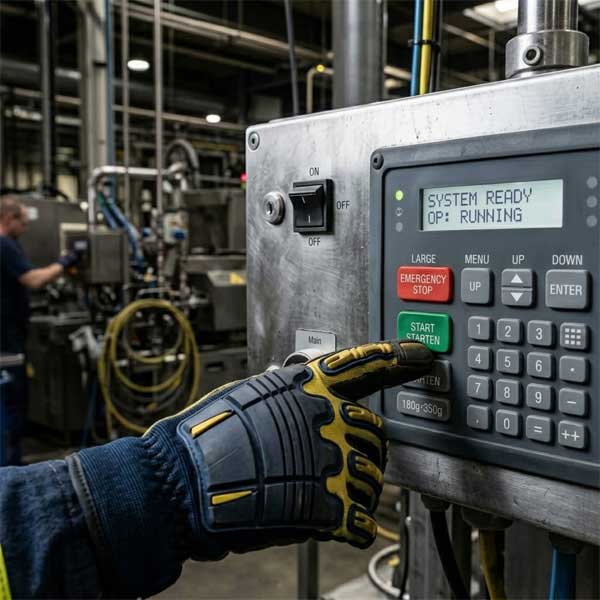
A gloved hand presses silicone keypads on industrial control panel

What Is an Industrial Control Panel Silicone Keypad?

An industrial control panel silicone keypad is a molded silicone interface component designed for operating machines, automation systems and industrial equipment through physical button input. It combines silicone rubber buttons, tactile structures, conductive contacts, graphic markings and sealing features into one integrated control interface.

Unlike general-purpose silicone buttons, industrial control panel silicone keypads are developed specifically for equipment environments where operators require reliable feedback, repeated operation and stable connection with internal electronic systems.

A custom industrial control panel silicone keypad is designed around your control panel structure, including button layout, PCB contact pattern, mounting method, operating force, environmental requirements and expected service life.

SKF manufactures industrial control panel silicone keypads for OEM equipment manufacturers, automation companies and industrial system developers. Our engineers support the complete development process from design evaluation and tooling review to silicone molding, secondary processing, inspection and production delivery.

Industrial equipment often requires thousands or millions of button operations during its service life. The keypad design must therefore balance tactile response, mechanical durability, electrical reliability and environmental protection.

Industrial Control Panel Silicone Keypad Manufacturing at a Glance

Panel Integration

Industrial control panel silicone keypads are developed according to your panel dimensions, PCB layout, button arrangement and installation requirements. SKF reviews mechanical and electrical interfaces before tooling to improve assembly compatibility.

Tactile Performance

Button feel is controlled through silicone hardness, web structure, key travel and actuation force design. The goal is to provide clear operator feedback while maintaining comfortable repeated operation.

Industrial Materials

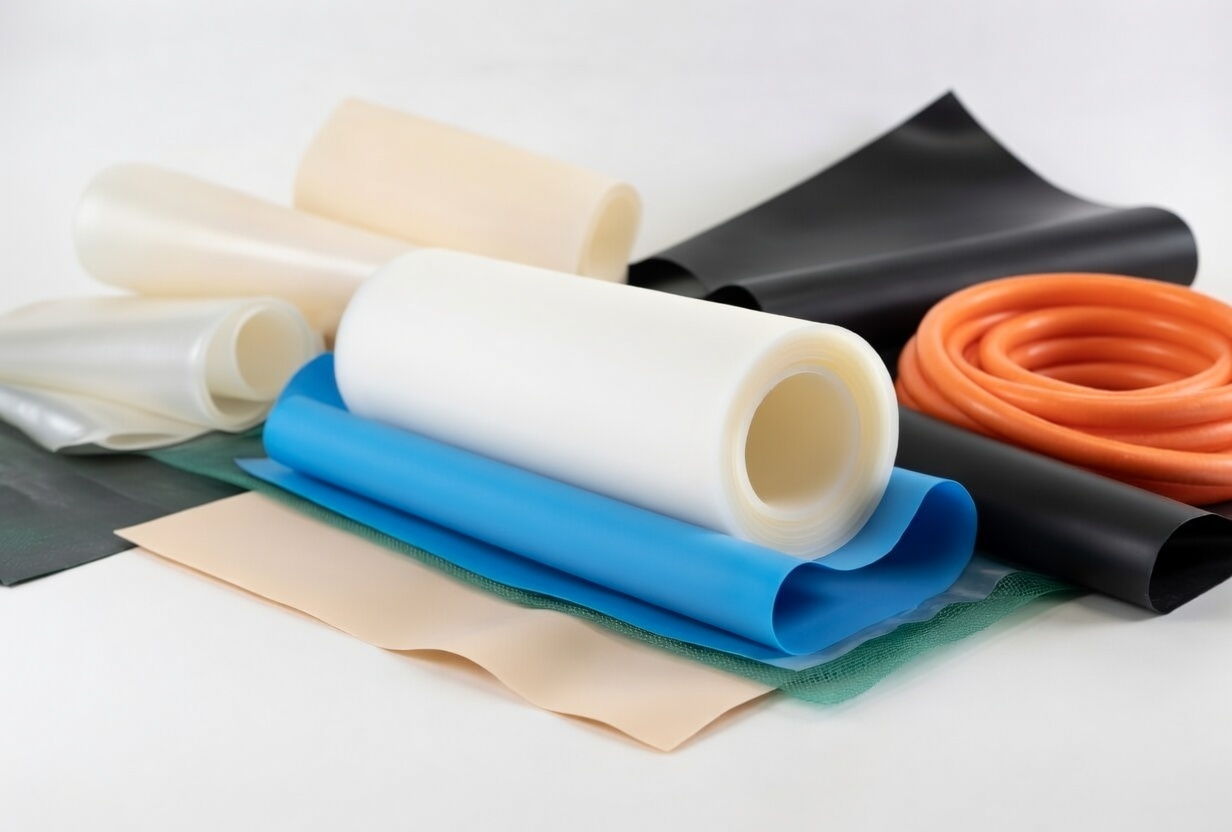
Silicone compounds are selected according to temperature range, chemical exposure, compression requirements and expected service conditions. Options include different hardness levels, translucent silicone and application-specific formulations.

Interface Options

Industrial silicone keypads can include conductive carbon pills, backlighting structures, laser-etched legends, screen printing, molded symbols and custom graphic designs for different control panel requirements.

Industrial Control Panel Silicone Keypad Applications

Industrial control panel silicone keypads are used across equipment requiring durable physical interfaces and reliable operator input.

An operator presses a green start button on a clean CNC machine screen interface featuring an Industrial Control Panel Silicone Keypad

CNC Machine Control Panels

CNC equipment requires control interfaces that support repeated operation, precise input and reliable operator interaction. Industrial control panel silicone keypads provide durable button structures, consistent tactile feedback and customized function layouts for machine operation environments. Their silicone construction helps protect the interface from dust, oil and other workshop conditions. These keypads are suitable for CNC machine control panels, numerical control systems and auxiliary machine interfaces.

An engineer presses a button on a handheld testing device featuring an Industrial Control Panel Silicone Keypad in a lab set

Testing and Measurement Equipment

Testing and measurement instruments require compact, reliable and easy-to-operate input interfaces. Silicone keypads for industrial control panels support functions such as parameter adjustment, function selection and equipment configuration while maintaining stable button performance during repeated use. Their flexible structure and customizable design allow integration into various testing devices and measurement systems.

An operator presses a start button on an Outdoor Industrial Control Panel Silicone Keypad at a quarry site

Outdoor Industrial Equipment

Outdoor industrial equipment may operate under changing conditions, including moisture, temperature variations and environmental exposure. Industrial control panel silicone keypads can be developed with protective sealing structures, durable silicone materials, high-visibility graphics and application-specific designs to improve interface reliability. These keypads are suitable for outdoor control equipment, monitoring systems and industrial devices installed in demanding environments.
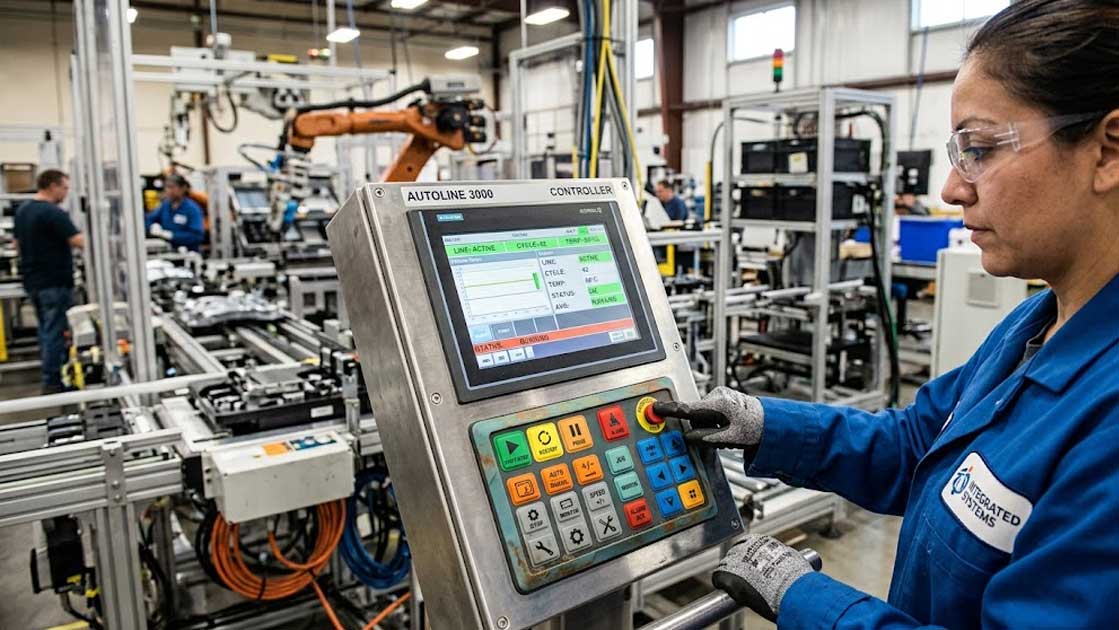
An operator controls an automated production line controller using a colorful Industrial Control Panel Silicone Keypad

Industrial Automation Systems

Automation equipment relies on efficient human-machine interaction for setup, monitoring and daily operation. Industrial silicone keypads can be integrated into production line controllers, robotic equipment, automated processing systems and factory control units. Custom button arrangements, tactile response and graphic markings allow manufacturers to create control interfaces that match specific operating workflows and equipment requirements.
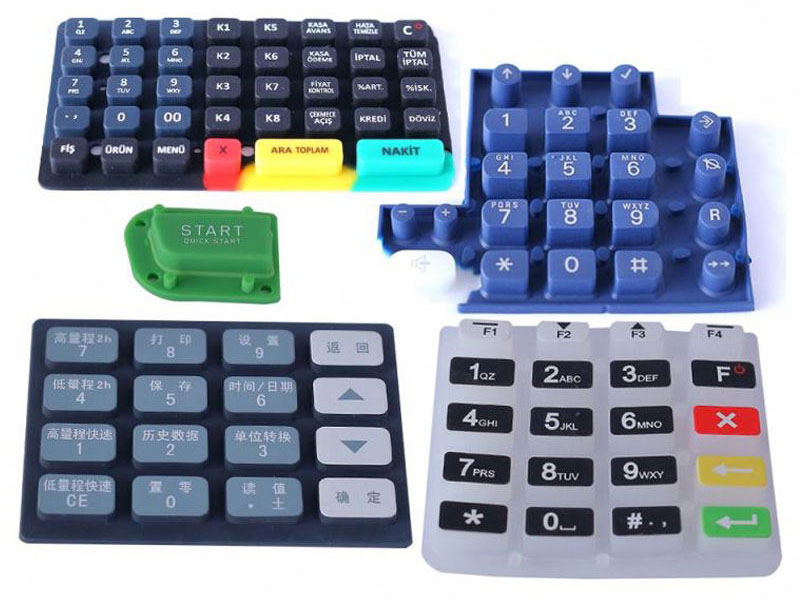
Industrial Control Panel Silicone Keypad Types We Can Develop

Industrial Control Panel Silicone Keypad Customization

SKF provides custom industrial control panel silicone keypad solutions based on equipment requirements, operating conditions and interface specifications.

Surface Legend Technology

Each industrial control system has different operating requirements. Button size, spacing and arrangement influence operator efficiency and equipment usability.

SKF develops custom layouts according to:

  • Control panel dimensions
  • Function requirements
  • Operator workflow
  • PCB arrangement
  • Installation limitations

This allows manufacturers to integrate the keypad directly into their equipment design.

Material Selection

Silicone material selection affects tactile response, durability and environmental performance.

SKF selects silicone compounds according to:

  • Required operating temperature
  • Chemical exposure
  • Compression requirements
  • Surface requirements
  • Expected service life

Different Shore hardness options can be used to achieve specific button response characteristics.

An operator interacts with Backlit Silicone Keypads on a control panel in a dark industrial environment

For equipment used in dark environments or where quick identification is required, SKF develops silicone keypads with integrated lighting features.

Solutions include:

  • LED backlight structures
  • Light-guiding designs
  • Transparent silicone areas
  • Laser-etched legends

The design process considers light distribution, button structure and graphic performance together.

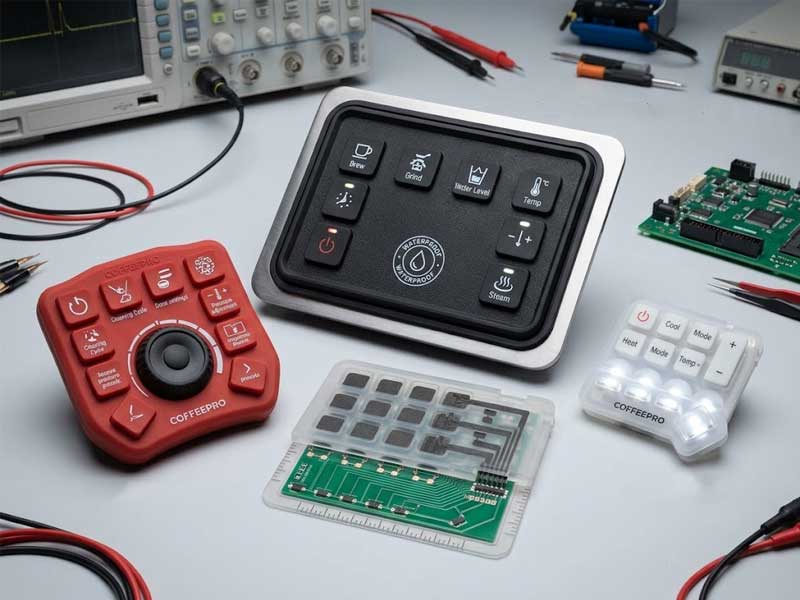
distinct Coffee Machine Silicone Keypads—featuring integrated multi function backlighting and conductive contact designs

Industrial control panel silicone keypads can be configured with conductive carbon pills for direct PCB switching.

SKF optimizes conductive switching performance through:

  • Carbon pill positioning
  • Contact pressure adjustment
  • Electrical resistance control
  • Alignment validation

This helps ensure reliable signal transmission during repeated operation.

Start Your Custom Silicone Keypads Project

Selecting the right manufacturing partner is important for industrial control panel silicone keypad projects because keypad performance depends on both silicone manufacturing capability and engineering understanding.

SKF supports OEM customers with complete silicone keypad development, from initial concept evaluation to stable mass production.

Why Industrial Equipment Uses Silicone Keypads

Reliable Human-Machine Interaction
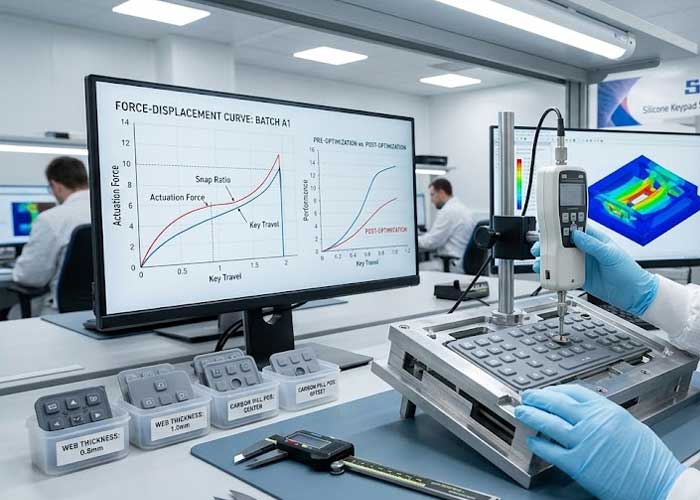
Operators depend on physical feedback when controlling industrial equipment. A well-designed industrial control panel silicone keypad allows users to recognize button activation through force response, key movement and tactile confirmation, improving operation confidence during frequent machine use. The tactile performance can be adjusted through multiple structural factors, including actuation force, key travel, snap ratio, return force and web geometry. SKF evaluates these elements together during development to create a balanced button feel that matches the operating requirements of different industrial control systems.
 
Protection Against Industrial Environments
Industrial control panels often operate in environments exposed to dust, moisture, oil, cleaning chemicals and temperature changes. A properly designed industrial control panel silicone keypad can integrate sealing skirts, protective membranes, silicone structures and customized compression features to improve environmental protection. Protection performance depends on the complete control panel assembly rather than the silicone keypad alone. SKF evaluates the relationship between the keypad, housing structure, mounting method and compression conditions to help achieve reliable protection for the intended application.
 
Flexible Control Panel Design
Silicone molding enables complex button layouts and integrated structures that are difficult to achieve with separate mechanical switches. Industrial control panel silicone keypads can combine different button sizes, irregular button arrangements, function labels, backlit indicators and custom symbols within one flexible interface. This design flexibility allows equipment manufacturers to create compact, intuitive and application-specific control interfaces while maintaining reliable operation and consistent appearance.
 
Long-Term Operating Reliability
Industrial operators may activate the same buttons thousands of times during daily operation. The silicone keypad structure must maintain stable tactile performance, electrical contact and mechanical durability throughout its service life. SKF evaluates silicone material selection, web fatigue risk, conductive contact design, button geometry and compression conditions during development. These factors work together to reduce performance changes caused by repeated pressing and support long-term reliability in industrial environments.
An engineer tests an industrial silicone control panel keypad using a force displacement probe next to actuation curves on a monitor

Silicone Keypad Logo and Branding Methods

Branding should remain durable throughout repeated baking, washing, and rolling. The best logo method depends on whether the artwork is decorative, instructional, or part of the working surface.

Screen Printing

Screen printing is a common method for adding logos, symbols and text onto silicone keypads. The process applies ink directly onto the silicone surface to create clear visual markings with customized colors and patterns. This method is suitable for company logos, button labels and functional indicators that require high readability. Protective coatings can also be added to improve resistance against wear, cleaning agents and repeated handling.

Laser Etching

Laser etching creates permanent markings by removing the surface layer of silicone or coating material through controlled laser processing. It is widely used for logos, legends and backlit keypad designs. The method provides precise details and long-lasting identification without relying on surface ink. For illuminated silicone keypads, laser etching can create transparent areas that allow LED light transmission through selected symbols or logos.

Molded Logos

Molded logos are formed directly during the silicone molding process by integrating logo structures into the keypad surface. This method creates a three-dimensional branding effect with excellent durability. Because the logo becomes part of the silicone structure, molded markings are suitable for industrial applications requiring frequent operation, harsh environments or long service life.

Embossing and Debossing

Embossing and debossing create raised or recessed logo designs on the silicone keypad surface through tooling features. This method provides a tactile branding effect that users can feel during operation. It is suitable for simple logos, symbols and identification marks where visual appearance and physical recognition are both important. The integrated silicone structure helps maintain the marking performance during repeated use.

Silicone Keypad Material & Performance Options

Industrial applications often require silicone keypads to operate under demanding conditions. Material selection plays an important role in maintaining performance over the product lifetime.

Silicone rubber is widely used for industrial control interfaces because it provides:

  • Flexible button movement
  • Temperature resistance
  • Mechanical durability
  • Chemical resistance
  • Long-term elasticity

The final performance depends on silicone formulation, curing process, design structure and operating environment.

Industrial equipment may operate in environments with changing temperatures. Silicone materials can be selected according to application requirements.

Common considerations include:

  • Continuous operating temperature
  • Thermal cycling
  • Outdoor exposure
  • Heat sources near equipment

SKF evaluates material selection together with product structure to ensure the keypad meets application requirements.

Industrial equipment may encounter oils, cleaning agents, dust and other contaminants.

Silicone keypad designs can be optimized by considering:

  • Silicone compound compatibility
  • Surface treatment requirements
  • Sealing structure
  • Cleaning conditions

Material testing and validation help confirm suitability for specific industrial environments.

Repeated operation places continuous stress on silicone structures. The keypad must maintain:

  • Stable tactile response
  • Reliable electrical contact
  • Consistent button return
  • Structural integrity

SKF considers material properties, web design and molding quality during production development to improve long-term reliability.

How Silicone Keypads Are Manufactured

Two engineers review a CAD drawing and prototype parts for an Industrial Control Panel Silicone Keypad at a conference table

Engineering Review

Before tooling, SKF reviews the keypad design based on the equipment requirements and control interface structure. The evaluation covers button layout, silicone web design, PCB connection, mounting method and sealing requirements. Early engineering review helps identify potential issues before production begins.

Engineers evaluate a mold and examine a flexible Industrial Control Panel Silicone Keypad alongside a computer flow analysis simulation

DFM Analysis

Design for Manufacturing (DFM) analysis helps ensure the silicone keypad can be produced efficiently and reliably. SKF evaluates factors such as silicone flow, mold structure, demolding conditions and structural strength to reduce manufacturing risks and improve production stability.
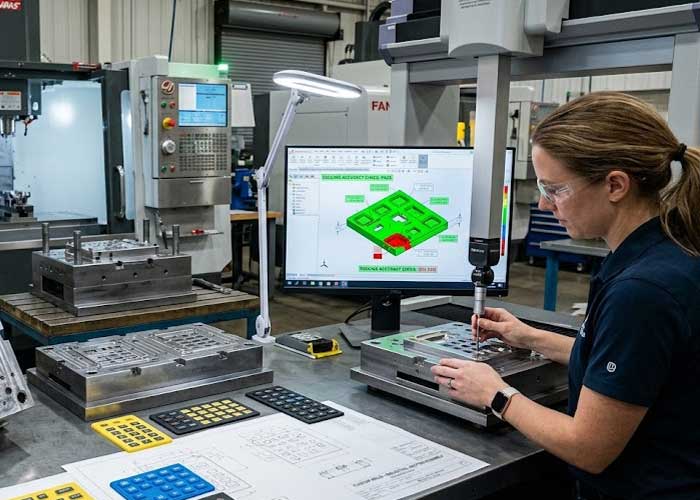
In a machine shop woman deburrs a mold component with a CAD model on a monitor

Tooling Development

Custom molds are developed according to the keypad structure, button arrangement and functional requirements. Tooling accuracy directly affects button consistency, surface quality and overall keypad performance during mass production.
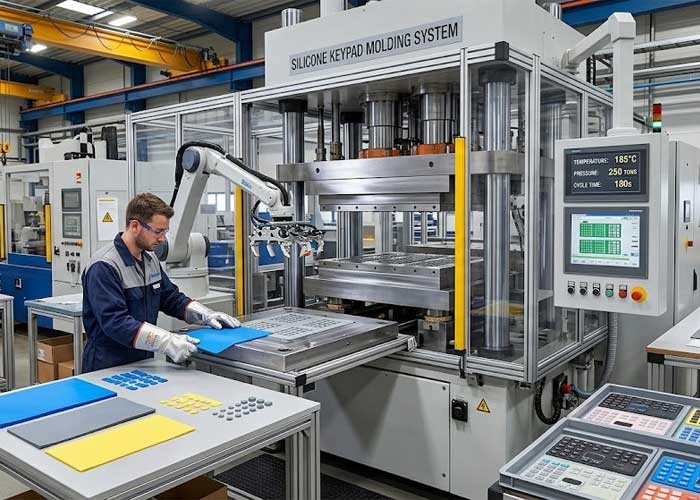
Technicians operate a large silicone keypad compression molding machine in a modern factory setting

Silicone Molding

Industrial control panel silicone keypads are produced through silicone molding processes selected according to design requirements and production volume. The molding process controls silicone distribution, button geometry, surface finish and structural consistency.

A lab technician uses a microscope and tweezers to place small components onto a base with an automated SKF gantry robot in the background

Conductive Integration

For PCB-based switching applications, conductive carbon pills are integrated into the silicone keypad structure. SKF controls conductive pill positioning, contact alignment and electrical performance to ensure stable switching during repeated operation.

A technician inspects a silicone keypad at a laser etching station next to screen printing supplies and an industrial oven

Graphic Processing

After molding, silicone keypads can receive additional visual and functional processing. Common options include laser etching, screen printing, spray coating, PU coating and color marking for clear identification and long-lasting appearance.

A quality control inspector tests key tactile force on a silicone keypad using a force gauge in a cleanroom lab

Assembly and Inspection

Finished silicone keypads are assembled and inspected according to customer requirements. SKF checks dimensions, appearance, tactile response and electrical performance to maintain consistent quality across production batches.
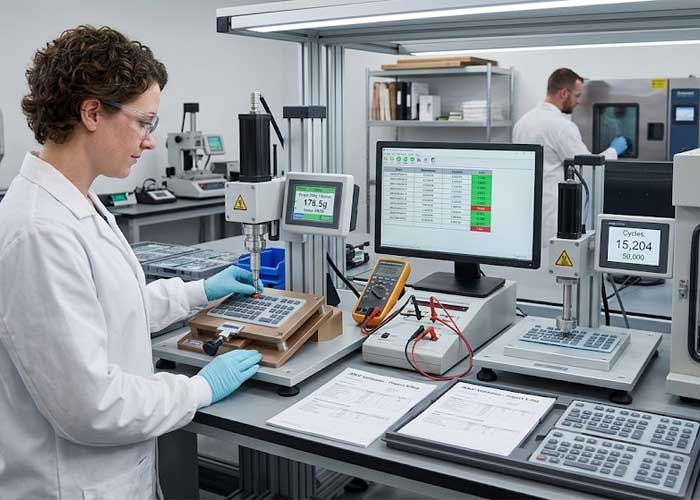
A technician uses automated testing equipment to measure contact resistance and key lifecycle durability on a silicone keypad in a lab

Production Validation

Before mass delivery, SKF validates the keypad performance based on application requirements. Testing may include tactile force evaluation, contact resistance testing, durability checks and environmental performance verification to support reliable industrial operation.
Quality Control for Industrial Silicone Keypads

Industrial equipment manufacturers require stable and repeatable keypad performance. SKF applies quality control throughout development and production to maintain consistency.

Dimensional accuracy affects installation compatibility and button operation.

Inspection focuses on:

  • Overall keypad dimensions
  • Button position
  • Mounting features
  • Silicone thickness
  • Structural details

This ensures the keypad matches the customer’s control panel design.

Button feel is an important factor for industrial operators. SKF evaluates tactile performance according to project requirements.

Testing may include:

  • Actuation force measurement
  • Key travel analysis
  • Return force evaluation
  • Snap response verification

These measurements help maintain consistent operation across production batches.

For conductive silicone keypads, electrical reliability is verified through contact testing.

Evaluation includes:

  • Contact resistance
  • Switching consistency
  • Conductive pill performance
  • PCB interface compatibility

This helps prevent issues caused by unstable electrical contact.

During mass production, SKF performs process inspections to maintain product consistency.

Quality checks may cover:

  • Appearance inspection
  • Surface defects
  • Printing accuracy
  • Material consistency
  • Functional testing

Industrial customers often require stable performance across long production cycles, making process control an important part of manufacturing.

Industrial Control Panel Silicone Keypad Specifications

ParameterTypical Options
MaterialSilicone rubber, custom formulations available
HardnessCustomized Shore hardness according to tactile requirements
Contact TypeConductive carbon pill, PCB contact interface
Surface FinishMatte, glossy, textured, coated surfaces
Graphic OptionsScreen printing, laser etching, molded symbols
Lighting OptionsLED backlighting, transparent silicone areas
Operating EnvironmentIndoor equipment, outdoor equipment, industrial environments
CustomizationButton layout, structure, color, graphics and mounting design

Specifications vary according to equipment requirements and operating conditions. SKF develops custom industrial control panel silicone keypads based on customer drawings and application needs.

Why Work with SKF

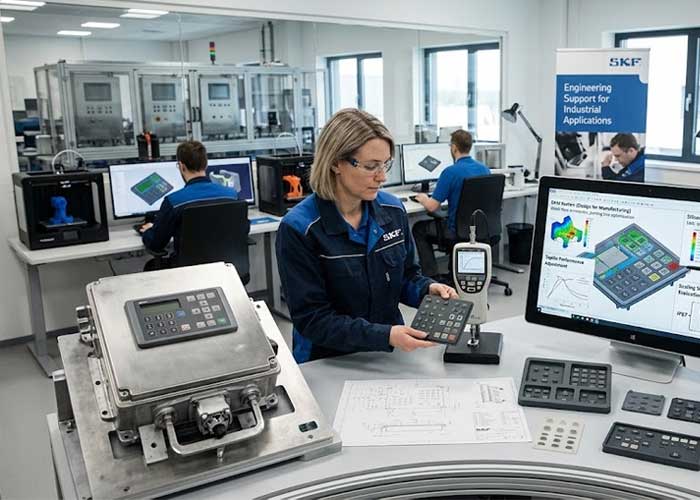
Engineers discuss silicone keypad DFM analysis and sealing structure models on a large screen in a product design lab

Engineering Support for Industrial Applications

Industrial silicone keypads are not only molded rubber components. They are functional interfaces that must work together with mechanical structures, electronic systems and operator requirements.

SKF provides engineering support including:

  • Design for manufacturing (DFM) review
  • Silicone structure optimization
  • Conductive contact analysis
  • Tactile performance adjustment
  • Sealing structure evaluation

This engineering approach helps customers reduce design risks before tooling and improve production reliability.

An engineer tests silicone keypad actuation force using a gauge next to a force displacement graph and cross section inset

Experience in Silicone Keypad Structure Development

The internal structure of a silicone keypad directly affects button feel, durability and electrical performance.

SKF has experience optimizing:

  • Silicone web structures for different actuation forces
  • Carbon pill positions for stable PCB contact
  • Key travel and snap response
  • Silicone thickness distribution

These details are especially important for industrial control panels where operators may use the same buttons thousands of times during equipment operation.

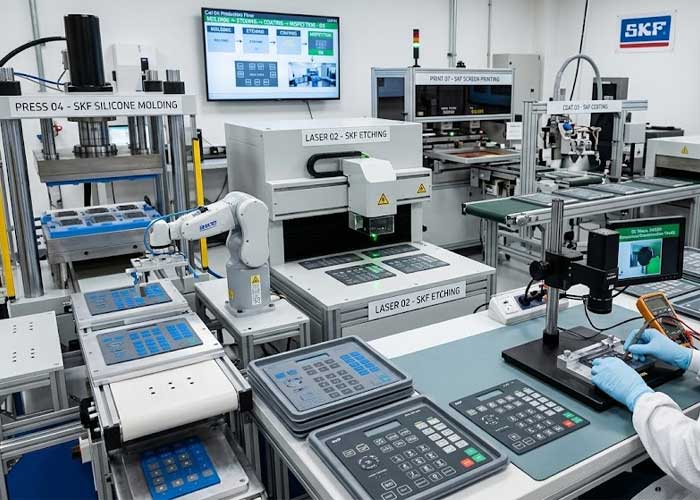
An automated silicone keypad production line features molding laser etching and coating stations alongside a quality inspector

Integrated Manufacturing Capabilities

SKF provides a complete production process for industrial control panel silicone keypads, including:

This integrated capability allows better control over product consistency and production coordination.

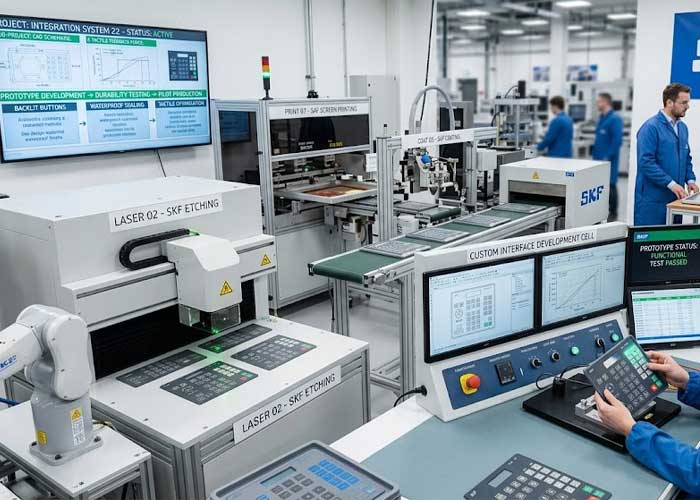
Engineers review custom silicone keypad prototypes and project status displays inside an industrial development facility

Support for Custom Industrial Equipment Projects

Every industrial control system has different requirements. SKF works with equipment manufacturers, automation companies and system integrators to develop keypads that match their application needs.

Whether the project requires a compact control interface, waterproof structure, backlit buttons or specialized tactile feedback, SKF supports customized development from prototype to production.

Industrial Control Panel Silicone Keypads FAQ

An industrial control panel silicone keypad is used as a physical input interface for machines, automation equipment and industrial systems. It allows operators to control equipment through silicone buttons connected with internal electronic systems such as PCBs.

Yes, silicone keypads can replace some mechanical switch solutions when the application requires a flexible, integrated and customizable interface.

The final design depends on factors such as electrical requirements, operating force, environmental conditions and expected service life.

The design process considers the complete control interface, including:

  • Panel dimensions
  • PCB contact layout
  • Button arrangement
  • Tactile requirements
  • Sealing needs
  • Operating environment

SKF reviews these factors during the engineering stage to create a keypad that fits the equipment structure.

The suitable tactile force depends on the application and operator requirements.

Industrial keypads may require different actuation forces depending on:

  • Button size
  • Frequency of operation
  • User environment
  • Required feedback level

SKF adjusts silicone hardness, web structure and button geometry to achieve the required operating feel.

Silicone keypads can be designed with sealing features to improve resistance against moisture and contaminants.

However, waterproof performance depends on the complete assembly, including the keypad structure, housing design and installation method.

Yes. Industrial silicone keypads can include backlighting designs using transparent silicone areas, LED structures and laser-etched legends.

SKF evaluates light transmission, graphic design and internal structure to achieve clear illumination.

The service life depends on material selection, structural design, operating conditions and usage frequency.

SKF evaluates factors such as silicone fatigue, web structure, conductive contact performance and repeated pressing conditions during development to improve long-term reliability.

Ask for a quote

Fill out the form below, and we will be in touch shortly.

询盘表单