
SKF Quality Control
Engineered for Reliability
Quality in silicone keypad manufacturing is not a final inspection step; it is a controlled process from raw material formulation to contact resistance validation. At SKF, we rely on data, precision testing, and strict process boundaries to ensure every batch meets the exact actuation force, durability, and conductivity requirements of industrial, medical, and payment applications.
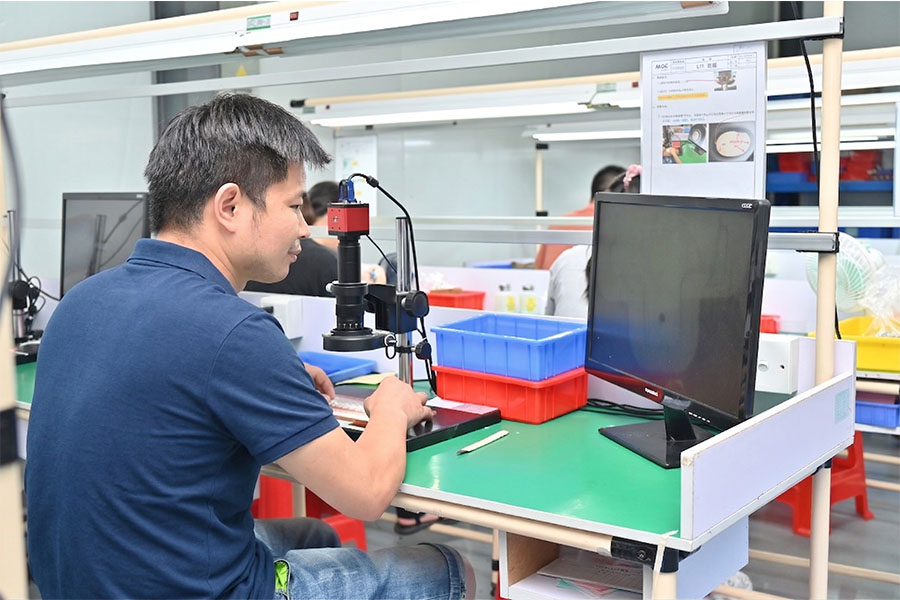
Precision Control of Keypad Mechanics
We design silicone keypads based on measurable engineering parameters, not guesswork.
Raw Material Verification
- FDA, LFGB & USP Class VI compliance
- Tensile strength & Shore A hardness testing
- Curing agent ratio validation
In-Process Control
- 170°C–200°C vulcanization monitoring
- ±0.05mm dimensional tolerance control
- Coating & printing alignment accuracy
Reliability Testing
- 1,000,000+ cycle life testing
- Actuation force & snap ratio validation
- Contact resistance & abrasion checks
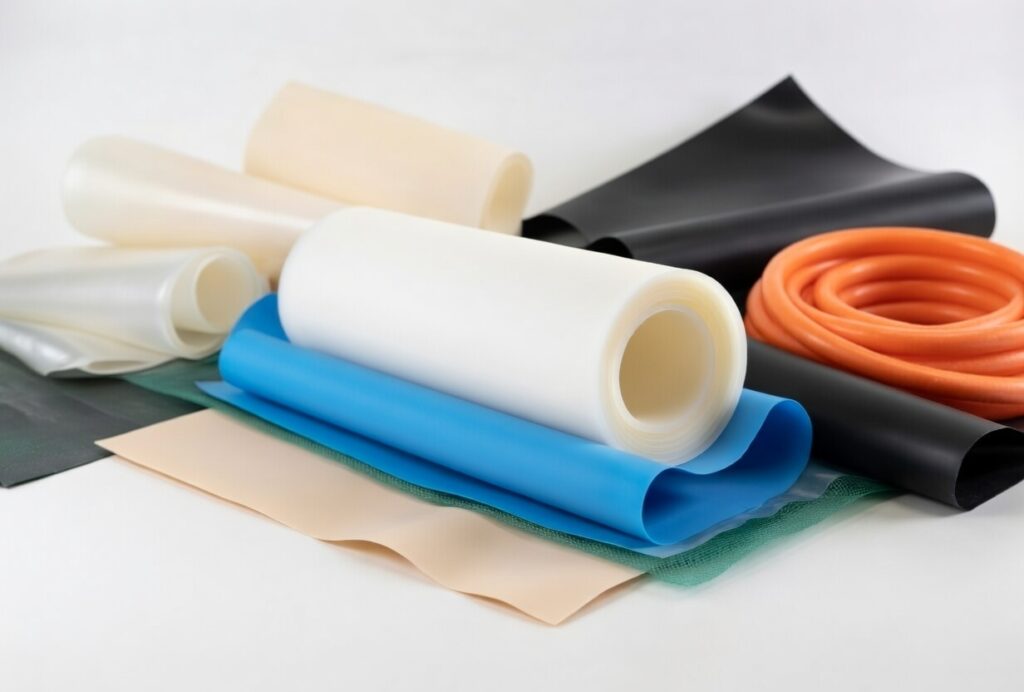
IQC: Raw Material Verification
The stability of a silicone keypad begins with the raw compound. Unverified materials lead to premature tearing, inconsistent vulcanization, and compliance failures.
Regulatory and Formulation Checks
- Compliance Verification: Confirming material certifications such as FDA 21 CFR 177.2600, LFGB, USP Class VI, and RoHS/REACH before acceptance.
- Physical Properties: Testing tensile strength, hardness (Shore A), and elongation at break to ensure baseline mechanical performance.
- Curing Agent Control: Precise validation of platinum or peroxide curing agent ratios to prevent post-cure odor and stabilize dimensional shrinkage.
IPQC: In-Process Manufacturing Control
Process drift during vulcanization and surface treatment is the primary cause of tactile inconsistency and visual defects. Our IPQC monitors critical parameters in real-time.
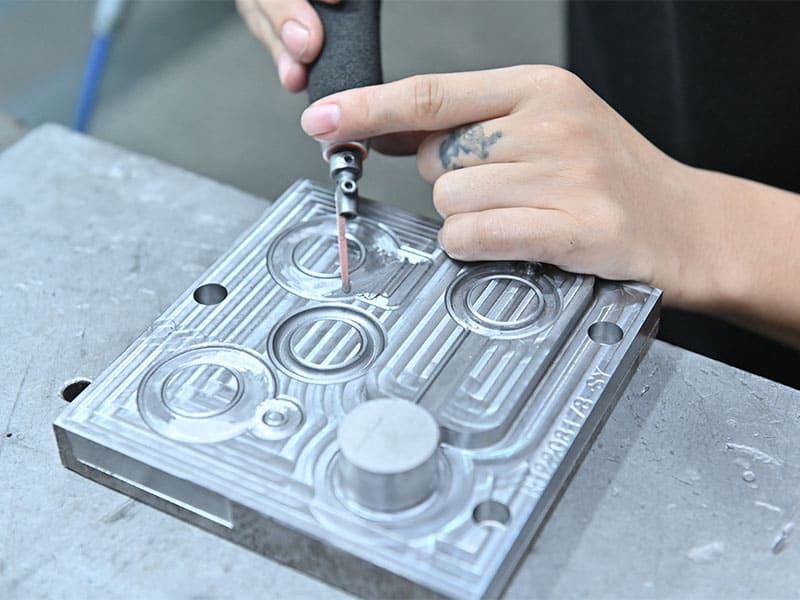
Molding
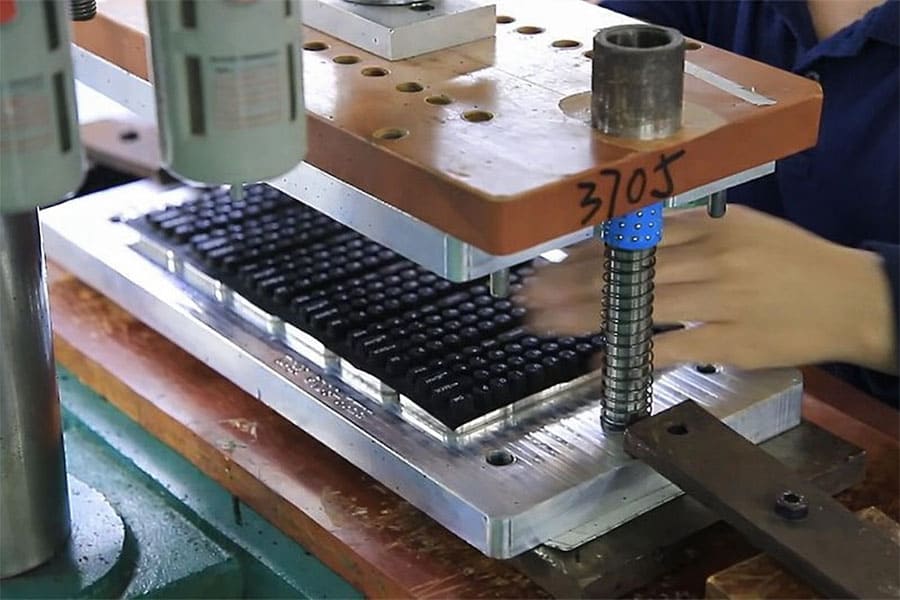
Printing
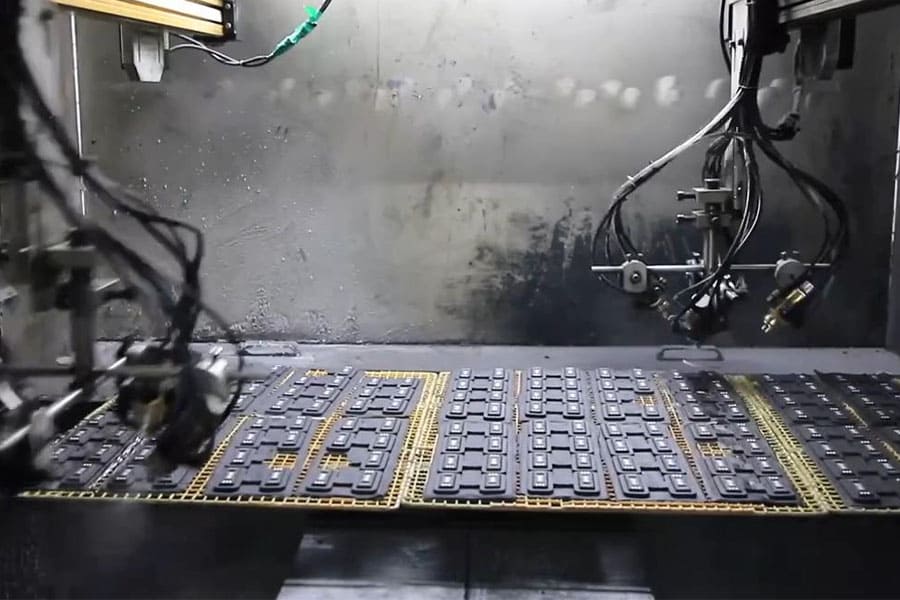
Coating
Compression Molding Boundaries
- Temperature & Time Control: Vulcanization temperatures are strictly maintained between 170°C and 200°C to guarantee complete cross-linking.
- Dimensional Tolerance: Critical structural dimensions and web thickness are measured via optical systems, controlled within ±0.05mm.
- Defect Prevention: 100% visual inspection at the press to immediately catch flash (burrs), short molding, and trapped air bubbles.
Surface Treatment Accuracy
- Printing Alignment: Silkscreen and laser etching alignment tolerances are maintained within ±0.1mm.
- Coating Consistency: The application thickness of PU Coating, Matte Coating, and Epoxy Resin is monitored to ensure uniform wear resistance and precise light transmission for backlit keypads.
Every production batch undergoes rigorous mechanical and electrical validation to confirm it aligns with your specific engineering limits.
| Test Category | Testing Equipment | Standard Metric / Passing Criteria |
|---|---|---|
| Tactile Feedback | Load Curve Tester | Actuation Force: 50g–300g (±10g). Snap Ratio: 40%–60%. |
| Conductivity | Resistance Tester | Carbon Pills: <100 Ohms. Conductive Ink: 50–200 Ohms. Gold Pills: <1 Ohm. |
| Durability | Life Cycle Tester | Actuation life exceeds 1,000,000 cycles without structural or conductive failure. |
| Wear Resistance | RCA Abrasion Tester | PU Coating / Epoxy Resin withstands required abrasion cycles without character loss. |
Load Curve Tester
Resistance Tester
Life Cycle Tester
RCA Abrasion Tester
Start Your Project with Factory-Direct Quality
Stop dealing with inconsistent tactile feedback and unpredictable contact resistance. Send us your 2D/3D CAD drawings and environmental requirements. Our engineering team will evaluate your design for manufacturability (DFM) and define the exact quality control boundaries for your project.