Screen Printed Silicone Keypads Manufacturer
Screen printed silicone keypads for industrial controls, medical devices, test instruments, remote controls and electronic interfaces. Custom legends, symbols, colors, graphics and protective coatings with OEM/ODM manufacturing support.
What Are Screen Printed Silicone Keypads?
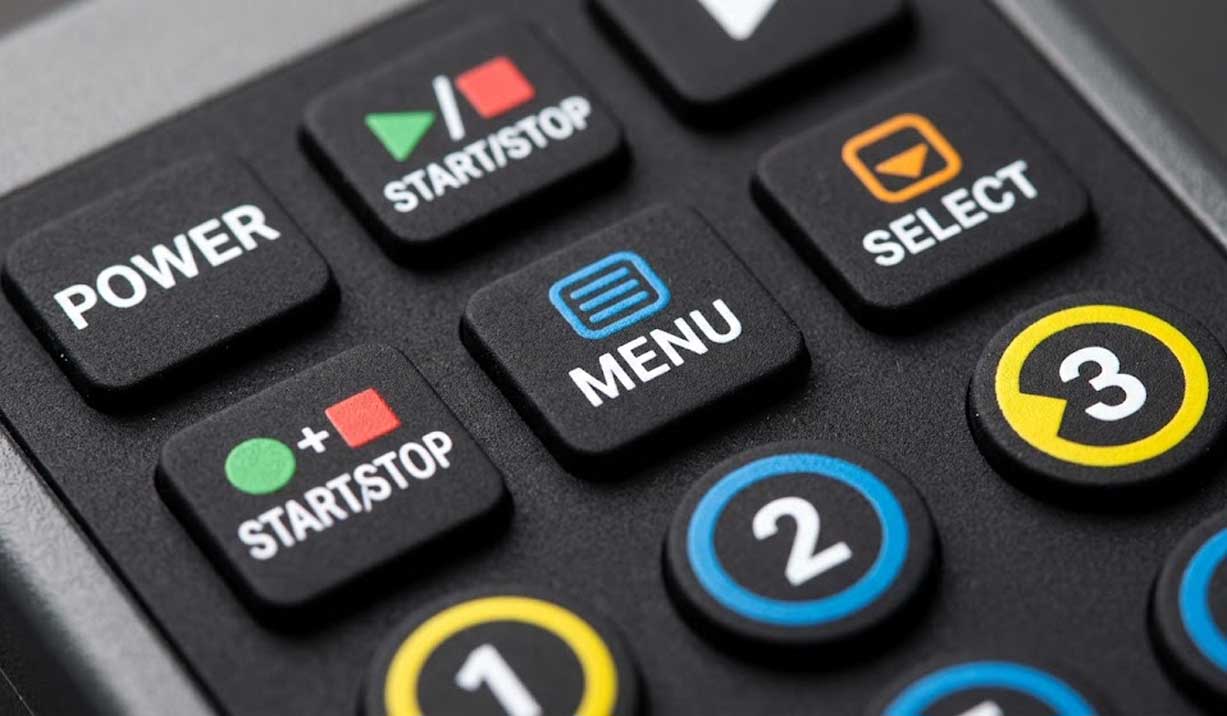
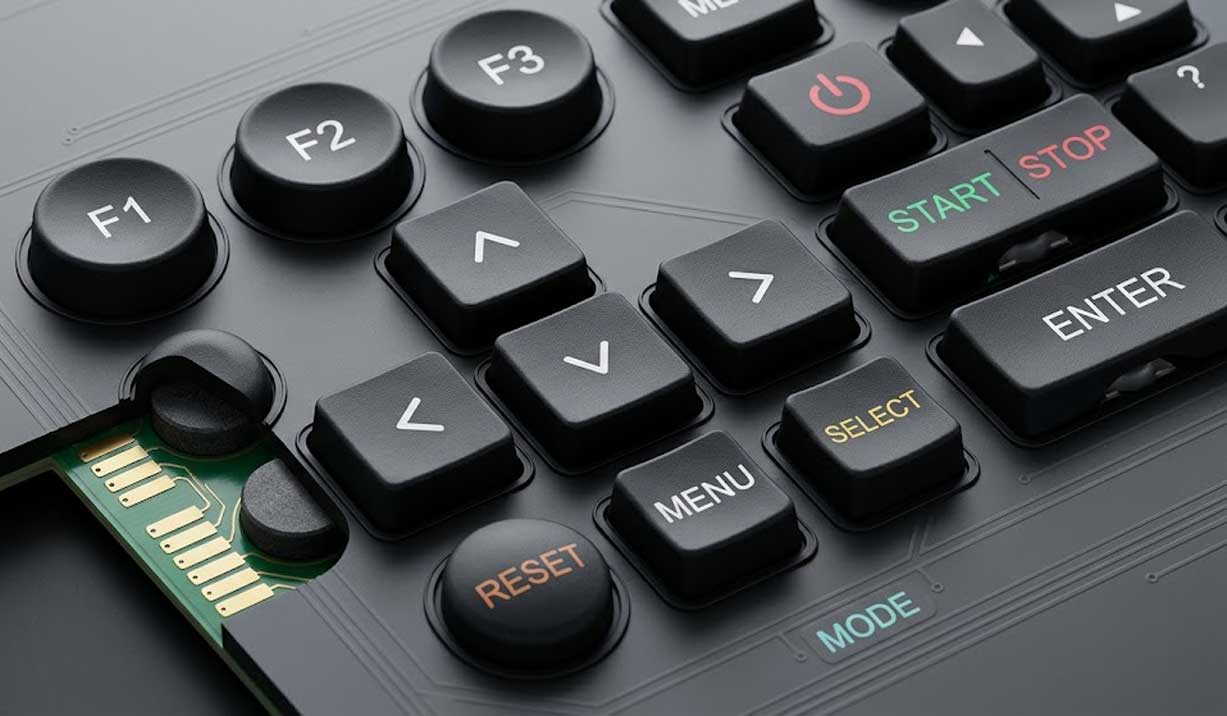
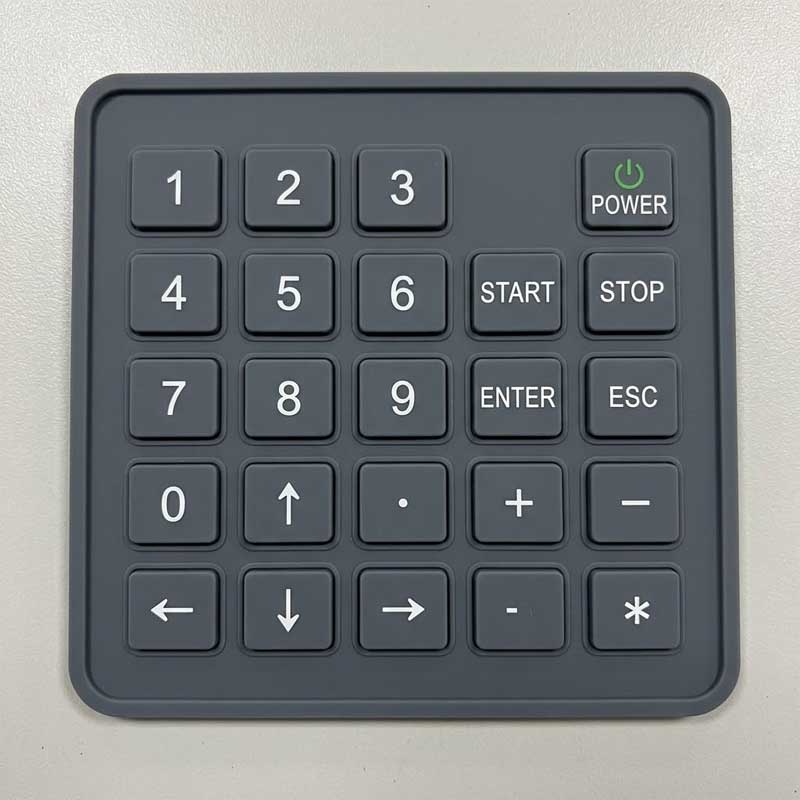
Screen printed silicone keypads use printed ink graphics, legends, symbols or colors on the silicone surface to create a clear and durable user interface for electronic devices. Custom screen printed silicone keypads combine silicone rubber structures with application-specific artwork, tactile feedback requirements, electrical contacts and surface protection options.
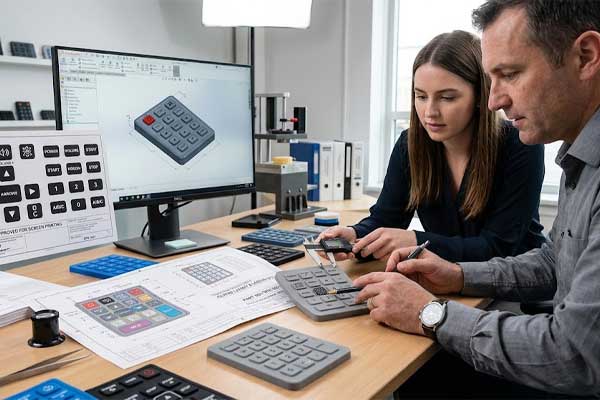
SKF is a silicone keypad manufacturer based in China, specializing in custom silicone keypads for industrial equipment manufacturers, electronic brands and OEM customers. Our engineering team reviews graphic layout, key structure, printing position, ink selection and assembly requirements before production to reduce issues such as print misalignment, unclear legends or insufficient surface durability.
Screen printing remains one of the most widely used graphic methods for silicone keypads because it allows flexible customization of text, icons, symbols and multi-color designs while maintaining the soft-touch feel and sealing advantages of silicone rubber.
Screen Printed Silicone Keypads Manufacturing at a Glance
Custom Graphics
Screen printing enables clear legends, symbols, numbers, and multi-color designs on silicone keypad surfaces. Custom graphics can match product branding, functional requirements, and user interface layouts while maintaining consistent appearance.
Durable Printing
Silicone-compatible inks provide excellent wear resistance against repeated operation, cleaning, and environmental exposure. Printed legends remain clear and reliable throughout long-term use.
Tactile Performance
Optimized silicone structures deliver responsive tactile feedback with customized actuation force, key stroke, and button feel. Different tactile experiences can be developed based on application requirements.
Design Flexibility
Screen printed silicone keypads support various shapes, colors, sizes, conductive pills, LED windows, and backlighting options for industrial controls, medical devices, remote controls, and electronic products.
Who We Manufacture Screen Printed Silicone Keypads For
Screen printed silicone keypads are mainly used where users need clear visual instructions, reliable tactile feedback and durable operation in compact electronic interfaces.

Industrial Equipment Manufacturers
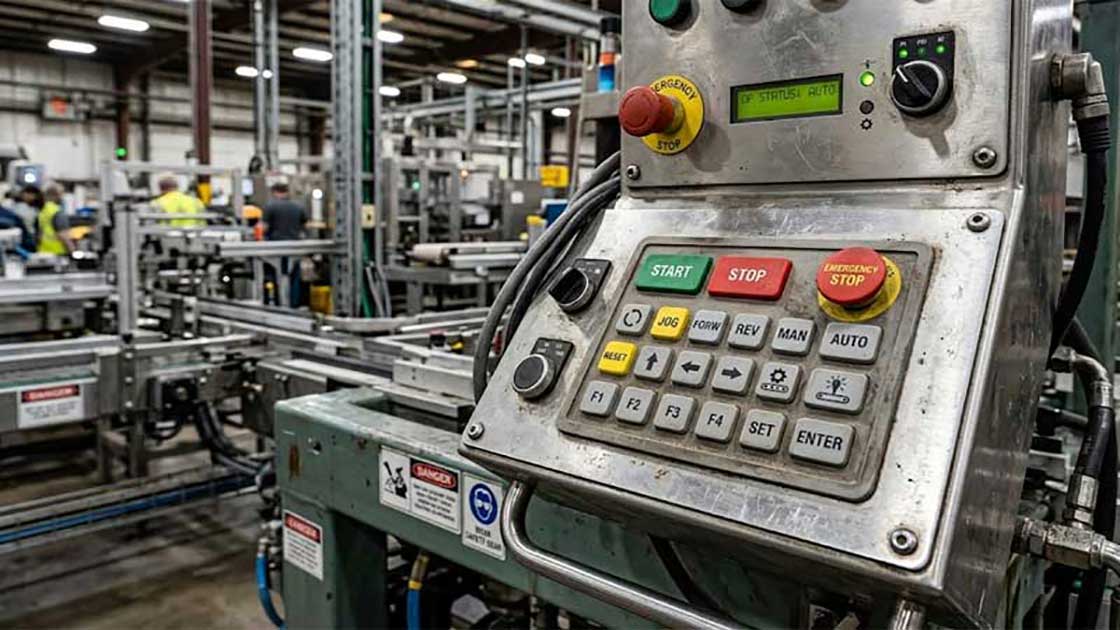
Industrial control systems require keypads that remain readable after repeated operation in demanding environments. SKF develops printed silicone keypads for CNC machines, automation controllers, measurement equipment and industrial panels where legends, tactile response and sealing performance must work together. Graphic layout is reviewed together with key spacing, actuator position and PCB contact design to avoid situations where printed labels look correct but the key function does not match the mechanical structure.

Medical and Laboratory Equipment Brands
Medical instruments and laboratory devices often require clean, precise and easy-to-identify interfaces. Screen printed silicone keypads allow manufacturers to add medical symbols, operation instructions, icons and color-coded controls while maintaining a sealed silicone interface. Projects can include requirements for material documentation, cleaning compatibility and long-term graphic clarity according to the selected application.
Electronics and Control System Companies
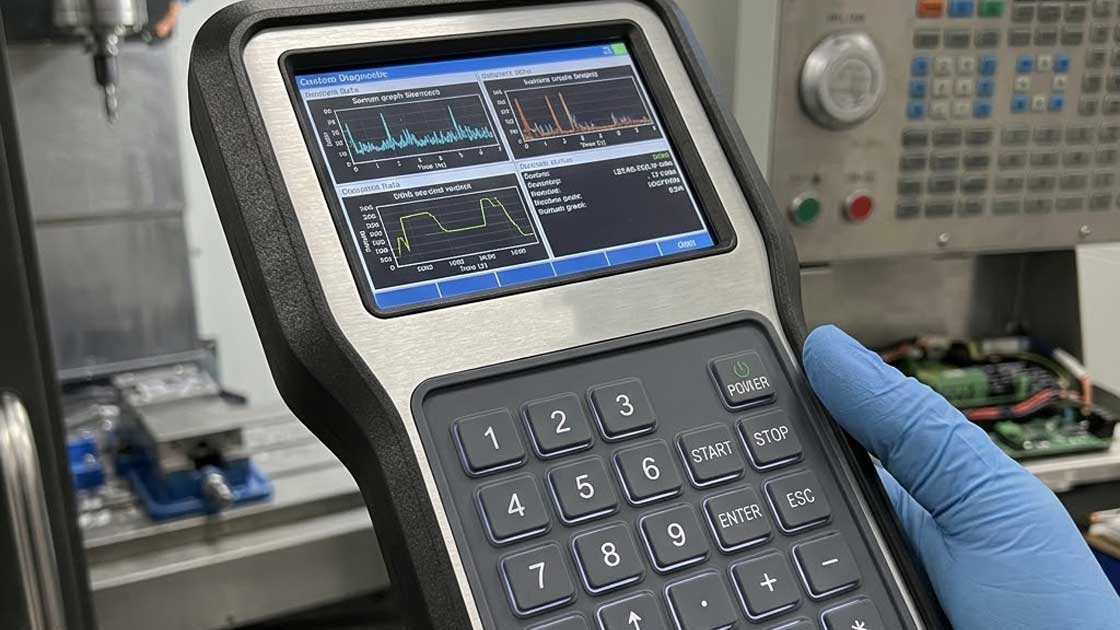
Electronic device manufacturers use screen printed silicone keypads for compact interfaces that combine appearance customization with reliable operation. Custom graphics, button layouts and color systems help create consistent product designs across different models or product series. SKF supports OEM development from artwork review and prototype samples through final keypad production.
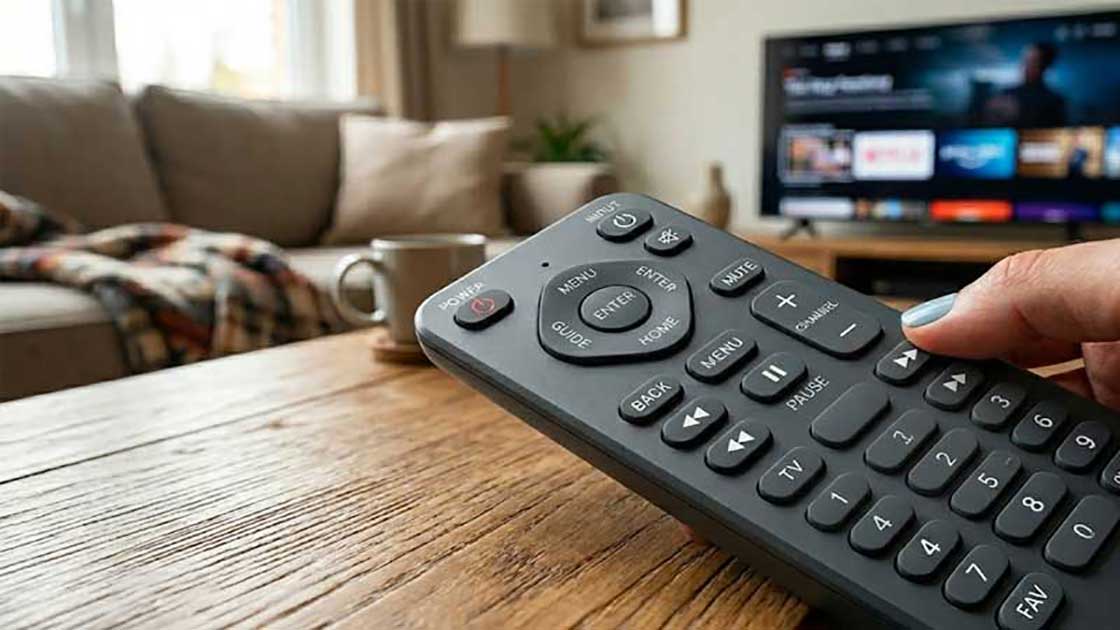
Remote Control and User Interface Brands
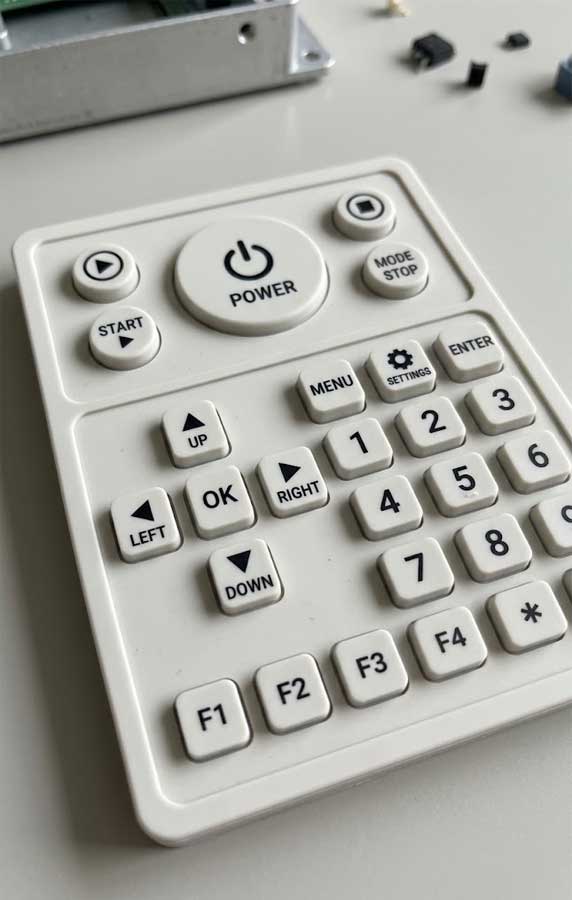
Remote controls and handheld devices often depend on printed legends to guide users through multiple functions. Screen printing provides flexible options for numbers, icons, directional symbols and function labels while maintaining the soft silicone touch preferred in handheld products.
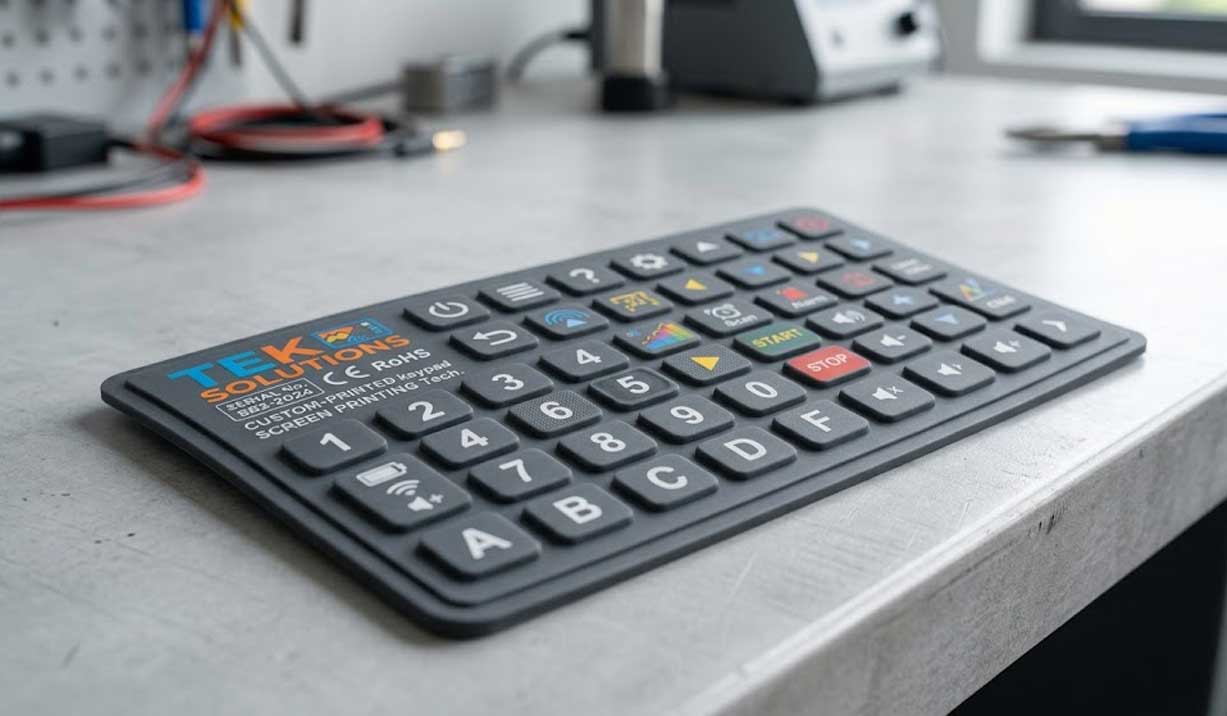
Screen Printed Silicone Keypad Types We Can Develop
Green Numeric Screen Printed Silicone Keypad
Gray Multi-Function Screen Printed Silicone Keypad
Black 12-Key Screen Printed Silicone Keypad
Gray Control Screen Printed Silicone Keypad
Black Remote Screen Printed Silicone Keypad
Blue Screen Printed Silicone Keypad
Screen Printed Silicone Keypad Customization
Custom screen printed silicone keypad projects start with three key elements: the keypad structure, the graphic artwork and the operating environment.
The printed graphic defines how users understand and operate the device.
SKF reviews artwork details before production because small graphic problems can become visible after printing on flexible silicone surfaces.
Available options include:
- Custom legends and characters
- Functional symbols
- Numeric layouts
- Multi-color graphics
- Warning indicators
- Brand logos
- Custom icons
- Printed reference marks
- Different gloss or matte appearances
The printing process determines the durability, clarity and appearance of the keypad surface.
The correct ink system depends on the silicone compound, surface treatment, expected usage frequency and environmental conditions.
Available options include:
- Single-color screen printing
- Multi-color screen printing
- Sequential color printing
- Printed transparent windows
- Protective coating over graphics
- Wear-resistant surface treatment
- Custom ink colors
Screen printing works together with the silicone keypad structure.
A graphic design may look suitable on artwork files but require adjustment when transferred onto curved surfaces, raised buttons or flexible silicone membranes.
Available options include:
- Custom button layouts
- Different key shapes
- Tactile force adjustment
- Conductive carbon pills
- PCB contact structures
- Silicone web design
- Multiple actuator heights
- Custom overall dimensions
Silicone compound selection affects printing adhesion, tactile response and product durability.
The material choice should match the operating environment instead of focusing only on appearance.
Available options include:
- Different Shore A hardness levels
- High-temperature silicone compounds
- Chemical-resistant silicone options
- Medical-grade silicone options
- Flame-retardant silicone options
- Custom color silicone materials
Start Your Screen Printed Silicone Keypad Project
Share your keypad drawings, graphic artwork or product requirements with SKF.
Our engineering team will review the printing design, silicone structure, material selection and production requirements to develop a suitable screen printed silicone keypad solution for your electronic interface.
How to Specify a Better Screen Printed Silicone Keypad
A good screen printed silicone keypad is not only defined by clear graphics. The printing design, silicone structure, tactile performance and operating environment must be evaluated together.
The wrong printing decision can create problems after production, such as blurred legends, ink peeling, poor contrast or graphics that do not match the actual button position.
Key specification factors include:
- Graphic Layout — Artwork should match the actual keypad structure, button position and user operation flow.
- Ink Adhesion — Ink selection and surface preparation determine whether graphics remain stable after repeated pressing and cleaning.
- Print Accuracy — Small symbols and fine lines require controlled positioning to avoid offset or incomplete patterns.
- Surface Protection — Coatings or finishing options should match expected usage frequency and environmental exposure.
- Tactile Performance — Printing should not interfere with button travel, snap ratio or user feedback.
- Operating Environment — Temperature, chemicals, UV exposure and cleaning requirements influence material and surface choices.
A printed legend that looks perfect on artwork files may require adjustment after it is applied to flexible silicone. Curved surfaces, raised buttons and membrane movement can change the final appearance. SKF reviews the printing position together with the silicone structure during engineering evaluation.
Screen Printed Silicone Keypad Logo and Graphic Printing Methods
Screen printing remains one of the most flexible graphic technologies for silicone keypads because it supports detailed legends, functional symbols and multi-color interface designs. The best printing method depends on the logo structure, operating frequency, surface location and durability requirements. SKF evaluates the graphic design together with the silicone keypad structure to select a suitable printing solution.
Single Color Screen Printing
Single-color screen printing is widely used for standard silicone keypad legends where clear and simple identification is required. This method is commonly applied to numbers, letters, function symbols, direction indicators and brand marks. It provides a cost-effective solution for interfaces that require high-contrast graphics without complex color separation. Before production, SKF reviews character size, line thickness and spacing because flexible silicone surfaces can affect printed edge definition differently from rigid plastic panels.
Multi-Color Screen Printing
Multi-color screen printing allows different functions to be visually separated through customized color designs. This method is commonly used for industrial control buttons, warning indicators, medical equipment controls, communication devices and custom electronic interfaces where users need quick visual recognition. Each color layer requires accurate registration during production. SKF evaluates printing sequence, drying conditions and alignment tolerance to prevent color overlap, incomplete coverage or inconsistent graphic appearance.
Protective Coating Over Printed Graphics
Protective coatings improve resistance against abrasion, handling and cleaning. The coating choice depends on the ink system, surface texture and application requirements. Excessive coating thickness may affect silicone touch feeling.
Printed Transparent Windows
Transparent windows support LED light transmission, display visibility and status indication. SKF controls ink coverage, graphic position and silicone thickness during development to maintain consistent lighting performance.
Screen Printed Silicone Keypad Material and Performance Options
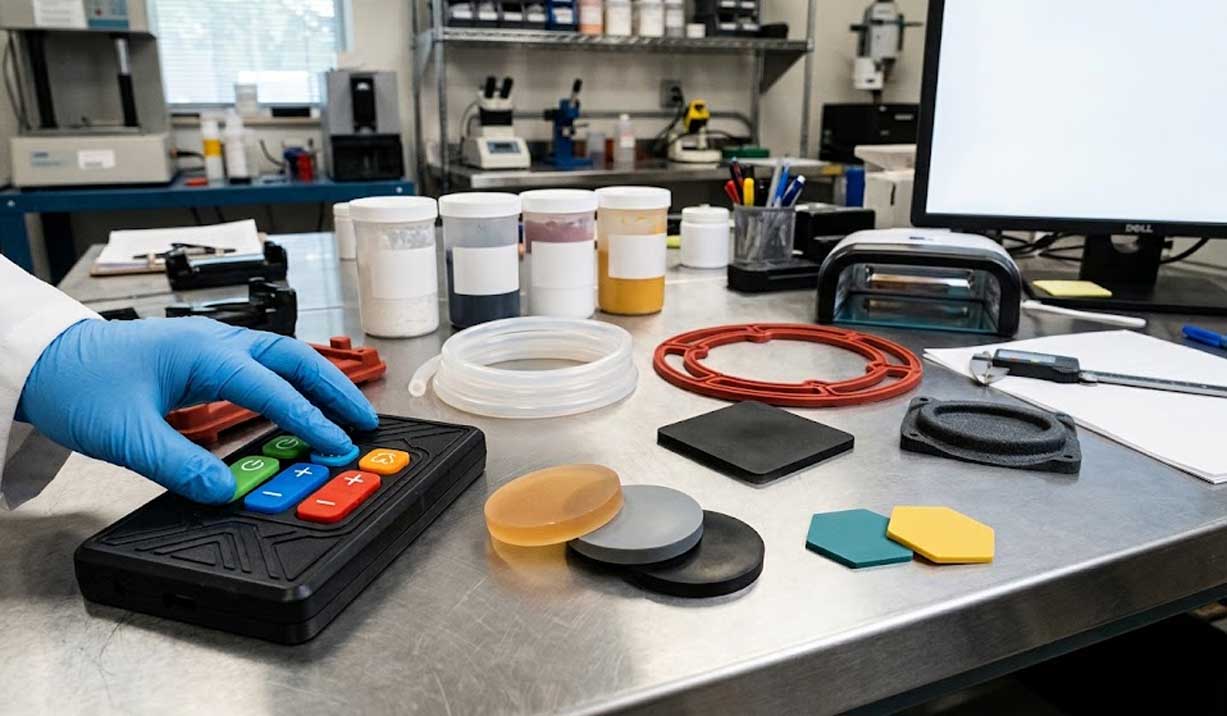
Screen printed silicone keypads combine flexible silicone rubber with printed functional graphics. Both components influence final performance.
Provides flexibility, sealing and tactile operation.
Silicone rubber remains the preferred material for custom keypads because it combines elastic recovery, environmental resistance and compatibility with electronic contacts.
Common material options include:
- General-purpose silicone rubber
- High-temperature silicone
- Chemical-resistant silicone
- Flame-retardant silicone
- Medical-grade silicone when required
Material selection depends on the device environment and applicable standards.
Controls tactile feeling and mechanical behavior.
Silicone hardness influences:
- Pressing force
- Button recovery
- Flexibility
- Structural support
Typical keypad designs use approximately 30–70 Shore A silicone, depending on button size, web structure and required tactile response.
A softer material is not automatically better. Very soft silicone may reduce support, while harder silicone may require higher operating force.
Determines long-term graphic durability.
Printed graphics must remain attached after repeated pressing, cleaning and environmental exposure.
Factors affecting adhesion include:
- Silicone surface condition
- Ink formulation
- Curing process
- Surface preparation
- Protective coating selection
SKF evaluates printing performance during sampling because a keypad can pass appearance inspection but still show premature graphic wear after repeated use.
Supports operation in demanding environments.
Silicone keypads can be developed for applications requiring resistance to temperature variation.
The final operating range depends on:
- Silicone compound
- Printing ink
- Coating system
- Device environment
Typical silicone materials can support approximately -40°C to 200°C, depending on formulation.
Protects keypad performance in harsh conditions.
Industrial environments may expose keypads to:
- Cleaning agents
- Oils
- Dust
- Moisture
- Outdoor conditions
The material and surface treatment should be selected according to actual exposure rather than general assumptions.
Ensures reliable signal transmission.
Screen printed silicone keypads often integrate conductive components for PCB connection.
Common options include:
- Carbon pills
- Conductive rubber contacts
- Custom contact arrangements
Conductive pill position is critical because even small deviations can affect contact reliability and tactile consistency.
SKF reviews carbon pill placement together with web geometry and button travel during engineering validation.
How Screen Printed Silicone Keypads Are Manufactured

Requirement and Artwork Review
Every project starts with reviewing the keypad function, operating environment, graphic requirements and assembly method. The engineering team confirms key layout, printing position, logo requirements, tactile force target, PCB interface, material requirements and testing expectations before moving into the design stage. A clear understanding of application requirements helps prevent design conflicts later in production. For example, printing areas, button functions and assembly conditions must be considered together to ensure the final keypad meets both appearance and performance requirements.
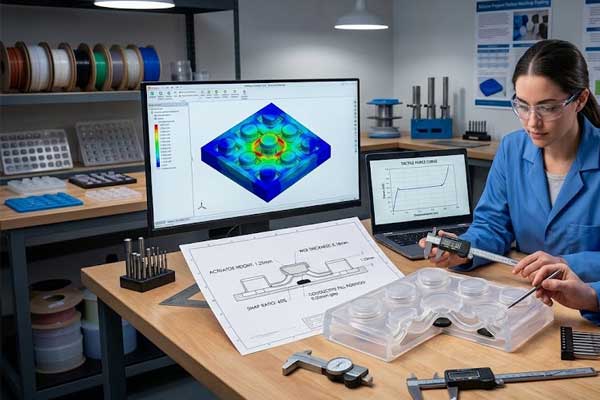
Structural Design Review
The silicone structure is evaluated before tooling development. Important factors include button dimensions, web thickness, actuator height, conductive pill position, snap ratio and overall keypad thickness. A printed graphic cannot compensate for an incorrect mechanical design. The keypad structure must provide the required user feedback first. SKF reviews key mechanical parameters such as tactile force, web design and conductive pill positioning to ensure the keypad delivers stable operation and long-term durability.
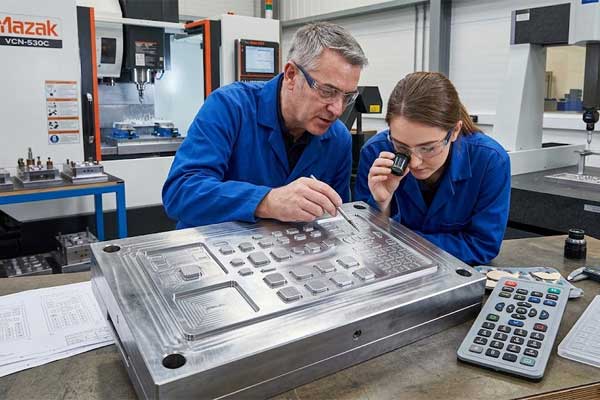
Tooling Development
Custom molds are developed according to the approved design specifications. During tooling review, engineers evaluate parting line position, draft angles, fine detail reproduction, surface finish and printing reference areas. Small structural adjustments during this stage can help prevent later issues related to printing accuracy, molding consistency or assembly performance. Proper tooling design creates a reliable foundation for efficient production.
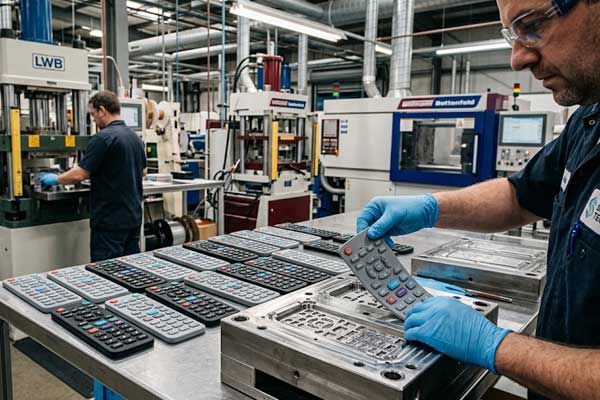
Silicone Molding
The approved silicone compound is molded into keypad structures using suitable production processes. Manufacturing parameters are carefully controlled to maintain consistent dimensions, stable hardness, clean surfaces and reliable button movement. During molding, factors such as silicone material selection, compression conditions and curing stability influence the final keypad performance. Proper process control ensures that each keypad provides consistent mechanical behavior.
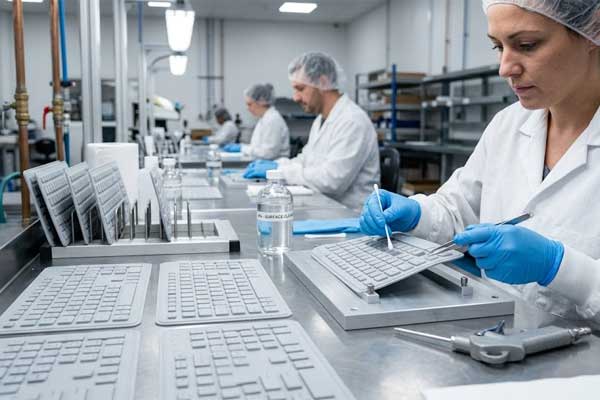
Surface Preparation
Before screen printing, silicone surfaces are prepared according to the selected ink system and application requirements. Surface treatment plays an important role in improving ink bonding, graphic clarity and long-term printing durability. Proper preparation helps ensure that printed legends, symbols and decorative graphics remain clear after repeated use and environmental exposure.
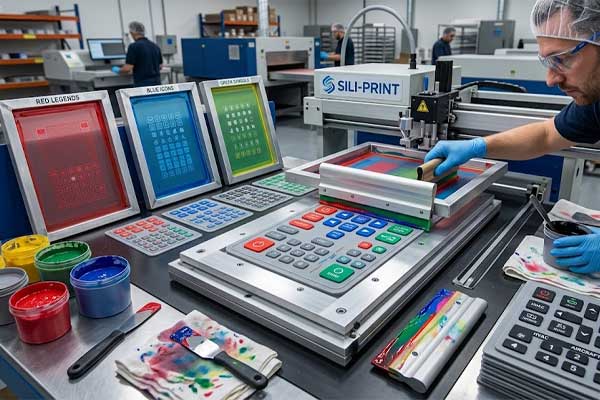
Screen Printing
Graphics are printed onto the silicone keypad surface according to approved artwork. The printing process controls ink coverage, layer sequence, position accuracy and color consistency to achieve the required visual appearance.For multi-color designs, additional alignment checks are required between printing steps. Careful control of printing parameters helps maintain consistent graphics across production batches.
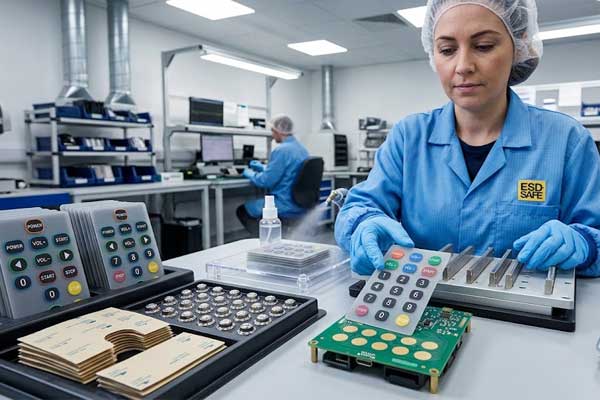
Protective Treatment and Assembly
Additional coatings or surface treatments can be applied when extra protection is required. These treatments may improve resistance against abrasion, chemicals or frequent operation. After printing and surface treatment, silicone keypads can be assembled with PCB components, adhesive layers, metal domes or other electronic parts. Assembly processes are controlled to ensure proper alignment, electrical connection and overall product reliability.
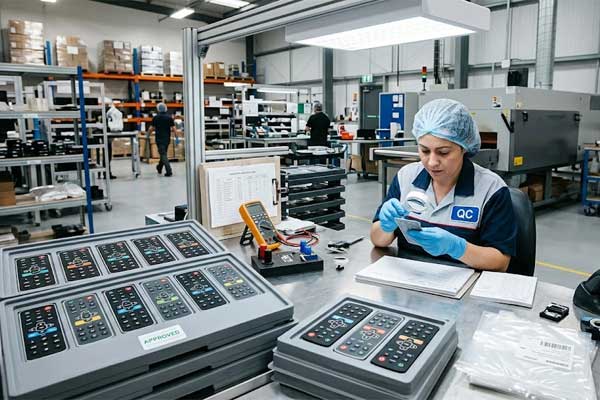
Inspection and Packaging
Finished keypads are inspected against approved samples and production specifications before shipment. Quality checks cover appearance, printing quality, dimensions, tactile response, electrical contact performance and packaging requirements. Through complete inspection procedures, manufacturers can confirm that each batch meets customer expectations for appearance, functionality and reliability before delivery.
Screen Printed Silicone Keypad Quality Control
Quality control focuses on both the silicone component and the printed interface.
A keypad may function mechanically but still fail customer expectations if the printed legends are unclear, misplaced or inconsistent.
AQL 2.5 / 4.0 Standard Inspection
SKF can apply agreed final random inspection plans for production batches:
AQL 2.5
Major Defects
AQL 4.0
Minor Visual Defects
Customer-specific inspection standards can be applied when defined in the purchase order.
Approved Sample Control
The approved sample becomes the production reference for:
- Key shape
- Graphic position
- Color appearance
- Surface finish
- Tactile feeling
- Packaging presentation
Printing Inspection
The QC team checks:
- Missing graphics
- Ink peeling
- Blurred characters
- Color variation
- Printing offset
- Incomplete coverage
- Surface defects
Dimensional Inspection
Measurements include:
- Overall keypad dimensions
- Button height
- Mounting features
- Contact position
- Thickness
Tactile Performance Testing
Mechanical feeling is verified according to agreed requirements.
Evaluation may include:
- Actuation force
- Return force
- Travel distance
- Snap response
Electrical Contact Testing
Carbon pills and conductive contacts are checked to confirm reliable connection with PCB circuits.
Contact position is especially important for multi-button assemblies where alignment errors can affect multiple functions.
Packaging Inspection
Before shipment, the team verifies:
- Quantity
- Labels
- Protective packaging
- Carton marks
- Customer packing requirements
Typical Screen Printed Silicone Keypad Specifications
| Specification | Typical Reference |
|---|---|
| Product | Custom screen printed silicone keypad |
| Applications | Industrial controls, medical devices, laboratory equipment, remote controls, electronic interfaces and control panels |
| Material | Silicone rubber selected according to tactile, environmental and application requirements |
| Hardness range | 30–70 Shore A |
| Temperature range | -40°C to 200°C depending on silicone compound and printing system |
| Printing method | Screen printing, multi-color printing, protective coating options |
| Graphic options | Text, symbols, icons, numbers, logos and custom artwork |
| Colors | Standard colors or custom color matching |
| Surface options | Matte finish, gloss finish, texture, protective coating |
| Contact options | Carbon pills, conductive rubber contacts and custom PCB interfaces |
| Tactile force | Customized according to button size, web structure and user requirements |
| Key structure | Single keys, multi-button keypad arrays and custom layouts |
| Silicone thickness | Designed according to keypad structure and sealing requirements |
| Molding process | Compression molding or other suitable silicone molding processes |
| Printing durability | Confirmed through approved samples and application requirements |
| Inspection | Appearance, dimensions, printing quality, tactile response and electrical performance |
| OEM and ODM | Available |
Final specifications depend on keypad design, printing requirements, silicone compound, assembly method and approved sample.
Why Work with SKF for Screen Printed Silicone Keypads
Silicone Keypad Manufacturing Experience
SKF focuses on custom silicone keypad manufacturing for electronic interface applications.
Our production experience covers the complete development process, including keypad structure evaluation, silicone molding, screen printing, surface treatment, inspection and assembly support.
Screen printed silicone keypads require coordination between mechanical design and graphic production. A keypad may have correct dimensions but still fail if the printed legend does not align with the actual actuator position or if the ink system does not match the working environment.
Engineering Review Before Quotation
SKF does not evaluate screen printed silicone keypads only from drawings or product names.
Before quotation, our engineering team reviews:
- Keypad dimensions
- Button arrangement
- Graphic artwork
- Printing layers
- Silicone hardness
- Tactile requirements
- PCB contact structure
- Surface protection needs
This review helps identify potential issues before tooling and production.
For example, fine text near curved button edges may require graphic adjustment because silicone deformation during pressing can affect visual consistency.
Screen Printing Process Experience
Screen printing silicone keypads requires more than transferring artwork onto the surface.
The process depends on:
- Ink compatibility
- Silicone surface preparation
- Printing alignment
- Drying and curing control
- Surface protection
SKF evaluates these factors during sampling to confirm both appearance and functional durability.
Sample-Based Production Control
Mass production follows an approved sample reference.
The approved sample confirms:
- Graphic position
- Print color
- Character clarity
- Button feeling
- Surface finish
- Overall appearance
If production results differ from the approved reference, the issue is reviewed before shipment.
Manufacturing Support for OEM and ODM Projects
SKF supports customers from early concept development to repeat production.
Support includes:
- Design review
- Prototype sampling
- Printing evaluation
- Production planning
- Quality inspection
- Export coordination
This approach helps customers develop reliable silicone keypad solutions instead of treating printing as a separate decoration process.
Screen Printed Silicone Keypad FAQ
What is the MOQ for custom screen printed silicone keypads?
The MOQ depends on keypad size, tooling requirements, printing complexity, colors and production volume.
Existing designs with customized printing may require a lower starting quantity, while completely new keypad structures usually require tooling development and sample approval before mass production.
SKF reviews the complete project information before confirming the suitable production quantity.
Can you print custom symbols, icons and logos on silicone keypads?
Yes.
Screen printing supports custom graphics including:
- Text
- Numbers
- Icons
- Functional symbols
- Brand logos
- Multi-color designs
Artwork should be provided in vector format whenever possible to ensure accurate reproduction.
How durable is screen printing on silicone keypads?
Durability depends on:
- Ink selection
- Silicone surface condition
- Protective coating
- Operating frequency
- Cleaning environment
SKF validates printing performance through approved samples before mass production.
The correct solution depends on the actual application rather than using one printing method for every keypad.
Can you make multi-color screen printed silicone keypads?
Yes.
Multi-color printing can separate different functions and improve interface recognition.
Color layers are produced according to approved artwork, and alignment is checked during sampling to maintain clear boundaries between colors.
What artwork files are required for screen printing?
Preferred formats include:
- AI
- EPS
- SVG
- Vector PDF
Artwork should include:
- Graphic dimensions
- Color references
- Printing position
- Layer information
- Special requirements
Can screen printed silicone keypads include backlighting?
Yes, when the design requires light transmission.
Transparent windows or selective printing areas can be developed for LED illumination.
However, backlighting performance depends on silicone transparency, ink coverage, LED position and optical design.
What is the difference between screen printed and laser etched silicone keypads?
Screen printing adds visible ink graphics on the silicone surface.
It is suitable for:
- Multi-color graphics
- Logos
- Detailed symbols
- Standard legends
Laser etching removes surface silicone to create graphics and is often used when wear resistance and illuminated legends are priorities.
The better choice depends on graphic requirements, lighting needs and operating conditions.
Can you add protective coatings to printed silicone keypads?
Yes.
Protective coatings can improve resistance against abrasion and repeated operation.
The coating selection depends on the printing ink, surface texture, cleaning method and expected service life.
How do you control printing quality during production?
Quality control includes:
- Artwork verification
- Color comparison
- Print position inspection
- Character clarity inspection
- Ink adhesion evaluation
- Surface defect inspection
- Final appearance check
Approved samples are used as the production reference.
Can you customize tactile force and button feeling?
Yes.
Tactile performance can be adjusted through:
- Silicone hardness
- Web thickness
- Web angle
- Button geometry
- Carbon pill position
SKF evaluates tactile requirements together with the mechanical structure because printing quality alone cannot determine user experience.
What information is needed for a quotation?
Please provide:
- Product drawings or samples
- Keypad dimensions
- Button layout
- Graphic artwork
- Printing colors
- Required quantity
- Silicone hardness requirement
- Tactile force requirement
- PCB/contact structure
- Application environment
- Packaging requirements
- Destination market