Tactile Silicone Keypad Manufacturer
Silicone keypads engineered for defined tactile response, controlled actuation force, snap ratio and key travel. SKF develops custom keypad structures for applications where button feel, switching reliability and long-term tactile consistency matter.
What Are Tactile Silicone Keypads?
Tactile silicone keypads are flexible switching interfaces engineered to provide defined physical feedback when users press individual buttons. Their tactile response comes primarily from the relationship between the silicone webbing, diaphragm geometry, actuation force, key travel and conductive contact structure. Unlike silicone keypads specified mainly by appearance or environmental resistance, tactile silicone keypads are developed around how the button feels and behaves during each press.
Custom tactile silicone keypads can be engineered around your target actuation force, contact force, snap ratio, travel, key height, return behavior and conductive pill position. The same keypad layout can produce noticeably different button feel when these parameters change.
SKF is a silicone keypad manufacturer based in China, with custom silicone manufacturing experience since 2012. Our engineering team evaluates tactile structure together with the electrical switching requirement, key geometry and intended operating conditions. This approach helps prevent designs that meet dimensional requirements but produce weak, slow or inconsistent tactile feedback.
Tactile Silicone Keypad Manufacturing at a Glance
Tactile Response
Key feel is engineered through actuation force, contact force, snap ratio, travel and diaphragm geometry rather than treated as an appearance feature.
Key Structure
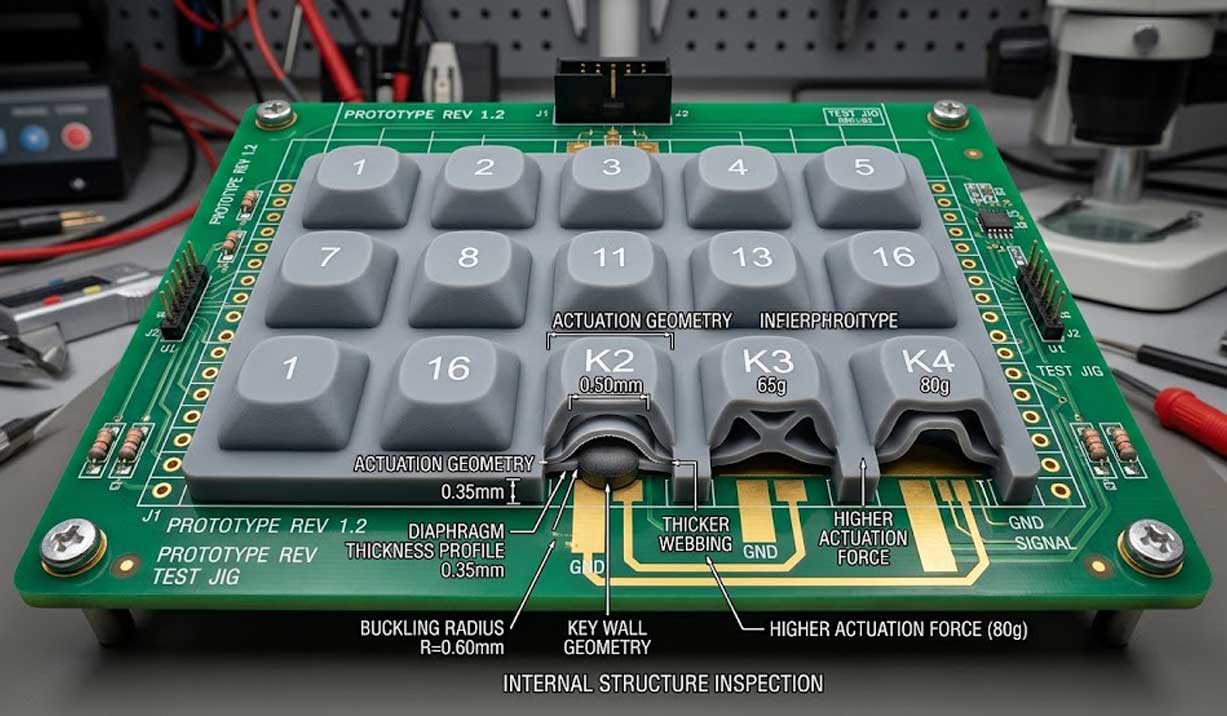
Webbing angle, diaphragm thickness, buckling radius, key height and conductive pill position are reviewed together because each parameter changes the force curve.
Switching Performance
Conductive pills are positioned to provide reliable PCB contact while preserving the intended tactile transition and return behavior.
Design Validation
Samples can be evaluated against agreed force, travel, switching and dimensional requirements before mass production.
Who We Manufacture Tactile Silicone Keypads For
Tactile silicone keypads are suited to products where users need to recognize button activation through physical feedback rather than relying only on visual confirmation.

Industrial Equipment Manufacturers
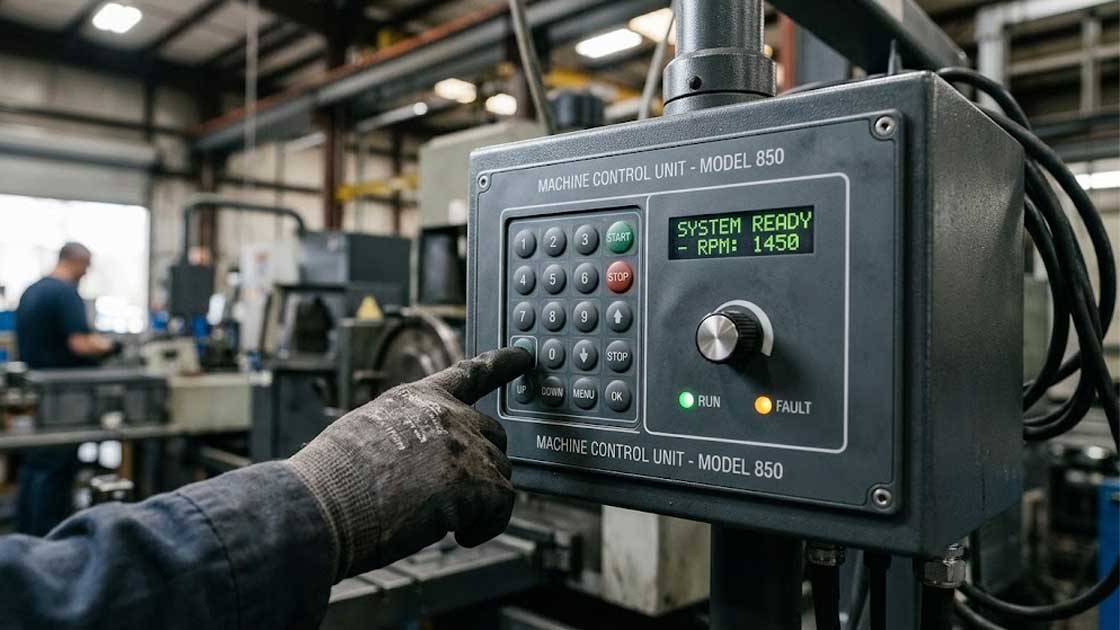
Use tactile keypads for control panels, instruments, meters and machine interfaces where operators may press buttons repeatedly during normal operation. Defined actuation force helps create predictable operator input. Consistent return behavior also helps users distinguish individual button presses during fast operation.
Consumer Electronics Brands
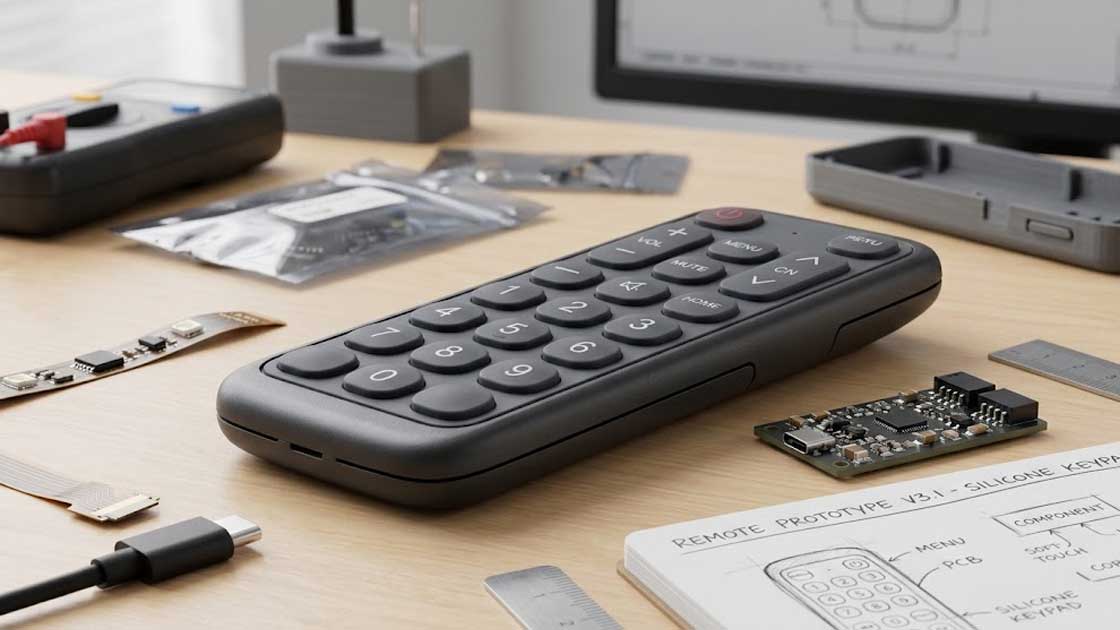
Develop tactile silicone keypads for remote controls, handheld electronics, calculators and other compact interfaces where button feel directly affects perceived product quality. Low-profile designs can still use engineered diaphragms to create distinct feedback without making the overall keypad unnecessarily thick.
Automotive and Vehicle Equipment
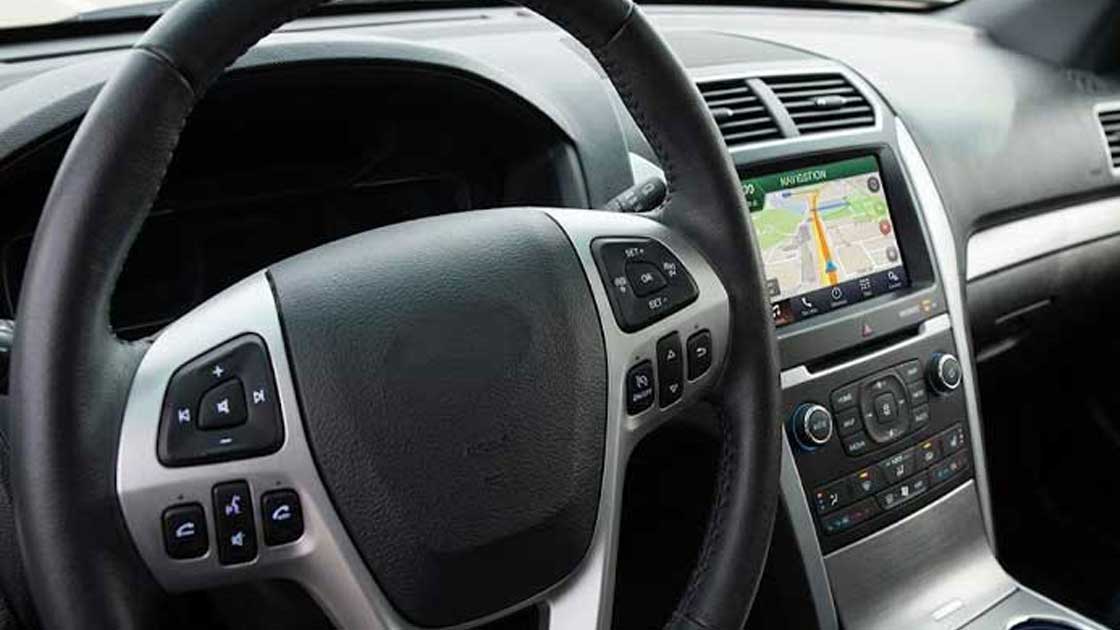
Tactile keypads can be developed for vehicle controls where users need recognizable feedback from short button presses. The design review considers vibration, temperature, repeated actuation and the available installation space together with the required force curve.

Medical and Healthcare Equipment
Use controlled tactile response for equipment interfaces where operators need clear confirmation that buttons have been activated. Material selection and compliance documentation remain project-specific. Tactile requirements should be validated together with the selected silicone compound and intended application.

Communication and Control Devices
Radio controls, communication equipment and portable control units can benefit from defined tactile feedback when users operate controls without continuously looking at the keypad. Key spacing, travel and force differences between buttons can be tuned to improve recognition between adjacent functions.

OEM and ODM Product Developers
Product teams can use custom tactile silicone keypads when an existing keypad cannot deliver the required button feel. SKF reviews the complete structure before tooling so the tactile target is considered during mold development rather than adjusted after production begins.
Tactile Silicone Keypad Types We Can Develop
12-Key Blue Tactile Silicone Keypad
Directional Control Black Tactile Silicone Keypad
Full-Function Black Calculator Tactile Silicone Keypad
Slim Remote-Style Black Tactile Silicone Keypad
Professional Panel Tactile Silicone Keypad
Compact Remote-Style Gray Tactile Silicone Keypad
Tactile Silicone Keypad Customization
Custom tactile keypad development starts with the required button feel rather than simply selecting dimensions.
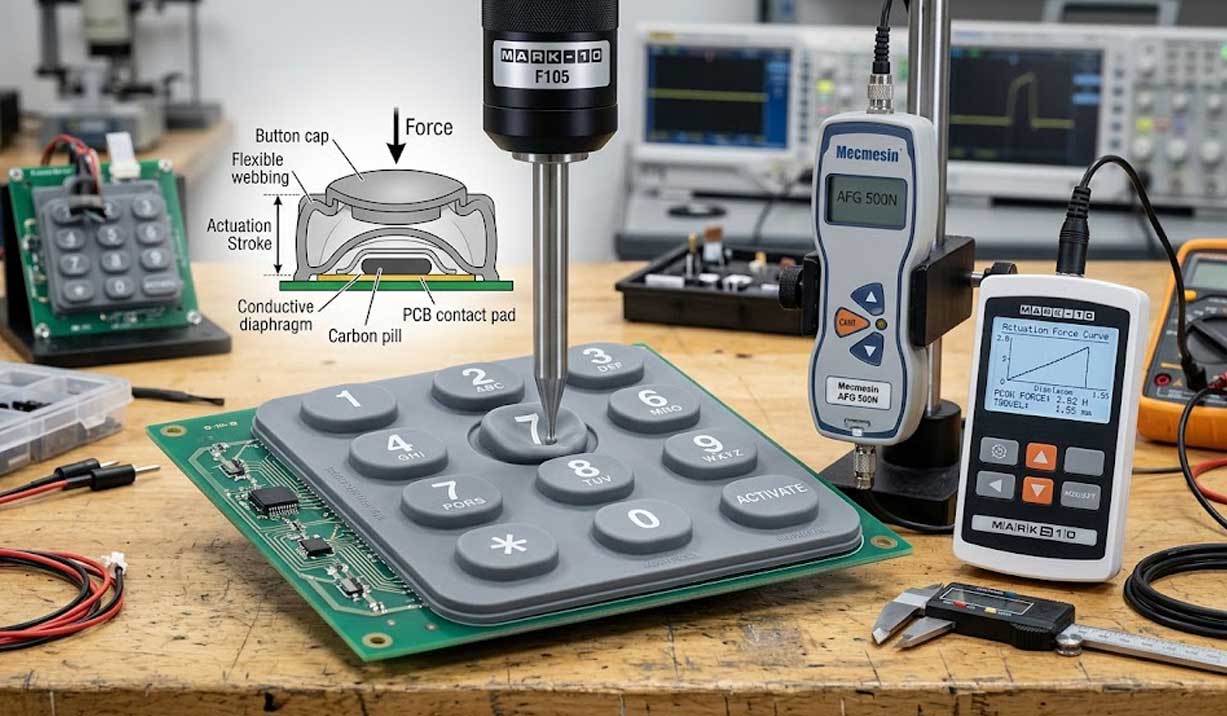
Actuation force defines how much pressure users need to apply before the silicone structure collapses and the button reaches its switching point. SKF can review the target force curve instead of treating force as one isolated specification.
Available options include:
- Target actuation force
- Contact force
- Force curve
- Low-force operation
- Medium-force operation
- Higher-force tactile feedback
- Different force levels across one keypad
- Application-specific force targets
The target should be established from the actual switch mechanism and intended user interaction. A force value without its corresponding travel and contact point does not fully describe tactile behavior.
Key travel determines how far the button moves before and during electrical contact. Short travel can support compact interfaces and rapid operation, while longer travel can provide stronger physical movement.
Available options include:
- Total key travel
- Pre-travel
- Contact travel
- Over-travel
- Key height
- Key top geometry
- Travel differences between button groups
- Low-profile structures
SKF reviews travel together with conductive pill position. If the pill reaches the PCB too early, the keypad may lose the intended tactile transition. If the contact occurs too late, the button can feel heavy or incomplete.
The silicone structure controls how the applied force is converted into button movement. Small changes to webbing geometry can significantly alter the force curve.
Available options include:
- Webbing angle
- Diaphragm thickness
- Diaphragm thickness profile
- Buckling radius
- Key wall geometry
- Return structure
- Key height
- Structural reinforcement
- Individual or shared web structures
Sharp tactile response can increase stress concentration around diaphragm edges. SKF therefore evaluates the tactile target against the expected actuation cycle instead of maximizing snap response without considering fatigue.
The conductive contact system must reach the PCB at the correct point in the button stroke. Its position affects both switching reliability and tactile behavior.
Available options include:
- Carbon pills
- Conductive silicone contacts
- Pill diameter
- Pill height
- Pill position
- Contact area
- PCB contact layout
- Multi-contact structures
The conductive pill position is checked against the diaphragm movement. Moving the pill can change the point of electrical contact even when the external key dimensions remain unchanged.
Start Your Custom Tactile Silicone Keypad Project
Send your keypad drawing, PCB layout, target actuation force or existing sample. SKF can review the tactile structure and identify the main parameters that need to be controlled before tooling.
How to Specify a Better Tactile Silicone Keypad
Tactile performance should be specified as a force-and-travel relationship rather than one isolated “soft” or “hard” requirement.
- Actuation Force — defines the peak force required to collapse the silicone structure.
- Contact Force — identifies the force present when the conductive contact approaches or closes the PCB circuit.
- Snap Ratio — describes the drop in force between the actuation peak and contact point.
- Key Travel — defines the physical movement available during activation.
- Webbing Geometry — controls how the silicone diaphragm buckles under load.
- Conductive Pill Position — determines when electrical contact occurs within the key stroke.
- Return Behavior — affects how quickly the key returns after release.
- Cycle Requirement — provides the durability target against which the structure should be validated.
A high snap ratio is not automatically the best tactile solution. Stronger tactile transitions can create higher stress concentration at the diaphragm edge, especially when combined with sharp webbing geometry or aggressive travel.
SKF recommends establishing the target force curve first, then adjusting the silicone structure and contact position around that target.
Full specification guide
How to Calculate Key Stroke and Tactile Force Ratio for Optimal Button Feel — force definitions, snap ratio, key travel, diaphragm geometry and conductive pill positioning.
Tactile Silicone Keypad Design and Surface Options
Surface treatment should support the tactile structure rather than interfere with the physical button response.
Screen Printing
Suitable for legends, numbers and symbols where clear visual identification is required without changing the mechanical structure of the key.
Laser Etching
Creates durable legends by selectively removing the surface layer. This option works well for key markings that need long-term visual definition.
Backlighting
Light-transmitting key structures can combine illuminated legends with tactile feedback. The light path should be designed separately from the diaphragm so the tactile structure retains sufficient mechanical strength.
Embossed & Debossed Legends
Raised or recessed markings can be molded into selected key surfaces for ink-free identification and distinctive button geometry.
Tactile Silicone Keypad Material and Performance Options
Material selection affects more than flexibility. Silicone hardness, compound behavior and structural thickness all influence how the keypad responds when users press the buttons.
Hardness provides the material baseline for the tactile structure.
Different silicone hardness levels can support different force requirements, but hardness alone does not determine actuation force. Webbing geometry, diaphragm thickness, key height and buckling behavior can produce major changes even when the same silicone hardness is used.
For this reason, SKF evaluates material hardness together with the mechanical structure during sample development.
Consistent silicone behavior helps maintain the intended force response across production batches.
The compound, curing process and molding conditions affect the final mechanical characteristics. Production control becomes particularly important when the keypad has narrow force tolerances.
An approved tactile sample provides the practical reference for subsequent production validation.
Fast and stable recovery supports repeated button operation.
The silicone diaphragm needs to return to its original position after each press. Poor structural balance can create sluggish return behavior or inconsistent key height.
The return response is affected by the diaphragm profile, webbing geometry, material characteristics and conductive pill structure.
The diaphragm must survive repeated buckling without losing the intended tactile response.
A design can initially produce the correct force curve and still require structural review for long-term cycling.
SKF pays particular attention to sharp transitions around the diaphragm and webbing because these areas experience repeated deformation during operation.
The silicone structure and conductive contact should be developed as one switching mechanism.
Carbon pills or conductive silicone contacts need enough contact area and travel to provide reliable electrical closure.
Contact geometry also influences the point at which the user feels the tactile transition. Moving the contact position without recalculating the force curve can change the button feel.
Environmental requirements should be matched to the application rather than used as generic keypad specifications.
Silicone offers broad temperature capability and resistance to moisture and many environmental conditions. The actual operating range depends on the selected compound, design and application.
For demanding equipment, SKF reviews the environmental requirement alongside the tactile cycle requirement.
Available project documentation may include:
- Silicone material data sheets
- Material declarations
- FDA-related documentation where applicable
- LFGB-related documentation where applicable
- REACH-related documentation
- Project-specific test reports
- Customer-required inspection records
The exact documentation depends on the selected silicone compound, conductive material, printing system and destination market.
A material report should not be treated as proof of compliance for every finished keypad configuration.
How Tactile Silicone Keypads Are Manufactured

Tactile Requirement Review
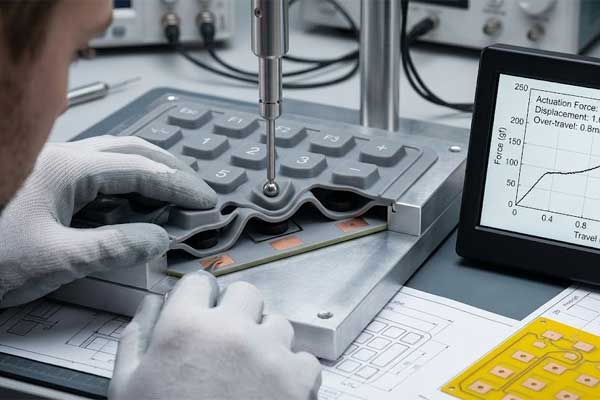
Every project begins by identifying the intended button feel. The engineering review covers actuation force, contact force, snap ratio, key travel, cycle requirement, PCB contact position and overall keypad dimensions. An existing sample can also be used as the physical reference when the goal is to reproduce an established button feel.
Force Curve and Structure Evaluation
The keypad structure is reviewed before mold development. SKF evaluates the webbing angle, diaphragm thickness profile, buckling radius, key height and conductive pill position as one mechanical system. This step is important because changing one parameter can move the tactile peak or alter the contact point.
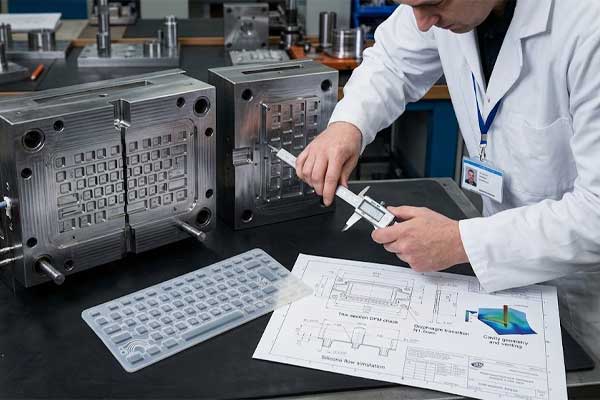
Tooling and DFM Review
The mold design is checked for the intended diaphragm and web structure. Thin sections need enough support for stable molding. Sharp structural transitions are reviewed because they can concentrate stress during repeated key actuation. The tooling plan also considers the required legends, backlighting features and conductive contact structure.
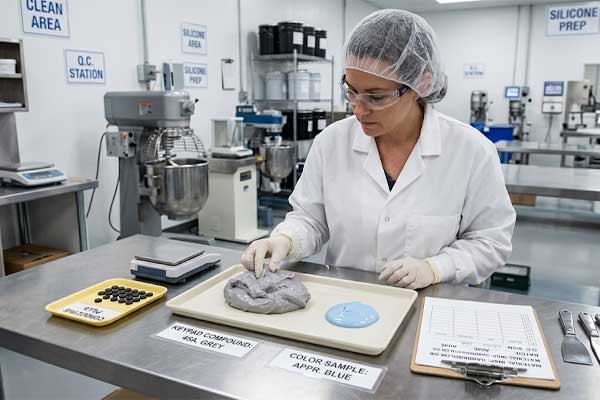
Silicone Material Preparation
The selected silicone compound is prepared according to the approved formulation and hardness requirement. Color, material documentation and any conductive contact material are confirmed before molding.

Silicone Molding
The silicone compound is molded into the approved keypad geometry. Compression molding or another suitable silicone molding process is selected according to the keypad structure, production volume and material requirements. Molding conditions are controlled because incomplete curing or dimensional variation can affect the final tactile response.

Contact and Surface Processing
Conductive pills, legends, printing, laser processing or other secondary operations are completed according to the approved design. The conductive contact area is checked carefully because contamination, incomplete contact formation or incorrect positioning can affect switching reliability.
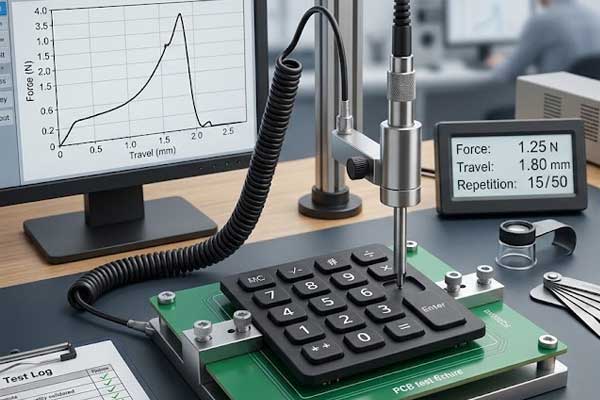
Tactile and Quality Validation
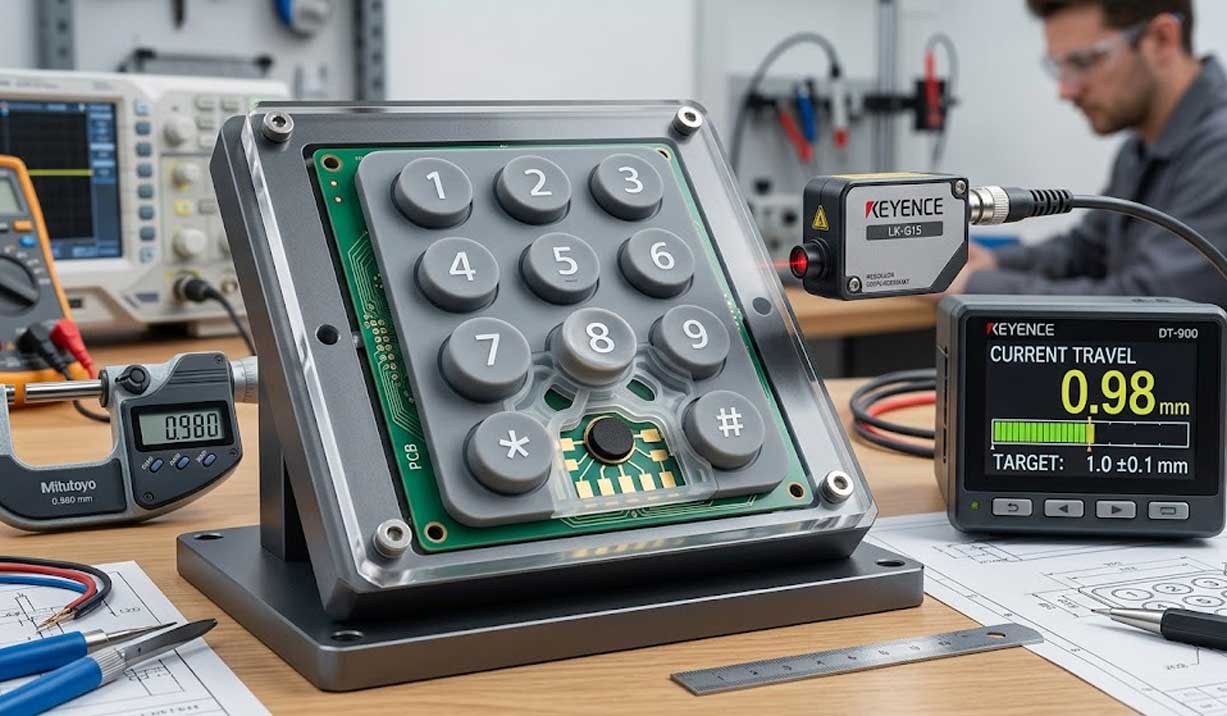
The finished keypad is compared with the approved specification and sample. Where required, testing covers actuation force, travel, contact behavior, dimensions, appearance and repeated actuation. The tactile result is assessed as a complete force-and-travel system rather than judging the button only by its peak force.

Final Inspection and Packaging
After inspection, the keypads are counted, packed and labeled according to the approved packaging specification. Individual key separation, conductive contact protection and surface protection are considered where the keypad design requires them.
Tactile Silicone Keypad Quality Control
Quality control for tactile keypads needs to cover both conventional dimensional requirements and the mechanical behavior users actually experience.
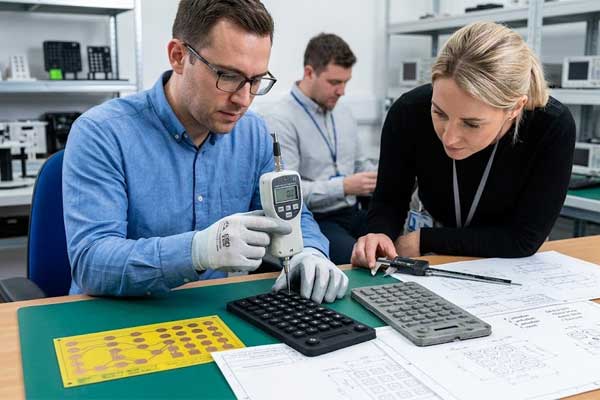
Approved Sample and Inspection Standard
The approved sample becomes the reference for the production batch.Where specified, final random inspection can follow AQL 2.5 for major defects and AQL 4.0 for minor visual defects.Tactile performance requirements are controlled separately according to the agreed project specification.
Approved Tactile Sample Control
The approved sample provides the reference for:
- Key height
- Key geometry
- Actuation feel
- Travel
- Conductive pill position
- Color
- Surface finish
- Legend position
- Overall dimensions
The sample is especially important for tactile projects because numerical specifications do not always capture the complete subjective feel of the button.
Incoming Material Review
Incoming silicone compounds, pigments and conductive materials are checked against the confirmed project requirements.
Material documentation is reviewed when required by the project or destination market.
In-Process Molding Inspection
Production checks cover molding completeness, diaphragm formation, webbing structure, visible defects and dimensional consistency.
Thin tactile structures receive particular attention because incomplete filling or local deformation can directly change button response.
Actuation Force
Actuation force is checked against the agreed target or tolerance where force measurement is part of the project specification.
The measurement method and test conditions should remain consistent between sample approval and production inspection.
Travel and Contact Point
Key travel and contact behavior are checked where specified.
A keypad can have the correct peak force but still feel wrong if the electrical contact occurs too early or too late in the stroke.
Snap Response
Snap behavior is reviewed against the approved tactile target.
The force drop after the actuation peak should remain consistent with the intended button feel. Excessive snap should not be pursued if it creates structural stress or unstable return behavior.
Conductive Pill Quality
Inspection covers:
- Pill position
- Pill dimensions
- Surface condition
- Contact area
- Contamination
- Missing or incomplete conductive material
- PCB contact alignment
Appearance and Surface Quality
Finished keypads are checked for:
- Flash
- Tears
- Short molding
- Surface contamination
- Bubbles
- Scratches
- Color variation
- Printing defects
- Laser marking defects
- Damaged key tops
Packaging
Packaging inspection verifies:
- Quantity
- Labels
- SKU information
- Individual protection
- Carton marks
- Customer-specific packing instructions
Typical Tactile Silicone Keypad Specifications
| Specification | Typical Reference |
|---|---|
| Product | Custom tactile silicone keypad |
| Primary design focus | Tactile response, actuation force, snap ratio and key travel |
| Material | Silicone rubber, selected according to application |
| Silicone hardness | Project-specific |
| Actuation force | Custom target according to application |
| Contact force | Custom target according to switching structure |
| Snap ratio | Calculated from the approved force curve |
| Key travel | Custom according to keypad structure and PCB |
| Diaphragm | Custom thickness and profile |
| Webbing | Custom angle and geometry |
| Buckling radius | Custom according to tactile target |
| Conductive contact | Carbon pill or conductive silicone contact |
| Conductive pill position | Custom according to PCB contact location |
| Key height | Custom |
| Key shape | Round, square, rectangular or custom |
| Key layout | Single or multi-key keypad |
| Surface | Matte, glossy or custom texture |
| Legends | Screen printed, laser etched, molded or other approved method |
| Backlighting | Available for suitable translucent structures |
| Color | Standard or custom color matching |
| Molding process | Compression molding or suitable silicone molding process |
| Electrical interface | PCB-compatible conductive contact |
| Tactile validation | Force, travel and switching checks where specified |
| Inspection | Approved sample plus agreed inspection standard |
| OEM / ODM | Available |
| Packaging | Bulk, individual, assembly-ready or custom packaging |
| MOQ | Confirmed according to tooling, structure and production requirements |
| Sample lead time | Confirmed according to design complexity |
| Mass-production lead time | Confirmed after sample and specification approval |
Final specifications are confirmed according to the keypad drawing, tactile target, PCB structure, material, tooling and approved sample.
Why Work with SKF
Silicone Manufacturing Experience Since 2012
SKF has focused on custom silicone product manufacturing since 2012.
Our experience covers silicone keypad structures, molding, conductive contacts, surface processing and assembly-related requirements for international customers.
Engineering-Led Tactile Development
Tactile performance is treated as an engineering requirement rather than a visual product feature.
SKF reviews the force curve, diaphragm structure and conductive contact position together so the keypad is developed around the required user experience and switching behavior.
DFM Review Before Tooling
Our engineering team reviews the keypad drawing before mold development.
Particular attention goes to web thickness, diaphragm transitions, key height, conductive pill location and areas where sharp structural changes may create excessive stress during repeated actuation.
Tactile Sample Validation
Samples provide the physical reference for production.
When the project includes defined force or travel requirements, the sample stage allows the tactile structure to be adjusted before production tooling and mass production are finalized.
This is more reliable than trying to correct button feel after the mold has already entered full production.
Conductive Contact Experience
The conductive pill is not treated as an independent component.
Its diameter, height and position affect both electrical switching and the point where the user feels the button transition. SKF reviews the contact structure together with the diaphragm movement and PCB layout.
Production and Quality Control
Our production system supports molding, secondary processing, inspection and packaging within the silicone manufacturing workflow.
Production controls cover both conventional cosmetic requirements and project-specific tactile specifications.
Export Project Support
SKF works with international OEM and ODM customers on custom silicone keypad projects.
Our team can support drawing review, sampling, tooling coordination, material documentation, production inspection, packaging and shipment preparation.
Tactile Silicone Keypad FAQ
What is the MOQ for custom tactile silicone keypads?
MOQ depends on the keypad structure, tooling requirement, number of colors, conductive contact configuration and packaging. Existing tooling with limited customization can require a different minimum from completely new keypad tooling.
The exact quantity should be confirmed after reviewing the drawing and project requirements.
How do you control the tactile feel of silicone keypads?
Tactile feel is controlled through the relationship between actuation force, contact force, snap ratio, key travel, diaphragm thickness, webbing angle, buckling radius and conductive pill position.
Changing only the silicone hardness rarely provides precise control of the complete button response.
What is snap ratio in silicone keypads?
Snap ratio describes the force drop after the actuation peak.
Using F1 as the actuation force and F2 as the contact force:
Snap Ratio = (F1 − F2) / F1
A higher snap ratio generally creates a more pronounced tactile transition. However, the target should be balanced against diaphragm stress, return behavior and cycle life.
Can you produce low-force tactile silicone keypads?
Yes.
Low-force structures can be developed by adjusting the silicone material and mechanical geometry.
The goal is to reduce actuation effort while retaining enough tactile distinction to prevent accidental activation.
Can you make different actuation forces within one keypad?
Yes.
Different keys can use different structural dimensions or diaphragm configurations when the product requires different button responses.
This approach is useful when frequently used function keys need different feedback from secondary controls.
How does the conductive pill affect tactile performance?
The conductive pill determines when the electrical circuit closes during the key stroke.
Its position and geometry can therefore change the relationship between the tactile force peak and the electrical contact point.
A change in pill position should be evaluated together with the diaphragm and travel.
What causes weak or inconsistent tactile feedback?
Common structural causes include unsuitable webbing geometry, excessive or insufficient diaphragm thickness, incorrect conductive pill position, inconsistent molding conditions and force tolerances that are too broad for the intended design.
The complete force curve should be reviewed before changing material hardness alone.
Can you match the tactile feel of an existing silicone keypad?
Yes.
An existing keypad can serve as the physical reference for development.
SKF can review the existing structure, dimensions and switching arrangement to identify the main parameters affecting its force and travel response.
How do you test actuation force and key travel?
Testing should use consistent measurement equipment, fixture conditions, pressing speed, measurement location and environmental conditions.
The exact test method should be agreed during project specification so sample and production measurements remain comparable.
Can tactile silicone keypads include carbon pills?
Yes.
Carbon pills are widely used for conductive switching against PCB contacts.
Their dimensions and position are selected according to the PCB design and required switching behavior.
Can tactile silicone keypads be backlit?
Yes.
Backlit tactile keypads can combine illuminated legends with engineered silicone diaphragms.
The light-transmitting structure must be balanced with the mechanical requirements of the tactile mechanism.
Can you provide material and compliance documentation?
Available documentation depends on the selected silicone, conductive material, printing system and destination market.
Possible documentation can include material data sheets, material declarations and project-specific FDA-, LFGB- or REACH-related documentation where applicable.
The exact scope should be confirmed against the finished keypad configuration and target market.
What information do you need to quote tactile silicone keypads?
Please provide:
- Keypad drawing or 3D file
- PCB layout or contact position
- Target actuation force
- Target travel
- Existing tactile sample if available
- Key height and overall dimensions
- Conductive pill requirements
- Key legends
- Color requirements
- Backlighting requirements
- Expected actuation cycles
- Operating environment
- Required material documentation
- Target order quantity
- Destination country
- Target delivery date