
Silicone Injection Molding
What is Silicone Injection Molding?
Silicone injection molding is a highly efficient method for producing high-precision, durable silicone keypads. It involves injecting liquid silicone rubber (LSR) into a mold cavity under controlled temperature and pressure.
This process ensures consistent shapes, intricate details, and complex designs suitable for industrial, medical, and consumer electronics applications.
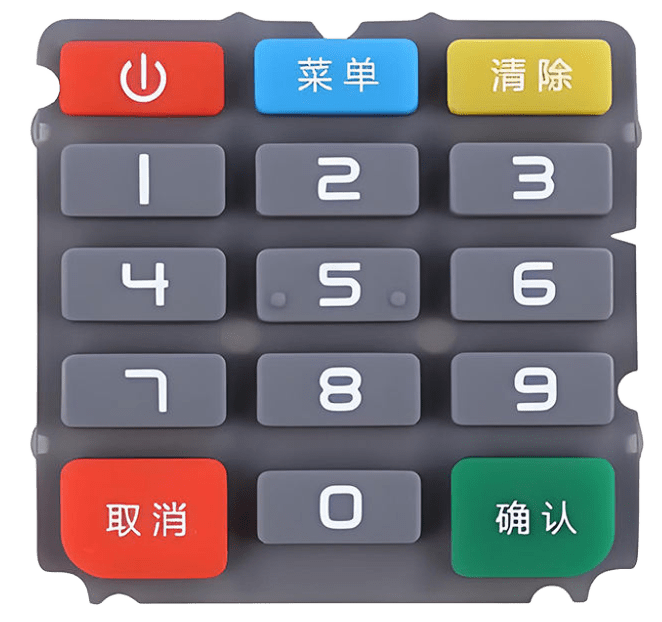
It also enables complex shapes and detailed patterns, thin-wall keypads with consistent thickness, multi-color or multi-layer features, and high-volume production with minimal variation. Our expertise ensures optimal tactile feedback, long-lasting performance, and superior visual quality.

Advantages of Injection Molding for Silicone Keypads
High Precision and Consistency
Silicone injection molding delivers exceptional dimensional accuracy and repeatability. The automated injection process controls material flow, pressure, and curing conditions with high precision, ensuring every keypad is produced to the same specifications. This consistency is especially valuable for applications that require uniform tactile response, tight tolerances, and reliable performance across large production runs.
Support for Complex Designs
Injection molding enables the production of silicone keypads with intricate geometries that can be difficult to achieve through other manufacturing methods. Features such as thin walls, deep key profiles, integrated sealing structures, multi-level surfaces, and complex tactile dome designs can be molded with excellent accuracy. The process also supports multi-color silicone components and specialized functional zones for advanced user interfaces.
Faster Production Cycles
Once the mold is optimized, silicone injection molding can achieve highly efficient and repeatable production. Automated material feeding and injection reduce manual handling and shorten cycle times compared to traditional compression molding. This makes the process particularly suitable for medium- to high-volume orders where consistent quality and production efficiency are critical.
Superior Surface Finish
The controlled molding environment produces keypads with smooth surfaces, well-defined edges, and consistent textures. Fine details such as legends, symbols, and surface patterns can be accurately replicated from the mold. The result is a professional appearance that improves product aesthetics while also enhancing the user's tactile experience.
Material Efficiency and Reduced Waste
Injection molding uses precisely metered amounts of silicone material, helping minimize flash, excess material, and production waste. Consistent material distribution throughout the mold also contributes to uniform hardness, elasticity, and mechanical performance. This efficiency can reduce overall material consumption while maintaining high product quality.
Why Choose Our Injection Molding Expertise
- 10+ years in silicone keypad manufacturing
- In-house mold design and production
- Rigorous quality control at every stage
- Capable of high-volume and high-precision orders
- Expertise in complex and multi-functional keypads
Silicone Injection Molding Process
Material Preparation
The injection molding process begins with the careful preparation of liquid silicone rubber (LSR). Two-part silicone materials are accurately measured and mixed to achieve the required hardness, elasticity, and performance characteristics. The material is then degassed to remove trapped air that could cause bubbles or defects in the finished keypad. Color pigments, conductive additives, or special performance enhancers can also be incorporated at this stage to meet specific design and functional requirements.
Mold Setup
A precision-engineered mold is prepared and installed in the injection molding machine. The mold design plays a critical role in determining keypad dimensions, tactile response, key travel, sealing features, and surface details. Temperature control systems are calibrated to ensure uniform curing throughout the mold cavity. Proper mold preparation helps achieve consistent product quality and minimizes production variation across large manufacturing runs.
Injection & Curing
Once the system is ready, the liquid silicone is injected into the mold cavity under carefully controlled pressure and flow conditions. The material fills every detail of the mold, including fine legends, tactile dome structures, and complex geometries. Heat is applied during the molding cycle to initiate vulcanization, transforming the liquid silicone into a durable and elastic solid component. Precise control of temperature, pressure, and curing time ensures dimensional stability and consistent tactile performance.
Demolding & Inspection
After curing is complete, the molded silicone keypads are carefully removed from the mold. Each batch undergoes thorough inspection to verify dimensional accuracy, surface quality, color consistency, and overall appearance. Critical functional characteristics such as actuation force, key travel, tactile feedback, and sealing performance can also be evaluated according to customer specifications. This inspection stage helps identify any defects before the products move to secondary operations.
Post-Molding Finishing
Depending on the application requirements, additional finishing processes may be performed to enhance functionality and appearance. Common options include trimming excess flash, applying protective coatings, creating matte or gloss surface textures, and improving abrasion resistance. Laser etching can also be used to create precise legends and symbols, especially for backlit keypad designs.
Printing & Functional Integration
The final stage adds graphics, markings, and functional features to the keypad. Screen printing is commonly used for legends, icons, and branding elements, while PU coating or epoxy coating can improve wear resistance and extend service life. For illuminated keypads, laser etching and LED-compatible structures can be incorporated to achieve clear and uniform backlighting. Additional components such as metal domes, conductive pills, or adhesive backings may also be integrated to create a complete, ready-to-assemble keypad solution.
Typical Applications of Injection Molded Silicone Keypads
Injection molded silicone keypads are widely used in applications that demand durability, precision, and reliable tactile performance. Their versatility allows them to meet the needs of both industrial and consumer products, where consistent quality, ergonomic design, and long-term functionality are critical. These keypads are engineered to withstand harsh environments, frequent use, and a variety of mechanical and chemical stresses.
Frequently Asked Questions
What is silicone injection molding?
Silicone injection molding is a process where liquid silicone rubber (LSR) is injected into a precisely designed mold under controlled temperature and pressure. Once cured, the silicone forms durable, flexible keypads with consistent shape, tactile performance, and high-quality surface finish.
What are the benefits of injection molding over compression molding?
Injection molding offers higher precision, better repeatability, faster production cycles, and the ability to create complex shapes, thin walls, multi-color layers, and functional zones. It is particularly suited for medium- to high-volume production.
Can injection molding produce multi-color or multi-layer keypads?
Yes. Injection molding allows for precise layering of different silicone compounds, enabling multi-color keypads, distinct functional zones, and even integrated tactile domes or embossed patterns.
How durable are injection molded silicone keypads?
They are designed for long-term use and can withstand millions of key presses, extreme temperatures, and exposure to chemicals or UV light, all while maintaining tactile response and surface quality.
What sizes and shapes can be produced?
Injection molding can accommodate a wide range of keypad sizes, from small handheld controls to larger industrial panels. Complex geometries, thin walls, and ergonomic key layouts are all possible with precision mold design.
Can injection molded keypads be backlit?
Yes. We can design keypads compatible with LEDs or other backlighting systems. Special translucent silicone zones and integrated light guides ensure even illumination.
Are printed legends or icons possible on injection molded keypads?
Absolutely. Screen printing, UV printing, or laser etching can be applied to create durable legends, symbols, or branding. Protective coatings can be added to enhance wear resistance.
What industries commonly use injection molded silicone keypads?
Industrial automation, medical devices, automotive, consumer electronics, IoT and smart devices, military equipment, and any application requiring reliable tactile feedback and durability.
Can keypads be customized for tactile feel or actuation force?
Yes. By adjusting dome integration, silicone hardness, and layer thickness, key travel, and feedback can be finely tuned to meet specific user requirements.
What quality control measures are applied?
Each keypad undergoes dimensional inspection, visual checks, tactile feedback testing, and optional functional tests. We also monitor curing parameters and material consistency to ensure high-quality output for every batch.