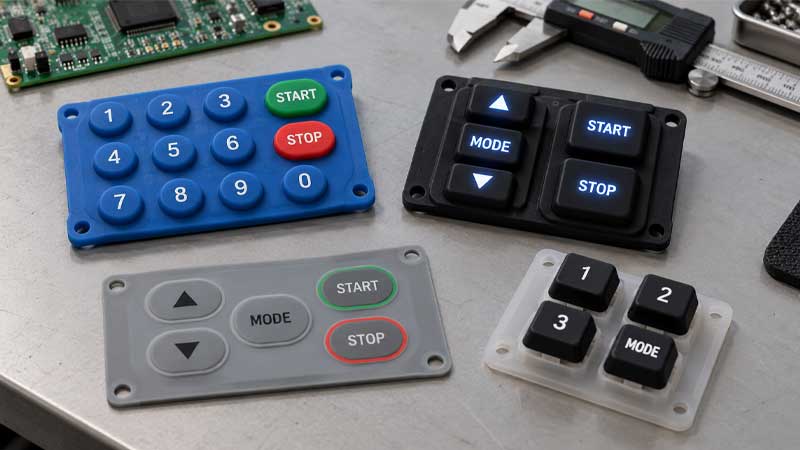
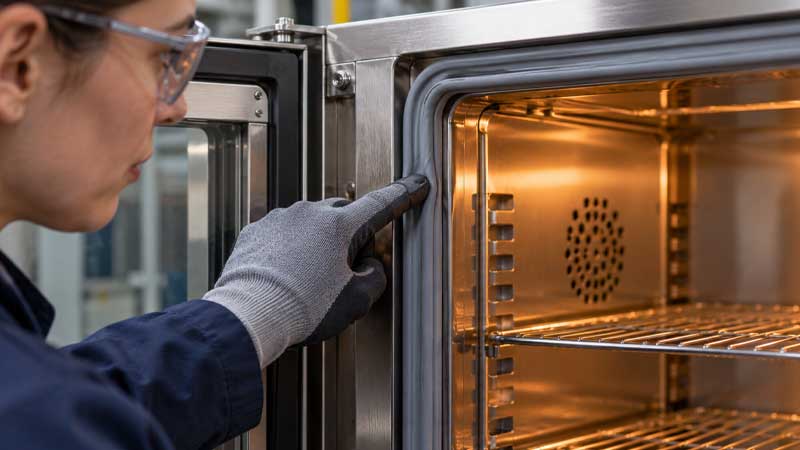
Before your silicone keypads are packed and delivered to their destinations, our SKF team will perform a series of quality control (QC) tests to ensure optimal performance, durability, and features such as environmental seals and backlighting.
These tests evaluate environmental resistance and mechanical strength, including abrasion and wear resistance, to reveal potential problems in the silicone rubber material. Our professional testers and strict process also ensure the quality of your rubber keypads.
Common Tests for Qualified Silicone Keypads
Force Displacement Switch Tester
This tester was engineered to take accurate measurements of most types of keypads, including silicone, membrane switches, and metal and plastic dome switches. This tester can measure the actuation and operation forces of silicone rubber keypads.
Human Finger Simulation & RCA Abrasion Tester
In terms of measurement of resistance to abrasion and wear for normal operation and heavy use, human finger simulation and RCA abrasion testers are utilized for evaluation of durability and estimated life cycle of silicone keypads.
Salt Fog Testing
Salt fog testing measures the corrosion resistance of silicone keypads in environments with salt, such as outdoor and marine applications. Past rubber keypads retain their performance and durability under long-lasting exposure to salt, protecting internal electronic circuits from corrosion and open circuits.
Color Matching
Color matching detects and analyzes the color of silicone rubber keypads from visual and electronic aspects by comparing supplied colorized silicone keypad samples.
Abrasion Resistance Measurement for Legends of Silicone Keypads
Abrasion resistance is a measurement of the ability to withstand repeated presses, heavy use, and operation in harsh conditions. Legends on silicone keypads with abrasion resistance offer clear symbols and long-term performance.
Prior to delivery, we test the wear resistance of the silicone buttons using an automatic finger tester and an RCA abrasion tester to ensure normal performance and mechanical strength during use.
Human Finger Simulation by Continuous Presses
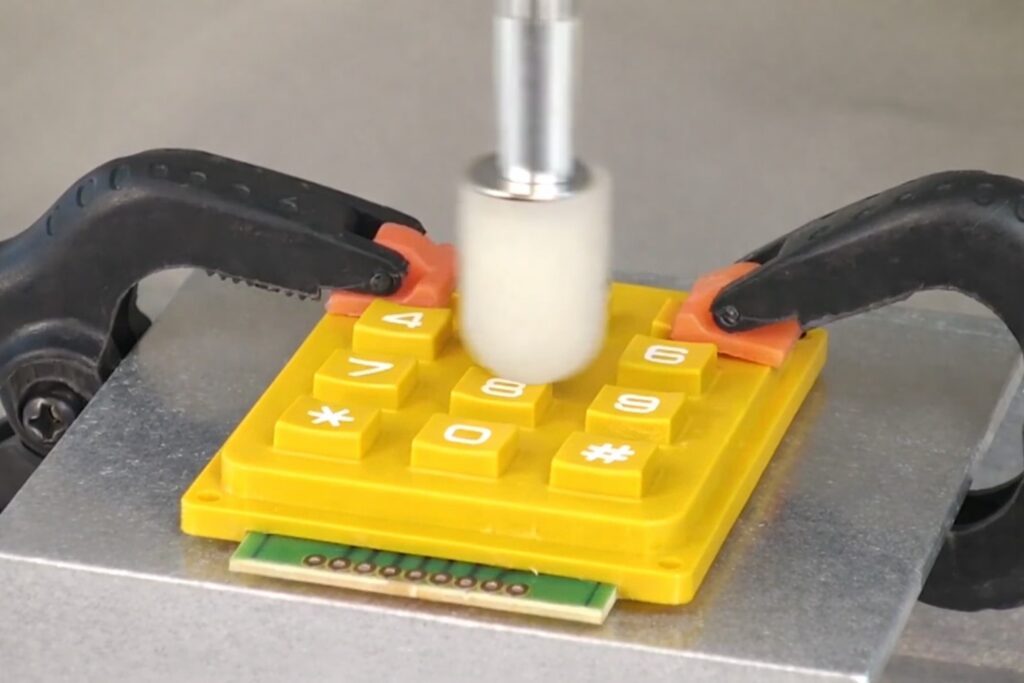
An automatic finger tester simulates a contact tester designed for silicone keypads, membrane switches, depress switches, and other physical buttons. Additionally, the tester can be set to repeatedly press a single keytop or multiple keys on a silicone keypad.
The tester is equipped with a silicone finger test probe to simulate a human finger. Continuous presses with the probe will be applied to the silicone keypads as required for testing, with adjustable cycle times, angles, displacements, and actuation.
RCA Abrasion Tester
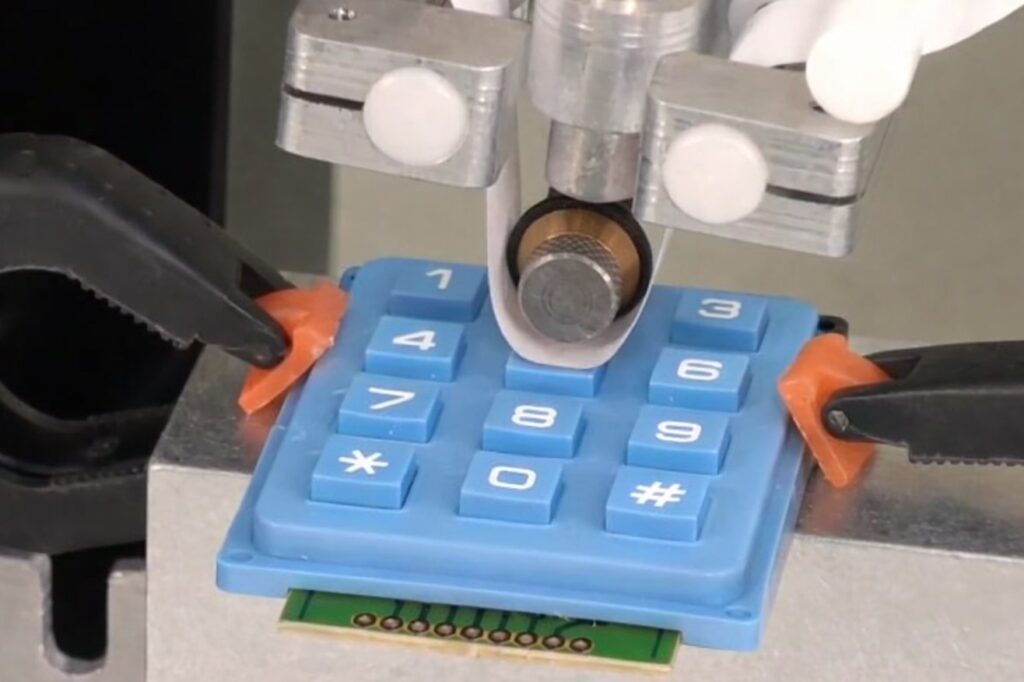
The RCA abrasion tester measures the resistance of inks and coatings to abrasion and wear. This test method is used for silicone keypads and membrane switches and has become standard practice for many manufacturers, including our silicone keypad factory.
The tester utilizes an inexpensive roll of disposable abrasion paper to ensure reliable and consistent results without interference from abrasion debris.
Salt Fog Testing
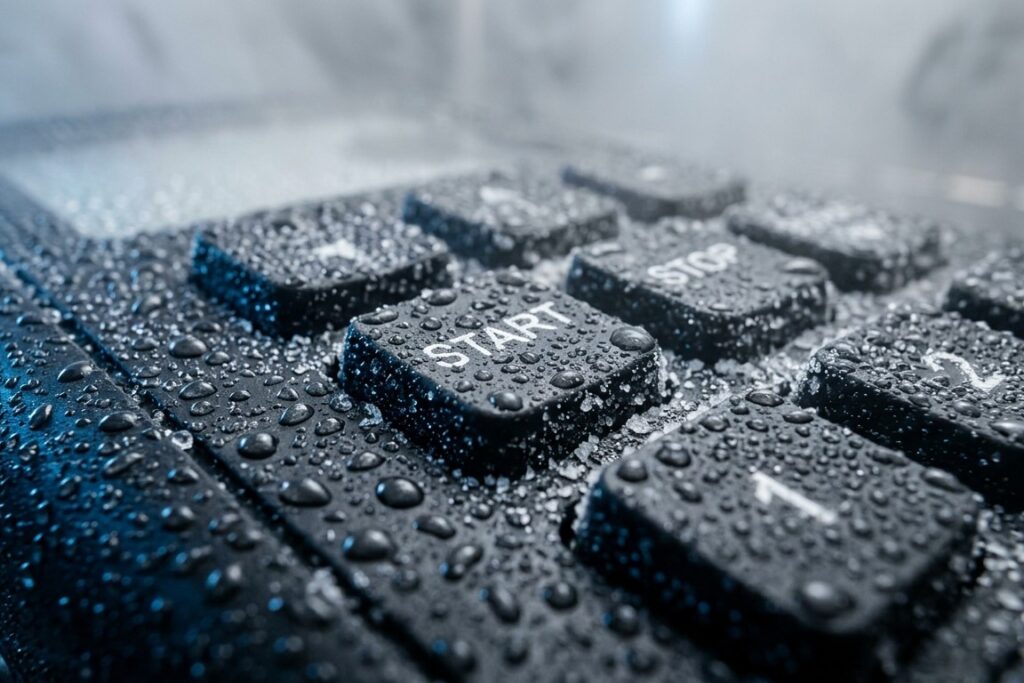
Is salt fog testing necessary?
NaCl, also known as sodium chloride or sea salt, is one of the most pervasive chemical compounds on Earth and significant in our daily lives. However, salt can lead to physical and electrical influences, as well as contamination of components, control panels, and keypads.
Silicone keypads are widely used in outdoor or harsh environments where saltwater easily accumulates. This corrosive saltwater can affect metals, coatings, and enclosures with poor environmental seals, resulting in corrosion due to electrochemical reactions and the ultimate failure of circuits. Additionally, salt deposits that accumulate under buttons or in the corners of screens may affect the operation of keycaps or create a leak path for the ingress of liquids and dust.
Thus, salt fog testing is necessary for silicone keypads operated in environments with long-term exposure to salt instead of occasional or irregular exposure. For example, in marine, outdoor, and medical settings, salt exposure poses a risk of failure for switches and user interfaces (usually silicone buttons on the surface) in HMIs.
How does salt fog testing go?
Salt fog testing simulates conditions that products will face over the long term in order to determine their ability to withstand salt. Salt fog chamber testing is typically based on the standard method MIL-STD-810H. Your silicone keypads will be placed in a stable chamber with specific, constant temperature (generally 35°C or 95°F) and humidity conditions to ensure reliable data.
Additionally, the warm, moist air will contain a 5% salt solution, and the exposure will last for 24 hours. The next 24 hours will be a drying cycle. These cycles will be simulated according to requirements to test long-term resistance in salt-prone conditions. In general, at least four 24-hour cycles (wet, dry, wet, dry) can simulate realistic exposure to salty conditions.
To measure resistance to salty conditions, we monitor and test the amount of salt that precipitates from the atomized salt fog mixture. If the silicone keypads can be powered on and all the buttons work as expected, then they have passed salt fog testing.
Are there any simple ways to test?
Yes, salt is easily obtained. Simply dissolve a little salt in warm water. Spray this solution on silicone or rubber keypads, and repeat this process as needed. You can test the functional performance of a silicone keypad in areas where salt has accumulated.
However, you can save time and salt. SKF offers professional testing to address potential problems due to salt fog and corrosion.
Whether it’s salt fog chamber testing or spraying a simple salt solution, the goal is to evaluate the effectiveness of protective coatings, seal them from environmental factors, and study the influence of salt deposits on the electrical and physical properties of silicone rubber keypads over time.
Color Matching
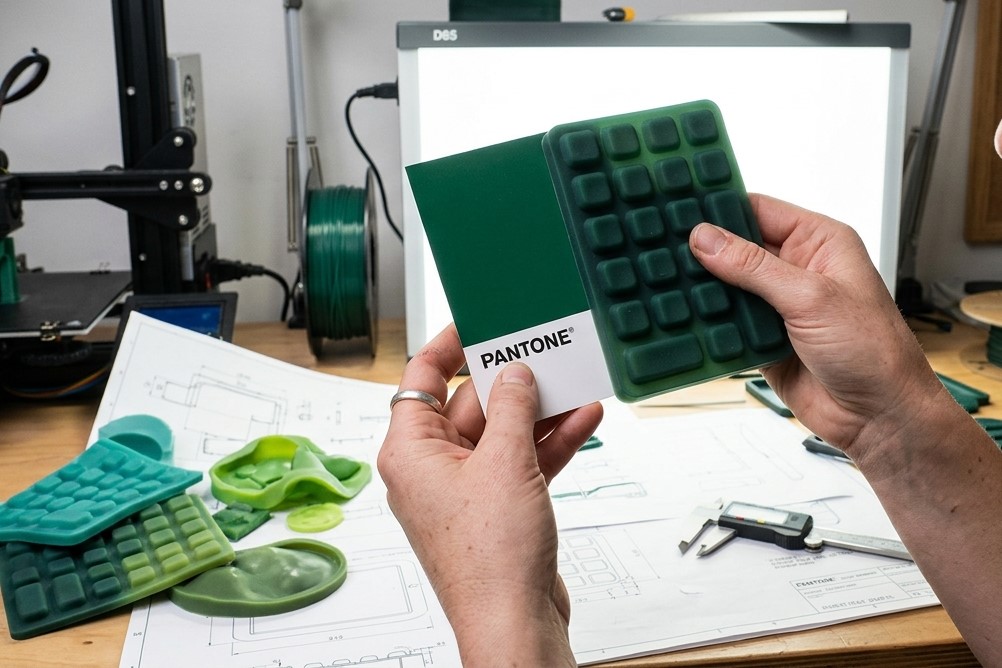
Colors of Silicone Keypads
At SKF, our factory can produce opaque, transparent, translucent, and colored silicone keypads according to your specifications. The transparency of the final silicone rubber keypads and the colors of the legends on the keytop are related to the added pigments.
During the initial design stage based on the information you provide, the colors of these rubber keypads are determined by specific Pantone colors, which are standardized colors that are identified by a unique number. This eliminates mistakes and subjectivity in communications between you and our engineering team.
Moreover, consistent colors of silicone keypads ensure consistent input products in devices or machines across batches. More information about color design for silicone keypads can be found in SKF.
Color Matching Test
Since different light sources, such as LEDs, fluorescents, and daylight, can affect how colors are perceived, the colors of materials may appear slightly different to the eye. To match the colors of rubber keypads in batches, we compare the samples to standardized Pantone swatches. Visual color evaluation tools, such as light booths, can be used to consistently evaluate color.
FAQs
Is the RCA abrasion test preferred over the finger test?
The RCA offers a standardized measurement with a consistent grade of abrasion paper and a fixed load to maintain stability for repeated cycles and eliminate possible human error, which ensures resistance to abrasion and wear for your silicone keypads with heavy use.
Does salt exposure affect the conductivity of silicone rubber keypads?
Yes. Salt deposits are conductive and result in open circuits or failure for circuitry. In salt fog testing, internal electronic circuit boards and conductive carbon pills will be isolated from salt moisture.
Why does the color of the received silicone keypad differ from the specified Pantone color displayed on the computer?
For the same Pantone color number, what is observed with the naked eye may differ from what appears on a computer display because of hardware, the brightness of the display, and the metamerism phenomenon. Your silicone keypad samples should be compared by physical Pantone swatch books or Pantone-validated monitors.
Can normal silicone keypads without protective coatings pass through salt fog testing?
Silicone rubber itself possesses a certain degree of resistance to salt corrosion, but the legends on the keytop and internal components are not. For operation with salt exposure, protective PU coatings can effectively eliminate the influence of salt and liquid ingress from entering switches or machines.
Why use a force-displacement test for silicone keypad testing?
Via analysis, the force curve of silicone rubber keypads, the lifespan, actuation force, travel distance, and snap ratio can be quantifiable. Besides, a ~40~60% snap ratio is recommended for improved tactility and user experience.
Conclusion
In the period of design and integration of silicone keypads into electronics or equipment, appearance, size of keys, and layout are the first things that catch your eye. And the durability, operation environments, and resistance to abrasion for the long term are also taken into our conversation about your silicone rubber keypad project.
The mentioned tests, involving evaluation of abrasion resistance, salt fog simulation, and color matching, are a cost-effective way to measure the lifespan for silicone keypads to meet the requirements of durability and compliance.
Any information about tests and factors upon the life cycle of silicone keypads can be found in SKF.