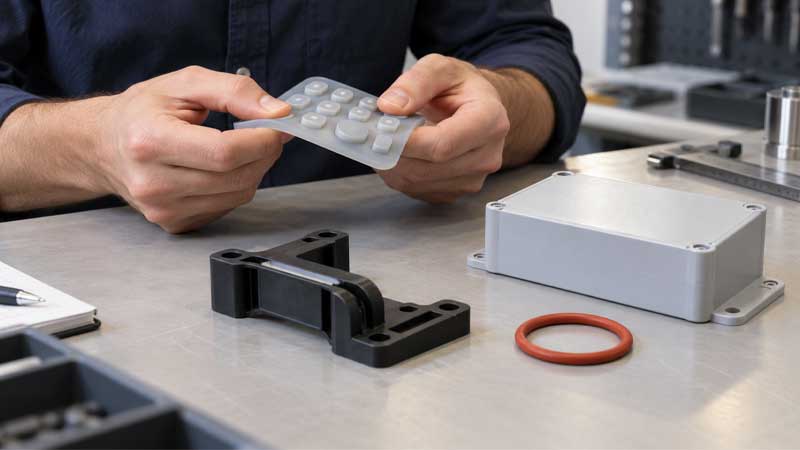
When we press a button or switch with a silicone keypad, an electrical current flows, and an electrical signal is successfully registered with just one keystroke. Silicone keypads are an essential and functional element that integrates electrical contacts, assemblies, and lighting elements into devices or equipment for data input or access control.
What’s the Switch?
Definition of Switch
A switch is an electrical component that controls whether an electrical circuit is open or closed. It allows control over current flow in a circuit and is a critical component of a control panel or interactive circuit.
When a switch is in the “off” state, it forms an open circuit, preventing current from flowing. When it is in the “on” state, however, current is allowed to flow through.
Classification of the Switches: Momentary & Maintained
There are two types of switches: momentary and maintained.
Momentary switches are only activated when actuated. Otherwise, they remain in the “off” state. Keys on a keyboard and push buttons on a remote controller are classic examples of momentary switches.
Maintained switches stay in one state until they are actuated into a new state. Light and fan switches, for instance, are toggle switches.
Core Electrical Components of an Integrated Assembly
Silicone Keypad: Physical Interface for Interaction
A single silicone keypad contains both internal and external parts of a complete switch. The external part exposed to users is the touch-sensitive interface. The back of the silicone keypad is generally made with conductive carbon pills or carbon dip printing, which makes the entire keypad an actuator in a switch.
To improve the protection rating, the keytop of the silicone keypad is painted with a polyurethane (PU) coating to protect against UV light and an epoxy resin coating with a glossy finish to protect against chemicals, liquids, and dust, and plastic keycaps are added above the silicone keypad. You can find more information about protective coatings for silicone keypads here.
Electrical Contact: Electrical Signal Transmission
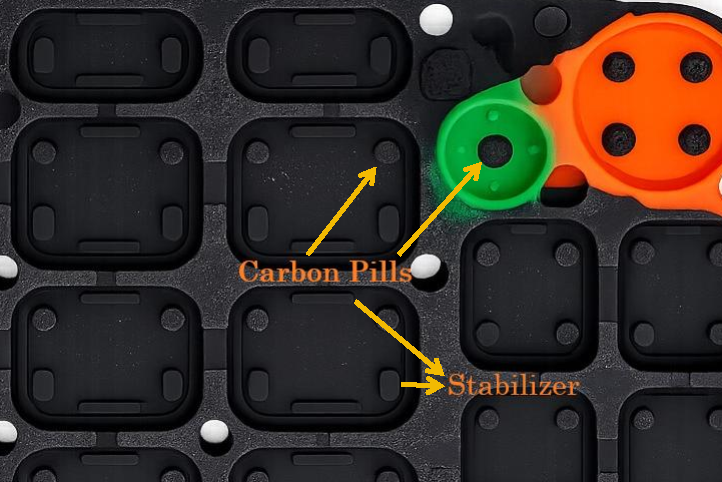
There are also various electrical contact options that convert keystrokes into electrical signals, facilitating connections in electronic devices. These options should be considered in relation to the specific requirements of your silicone keypad project, including durability, tactile response, and cost.
Types of conductive electrical contacts include carbon dip printing, carbon pills, metal pills (e.g., nickel, precious metals, and silver-carbon blends), metal domes, polymer domes, and tactile switches. Carbon pill silicone keypads are a reliable and cost-effective type of conductive silicone keypad for your rubber keypad project.
Metal domes, also called tactile metal domes, are typically momentary switch contacts positioned on the outer rim of the pathway in the relaxed state. They collapse and close the circuit when pushed. Metal domes come in various shapes, such as circles, four legs, triangles, squares, and oblongs. They can be customized with specific sizes and actuation force ranges to meet your requirements. Metal domes can serve as electrical contacts or tactile elements.
Electrical Circuit: Basic of Most Electronics
A printed circuit board (PCB) commonly serves as the foundation for most electronics, connecting different components via copper traces. When you push, slide, toggle, or rotate a switch, it changes the flow of electricity (switch actuation is determined by the ways switches are physically interacted with).
Integrated Assemblies
Integrated assemblies are used for status signaling and user feedback. Examples include light-emitting diode (LED) indicators, light guide plates, display modules, in-mold labeling (IML), and integrated antennas for NFC identification or payment. There are also different types of termination, such as ribbon, flat flex cable, and header.
Optional Lighting Elements
Light elements are available for integration with function independence for illumination effects on the silicone keypad and the whole switch. Light elements are integrated into an independent assembly via designs on the light block, light source placement, backlighting window, and lighting elements. This helps users identify graphics and characters on silicone keypads in low-light conditions. Additionally, a backlit silicone keypad reduces eye strain and provides a more comfortable keystroke experience.
How to Assemble the Mentioned Components in a Switch?
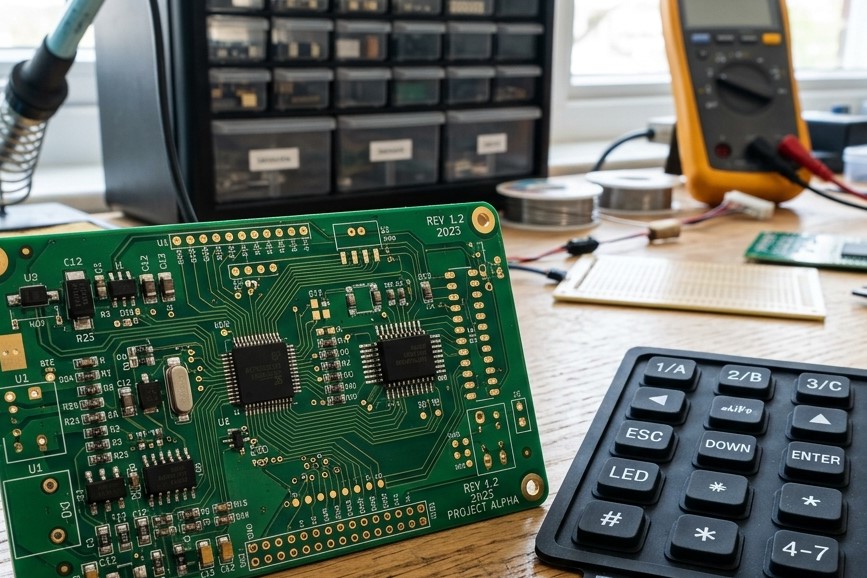
Mounting Style of Electrical Contact
In terms of mounting style, conductive metal pills and carbon-silicone pills will be compressed by compression machines and connected with circuits to realize current flow. While metal or polymer domes are fixed on the printed circuit board by bonding with pressure-sensitive adhesive (PSA) tape, which is also called a metal dome array.
Printed Circuit Board (PCB) Assembly Methods: Plated-Through Holes (PTH) or Surface Mount Technology (SMT)
Most electrical components, including switches, have two common termination styles, which are surface mount technology (SMT) and the through-hole method.
Surface mount is an easier assembly method than plated-through holes (PTH) by directly mounting onto the surface of the PCB rather than being inserted into holes. Surface mount is available for smaller electrical components that are mounted on PCB pads without holes and support compact placement and more complex circuit designs. Besides, surface mount technology (SMT) is processed automatically with lower labor sensitivity, higher component density, and cost-effectiveness for mass production.
Through-hole mounting is connecting through the holes in the circuit board and mounting securely onto the PCB. The holes are aiming for component lead insertion. Further, through-hole components are larger, which enables them to handle more power, have mechanical strength, and experience less failure due to excessive heat.
Panel-Mounting for Interface with Silicone Keypads
This panel-mounting method provides a secure installation onto flat surfaces or enclosures for switches, connectors, and displays. This simple installation method offers an environmentally sealed and stable interface with silicone keypads. There are front-mount and rear-mount types. Silicone keypads are bonded to housings or bezels with adhesive tapes to create an integrated assembly.
FAQs
What is the difference between a printed circuit board (PCB) and a printed circuit board assembly (PCBA)?
A PCB is a board without components and has no function. PCBA, on the other hand, refers to a finished product with a PCB, switch, resistors, chips, and connectors.
What is the difference between panel mount and surface mount?
Panel mounting is used for exterior wall installation, while surface mounting is used for the precise setup of small switches on walls.
Can I mount components for dealing with wobble issues in a silicone keypad?
Anti-wobble pins can solve this effectively.
How do different mounting methods impact the silicone keypad’s sealing or IP rating?
A rigid bezel, integrated with gaskets around the PCB, can create a durable seal against moisture and dust, whereas adhesive mounting by PSA (pressure-sensitive adhesive) remains adhered in wet conditions. Besides, a wrap-around enclosure effectively prevents liquids from entering from the edge of the casing.
What is the better element assembly method for silicone keypads?
A combination of light pipes and light-guided films offers an enhanced backlight effect by components assembled with silicone keypads.
Conclusion
Silicone keypads integrate electrical contacts, circuits, and optional lighting elements and assemblies into functional switches for electronic devices and equipment. These assemblies provide basic electrical signal transmission and integrated sealing against environmental factors through different mounting methods. They also provide unique tactile feedback through conductive pills or metal domes and an improved user experience with a backlighting effect in low-light environments.