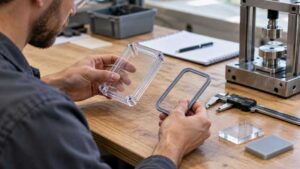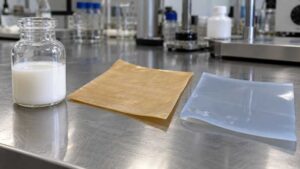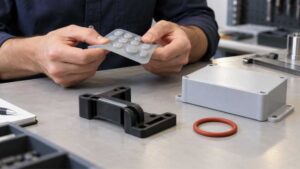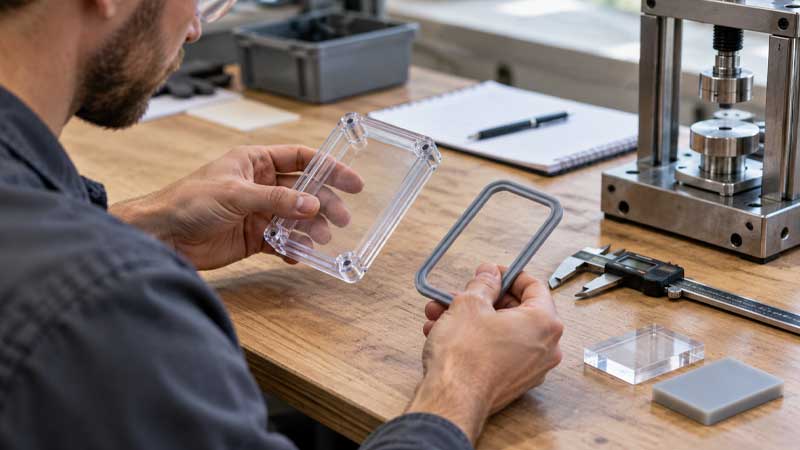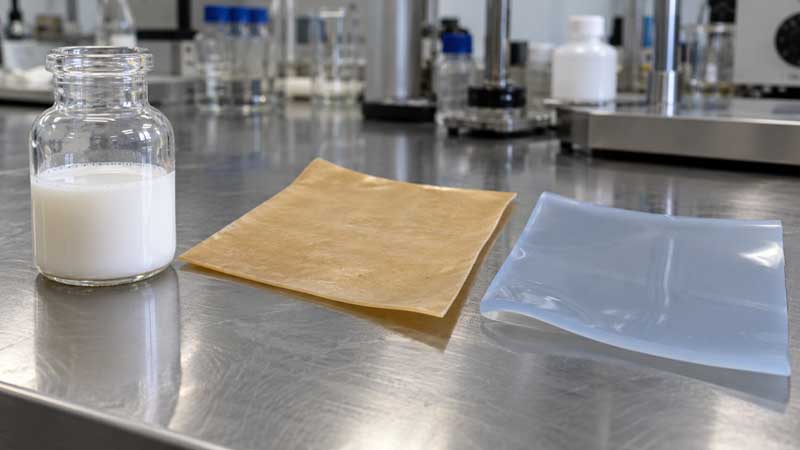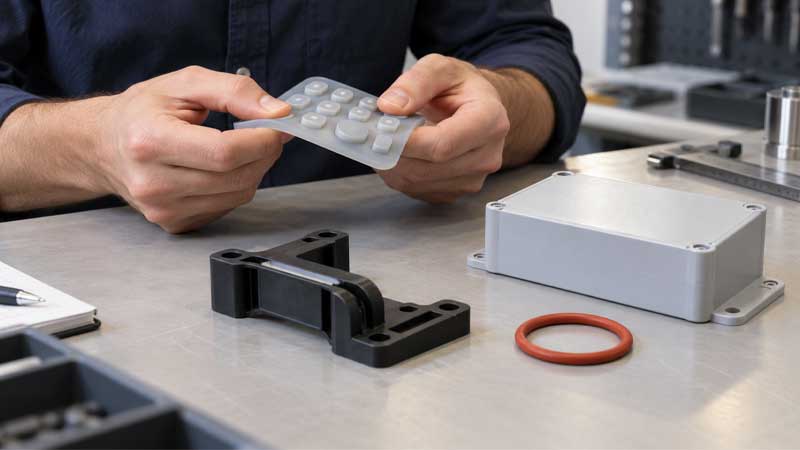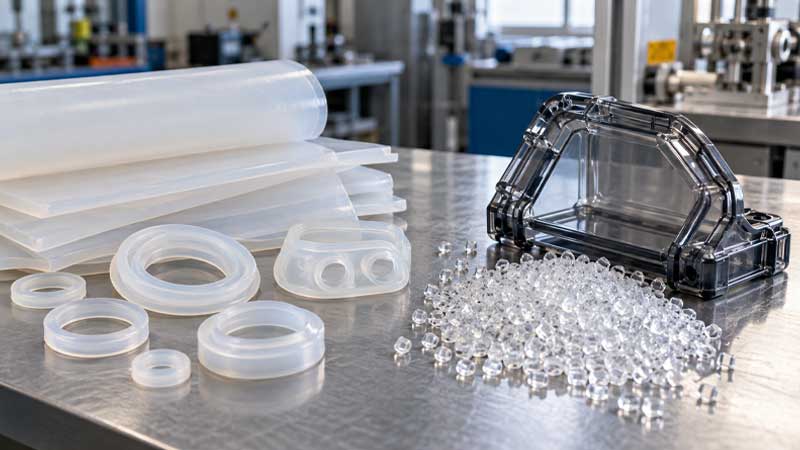
Silicone and thermoplastic polyurethane (TPU) are both used to make flexible products. They can look and feel similar, yet they differ in how they handle abrasion, heat, compression, weathering, and manufacturing. Those differences affect products ranging from protective cases and wearable parts to seals, tubing, and industrial components.
The right choice depends on what the part must do. A material that works well as an abrasion-resistant cover may be less suitable for a component held under compression at high temperature. This guide compares the two materials and shows which questions to answer before selecting one.
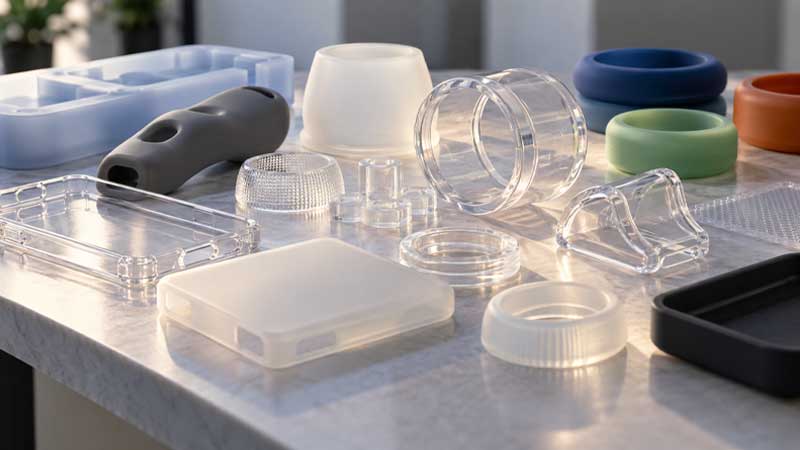
Silicone vs TPU at a Glance
Silicone rubber is often considered when a part needs flexibility across a broad temperature range, weather resistance, or reliable performance under prolonged compression. TPU is often considered when wear resistance, tear strength, and thermoplastic processing are priorities.
| Property or requirement | Silicone rubber | TPU |
| Material type | Cured elastomer | Thermoplastic elastomer |
| Typical strength | Flexible, with properties that vary by compound | Often selected for toughness and tear resistance |
| Surface abrasion | May require a protective finish in demanding uses | Often a strong reason to consider TPU |
| Temperature exposure | Broad range of suitable grades | More dependent on the selected grade and exposure time |
| Compression recovery | Suitable grades work well in many sealing applications | Must be checked at the expected load and temperature |
| Outdoor exposure | Generally valued for weather resistance | UV-stabilized and other suitable grades are available |
| Processing | Includes compression and silicone injection molding | Includes thermoplastic injection molding and extrusion |
| Reprocessing | Cured parts cannot simply be remelted | Suitable production scrap may be reprocessed under controlled conditions |
This table describes broad tendencies. Neither column is a substitute for comparing the proposed grades under the same test conditions.
What Is Silicone?
In this comparison, silicone means silicone rubber, an elastomer based on a silicon–oxygen polymer backbone. During manufacturing, the material is cured into a crosslinked structure. The finished part remains flexible but cannot simply be heated until it flows into a new mold.
Silicone rubber is available in different hardness levels and formulations. Depending on the grade, it can be made into seals, tubing, flexible buttons, protective covers, cookware components, and parts for equipment exposed to demanding temperatures or outdoor conditions.
Its useful properties do not make it suitable for every environment. Standard silicone can swell when exposed to some oils and organic liquids. It may also need a suitable compound, surface finish, or protective design where rubbing and cuts are the main risks.
What Is TPU?
TPU stands for thermoplastic polyurethane. It belongs to the broader family of thermoplastic elastomers, or TPEs. Its structure combines flexible and more rigid segments, allowing manufacturers to formulate grades with different levels of hardness, elasticity, and mechanical strength.
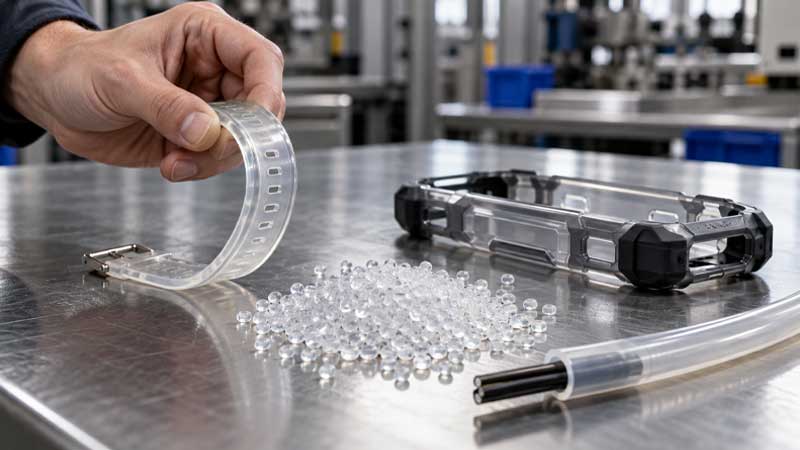
Because TPU is thermoplastic, it can be processed through methods such as injection molding and extrusion. It is used in protective cases, footwear, cable jackets, flexible films, tubing, grips, and other parts that need a combination of flexibility and toughness.
TPU is not one uniform material. Polyester-based and polyether-based grades, for example, can differ in their response to prolonged moisture exposure. Formulations intended for UV exposure or particular chemical environments may also perform differently from general-purpose grades.
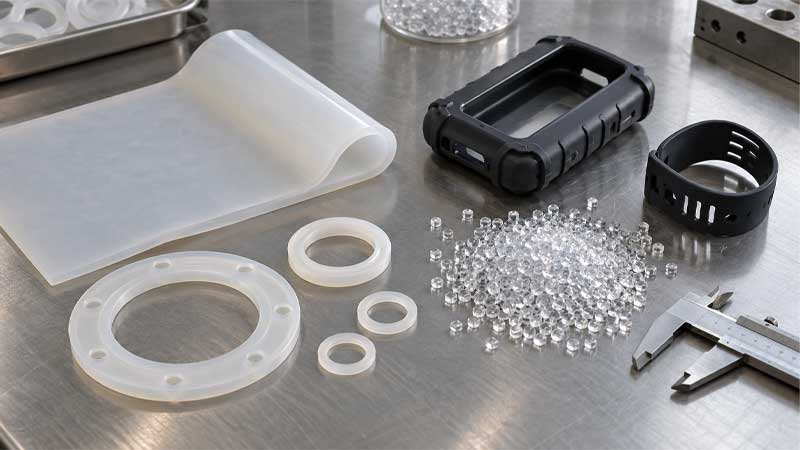
How Do Their Mechanical Properties Compare?
Flexibility and Feel
Both materials can bend and recover, and both are available in a range of hardness levels. Silicone is commonly associated with a soft, compliant feel. TPU can be formulated for a softer touch or for a firmer, more supportive part.
Hardness is only one part of the experience. A thick TPU cover may feel firmer than a thin silicone cover, but changing either part’s thickness or shape could change that impression. Surface texture and coatings also affect grip and touch.
If feel matters to the product, compare finished samples with the intended geometry. Two flat material samples with the same Shore A hardness will not necessarily feel alike once molded into different products.
Tensile and Tear Strength
TPU is frequently considered where a flexible part will be pulled, stretched, or exposed to damage at an edge. Its toughness can be useful for protective components, straps, and other parts that need to resist a small cut growing into a larger tear.
Silicone’s tear performance varies by compound. Geometry matters for both materials: sharp corners, thin sections, and poorly supported openings can become failure points regardless of a material’s datasheet result.
For a critical part, assess tear and tensile properties at the expected operating temperature. Then test the actual geometry, especially where loads concentrate.
Abrasion Resistance
When a part repeatedly rubs against another surface, TPU is often a strong candidate. Examples include cable jackets that contact equipment, flexible protective edges, and products handled against rough surfaces.
Silicone may still be suitable if abrasion is modest or if a surface treatment addresses the wear requirement. The important distinction is between surface wear and other forms of durability. A material that resists scratching is not automatically better at prolonged compression or repeated bending.
Abrasion tests should resemble the real contact: the opposing surface, pressure, movement, and presence of dust or liquid can all change the outcome.
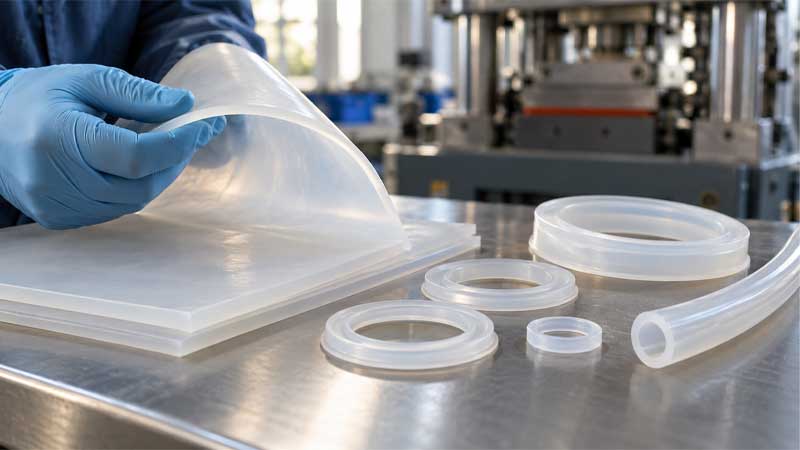
How Do They Perform Under Heat, Cold, and Compression?
Temperature Resistance
Silicone rubber is available for applications spanning a broad temperature range. TPU also has grades for different temperatures, but prolonged heat may limit the formulations suitable for a given project.
Do not treat a supplier’s highest quoted temperature as a guaranteed operating temperature for a finished product. Ask whether it represents continuous service or a short exposure, and which property was used to define the limit. A part may remain intact yet become too stiff, too soft, or dimensionally unsuitable for its function.
Cold performance also depends on grade. Where a product must flex immediately after outdoor storage or repeated cold exposure, evaluate its behavior at the lowest expected temperature rather than relying only on a room-temperature test.
Compression and Shape Recovery
Compression matters for gaskets, seals, pads, and any part held against another component. Compression set describes the deformation that remains after a material has been compressed for a specified time and then released.
Suitable silicone grades are often chosen for sealing duties, including applications involving heat. TPU grades can also be used in compressed parts, but their recovery must be checked under the intended load, temperature, and duration.
The material result is only part of a seal’s performance. The installed part also needs the correct shape, support, and amount of compression. A poor joint design can leak even when the chosen material performs well in a laboratory test.
What About Water, Chemicals, and Outdoor Exposure?
Moisture and Hydrolysis
Water on a part’s surface is different from long-term exposure to warm water or humid conditions. TPU grades do not all respond the same way to moisture; the chemistry of the selected grade matters when hydrolysis is a concern.
Silicone rubber is commonly used in wet and outdoor environments, but the whole product must still be designed for those conditions. A flexible material does not make an assembly waterproof if water can enter through seams, fasteners, or openings.
Oils, Solvents, and Cleaning Agents
There is no useful answer to “Which material is more chemical resistant?” without naming the chemical. Standard silicone may swell in some oils or organic liquids. TPU resistance also changes with formulation and with the substance involved.
For a cleaning or fluid-contact application, specify:
- The exact liquid or cleaning product
- Its concentration
- Contact temperature and duration
- How often exposure occurs
- Which changes are unacceptable, such as swelling, discoloration, or loss of strength
Test the finished part when possible. Printing, coatings, adhesives, and other components may fail before the base material does.
UV and Weathering
Silicone is often considered for parts exposed to sunlight and weather. TPU performance outdoors depends on its chemistry and formulation; grades intended to improve UV stability or color retention are available.
If appearance matters, evaluate it separately from function. A transparent part may show color change before it loses its protective function. An opaque part may hide discoloration while its mechanical properties still change over time. Define the required appearance and service life before choosing the test.
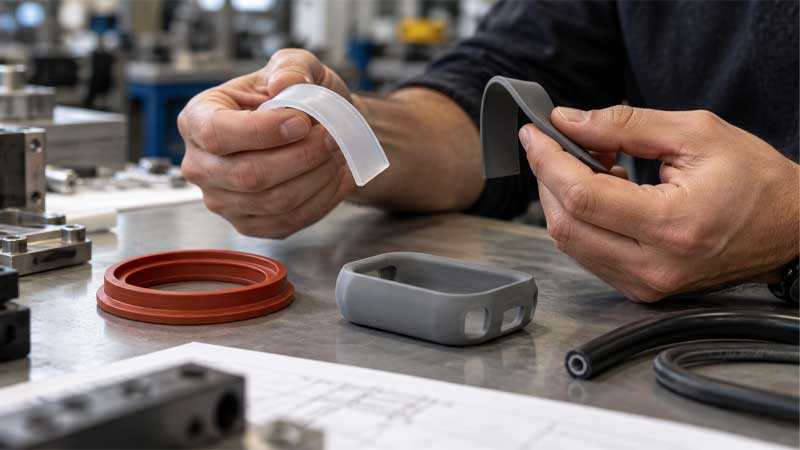
Appearance, Transparency, and Product Design
Both silicone and TPU can be used for clear or colored parts, subject to grade and processing choices. Transparency at the time of manufacture is only one consideration. A finished product may also need to retain color, resist scratching, accept printed graphics, or maintain a particular surface feel.
Silicone’s soft surface can be desirable where comfortable touch is important. Depending on formulation and finish, some silicone surfaces may also attract visible dust or lint. TPU can provide a different balance of toughness and surface appearance, but its performance should not be inferred from one familiar consumer product.
Evaluate the result the customer will see and handle. For example, a protective case needs to fit its device, resist damage, and remain comfortable to grip. Those outcomes depend on wall thickness, corners, surface texture, and the complete construction as well as the material.
How Do Manufacturing and Cost Differ?
Silicone rubber and TPU follow different processing routes. A silicone part is formed and cured using a process chosen for its compound and geometry. TPU is shaped through thermoplastic processing and solidifies as it cools.
This distinction influences tooling, production cycles, finishing operations, and scrap handling. TPU’s ability to be reprocessed can be useful for suitable, controlled production scrap. Cured silicone cannot simply be remelted in the same way. Neither fact alone establishes the environmental impact of the finished product.
Cost also needs to be compared at the part level. A material with a lower price per kilogram may require additional tooling, finishing, inspection, or changes to meet the product specification. Conversely, an apparently more expensive material may simplify a design or meet a demanding service requirement more reliably.
For a meaningful quotation, provide the drawing, proposed volume, tolerances, operating environment, appearance requirements, and required tests. Compare prices for finished parts that meet the same specification, not only for raw materials.
Where Is Each Material Commonly Considered?
Protective Cases and Flexible Covers
TPU is frequently considered for thin protective covers and edges where abrasion, tear resistance, and shape are important. Silicone may be chosen for a softer surface or a particular grip and appearance.
For a phone case or similar accessory, claims such as “better drop protection” cannot be established by material alone. Corner design, thickness, fit, and any rigid supporting layer affect how the complete product handles impact.
Seals and Gaskets
Silicone is often evaluated when a seal needs to remain flexible through temperature changes or recover after prolonged compression. TPU may suit a different sealing design where mechanical toughness or contact with particular substances is central.
The correct choice depends on the joint design, compression, mating surfaces, operating temperature, and fluid exposure. Test the assembled seal rather than assuming a material property guarantees a watertight or airtight product.
Cable Jackets, Tubing, and Wearable Components
TPU can be attractive for cable jackets and flexible parts exposed to handling or abrasion. Silicone may be considered where temperature behavior, flexibility, or the intended contact conditions are more important.
For tubing, identify the fluid, pressure, bending requirements, and cleaning process. For a wearable part, consider skin contact, sweat, surface feel, repeated flexing, and appearance. Neither material name alone establishes suitability for medical or food-contact use; those applications require the appropriate grade and product-level assessment.
How Should You Choose Between Silicone and TPU?
Start with the part’s primary function and most likely failure mode.
If the part repeatedly rubs against a rough surface, investigate abrasion first. If it must maintain a seal for years, investigate compression and environmental aging. If users handle it every day, evaluate feel and appearance after use. If it contacts food or the body, identify the applicable requirements and review the proposed grade and finished product accordingly.
Then compare candidate designs under the same conditions:
- Define the environment. Include temperature, water, UV, chemicals, and cleaning.
- Define mechanical loads. Identify rubbing, stretching, bending, impact, or sustained compression.
- Set acceptance criteria. Decide how much change in dimensions, appearance, or performance is acceptable.
- Select candidate grades. Avoid comparing a specialty grade of one material with an unspecified version of the other.
- Test representative parts. Geometry and manufacturing can change the result seen on material samples.
- Compare qualified part cost. Include tooling, finishing, yield, and required validation.
This approach may lead to silicone, TPU, or a design that uses more than one material. It also gives suppliers a clear basis for recommending a grade and manufacturing route.
Frequently Asked Questions
Is TPU the same as silicone?
No. TPU is thermoplastic polyurethane, while silicone rubber is a cured elastomer with a different polymer structure. Both can be flexible, but they are processed differently and have different property profiles.
Is TPU the same as TPE?
TPU is a type of TPE. TPE is the wider category of thermoplastic elastomers, so a specification that says only “TPE” does not necessarily mean TPU.
Which material is softer?
Either can be formulated at different hardness levels. Compare specific grades using the same hardness scale, then assess the finished product’s shape and surface. Hardness alone does not determine how a product feels.
Which material is more durable?
It depends on the failure being considered. TPU is often attractive for abrasion and tearing. Silicone may be attractive where temperature performance or recovery under compression matters. Durability should be defined as performance in the product’s actual conditions.
Is TPU waterproof? Is silicone waterproof?
Both materials can be used in water-exposed products. Whether a finished product prevents water entry depends on its seams, joints, openings, and sealing design—not only on the material chosen.
Which is safer for food or medical use?
Neither material should be called compliant solely because it is silicone or TPU. Suitability depends on the specific grade, formulation, manufacturing process, intended contact, and applicable product requirements.
Which material is easier to recycle?
Suitable TPU production scrap may be reprocessed through thermoplastic methods. Cured silicone cannot be remelted in the same manner. The practical end-of-life route for either finished product depends on its construction and available recycling system.
Final Considerations
Choose silicone or TPU for the job the finished part must perform. Silicone may be the stronger starting point for demanding temperature or compression requirements. TPU may be the stronger starting point for an exposed part where wear and tear dominate. Specific grades and product design can shift that balance.
If your project involves a custom silicone component, SKF can review its drawing, operating conditions, and performance requirements before material and manufacturing decisions are finalized.