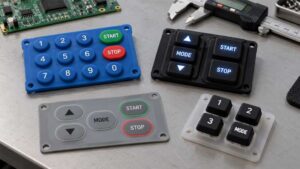
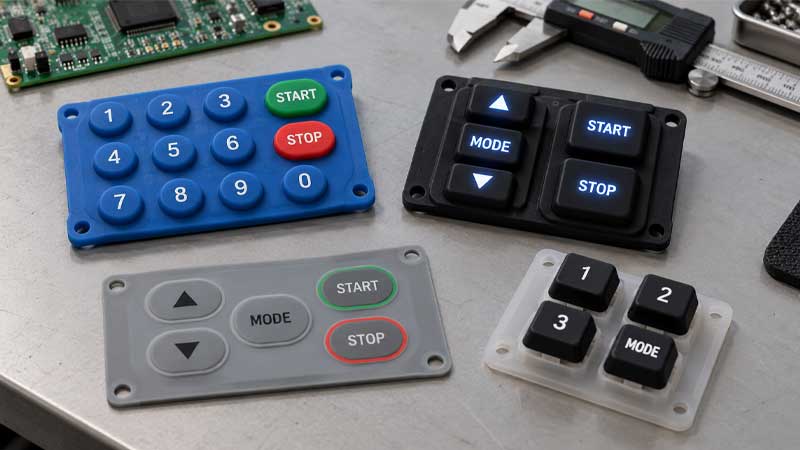
As a type of input device and user interface in machinery, silicone keypads face frequent abrasion and mechanical wear when pressed during operation. The legends on the keytops may fade due to repeated friction.
The following article discusses how to extend the lifetime of silicone rubber keypads and their printed legends by applying a protective coated silicone keypad.
Why Do Silicone Keypads Require Protective Coatings?
The significance of protective coatings for silicone keypads goes beyond mere shielding. These coatings protect silicone rubber keypads, improve durability and tactile feedback, and provide resistance to chemical corrosion.
Environmental Resistance
These coatings enhance the performance and robustness of silicone keypads, ensuring long-term operation and protection against harsh environmental elements such as chemical corrosion, dust ingress, daylight exposure, and high humidity.
Legend Protection
When printed using a conventional printing process, the legends on the keytops of rubber keypads can fade due to mechanical friction from pressing and oils or sweat from fingers.
Friction Issues
Consistent and repeated friction may lead to unclear or unrecognizable legends, stickiness, or contamination.
Types of Protective Coatings
Polyurethane (PU) Coating
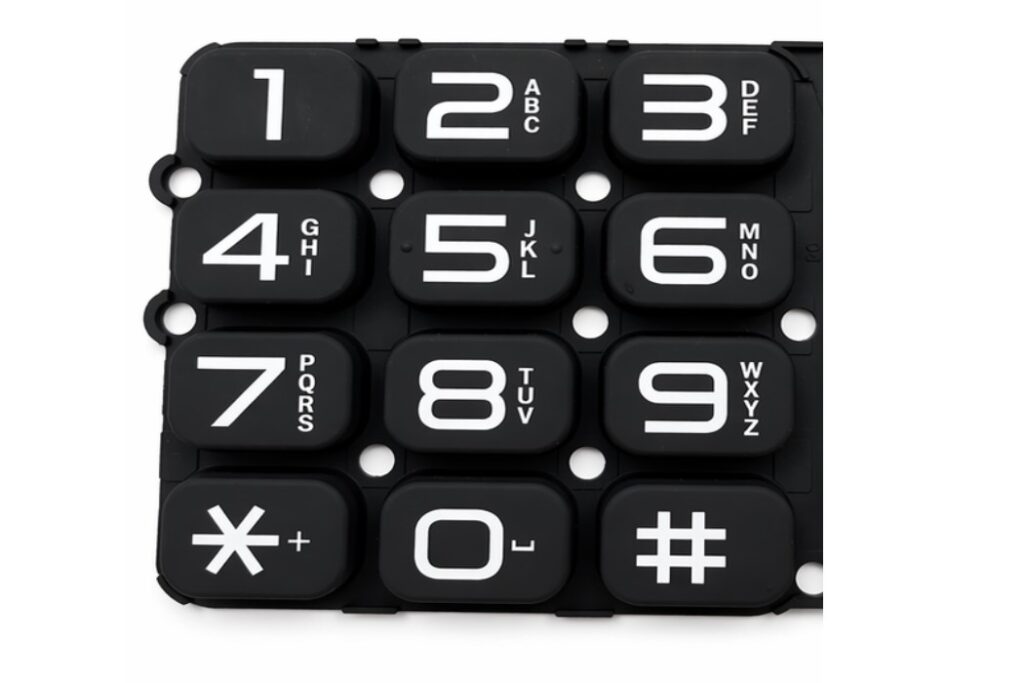
PU-coated silicone keypads have an anti-wear, abrasion-resistant, clear, and smooth layer on the surface.
PU has excellent coating properties, including UV resistance, waterproofing, high durability, and resistance to chemicals and scratches. It is a high-performance finish that protects and improves the appearance of surfaces.
Due to its superior properties, PU is also used for sports facility flooring, industrial floor coatings, and waterproof construction coatings. To create a protective layer on a silicone keypad’s surface, PU spray provides a rapid and uniform method of forming a thin protective layer.
Parylene Coating
A parylene coating is a seamless, clear, lightweight, and extremely thin (2-20 µm, thinner than hair) protective layer that enables silicone keypads to conform thoroughly with consistent thickness.
Due to its outstanding performance, Parylene is optimal for applications requiring resistance to moisture, heavy chemical corrosion, alkalis, acids, and organic solvents.
Epoxy Coating
An epoxy coating is a transparent, glossy layer that can be applied to the keytop of keypads, forming an epoxy-coated silicone keypad. It meets requirements for ease of cleaning and maintenance. Additionally, epoxy is ideal for user interfaces operated in tough conditions with a risk of chemical exposure.
Comparison of Distinct Protective Coatings for Silicone Keypads
| Features | PU Coating | Parylene Coating | Epoxy Coating |
|---|---|---|---|
| Coating Method on Silicone Keypad | Spray in liquid form | Vapor deposition | Vacuum deposition, spray on the keytop |
| Gloss Level | Smooth, satin, glossy, or textured | Satin, semi-gloss | Glossy |
| Color Options | Unlimited including clear | Clear, transparent | Clear, plastic feel |
| Hardness | Moderate | Hard but too thin to be distinctly perceived | Rigid |
| Resistance to Chemicals and Corrosion | Chemical shielding, resistance to oils, mild acids, alkalis | Excellent resistance to chemical exposure | Resistant to heavy chemical exposure, chemical corrosion |
| Resistance to dirt and stains | Resistant to dirt, dust, stains, fingerprints | Excellent resistance due to seamless surface | Outstanding, resistant to fingerprints and contaminations |
| Abrasion Resistance | Good | Great | Excellent |
| UV Resistance | Excellent | Outstanding | Poor, will be yellow in daylight |
| Crack Resistance | Great | Great | Lower |
| Cost | Cost-effective protection way, low maintenance cost | High setup cost | Moderate, cheaper than plastic buttons |
| Preference | Outdoors, appliances, medical devices, consumer electronics | Suitable for aerospace, medical, and industrial sectors | Industrial applications, heavy use, operation with gloves |
Protection for Silicone Keypads from Different Perspectives
Impact Resistance and High Flexibility: PU Coating
PU coatings are more elastic than rigid coatings, such as epoxy resin coatings. This elasticity enables PU coatings to absorb impacts without cracking or breaking. This flexible PU material improves abrasion resistance for substrates such as silicone rubber keypads and other user interfaces.
PU coatings can withstand scratches, impacts, expansion, and contraction. Thus, polyurethane protection is optimal for environments with heavy impacts, such as those involving heavy-duty vehicles.
Resistance to UV: Affordable PU or Advanced Parylene Coating
Polyurethane is UV-resistant, and it retains its structural integrity and color when exposed to sunlight over time because it contains UV stabilizers. Colored silicone keypads with PU coatings do not easily yellow, crack, or fade due to their high color stability, chemical shielding, and weather resistance.
However, if your silicone keypads will be used in aerospace or medical settings, parylene is a more advanced option that comes with increased costs.
Weather Resistance: Reliable Parylene or Cost-Effective PU Coatings
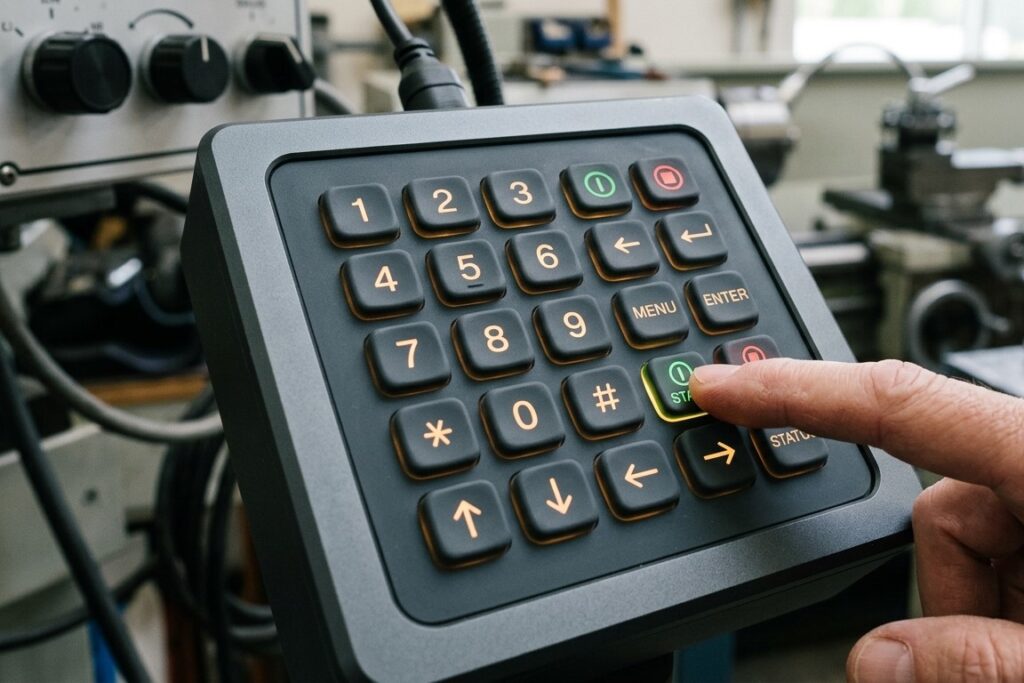
Parylene’s high chemical stability makes it resistant to heat and moisture, which is ideal for silicone keypads in harsh environments.
Moreover, PU coatings can withstand long-term operation under conditions of overheating or freezing cold without becoming brittle, making them a cost-effective option for outdoor applications.
Chemical Exposure
If your silicone keypads are used in environments with exposure to chemicals, acids, or organic solvents, it is important to apply protective coatings to the surface.
The following three coatings may be helpful: However, for exposure to mild chemicals or oils, a polyurethane (PU) coating is preferred. Parylene and epoxy coatings can protect silicone keypads from heavy chemicals.
Improved Tacility with Stickness: Parylene Coating
The ultra-thin, flexible parylene coating improves tactility for silicone keypads. You may have noticed that silicone rubber feels sticky when touched or pressed. Parylene can remove stickiness and enhance the surface feel of silicone keypads. This is also beneficial for protecting legends and keypads against oils, dust, and contamination.
Abrasion Resistance in Heavy Use: Epoxy Coating

When silicone keypads are used in applications with heavy use, abrasion resistance is important for maintaining the clarity of the printed legends.
Epoxy-coated silicone rubber keypads are a cost-effective solution that offers outstanding abrasion resistance compared to other protective-coated keypads and plastic buttons.
Your designed legends and patterns are protected by transparent, glossy epoxy coatings. Additionally, backlit silicone keypads can be produced without an illumination barrier when epoxy coatings are applied to the keytop.
How to test the protective effect for silicone keypads?
In general, RCA testers or finger simulation machines are used to test the abrasion resistance and mechanical wear of protective coatings on silicone keypads. These machines can apply a specific force continuously and uniformly and display the number of cycles that the protective-coated silicone keypad underwent before failing.
FAQs
Do these protective coatings attract dust or fingerprints?
PU and epoxy coatings have excellent resistance to dust, dirt, and fingerprints, ensuring the keys remain like new for the long term. But matte epoxy coating is more recommended for your needs.
What are relevant compliances for protective-coated silicone keypads?
Silicone keypads from SKF meet strict quality standards involving ISO 9001:2015, ISO 13485, REACH, RoHS, UL, and ASTM by passing through a series of strict tests.
Can I choose a protective plastic keycap for my silicone keypad project?
Yes. Hard plastic keycaps can be integrated into silicone keypads as protection against outer environmental factors. More information about hybrid
Will the PU coating fall off or peel?
If it comes to too thick or too few coatings, low curing temperature, or high curing humidity, the PU coating may fall off or peel. Our silicone keypad will be treated with thorough surface preparation of the silicone keypad, coating selection, and proper spraying in SKF, ensuring reliable protection.
Can I just choose a laser-etched silicone keypad with etched legends directly?
Certainly. Though the legends are highly durable under frequent abrasion, the laser-etched silicone keypad is easy to attract dirt and dust.
Will protective coatings affect the effect of legends printing on a silicone keypad?
No. Protective coatings enhance printed legends and symbols in terms of saturation, clarity, readability, and visual performance. But raised epoxy coatings on the keytop of the silicone keypad possibly make the patterns look slightly larger or distorted.
Conclusion
The selection of protective coatings for your silicone keypad project depends on the desired level of protection, durability, operating environment, and budget.
Our professional engineering team can offer a custom silicone keypad solution that protects against environmental factors according to your needs.