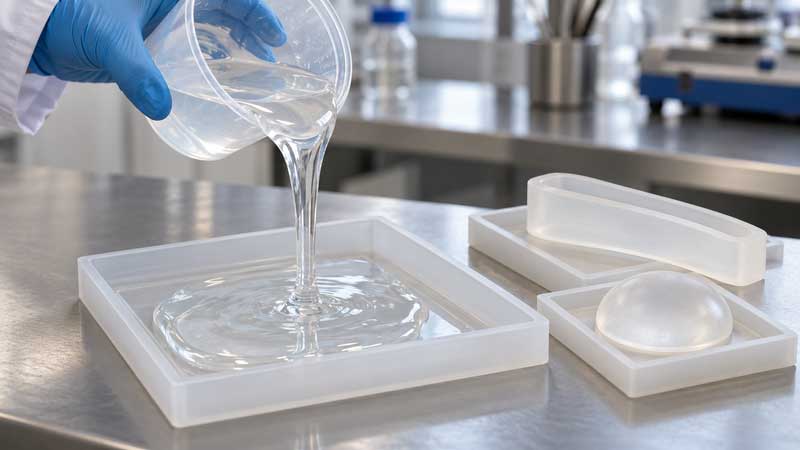
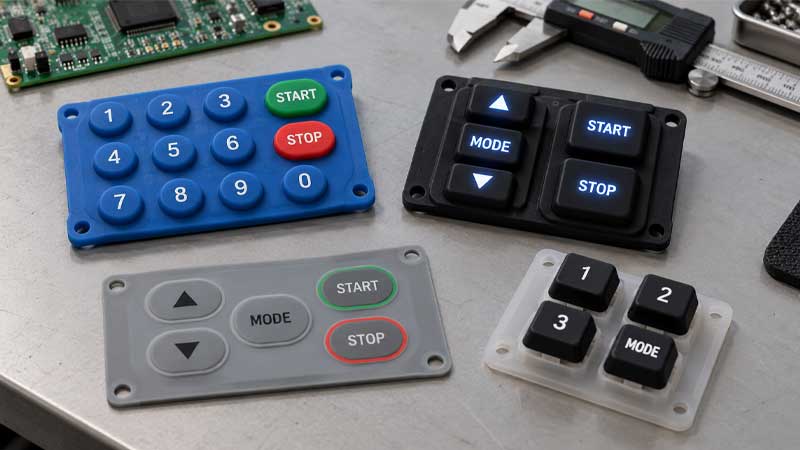
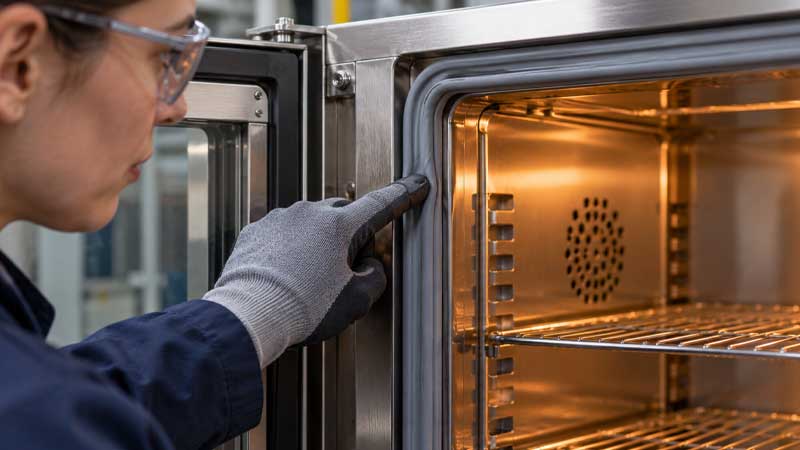
Some of our customers may require environmentally sealed silicone keypads for use in harsh environments. These environments may involve exposure to moisture, extreme temperatures, dirt, dust, body fluids, high altitudes, ultraviolet (UV) light, impact, and chemicals. Applications may include industrial fields, areas requiring frequent cleaning, dusty logistics warehouses, the pharmaceutical industry, and outdoor exposure.
Perhaps your silicone keypads work well in the lab, but would they perform the same in the aforementioned environments with harsh real-life conditions? Complete environmental sealing ensures the integrity and assembly of final electronic devices, control panels, and human-machine interfaces (HMIs).
Importance of Environmental Sealing
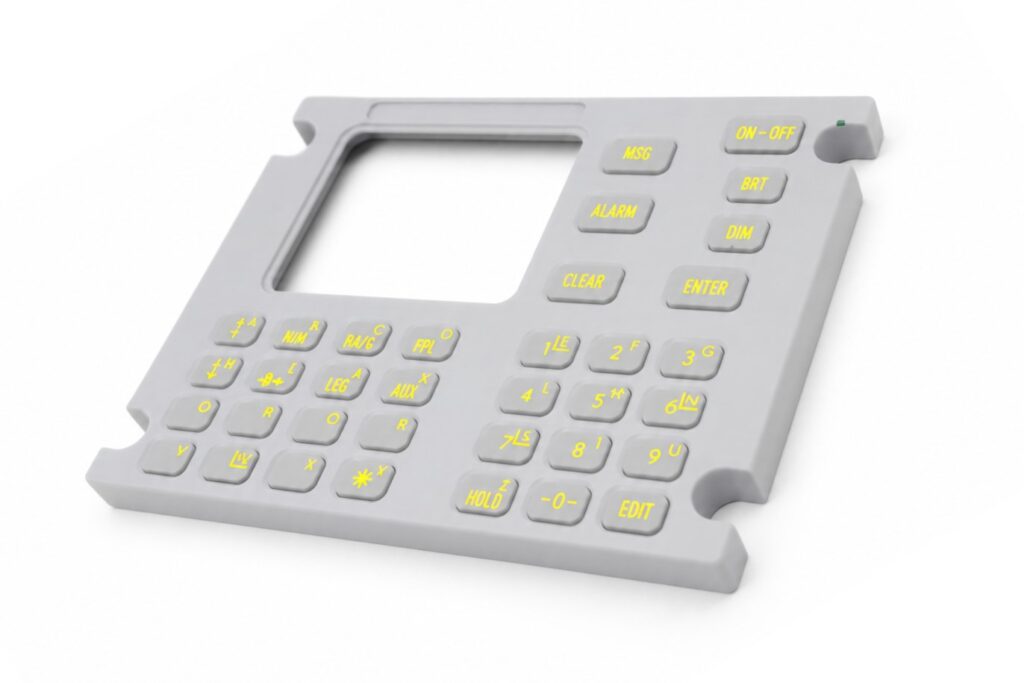
Diverse Protection Against Ambient Environments
For applications in harsh environments, silicone keyboard sealing efficiently prevents the ingress of liquids and solids, as well as environmental factors, into the internal electronic components.
Environmental sealing has been highlighted for its relationship with durability, improved life cycle, and maintenance costs, as well as its waterproof and dustproof performance.
Measuring the Water and Dust Protection of Silicone Keypads
In terms of solid and liquid ingress, the environmental sealing of keypads is also referred to as the ingress protection (IP) rating of electronic devices with silicone keypads. SKF offers waterproof silicone keypads with IP65–68 ratings.
The first digit indicates the solid protection rating, which ranges from 0 to 6. The second digit indicates the water protection rating, which ranges from 0 to 9.
Practical Examples of Silicone Keyboards with IP Ratings
In practical applications, an IP67 silicone keyboard is available through specific treatments on the front of the keyboard. This rating indicates dust tightness and resistance to temporary immersion in water. Examples include industrial control panels with silicone keyboards in indoor environments that are frequently wiped down, as well as outdoor environments where water splashing is present.
For temporary immersion in water or drops into water, IP 67 silicone keyboards can be used in medical fields or outdoor environments.
For tough conditions involving continuous immersion in water or exposure to high humidity, IP 68 keyboards can withstand moisture, salt spray, impact, and extreme temperatures for deck operation.
Environmental Sealing Designs: For Isolating Ambient Factors from Internal Structure
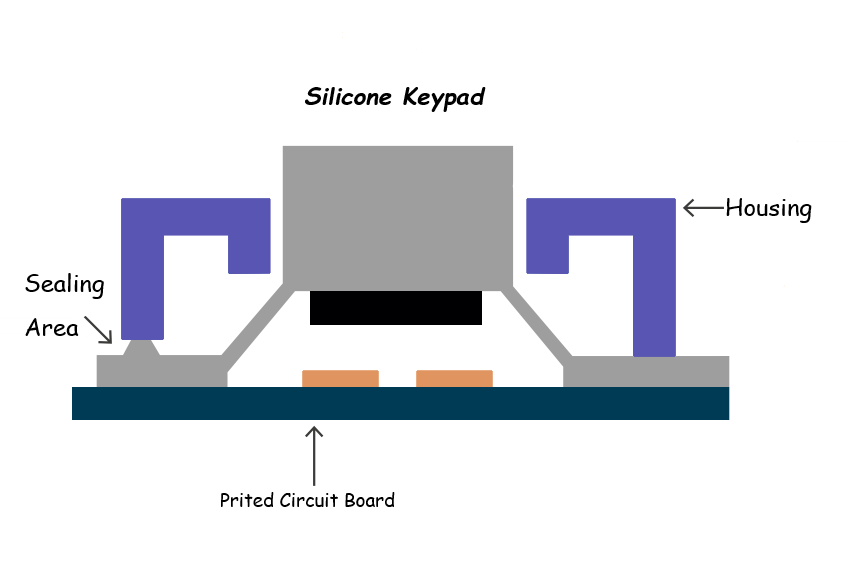
Co-molding, also called overmolding, is an injection molding process that combines two or more materials to form a single object. This process enables the silicone material to be molded over the substrate. More information about overmolded silicone keypads with enhanced sealing is in SKF.
By combining the silicone keypad and housing into one molded part, this method becomes more robust and efficient. Co-molding allows for the integration of backlighting, optimal tightness, and a soft-touch outer surface. It also houses electronic components, optimizing function and aesthetic requirements through the creation of airtight and watertight seals.
We also offer compact and flat silicone keyboards that can be placed stably on any flat surface, as well as portable and flexible keyboards that do not stick.
Environmental Sealing Designs: External Optimization
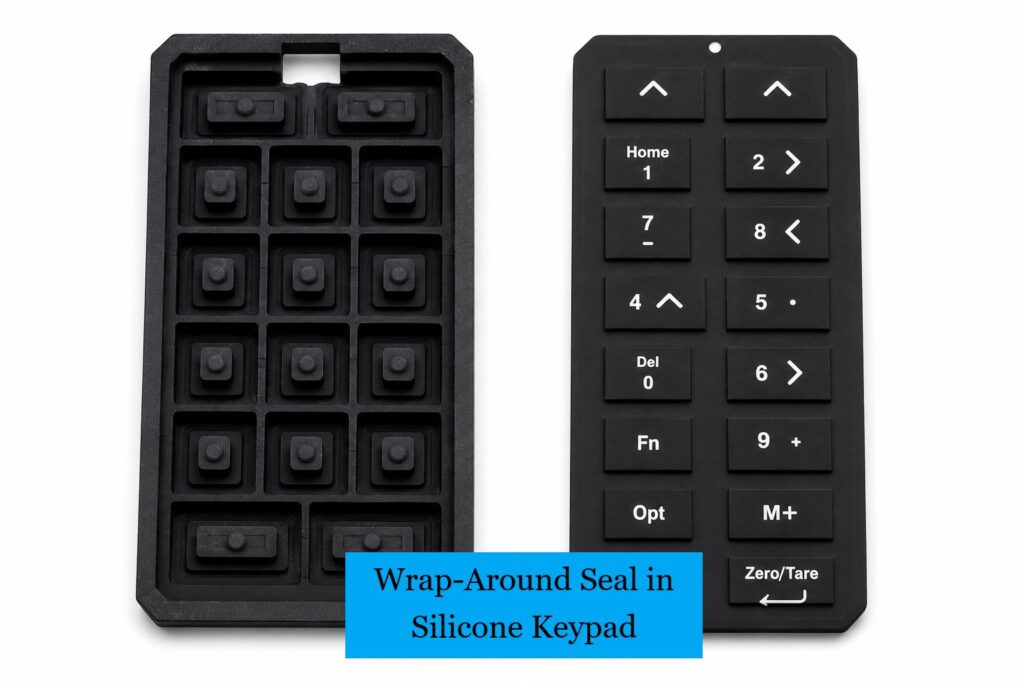
Wrap-Around Seal Design
In the initial design step, silicone keypads can be designed to wrap around the edges of electrical devices. This design provides complete sealing on the front and edges, preventing particulate matter from entering the internal electrical circuits.
Wrap-around seals provide front-to-edge protection against moisture, dirt, chemicals, and contaminations without extra, separate components.
Seal frame design
A seal frame is also a common way to insert an adhesive perimeter frame around the silicone keypad or keyboard to prevent the ingress of chemicals and liquids. However, if the frame seal is incorporated into the silicone keypad design from the beginning, sufficient space must be left at the edges for the placement of the frame seal.
Seal frames can be added to your project at a minimal additional cost.
Sealing Gasket Wrapping
An adhesive sealing gasket can be applied to ensure strong and reliable protection for silicone keyboards. It fits securely around the outer edges of the silicone keypads and compresses against the housing. At the same time, the elastic sealing gasket expands when exposed to heat and pressure in specific environments. When it cools down, the gasket returns to its original size. These gaskets serve to isolate dust and water, adapt to surface irregularities, compensate for thermal expansion, and absorb impact and vibration for silicone keyboards.
Sealing by Gluing
When there is not enough space for a gasket or sealing lip, gluing is ideal. Gluing can be applied to the area between the silicone material and the plastic housing part to improve protection against water in tight, compact, and limited space.
Antimicrobial, Disinfectable & Washable Medical-Grade Silicone Keypads: Hygienic Sealing
For medical and laboratory environments, our medical-grade silicone keypads are processed with platinum curing and antimicrobial additives, such as silver-ion-based additives, to ensure protection from microbes throughout the life of our products.
In environments with exposure to contamination, our medical silicone keyboards can withstand alcohol and disinfectant liquids during washing and disinfection. The all-in-one structure of the keyboards prevents liquids and solid objects from entering the internal circuits and causing failure.
With these two features, our medical silicone keyboards provide a hygienic human-machine interface (HMI) solution for your project.
Non-Conductive Silicone Keypads with Improved Switch Sealing
There are generally cavities between the electrical contacts and the printed circuit boards on the bottom of the switch. Compared to conductive silicone keypads, non-conductive silicone keypads enable a sealed environment while minimizing contamination, chemicals, and the ingress of water on the circuit boards.
Protection Solution from Electrostatic Discharge (ESD)
ESD and EMI issues can affect the performance and accuracy of the equipment and some sensitive precision machines in medical, diagnostic, and military sectors. The following is to explain the influence of ESD for machines and ESD solutions in user interfaces with silicone keypads or keyboards.
What Is Electrostatic Discharge (ESD)?
There is a risk of electrostatic discharge (ESD) on the keytop of a switch. Likewise, the silicone keytops of a keypad are high-contact areas that undergo constant pushing due to human interaction. This may lead to electrostatic discharge in the internal cavity of the switch. Unwanted ESD can damage electronic devices. For medical devices, military instruments, and other sensitive machinery with silicone keypads, ESD can cause interference or emit harmful frequencies.
In specific environments, such as those containing fuel, ESD can lead to a potential safety hazard. In terms of silicone keyboards with USB lines and long cables, hot-pluggable action results in a charge, especially when first plugged in.
Static-Resistant Silicone Keyboards with ESD Protection
With an ESD protection insert, silicone keyboards are resistant to static electricity and the potential damage risks of normal keyboards.
Although silicone is an inherent insulator, the ESD protection and design effectively decrease ESD damage. A metallized Mylar shield layer with a separate tail connects to the grounded housing or mechanical part, providing ESD protection for silicone keyboards by canceling or dissipating electrostatic buildup on the operators’ fingers.
FAQs
Is environmental sealing the same as hermetic sealing?
No. Environmental sealing mainly protects objects from the ingress of liquids, dust, and chemicals. It allows for some pressure and air permeability. However, hermetic sealing aims to create a 100% vacuum-tight barrier.
Can I mount environmentally sealed silicone keypads outdoors?
Yes. Our silicone keypads resist UV light, dust, and moisture from fog or rain.
Where should electrostatic discharge (ESD) protection be placed in a controller: on the main controller PCB or the keypad PCB?
If you only have a ribbon cable for a ground connection, connect the ESD protection directly to the keypad PCB. This will divert ESD currents away from the main PCB.
What is the difference between IP67 and IP68 environmental sealing for silicone keypads?
In terms of occasional splashes or submersions for a while, an IP67 rating is enough for your silicone keypads. IP68-rated silicone keypads can be submerged into water for a specific time under pressure, which makes them optimal for user interfaces in marine, heavy-duty, or underwater control settings.
When should I select gluing for my sealed silicone keypad project?
If your space is pretty limited in a compact and tight room, gluing will be an effective solution.
Conclusion
In harsh operational environments, robust environmental sealing is essential for transforming a laboratory prototype into a reliable, field-ready human-machine interface (HMI). We ensure that internal electronics remain shielded from moisture, dust, chemical corrosion, and extreme temperatures by integrating advanced solutions such as specific ingress protection (IP) ratings, co-molding, and wrap-around seal designs. The inclusion of medical-grade antimicrobial materials and electrostatic discharge (ESD) shielding provides critical protection against microbial growth and ESD, ensuring long-term durability and safety in high-stakes industrial, medical, and outdoor applications.
Protecting your device against the elements extends its life cycle and significantly reduces maintenance costs and field failures. Contact our engineering team today to integrate a tailored environmental sealing and electrostatic discharge (ESD) protection solution into your next silicone keypad project.