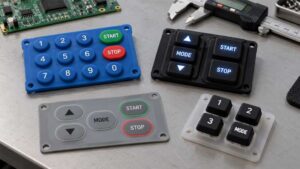
Overmolding is a molding technique used in the production of silicone keypads and other final silicone products. It offers enhanced environmental sealing, precise multiple-color key coloring, and resistance to stains, vibration, and impacts. Overmolded silicone keypads are a durable and reliable option for your rubber keypad project.
The following article will cover the overmolding process, the production of overmolded silicone keypads, their advantages, and their applications in harsh environments.
What Is the Overmolding in Silicone Keypad Production?
What is the Overmolding Process?
Overmolding is a type of injection molding technique that typically involves using elastomers, polymers, or plastics on top of another substrate.
LSR two-shot molding technology involves molding two materials in the same process, whereas the overmolding technique involves molding around a finished molded substance.
What Type of Silicone Rubber is suitable for Overmolding Process?
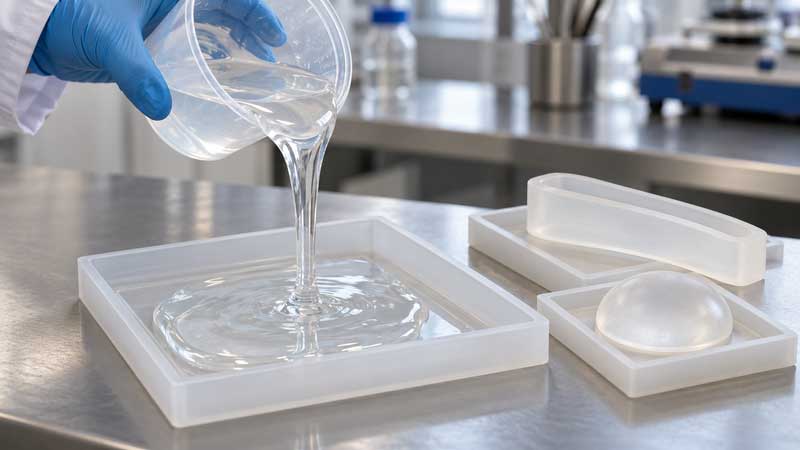
Due to the use of feeding, mixing, and injection systems in the overmolding process, LSR (liquid silicone rubber) is a suitable material for manufacturing overmolded silicone keypads.
How Does the Overmolding process work in Silicone Keypad Manufacture?
There are two ways to carry out overmolding: manual molding and multi-shot injection molding.
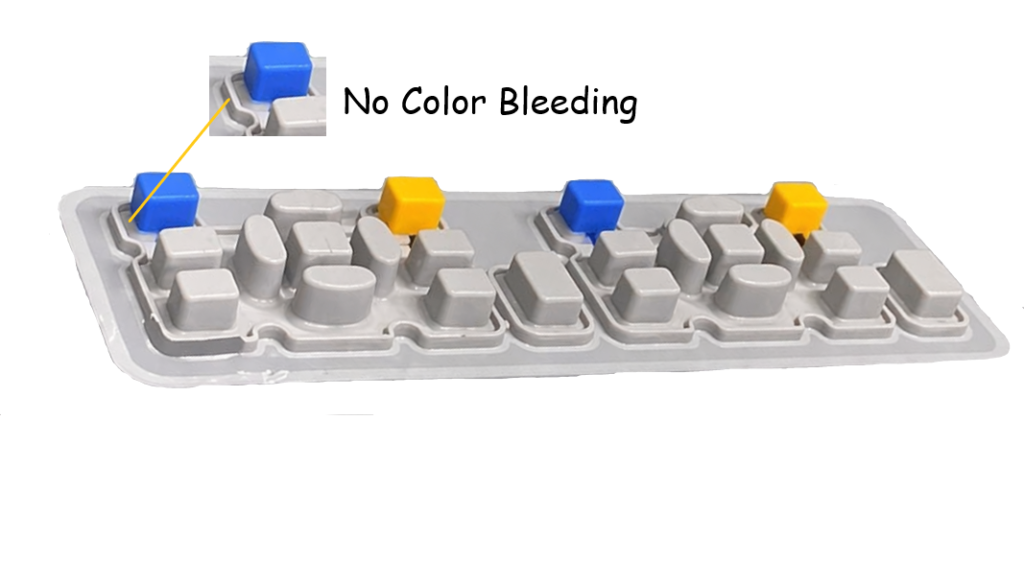
In the manual overmolding process, also known as insert molding, the silicone keypad is placed in the metal tooling. Some of the silicone keypads will then be overmolded with other materials, which usually refers to colored silicone or protective plastic keycaps. For small-scale production of colored silicone keypads, insert molding is more cost-effective, as there are no additional costs for injection molding machines.
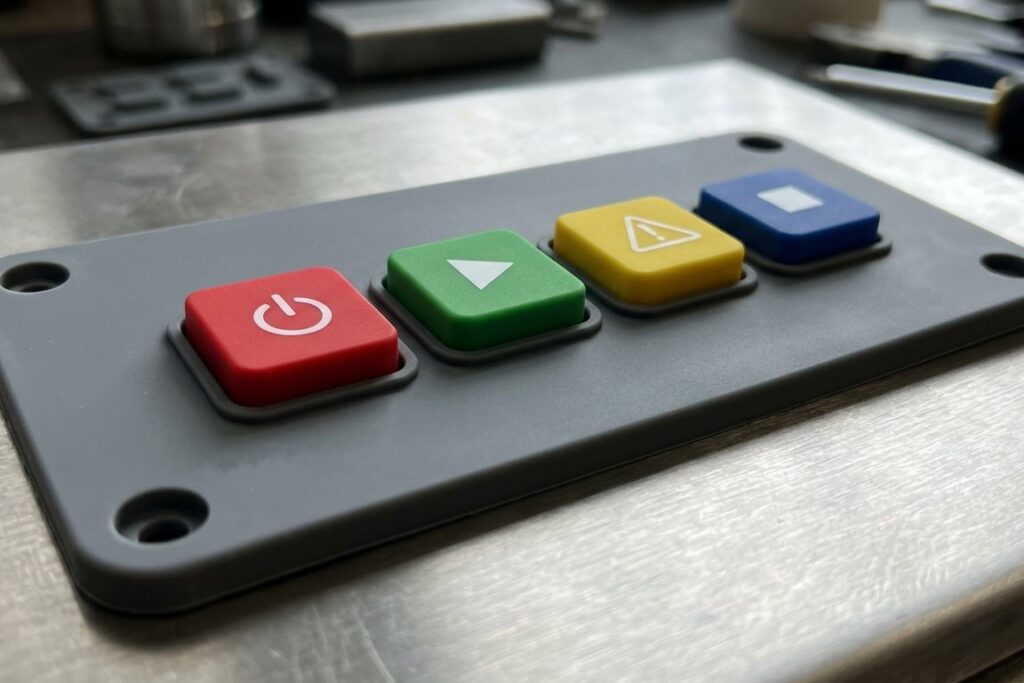
In the multi-shot injection molding overmolding technique, the two molding processes are separated. The first molds the substrate, and the second molds the part. Two or more different silicone materials are injected into the same injection tooling with multiple barrels, which is optimal for the large-scale production of high-precision, complex designs in a cost-effective manner.
Benefits of Overmolding Process for Silicone Keypads
Some overmoulded parts offer benefits such as a better grip and sound absorption for components with handles or where sound absorption is required.
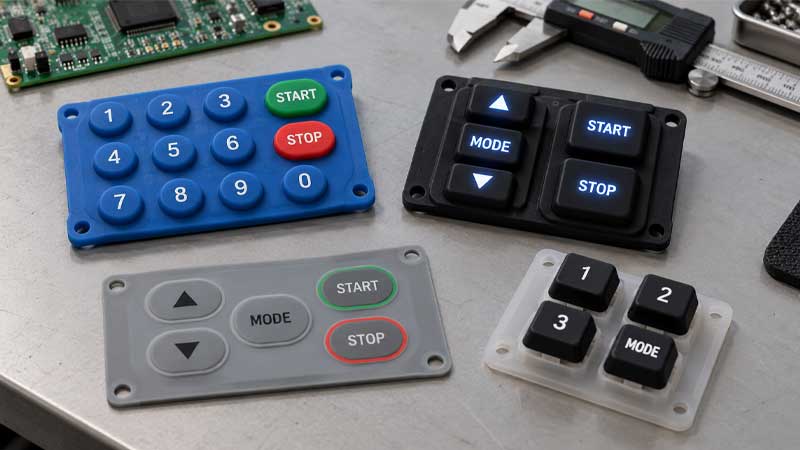
Overmolded silicone keypads are ideal for electronic devices or equipment with physical buttons thanks to their sharp, detailed, colored edges; enhanced mechanical strength; improved sealing against liquid ingress; and ergonomic comfort.
Custom Silicone Keypads with Dual Hardness
In the overmolding process for producing silicone keypads, silicone materials of different colors and hardnesses can be molded into keypads.
During the curing process, the different colors and hardnesses of the silicone keypads are treated under high heat and pressure, bonding them firmly together to create functional overmolded silicone rubber keypads.
Friendly for Dual-Color or Multi-Color Silicone Keypad
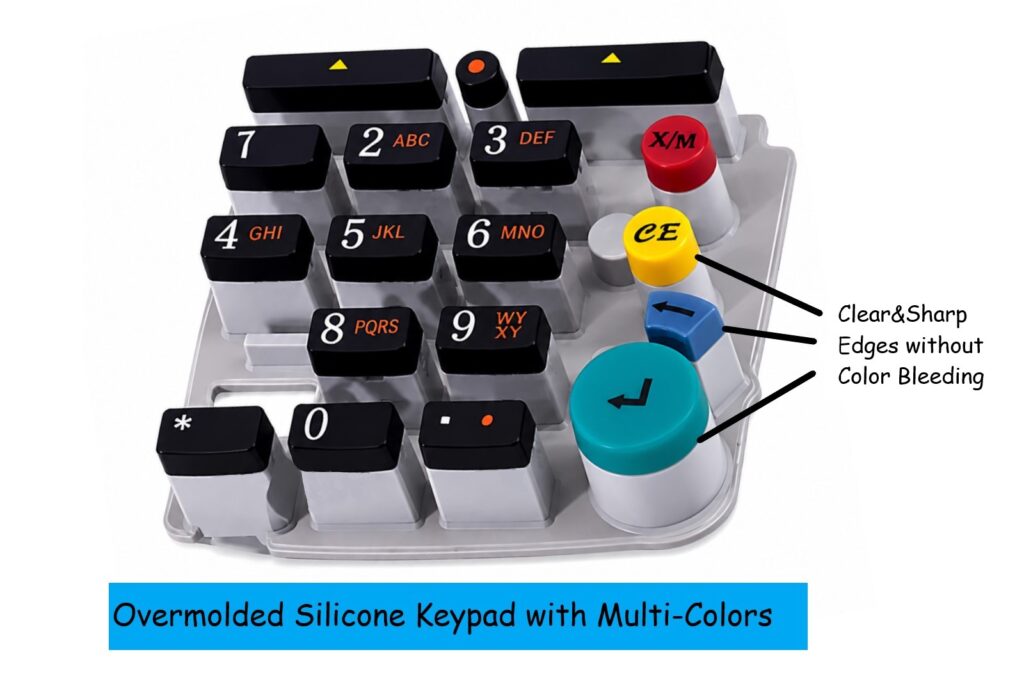
Unlike compression molding, different colors of silicone material are placed in the cavity of the tooling. Then, the preheated silicone is treated and cured at high temperatures and pressures. Excess silicone material and limited cavity space in the tooling can cause flashes and color bleeding issues in the final products.
Overmolded silicone keypads can solve these problems by serving as a multiple- or dual-color rubber keypad solution with clear, neat, and sharp coloring and less material waste.
Waterproof and Dustproof Overmolded Silicone Keypad
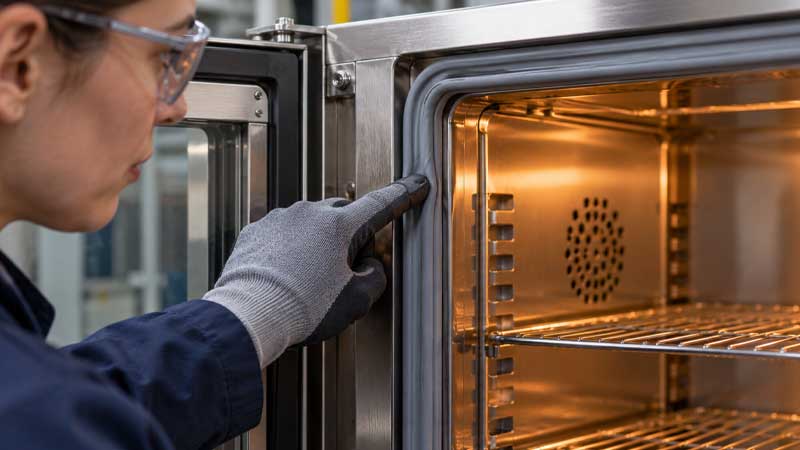
The overmolding process gives the overmolded silicone keypad a relatively higher overall hardness, a thicker profile, a wrap-around structure with watertight silicone rubber, and airtight edges.
Unlike mechanical keyboards, silicone keypads have a smooth and seamless surface with the pleasant touch and comfort of ergonomic design to eliminate finger fatigue and to improve user experience.
Improved Precision and Reliable Bonding
Overmolded silicone keypads have a lower risk of seal displacement due to their secure bonding of substances and their treated silicone rubber coating on the outside, which is the result of a precise injection system and curing process.
Meanwhile, membrane or P+R rubber keypads bonded with pressure-sensitive adhesive (PSA) or other special adhesives still face the risk of coming loose or peeling due to reduced adhesion from prolonged use and environmental factors, such as moisture ingress.
Impact Resistance
For some portable electronic devices, overmolded silicone keypads can improve your electronics with strengthened mechanical strength to resist impacts, shocks, or vibrations from outside in construction, heavy-duty vehicles, or workshops.
Compared to weak and brittle plastic housing for electronics, silicone rubber enables absorption of these impacts, protecting internal electronic circuits and other components from damage.
Disadvantages of Overmolding Process for Silicone Keypads
Similar to the LIM (liquid injection molding) technique, the overmolding process also requires additional costs, including a higher initial cost for manufacturing metal tooling, commodity tooling, and setting up and maintaining injection machines.
The high performance and improved sealing of your silicone keypads require extra costs, but they also ensure consistent colors and details. Subsequent repairs and replacements of silicone keypads in electronics or equipment can be eliminated, reducing downtime and failure of your instruments.
Application of Overmolding with Silicone Keypads
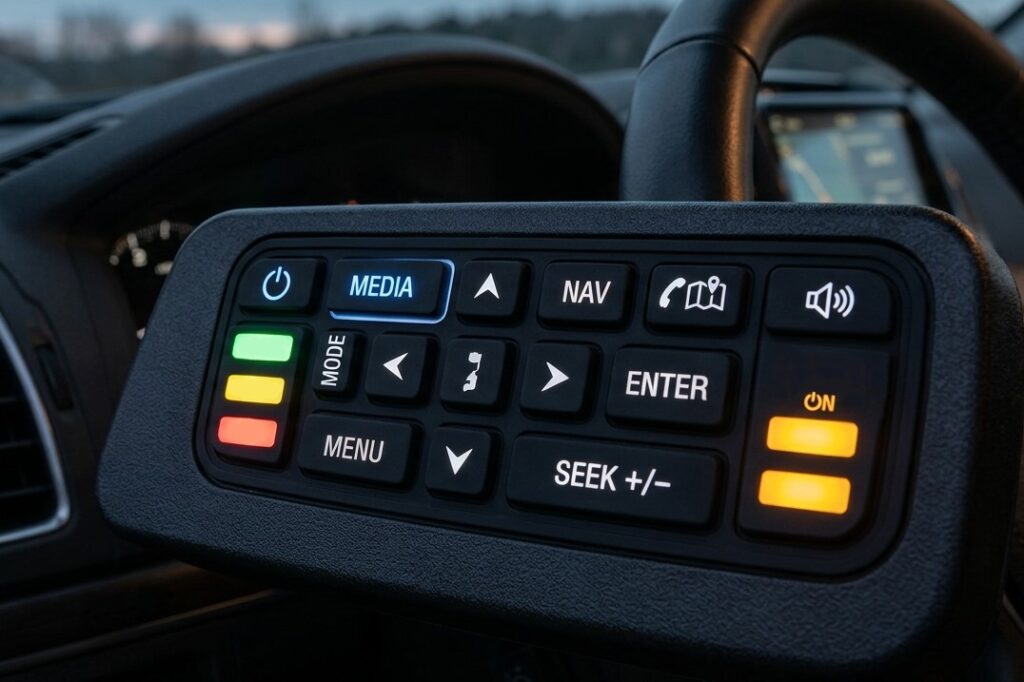
Some electronic devices, involving portable measurement tools, handheld diagnostics, controllers, monitors, scanners, smart control panels, and electric toothbrushes, among others, are integrated with overmolded silicone keypads. These keypads offer improved protection from water and dust ingress, impact resistance, and design flexibility for color customization.
FAQs
Is overmolding cost-effective for small-batch custom silicone keypads?
Yes. For small-batch silicone keypads or rapid prototypes, the manual overmolding process can ensure high quality about sealing, coloring, and forming.
Can overmolded silicone keypads be integrated with a backlighting effect?
Yes. LEDs can be integrated into overmolded silicone keypads, and optional light blocks can accelerate the backlight effect by allowing more focused light transmission and the appearance of silicone keypads.
Can I use RTV (room temperature vulcanized) silicone rubber for the overmolding process in silicone keypad production?
LSR is highly preferred for the overmolding process owing to rapid curing speed, lower injection pressure, and excellent fluidity as an optimal material. HTV may result in color bleeding or displacing issues.
Can I customize a silicone keypad with different colors and hardness?
Yes. SKF also provides silicone keypads with your desired hardness and color designs.
Are overmolded silicone keypads waterproof and can be splashed?
Yes. Our overmolded silicone keypads are wrapped in watertight silicone and enable withstanding spraying or water splashes without changes in performance and short circuit problems.
Final Thoughts
Multiple color designs for functions or appearance customization for silicone keypads can be realized with precise & neat coloring of colored keys. Ergonomic interactive surfaces in silicone keypads not only improve user experience but also create an excellent environmental seal for reliable applications in harsh environments.
SKF manufactures and offers robust and reliable silicone keypads to meet your rubber keypad project.