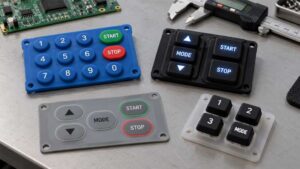
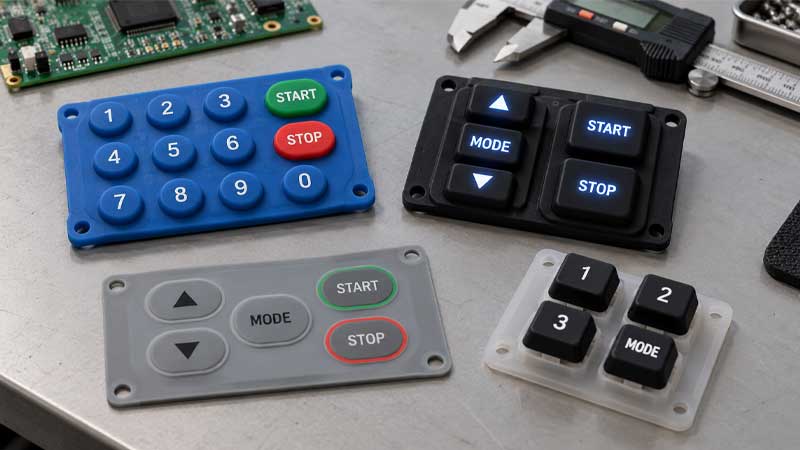
Rigid silicone keypads offer hard touch and a noticeable tactile response. They are molded by transfer or compression molding techniques in the cavity of tooling. These two processes are similar and form HCR silicone material into reliable, durable, and precise keypads.
This article discusses how compression and transfer molding work and the benefits of producing silicone keypads.
Transfer and Compression Molding for Silicone Keypad Manufacturing
What type of Silicone Rubber is applied for Silicone Keypad Manufacturing?
In general, transfer molding is the best method for producing rubber keypads and other complex components made of HCR (high-consistency rubber) silicone. This technique ensures both performance and consistency.
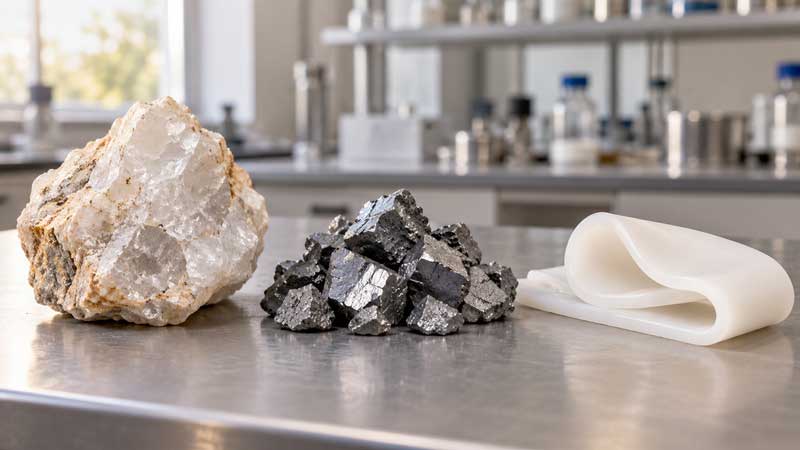
HCR is a type of solid silicone rubber with a relatively high molecular weight and longer polymer chains. Its high viscosity and compatibility with compression and transfer molding make HCR optimal for producing bulk silicone keypads that require high mechanical strength against abrasion, wear, impacts, and shocks.
The durometer hardness of HCR typically ranges from 10 to 80, which is also the range for silicone keypads in electronic and instrument user interfaces.
Besides, LSR silicone rubber is also a typical material selection for rubber keypads by other molding techniques, and FVMQ keypads are optimal for advanced mechanical strength and high performance.
What Is the Transfer & Compression Molding Process in Silicone Keypad Production?
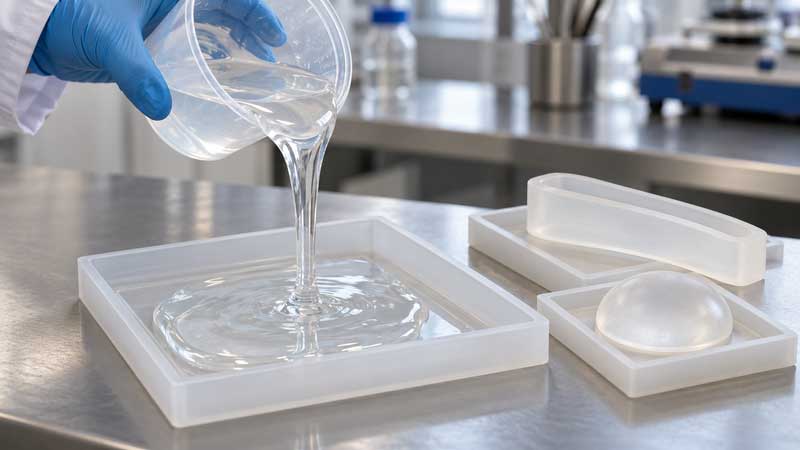
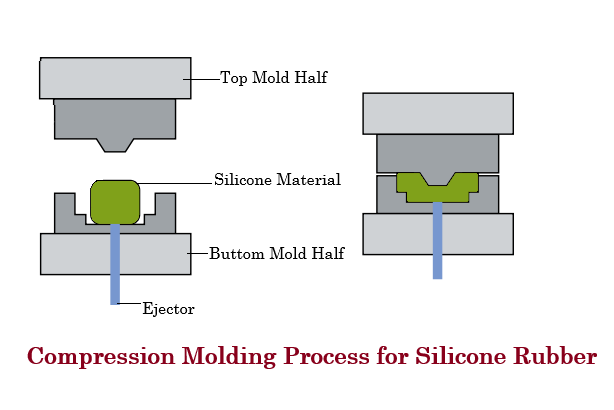
In compression molding, silicone material is forced into the cavity of a mold to create formed silicone rubber. This is a common method for producing silicone rubber keypads.
In transfer molding, preheated silicone rubber raw materials are injected into the mold cavity under high temperature and pressure. This molding technology significantly enhances the dimensional accuracy and consistency of silicone keypads, which is crucial for bulk orders.
Common Molding Process in Silicone Keypad Manufacturing
Silicone rubber molding technologies include transfer molding, compression molding, injection molding, extrusion, co-extrusion, and more. Solid silicone rubber (HCR, for example) is suitable for transfer, extrusion, co-extrusion, calendering, and compression molding.
However, for molding rubber keypads, extrusion and calendering techniques are not suitable for fabricating three-dimensional keypads with a web structure; rather, they are suitable for fabricating products in sheet or tube form.
Therefore, transfer, compression, and injection molding are better suited for forming silicone keypads for electronic or equipment user interfaces.
Compression Molding
Silicone rubber molding technologies include transfer molding, compression molding, injection molding, extrusion, co-extrusion, and more. Solid silicone rubber (HCR, for example) is suitable for transfer, extrusion, co-extrusion, calendering, and compression molding.
However, for molding rubber keypads, extrusion and calendering techniques are not suitable for fabricating three-dimensional keypads with a web structure; rather, they are suitable for fabricating products in sheet or tube form.
Therefore, transfer, compression, and injection molding are better suited for forming silicone keypads for electronics or equipment in user interfaces.
Transfer Molding
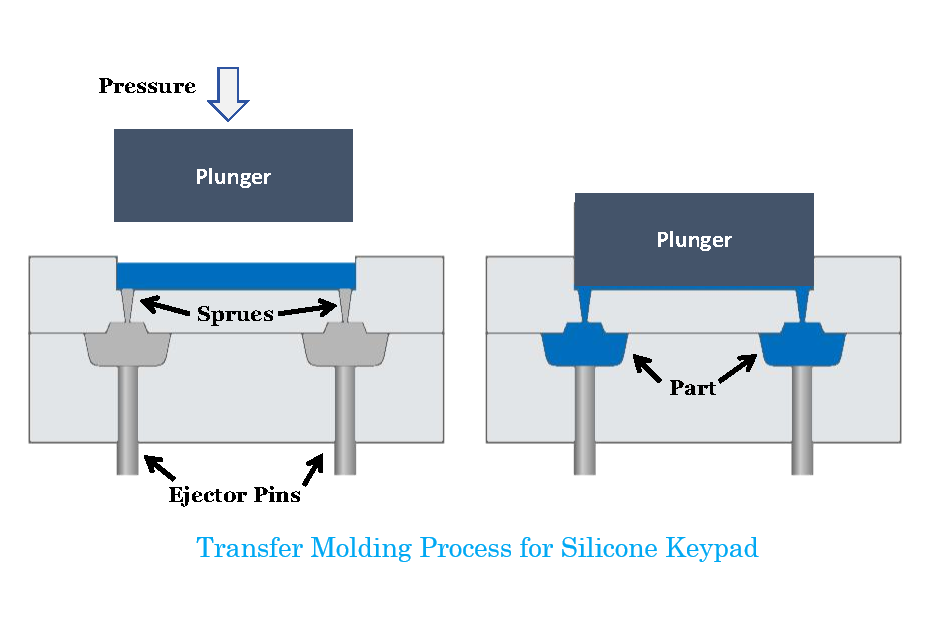
Transfer molding is a technique used to mold solid silicone rubber products, including HCR silicone keypads. Molded silicone rubbers have sharp edges and corners, making them ideal for improved sealing and precision.
A defined amount of silicone keypad raw material is fed into a mold cavity from a feeding system. Then, a plunger forces the rubber through a chamber (a pot) with a runner or sprue.
Injection Molding
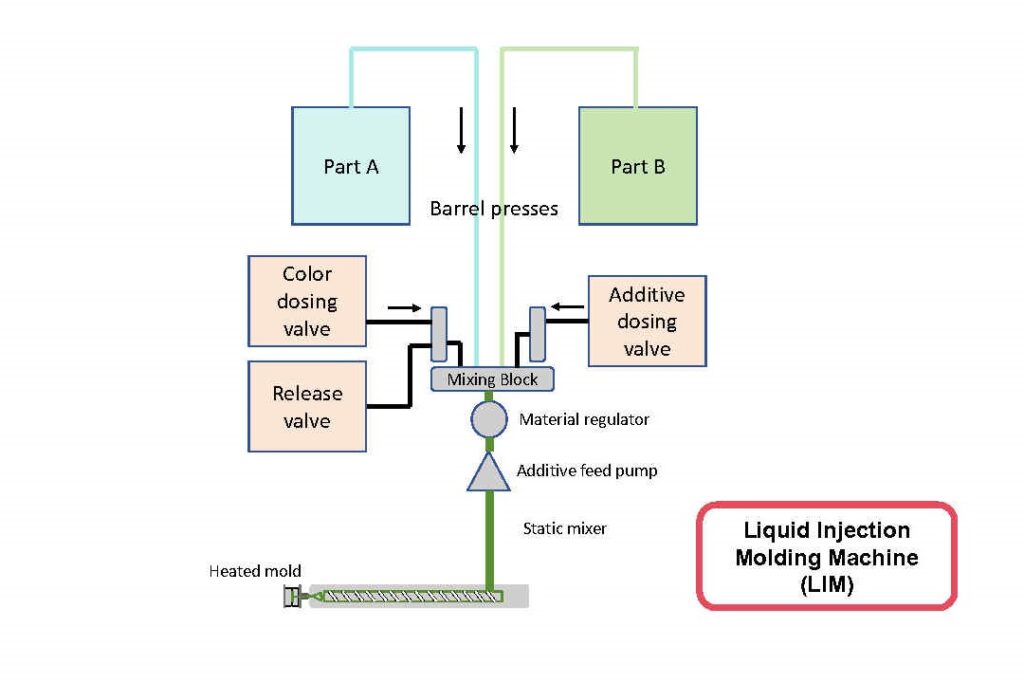
This method enables the formation of solid and liquid silicone rubber. Compared to compression and transfer molding, injection molding uses a screw to melt and inject silicone material directly into the mold. Though this molding technique can be used to mold rubber into silicone keypads, it is more beneficial for mass production of components with thin walls.
Furthermore, the cycle time of injection molding is shorter than transfer molding because the silicone rubber material melts quickly in the tooling cavities.
The Difference between Transfer, Compression, and Injection Molding
| Features | Transfer Molding | Compression Molding | Injection Molding |
|---|---|---|---|
| Sealed State of Cavity in Mold | Closed | Opened | Closed |
| Location of Pressure-Treated Materials | Separate chamber | Cavity of mold (tooling) | Cavity of mold (tooling) |
| Material Waste | More, wastes in sprue and overflow grooves | Moderate | Less |
| Manual Work Cost | Low | Moderate, additional coat for manual deflashing | Low, automated production available |
| Tooling Cost | Moderate | Low | High |
| Cycle Time | Moderate | Long | Short |
| Rubber Grade | Solid silicone rubber | Solid silicone rubber | Solid and liquid silicone rubber |
| Preference | Tight tolerance | Moderate tolerance control in medium- to large-volume production | Long-term value for complex, consistent, and precise parts |
Key Differences Between Compression Molding and Transfer Molding
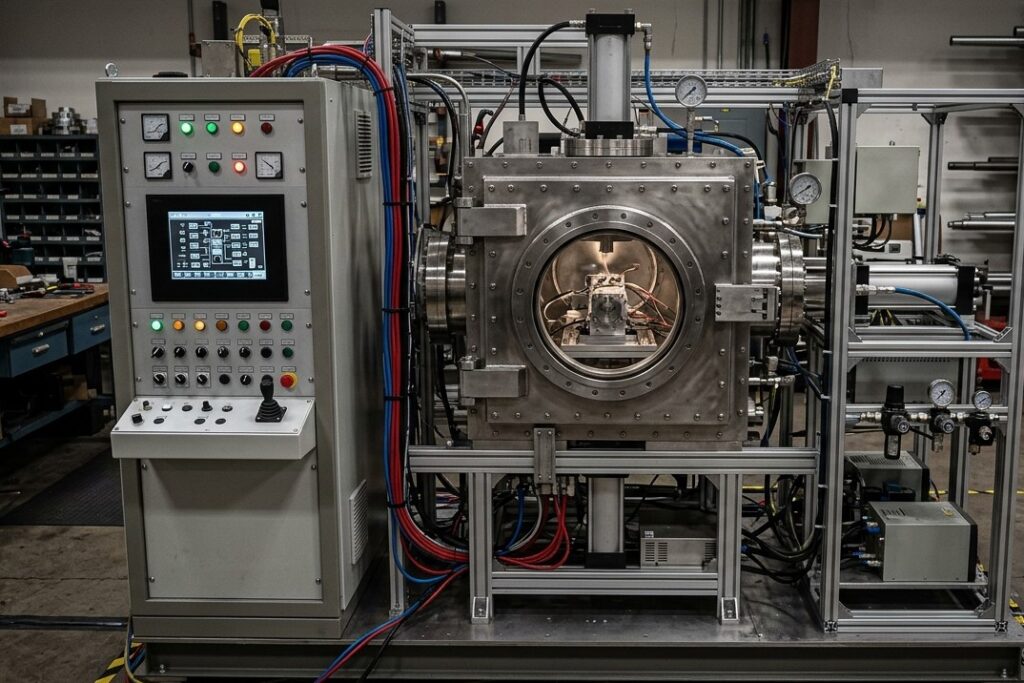
Both compression and transfer molding are classified as high-pressure processes, with molding pressures ranging from 2,000 to 10,000 pounds per square inch (psi). These processes create durable properties and enhanced mechanical strength against external abrasion and wear, making them ideal for silicone keypads in user interfaces.
Cost Considerations
Silicone keypads or keyboards do not usually require intricate designs, extremely sharp edges or corners, or high precision for details and tolerances.
The simple design, low cost of tooling, and larger production runs make compression molding beneficial for silicone keypads in medium or mass production. This technique offers a reliable option for mechanical strength. Additionally, compression molding is more material efficient; the molded silicone keypads remain flat along the parting line.
Transfer molding is more suitable for complex silicone components, though it has a higher initial cost for tooling and setup. For high-performance user interfaces in the aerospace or medical industries, silicone keypads molded by transfer molding may meet your requirements for lower maintenance costs and strict tolerances for electrical contacts or tactile response.
Design Flexibility for Silicone Keypads
Transfer molding can achieve tighter tolerances for complex, three-dimensional silicone keypad designs. Compression molding, on the other hand, is a conventional and cost-effective option for simple, general silicone rubber keypads and medium- or large-scale orders.
Material Waste
Due to the extra runners involved in material injection and forcing techniques, transfer and injection molding have more material waste in the sprue and runner system. In contrast, compression molding optimizes the use of silicone rubber, offering a sustainable solution for silicone keypad production.
Efficiency in Silicone Keypad Manufacture
In terms of cycle time, transfer molding is more efficient for rigid silicone keypads (like HCR silicone) due to shorter curing time.
Furthermore, preheated silicone materials are filled into the tooling and rapidly cured in the injection molding process. Liquid silicone keypads can be molded efficiently with shorter cycle times.
FAQs
Which molding process is suitable for a conductive silicone keypad with carbon pills?
The compression molding is standard for tactile feedback of rubber keypads. But the transfer molding process can ensure high consistency of tactile response in every key and precise web structure for tactile silicone keypads, which meet the requirements of high performance and extreme precision.
Which molding process is suitable for multi-colored silicone keypads?
The compression molding is more recommended by manual placement of diverse-colored silicone into specific cavities of tooling, whereas distinct-colored silicone materials are hardly isolated in the same part.
Will transfer-molded silicone keypads have a flash in production?
Transfer molding can form silicone keypads with fewer flashes and other material waste instead of deflashing processes. Rubber keypads made by injection molding have more strict flash control, whereas compression molding results in more flash.
Are transfer-molded silicone keypads heat-resistant?
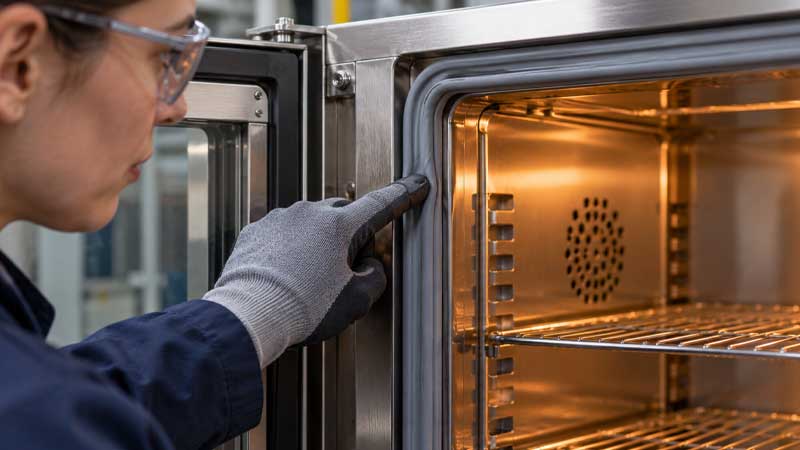
Yes. Silicone keypads, formed by transfer molding, have excellent performance with heat resistance and maintain structural integrity and performance under high heat.
What is the hardness spectrum of silicone keypads that I can choose?
30~80 Shore A typically.
Conclusion
Compression molding remains the optimal solution for large- or medium-scale production, offering high material efficiency and cost-effectiveness. However, silicone keypads for the medical or aerospace sectors, which require strict tolerances and consistency, are molded using the transfer molding process.
Both compression and transfer molding techniques produce reliable, durable silicone keypads using rigid silicone rubber materials. The selection of the molding technique for your rubber keypad project depends on balancing design complexity, precision, and budget.
Our engineering team at SKF offers professional services for your custom silicone keypad project.