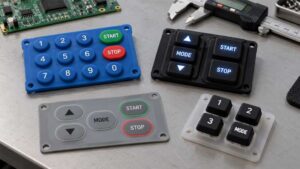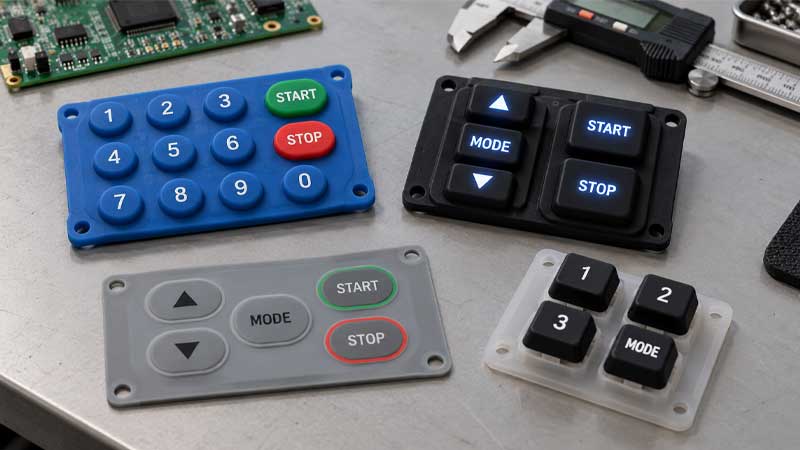
Silicone keypads are widely used in medical equipment, industrial controls, laboratory instruments, and other applications that require reliable and durable interfaces. Although silicone rubber is resistant to moisture, chemicals, and environmental exposure, regular cleaning is still necessary to maintain hygiene, appearance, and long-term performance.
This article explains how to clean silicone keypads, including recommended cleaning solutions, suitable cleaning tools, methods for removing common contaminants, disinfection practices, and maintenance tips to help keep silicone keypads in optimal condition.
Why Should Silicone Keypads Be Cleaned?
Silicone itself does not provide a nutrient source that inherently supports microbial growth. However, contaminants can accumulate on the surface during normal use.
Skin oils and grease can build up on frequently touched keytops. Dust can settle on exposed surfaces, while food residues and moisture may create additional cleaning challenges.
Regular cleaning removes these contaminants before they accumulate. In applications with higher hygiene requirements, disinfection may also be necessary after cleaning.
Cleaning also helps protect the keypad’s secondary features. Printed legends, coatings, and sealing areas can deteriorate if exposed to incompatible chemicals or excessive mechanical cleaning.
How to Clean Silicone Keypads?
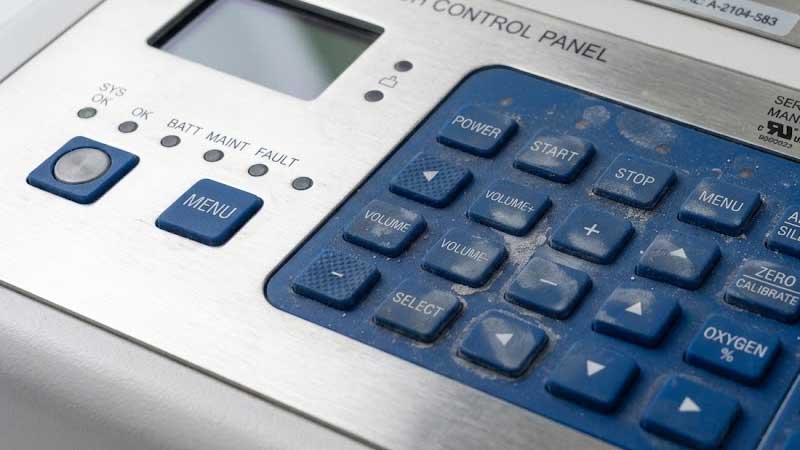
The best cleaning method depends on the type of contamination and the construction of the keypad. Before cleaning a custom silicone keypad, check the equipment manufacturer’s cleaning instructions and confirm that the cleaning agent is compatible with the complete assembly.
Choose the Right Cleaning Solution
For light contamination, warm water and a mild soap or detergent are usually suitable for routine cleaning.
For oils, grease, and more persistent residues, a compatible cleaning agent may be required. Isopropyl alcohol can be suitable for some silicone keypad constructions, but compatibility should be confirmed before repeated use.
Do not select a cleaning chemical based on silicone compatibility alone. A keypad may also contain printed graphics, coatings, conductive pills, adhesives, plastics, metals, and sealing materials.
The concentration and exposure time should also be considered. A chemical that does not immediately damage silicone may still affect a printed legend or coating after repeated exposure.
Use Non-Abrasive Cleaning Tools
Use soft tools that can remove contamination without damaging the silicone surface.
Suitable options include:
- Soft lint-free cloths
- Soft sponges
- Soft nylon brushes
A soft brush can help clean around individual keys and other areas that are difficult to reach with a cloth.
Avoid steel wool, scouring pads, hard brushes, and abrasive cleaning powders. Repeated abrasion can wear the silicone surface, printed legends, or secondary coatings.
Test the Cleaning Method First
For custom silicone keypads, test the cleaning solution and cleaning method before applying them to the complete production assembly.
This is particularly important for colored keypads, printed legends, coated surfaces, and keypads exposed to frequent chemical cleaning.
A small compatibility test can help identify discoloration, surface changes, legend damage, coating deterioration, or other unwanted effects before regular cleaning begins.
For OEM projects, SKF can review the intended cleaning chemicals and frequency during the engineering stage and evaluate them against the planned keypad construction.
Remove Oils, Grease, and Other Residues
Oils and grease can come from operators’ hands, machinery, lubricants, or the surrounding environment.
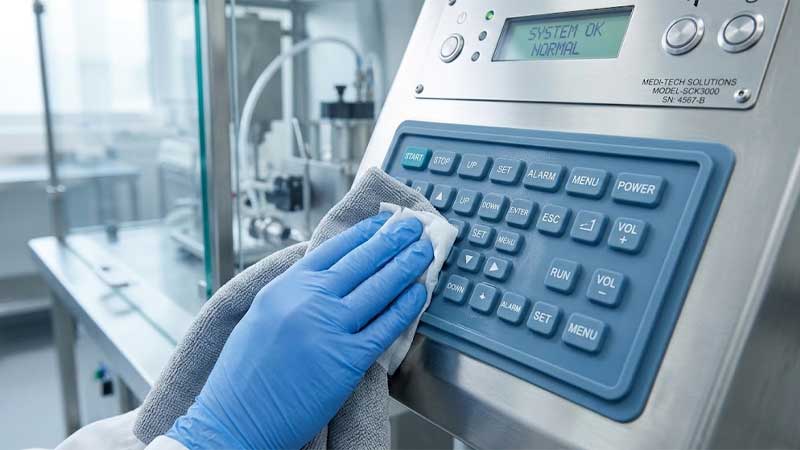
Start with a mild detergent and warm water. Gently wipe the contaminated surface with a soft cloth.
For persistent residues, a compatible cleaning agent may be used after testing. Avoid aggressive solvents unless the complete keypad assembly has been validated for them.
If silicone lubricant or another unknown chemical comes into contact with the keypad, identify the substance before selecting a cleaning method.
Clean Key Edges and Hard-to-Reach Areas
Pay particular attention to the areas around individual keys.
Contamination can remain around key edges, narrow gaps, recessed areas, the keypad perimeter, and sealing interfaces.
Use a soft nylon brush and compatible cleaning solution to reach these areas without applying excessive force.
Keypad geometry also affects cleaning performance. Suitable key spacing, smooth surfaces, and reduced areas where contaminants can accumulate can make routine cleaning easier.
Rinse When Required
If a detergent or cleaning solution leaves residue, rinse or wipe the keypad according to the cleaning-agent and equipment manufacturer’s instructions.
Removing residual chemicals can help prevent buildup on the surface.
For electrical equipment that cannot be exposed to water, use a controlled wiping process instead of rinsing the complete assembly.
Dry the Keypad Completely
After cleaning, remove excess moisture with a clean, lint-free cloth and allow the keypad to dry completely.
This is particularly important for assemblies with electrical connectors or areas where moisture may become trapped.
Keeping the keypad dry between cleaning cycles can also help reduce conditions that allow microorganisms to persist.
How to Clean Silicone Keypads for Different Contaminants
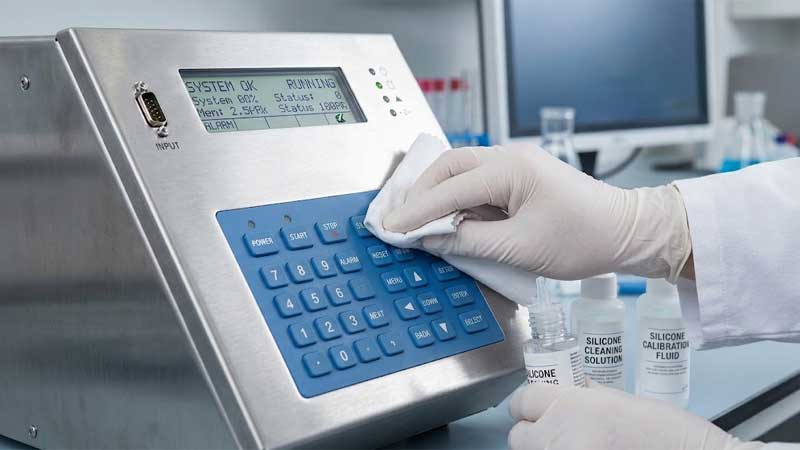
Different contaminants may require different cleaning approaches.
Removing Dust and Dirt
For loose dust and light dirt, a soft cloth or soft nylon brush is usually sufficient.
Avoid aggressive compressed air or high-pressure cleaning if the airflow could force contaminants into gaps, seals, or other sensitive areas.
Removing Oils and Grease
For oily contamination, begin with mild detergent and warm water. More persistent grease may require a compatible cleaning agent.
Apply the solution gently rather than using excessive mechanical force. Always consider the effect of repeated exposure on printed legends, coatings, and other keypad components.
Removing Food Residues
Food processing equipment can expose silicone keypads to oils, sugars, proteins, and other organic residues.
Remove visible food contamination as soon as practical. Clean the surface with a compatible detergent and follow the site’s established sanitation procedure.
For frequent washdown or sanitation, the keypad structure should be designed around the actual cleaning chemicals and process used at the facility.
Removing Stains and Discoloration
Do not immediately use abrasive cleaners or aggressive solvents on stained silicone.
First determine whether the discoloration comes from surface contamination, chemical exposure, pigment transfer, aging, or damage to a coating or printed layer.
For custom keypads, test the selected cleaning method on the actual material and surface finish before applying it regularly.
How to Disinfect Silicone Keypads?
Cleaning and disinfection serve different purposes.
Cleaning removes dirt, oils, residues, and other contaminants. Disinfection is used to reduce microorganisms that may remain after cleaning.
For applications with higher hygiene requirements, the disinfectant should be selected according to the equipment, keypad construction, and applicable cleaning procedure.
Chemical Disinfection
Depending on the application, disinfectants may include alcohol-based solutions, hydrogen peroxide solutions, quaternary ammonium compounds, or appropriately formulated chlorine-based products.
Always follow the disinfectant manufacturer’s specified concentration and contact time.
Do not assume that a stronger concentration or longer exposure provides better results. Repeated exposure to aggressive chemicals can affect silicone, printed legends, coatings, adhesives, or other components.
When Is Sterilization Required?
Sterilization is different from routine cleaning or disinfection. It is intended to achieve a much higher level of microbial inactivation.
Some reusable medical components may require validated sterilization processes such as steam sterilization or other approved methods.
Whether a silicone keypad can withstand a sterilization process depends on the material, construction, secondary processing, and complete device design. Silicone’s heat resistance alone does not mean that every keypad assembly is suitable for autoclaving.
Can Silicone Keypads Be Immersed?
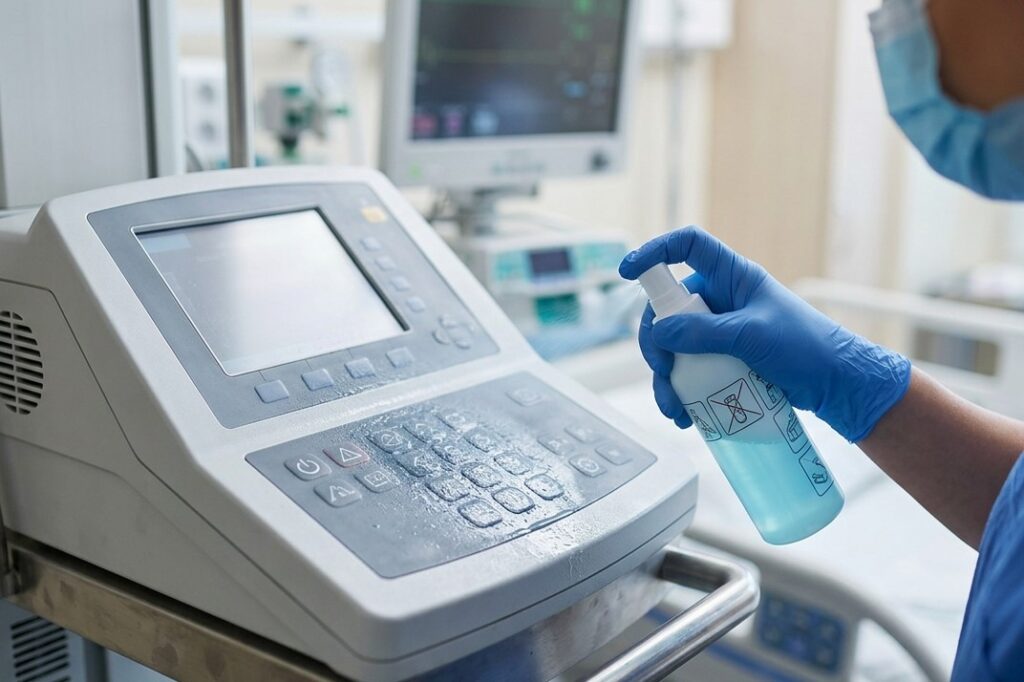
Some silicone keypad assemblies can be designed for immersion cleaning, but this depends on the complete construction.
A waterproof or IP-rated keypad provides protection under specified test conditions. An IP rating does not automatically confirm compatibility with every disinfectant, temperature, concentration, or immersion duration.
Before using immersion cleaning, consider the keypad, housing, connector, cable, printed graphics, conductive elements, adhesives, and sealing structure as one assembly.
For a custom keypad intended for repeated immersion or washdown, these requirements should be considered during design and validated before production.
What Should You Avoid When Cleaning Silicone Keypads?
Avoid Abrasive Cleaning Materials
Steel wool, scouring pads, hard brushes, and abrasive powders can damage silicone surfaces and secondary finishes.
Avoid Unverified Solvents
Acetone and certain petroleum-based solvents may affect silicone, printed graphics, coatings, adhesives, or adjacent components.
Do not assume that a chemical is suitable simply because it does not visibly damage silicone during one cleaning cycle.
Avoid Excessive Chemical Exposure
High concentrations, prolonged contact times, and frequent exposure to aggressive chemicals can affect some silicone formulations and secondary materials.
Follow the cleaning chemical manufacturer’s instructions and validate the complete keypad assembly when the exposure is frequent.
Avoid Excessive Heat
Silicone has good temperature resistance, but the complete keypad assembly may contain components with lower temperature limits.
High-temperature cleaning or sterilization should only be used when the complete assembly has been validated for the intended process.
Avoid Excessive Mechanical Force
Do not repeatedly stretch, fold, or strongly compress thin silicone key structures during cleaning.
Excessive mechanical force can affect key geometry, tactile response, printed areas, or the connection between the keypad and its supporting components.
How Keypad Design Affects Cleanability
Cleanability starts with the physical design of the keypad.
Smooth surfaces, appropriate key spacing, controlled key height, and well-designed transitions can reduce areas where contaminants accumulate.
Sealing is also important for keypads exposed to water, dust, cleaning chemicals, or washdown processes. Depending on the application, gasket structures, housing interfaces, and connector protection may need to be incorporated into the design.
Printed legends and coatings should also be selected according to the expected cleaning frequency and chemical exposure.
During DFM review, SKF can evaluate key geometry, surface construction, sealing interfaces, material selection, printed graphics, and secondary finishes based on the customer’s cleaning requirements. Addressing these factors before tooling can help reduce cleaning and maintenance problems during service.

How to Maintain Silicone Keypads
Cleaning removes current contamination, while regular maintenance helps preserve keypad performance over time.
Clean Regularly
Cleaning frequency should match the operating environment, frequency of use, contamination level, and hygiene requirements.
High-touch interfaces in healthcare or food processing may require more frequent cleaning than keypads used in relatively clean industrial environments.
Keep the Surface Dry
Remove excess moisture after cleaning and avoid leaving the keypad wet for extended periods.
Inspect the Keypad
Periodically check keytops, printed legends, coatings, sealing areas, and other visible components for signs of wear or damage.
Changes in tactile response can also indicate deterioration of the keypad structure.
Recheck Compatibility When Cleaning Procedures Change
If the facility changes its disinfectant, cleaning frequency, temperature, or sanitation process, the keypad should be evaluated against the new conditions.
This is particularly important for equipment that undergoes repeated chemical exposure throughout its service life.
FAQs
Can I clean a silicone keypad with alcohol?
Many silicone keypad constructions can be compatible with isopropyl alcohol, but the complete assembly should be evaluated. Printed legends, coatings, adhesives, and other materials may have different resistance to repeated alcohol exposure.
Can I use bleach on a silicone keypad?
Some silicone keypad assemblies can withstand appropriately formulated chlorine-based disinfectants. However, concentration, contact time, and repeated exposure should be evaluated because other keypad components may have lower chemical resistance.
How often should silicone keypads be cleaned?
There is no universal cleaning frequency. The appropriate schedule depends on the operating environment, frequency of use, type of contamination, and applicable hygiene requirements.
Can a silicone keypad be immersed in disinfectant?
Only when the complete keypad assembly has been designed and validated for immersion. An IP rating alone does not confirm compatibility with every disinfectant or immersion condition.
Does antimicrobial silicone eliminate the need for cleaning?
No. Antimicrobial materials or treatments may help inhibit microbial activity, but they do not remove dirt, oils, food residues, or other contaminants.
What should I do if a silicone keypad is exposed to an unknown chemical?
Identify the chemical before selecting a cleaning method. The compatibility of the silicone, printed graphics, coatings, adhesives, and other components should be evaluated before normal operation resumes.
Final Thoughts
Cleaning silicone keypads does not require an unnecessarily aggressive process. The key is to match the cleaning solution, tools, mechanical action, and exposure time to the keypad construction and operating environment.
Routine cleaning removes contaminants, while appropriate disinfection helps control microorganisms in applications with higher hygiene requirements. Proper drying and periodic inspection also help maintain long-term keypad performance.
For OEM and ODM projects, cleaning requirements should be considered before tooling. SKF supports custom silicone keypad development from DFM review and material selection through tooling, molding, secondary processing, and production validation.
If your keypad requires frequent cleaning, chemical disinfection, immersion, or washdown, SKF can help develop the material, structure, sealing, and surface treatment around your actual cleaning requirements.