HCR (high-temperature cure) and HTV (high-temperature vulcanization) are types of silicone rubber that provide silicone keypads with exceptional mechanical strength, stiffness, robustness, and environmental resistance during operation.
Conventional compression and injection molding are common techniques for manufacturing silicone keypads with HCR/HTV silicone rubber. These techniques have individual advantages for specific production volumes, molding precision, cycle times, and cost control in your projects.
HCR/HTV in Silicone Keypads
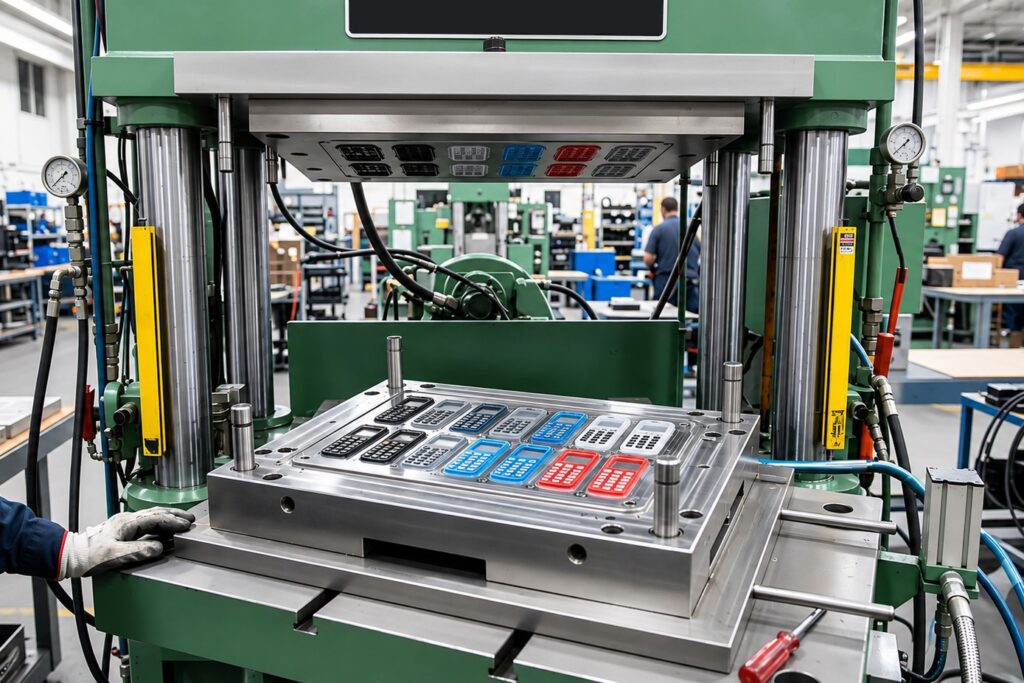
What Is HCR (High Consistency Heat-Cured Rubber)/HTV (High Temperature Vulcanizing) Silicone Rubber?
In the silicone elastomer and silicone keypad industries, HCR and HTV silicone rubber are the same. As the name suggests, HCR is a high-consistency silicone rubber that can be cured at high temperatures using a platinum or peroxide catalyst.
Performance for Applications
HCR is a high-consistency, heat-cured rubber that features excellent mechanical strength in harsh environments, high optical clarity for medical consumables (such as hoses and tubes), a wide durometer hardness range for design flexibility, and outstanding resilience. These properties make HCR an optimal material for silicone keypads, offering a high-performance, reliable option.
Processing Methods for HCR/HTV Silicone Keypads
The material used for your silicone keypad project is determined by mechanical requirements, operation frequency (heavy or occasional use), vulcanization, environmental endurance, and processing methods.
HCR/HTV is generally compatible with compression, injection, transfer, calendering, and extrusion molding techniques. However, in terms of the specific three-dimensional structure of silicone keypads, extrusion and calendering molding are not suitable for single-cavity tooling.
Advantages of HCR/HTV
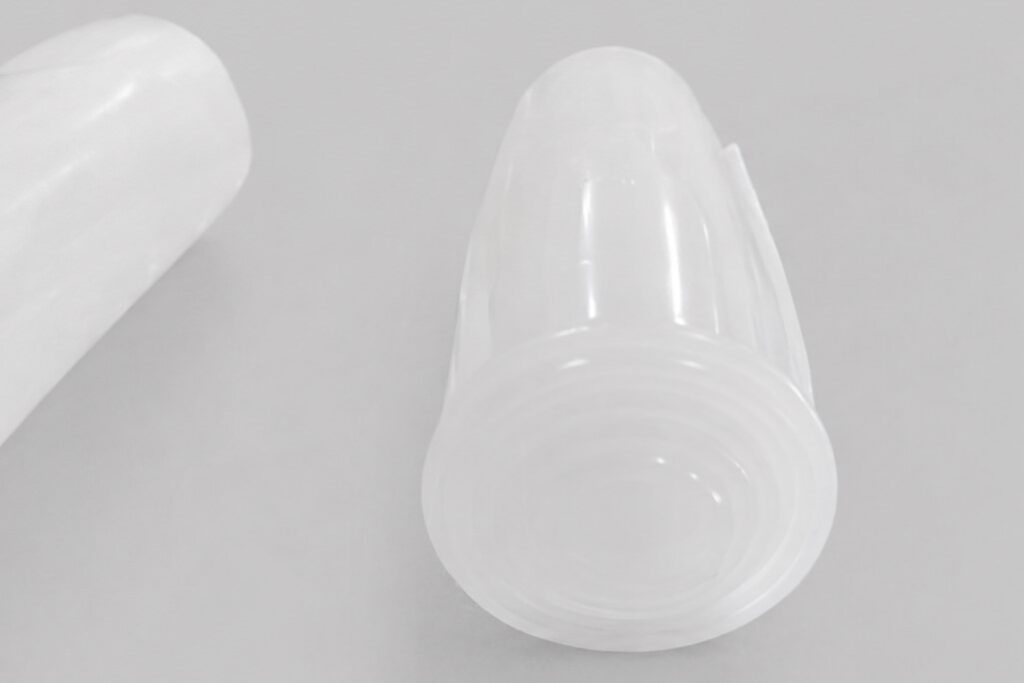
Excellent Resilience & Elasticity
HCR/HTV silicone rubber is flexible and resistant to high and low temperatures. This property provides resilience and elasticity when operating a silicone keypad and enough stiffness and strength to withstand repeated wear, friction, and potential damage from the environment.
Mechanical Strength
Compared to the low molecular weight and short chains of LSR silicone material, HCR has a higher molecular weight and longer chains that are highly flexible. These properties create a wide range of operating temperatures, weatherability, hydrophobic features, and an enhanced lifespan.
This high-performance makeup sets HCR apart from other conventional elastomers. Silicone keypads made of HCR/HTV exhibit exceptional mechanical strength, aging resistance, and photo-oxidative stability even in harsh environments such as outdoors, heavy vehicles, or industries with high ambient temperatures.
Ease of Processing: High Processability of HCR/HTV
HCR supports unlimited color options for your silicone keypad project, including dual-color and multi-color designs. In contrast, some elastomer keypads, such as high-performance FVMQ keypads designed for operation in extremely harsh conditions, have limited color options due to the difficulty of coloring these materials and their inherent properties.
Further, additives that enhance the physical properties and performance of custom silicone keypads can be mixed with other raw materials to meet your requirements.
Optional Transfer Molding Technique for HCR/HTV Silicone Keypads
The transfer molding technique with injection machines is also applied in the HCR/HTV molding process for silicone keypad manufacturing. In this process, silicone materials are completely mixed and pushed into the tooling via a closed mold system and a runner system. This makes the process suitable for applications requiring high precision and complex geometry in industrial, aerospace, or military settings.
This technique also supports overmolding with other materials, which results in excellent sealing and environmental resistance in overmolded silicone keypads.
More information about transfer molding as well as advantages compared to compression molding can be found in SKF.
Properties of HCR
| Features | HCR/HTV Silicone Rubber |
|---|---|
| Material State | Solid or gummy |
| Durometer Hardness | 30~80 ShA |
| Thermal Stability | Up to 300℃(572℉) |
| Cold Resistance | -50℃ (-58℉), or even -120℃ (-184℉) |
| Mechanical Strength | 7~10 MPa |
| Elongation at Break | 200-800% |
| Tear Strength | 15~40 N/mm |
| Schrinkage Rate | 1.5-3.0% |
Properties Comparison betwee HCR Processing: Compression or Injection Molding?
| Features | Compression Molding | Injection Molding |
|---|---|---|
| Material Feeding Method | Manual placement of preformed silicone, labor-sensitive | Automated feeding system |
| When to Heat | After closing molding and when forcing the HCR/HTV to flow and fill the cavity | Preheated cavities in tooling before HCR/HTV feeding |
| Precision & Tolerances | Moderate | Pretty High |
| Tooling Cost | Moderate | High |
| Cycle Times | Relatively slow | Fast with automation |
| Optimal production volume | Low to medium | High Volume is preferred |
| Preference | Flat keytop and simple design | Complex design and suited for overmolded silicone keypads |
Compression Molding of HCR/HTV Silicone Rubber for Silicone Keypads Manufacturing
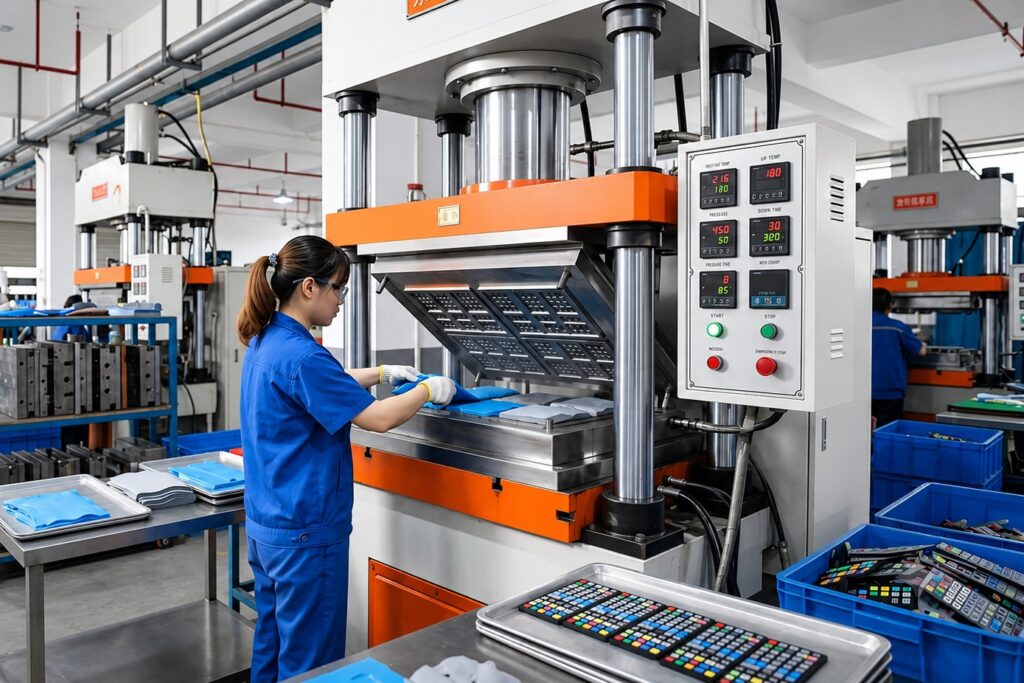
Cost-Effective
The compression molding technique is suitable for producing silicone products, regardless of the size of the batch.
This technology allows high-viscosity, high-strength silicone rubber to be formed into final products, including silicone keypads. Compression molding is also a cost-effective way to mold silicone keypads with complex designs and multiple cavities.
Low Tooling Costs and Material Wastes
Manufacturing silicone keypads by the compression molding process requires short setup times, relatively low tooling and equipment costs, and the ability to make rapid prototypes with minimal waste.
Mechanical Strength
Due to the high temperatures and pressures involved in compression molding, HCR/HTV silicone can be processed into keypads that are dimensionally stable, stiff, and reliable.
Flashes Issues in Compression Molding
However, the inconsistent shapes and flashes of silicone keypads require additional manual treatment in the post-mold finishing process.
Injection Molding of HCR/HTV Silicone Rubber for Silicone Keypad Manufacturing
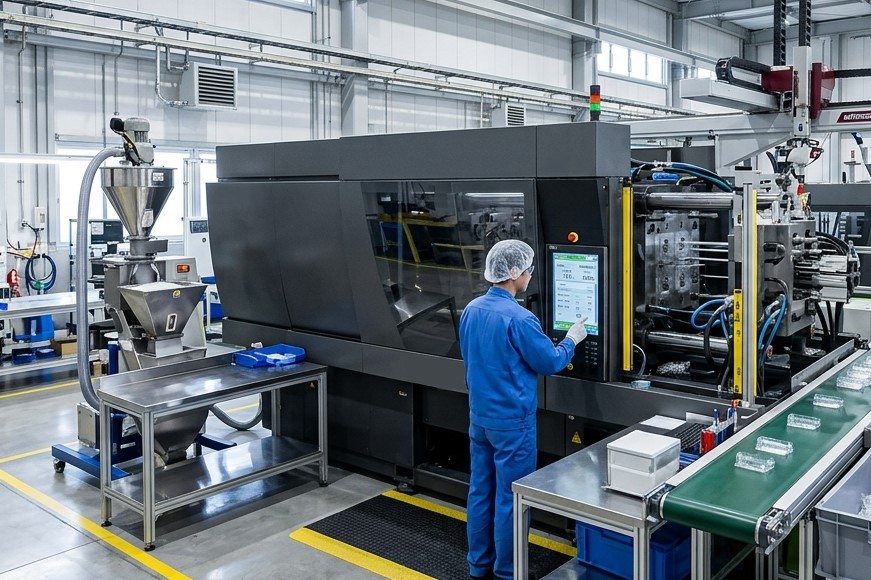
High precision with better filling
Compared to compression and transfer molding, injection molding provides excellent cavity filling and superior precision. It is a robust, reliable solution for silicone keypads made of HCR/HTV silicone, compatible with the specific shapes, sizes, and complexities of your designs.
High-Efficiency & Lower Costs: Injection Molding with HCR/HTV
Although tough LSR is typically processed by injection molding, HCR/HTV can also be injected using a specific instrument. Compared to LSR injection molding (LIM), HCR/HTV requires lower design, instrument, and machining costs, though it involves more steps.
Furthermore, HCR/HTV injection molding uses automated production to efficiently manufacture large batches of silicone keypads, reducing labor and unit costs while decreasing flashes and waste. This process also offers rapid cycle times and exceptional consistency. Short, accurate molding cycles eliminate uncertainty in silicone keypad manufacturing and subsequent delivery.
Post-Curing for Precision of Silicone Keypads Via Injection Molding Technique
In terms of producing silicone keypads by injection molding, applying a peroxide catalyst in the curing process requires post-curing to eliminate byproducts. Otherwise, deflashing or trimming molded silicone keypads increases labor and material costs.
FAQs
What are the main differences between HCR/HTV and LSR for manufacturing silicone keypads?
HCR/HTV has a high molecular weight and viscosity, which offers superior mechanical strength, better cost control, and color customization. LSR has low viscosity and is molded using injection molding.
What should I choose for high-volume production and high precision?
The injection molding technique ensures that the HCR/HTV fills the cavity of the tooling well. This results in lower unit costs, less waste, a shorter cycle time, and increased efficiency for your silicone keypad project.
Why is post-curing necessary for HCR/HTV injection-molded silicone keypads?
Post-curing improves the dimensional stability and physical properties of silicone keypads, which is beneficial for operation in harsh conditions.
Can HCR/HTV silicone keypads support multicolored designs and overmolding?
Certainly. Custom silicone keypads made with HCR/HTV silicone material can be any color.
How can flashes be reduced in compression-molded HCR/HTV silicone keypads?
SKF focuses on material feeding, tooling optimization, and strict control of pressure and temperature during the compression molding process to ensure the silicone keypads have sharp edges and precise dimensions.
Final Thoughts
The exceptional mechanical strength, resilience, and elasticity of HCR/HTV make it an optimal material for high-performance, durable, stiff silicone keypads.
For large-scale production requiring rapid cycle time and excellent precision, we recommend injection molding for HCR/HTV. Automation is suitable for large-scale production and rapid cycle time for the production of injection-molded silicone keypads using HCR.