UV exposure, heavy use, and salt fog or spray can damage silicone keypads in marine equipment or portable devices used in marine settings.
Salt fog and salt spray testing evaluates the effects of salt deposits on the physical and electrical properties of materials. This method is also used to simulate the effects of a salty environment on silicone keypads during operation.
What Is the Salt Fog & Salt Spray?
The Definition of Salt Fog and Salt Spray
As their names suggest, salt fog and salt spray are distinct states. “Salt fog” refers to a humid, saline environment with a fine mist of salt solution. “Salt spray,” on the other hand, is a more direct, corrosive salt mist.
How Does Salt Corrosion Affect Silicone Material?
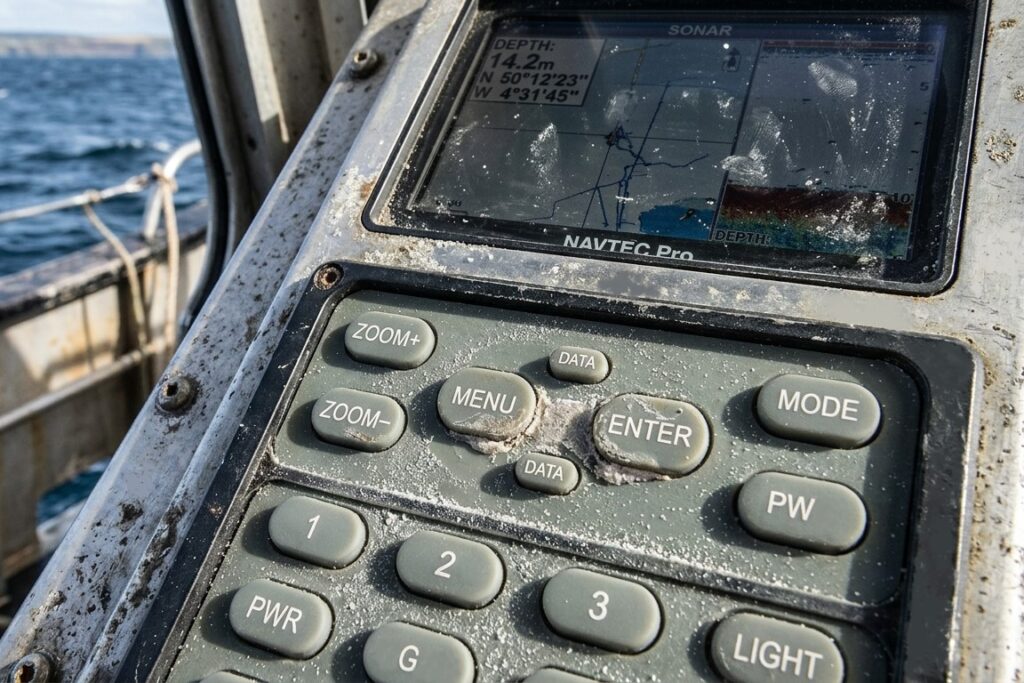
When marine equipment is exposed to a salt environment long-term, salt deposits are created on the surface of the housing, screens, and physical buttons, which changes the physical and electrical properties.
Salt corrosion physically results in the binding or clogging of mechanical components and the blistering of surface coatings. Additionally, salt deposits can form conductive coatings that decrease electricity and damage internal circuit boards or components due to ingressed saltwater and short circuits.
What are the differences between the salt fog test and the salt spray test?
The main difference between the two tests lies in how corrosion from salty substances is simulated.
In salt fog testing, a fine mist of salt solution is present in a humid environment simulation chamber. The chamber is maintained at about 95℉ (35℃) with high humidity and a 5% NaCl (sodium chloride) salt fog.
Salt spray testing, also called salt mist testing, involves directly spraying a salt solution (5% NaCl) at approximately 95℉ (35℃). However, this test sprays more intensely, creating more corrosive conditions.
Salt fog tests are preferred for long-term durability studies, which examine how silicone and other materials perform under long-term exposure to tough, realistic environments.
Conversely, salt spray tests aim to provide rapid evaluations and reliable data for quality control of produced silicone keypads.
Salt Fog & Salt Spray Testing for Measurement of Corrosion and Environment Resistance
Where do Salt Fog and Salt Spray Testing proceed?
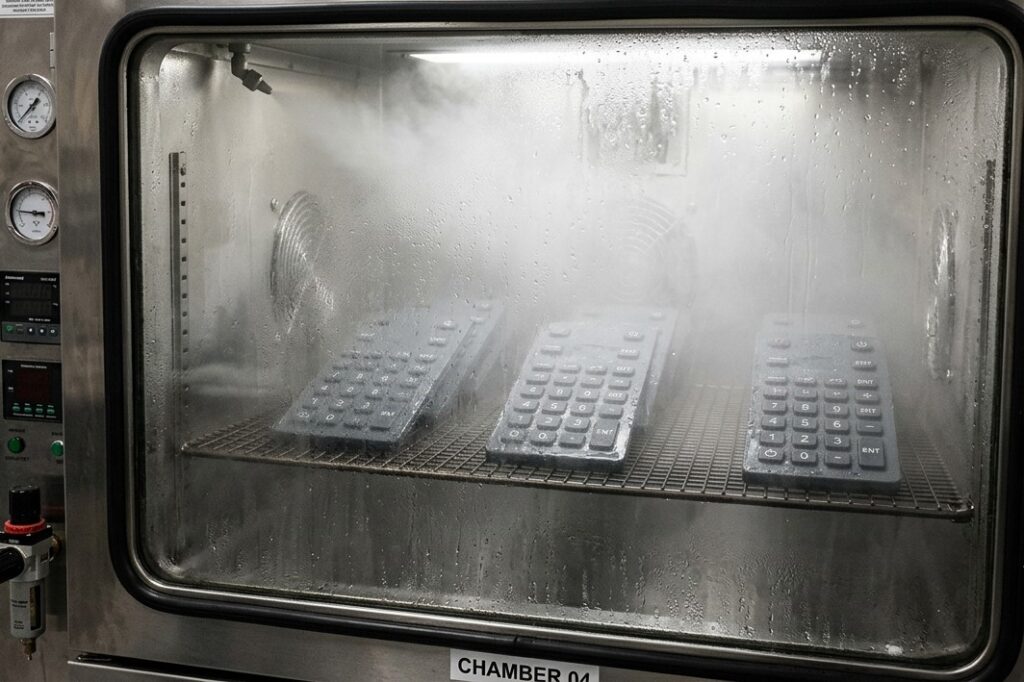
A salt fog test simulates environmental factors in a specific space, such as a benchtop chamber, walk-in chamber, or mixed test cabinet.
The chamber is selected according to the dimensions of the specimens being tested and has precise controls for humidity, temperature, salt mist concentration, and airflow. During testing, these environmental factors are strictly controlled and monitored for accurate, consistent, and reproducible data for your silicone keypads.
Measurement of Environmental Resistance against Salty and Wet Conditions
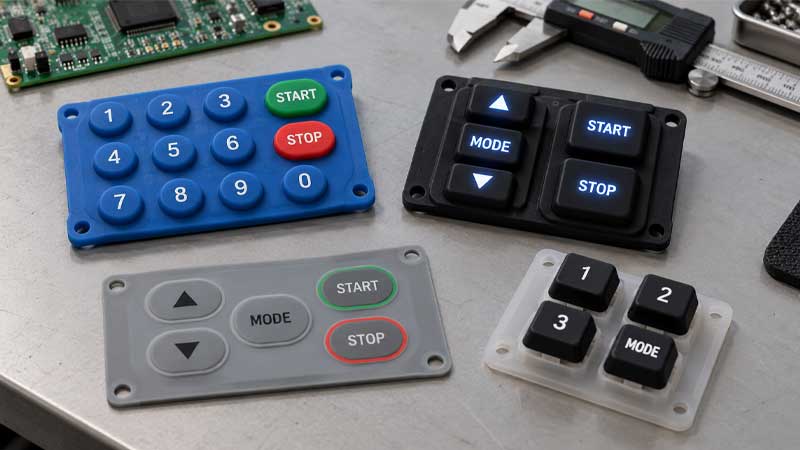
SKF has manufactured and supplied reliable silicone keypads tailored to tough marine conditions for user interfaces in the marine sector, including navigation systems, portable communication devices, deck controls, and onboard monitoring.
Limitations of Salt Fog Test and Salt Spray Test
These tests cannot duplicate complex conditions, but they identify issues that lead to subsequent failure and downtime in machines with failed silicone keypads.
A salt environment includes not only salt fog corrosion, but also various corrosive conditions. Additionally, fungus growth and humidity affect the physical and electrical properties of certain materials, including silicone rubber. Salt fog and salt spray tests cannot simulate the influence of these factors on silicone keypads.
Significant Simulation to evaluate Silionce Keypads in Harsh Environment: Salt Spray Testing
Salt spray testing generally simulates and evaluates the environmental resistance of silicone keypads in harsh conditions. This process enables the identification of potential issue areas, design flaws, and quality control issues in silicone keypads.
Although this test cannot entirely simulate the natural operating environment, it can indicate potential problems associated with a marine environment.
How does the salt spray test work?
Salt Spray Testing Procedures
According to MIL-STD-810H, the salt solution used for spraying in a chamber must be free of contaminants, acids, and alkalis that could affect the final test results, and it must have a concentration of 5±1%. Additionally, exposure durations should include 24- and 48-hour cycles. Silicone keypads are typically exposed to a salt solution spray for 24 hours, dried for an additional 24 hours, and then exposed to the spray again for another 24 hours, completing two cycles in total.
After the silicone keypads are carefully placed in the chamber, the salt solution passes through a filter system from the reservoir and is injected into the test chamber. A fine mist is sprayed at a consistent rate onto the insides of the silicone keypads, leading to uniform distribution on the surface.
Compared to salt fog testing, salt spray testing accelerates the salt corrosion process, providing an effective solution for rapidly assessing corrosion resistance.
To quantify salt corrosion of silicone keypads in salt spray testing, relevant data should include the pH of the salt solution, the quantity of salt deposits (also called salt fallout) per unit of time, and the corrosion, physical, and electrical effects on the keypads.
Evaluation and Criteria
To better evaluate environmental resistance under saltwater conditions, there are criteria for silicone keypads after salt spray testing.
Electrical integrity refers to the sealing performance of silicone keypads, and contact and insulation resistance must be tested. Additionally, the graphic durability of the keytops is evaluated using RCA abrasion testing to determine the mechanical wear resistance of the keypads. Additionally, an IP rating is a common requirement for silicone keypads that are waterproof and operate in wet environments long term.
Marine Solution with Silicone Keypads

Excellent Fatigue Resistance
Silicone keypads from SKF feature exceptional mechanical strength and enough stiffness to support your marine silicone keypad project.
Compared to metal or mechanical keypads, seamless and sealed silicone keypads are inserted into user interfaces of marine instruments, withstanding water splashes, UV light exposure, and salt environments. Rapid tactile response is offered by elastic web structure, reliable rebound, and strengthened carbon pills or metal domes inside.
Environmental Sealed Silicone Keypads
With gaskets, adhesives, a wrap-around design, or an overmolding process, silicone keypads can be designed to provide excellent environmental sealing and prevent the ingress of dust, liquids, and salt deposits into marine equipment. Effective sealing can prevent key sticking due to saltwater seeping around silicone buttons and contact corrosion.
SKF offers waterproof silicone keypads with an IP67 or IP68 rating that can withstand harsh marine conditions.
Operation in Day or Night Use
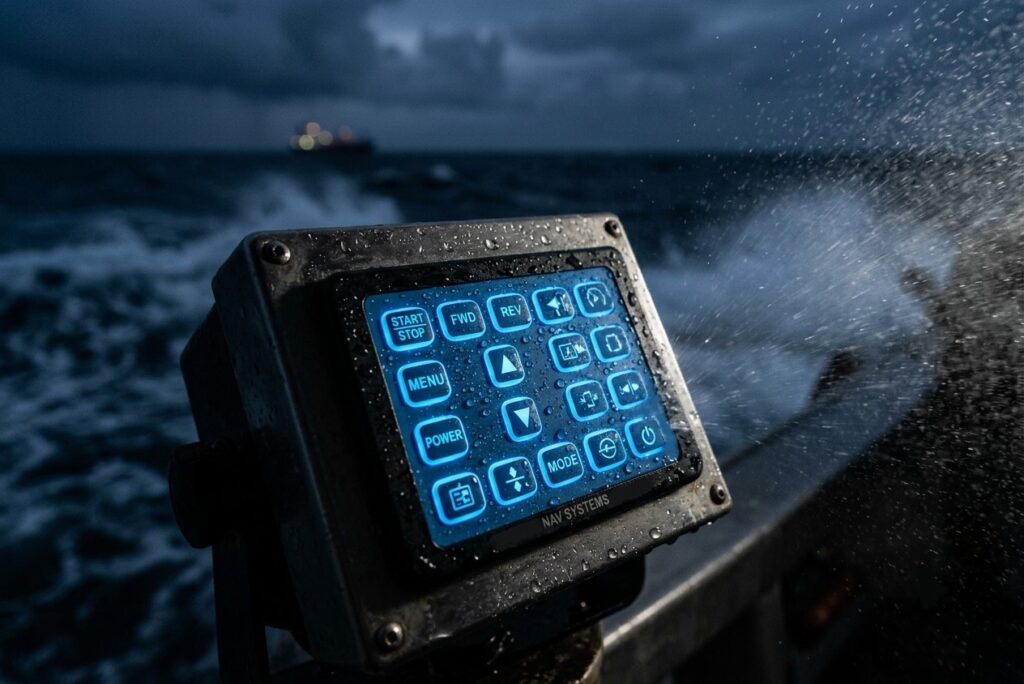
Our marine silicone keypads provide pleasant tactile feedback and easy recognition of the keytop legends, with integrated LED indicators and light blocks that provide recognizable status indications in user interfaces. User interfaces with well-designed silicone keypads ensure reliable and mistake-free operation, whether used during the day or at night.
FAQs
Can I customize silicone keypads for marine settings with a backlight effect?
Yes. Sealed silicone keypads can be designed with a backlighting effect in transparent or laser-etched keytops with robust legends. Clear reliability and rapid response ensure your operation in marine settings.
Are there other tests for quality control of silicone keypads?
Yes. A series of tests include color matching, abrasion resistance, actuation force & snap ratio for silicone keypads.
Will the legends of the marine silicone keypads fade or peel?
Salt deposits may affect the clarity of the legends on normal keypads’ keytops. However, our SKF silicone keypads can be designed with robust legends via laser etching or strengthened coatings that protect against mechanical wear and salt corrosion.
Can your silicone keypads maintain stability in marine environments with high heat or cold temperatures?
Yes, silicone keypads from SKF have excellent temperature stability, ranging from -75℉ (-59℃) to +400℉ (+204℃).
Can an environmental chamber be used for other silicone keypad tests?
Yes, there are specific chambers for testing temperature, humidity, pressure, solar radiation, water spray, accelerated weathering, and climate. These chambers enable the simulation of diverse actual environments during silicone keypad operation. SKF recommends focusing on a single factor at a time, rather than multiple factors simultaneously.
Final Thoughts
Salt fog and salt spray testing can effectively simulate a marine environment in test chambers by exposing silicone keypads to specific salt solutions, temperatures, and humidity levels.
Silicone keypads that pass SKF’s salt spray testing ensure high performance, mechanical strength, and reliability in marine conditions over the long term as a professional marine solution.