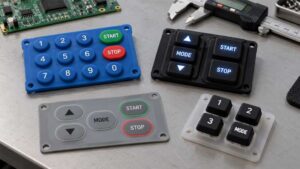
The curing process is crucial for producing silicone keypads and other silicone products. It provides enough mechanical strength to withstand wear and impact, and offers environmental resistance to UV light, chemicals, and extreme temperatures in harsh conditions.
The performance and properties of custom silicone keypads during operation in specific applications are partly determined by the specific curing temperature, time, and agents.
What Is Curing Process of Silicone Keypad Production?
Definition of Curing
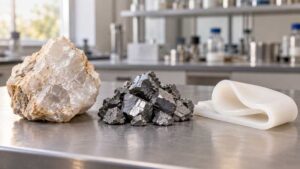
Natural rubber becomes brittle and sticky when exposed to heat. The curing process transforms raw silicone into a functional and reliable material for various applications, including silicone keypads for interactive use.
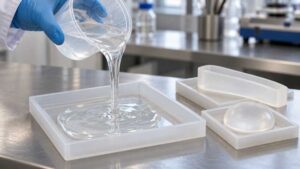
Curing, also called vulcanization, is a chemical cross-linking reaction that transforms raw rubber into durable, stiff, cured silicone keypads, also known as “vulcanized rubber.” A cross-link is a chemical bond that links one polymer chain to another, creating stable elasticity with a three-dimensional network structure in silicone keypads.
During the curing process, silicone materials are treated with heat, pressure, and additives. This changes the molecular structure of the silicone, strengthening its wear resistance, chemical resistance, robustness, and elasticity in the long term.
Will cured silicone keypads melt again?
Typically, no. “Thermoset” refers to a silicone compound that has been set at a high temperature. Thermoset is an irreversibly cured material. The cross-linked chains in silicone keypads demonstrate that the silicone has been cured and has gained stability instead of melting again.
How does the curing process work in silicone keypad manufacturing?
The curing process procedures include:
- Mixing: The silicone raw material is mixed with activators, fillers, colorants, additives, and curing agents, which leads to a series of chemical reactions that improve durability.
- Heating: The mixture is heated to between 121 and 204 degrees Celsius (250 and 400 degrees Fahrenheit) to speed up the curing process and significantly increase flexibility and mechanical strength.
- Cooling: After heating, the rubber material is cooled to create elastic, wear-resistant, stiff silicone keypads that provide the rebound, elastic webbing, and rapid tactile feedback you need.
Key Parameters in Curing Process of Silicone Keypads

Curing Temperature & Curing Times
In the production of silicone keypads, the key parameters are the curing temperature and time. These parameters ensure optimal curing.
A higher curing temperature decreases curing time, which lowers manufacturing costs. However, excessive temperature can result in process reversal and increased demolding issues.
Sizes of Silicone Keypads
The size of silicone keypads also affects the actual curing time. Thicker keypads require a longer curing time at a lower temperature to ensure consistency and thorough curing.
To accelerate productivity in the curing process and the entire manufacturing process, post-curing can be applied to enhance quality control, remove uncombined constituents, and improve color demonstration. After the molding process, silicone keypads are treated to a two-hour post-curing cycle at a temperature of 392℉ (200℃).
Curing Agents: Peroxide Vs. Platinum
Curing agents act as catalysts that improve the cross-linking process, also known as curing. Common agents used in silicone keypad production include peroxide and platinum.
The following table compares peroxide and platinum in terms of processing, properties, and final silicone keypad performance.
| Features | Peroxide | Platinum |
|---|---|---|
| Curing Mechanism | Utilizing organic peroxides | Using with a platinum catalyst |
| The Use of Talc | Required in processing | Talc free |
| Yellowing in Use | Yes | No |
| Flexibility | Higher stiffness and poor flexibility | Higher flexibility and elasticity |
| Thermal Stability | Excellent | Great, available fosr autoclaving of medical equipment with cured silicone keypads |
| Shrinkage Rate | Slightly | Nearly no |
| By-Products | Contained | No or little with high purity |
| Transparency | Lower, translucent | Higher, transparent |
| Process Difficulty | Lower, lower curing temperature | Higher, require higher curing temperature and precise control of curing conditions |
| Cost | Lower material and processing costs | Higher material and processing costs |
The Importance of the Curing Process for Silicone Keypads
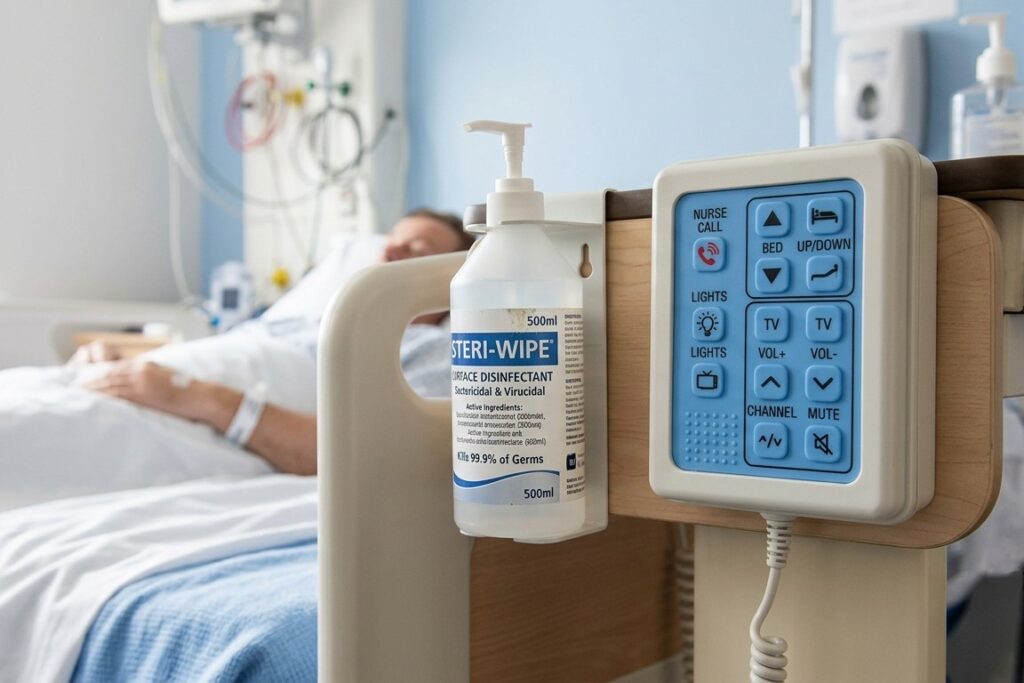
You can customize the properties and performance of silicone keypads for your rubber keypad project by adjusting the curing agent and opting for post-curing. This allows you to control factors such as temperature resistance, waterproof design, and compression set for elasticity and rebound during pressing.
Heat & Cold Resistance of Silicone Keypads
Compared to natural rubber, silicone keypads can withstand high temperatures. They maintain their original performance at 302°F (150°C) and can operate for up to 1,000 hours at 392°F (200°C).
Meanwhile, natural rubber becomes brittle at temperatures between -4℉ and -22℉ (-20℃ and -30℃), while silicone rubber’s embrittlement point is between -76℉ and -94℉ (-60℃ and -70℃). Silicone rubber remains elastic at these cold temperatures, offering rebound and a rapid tactile response during operation of silicone keypads.
However, silicone rubber increases its hardness and reduces elongation when exposed to heat. However, when silicone keypads are placed in sealed conditions at high temperatures, the expected lifetime decreases and the silicone softens due to degradation.
To eliminate softening and enhance the temperature resistance of silicone keypads in a sealed environment, the selection of curing agents and additional post-curing can be helpful.
Waterproof Silicone Keypads Against Moisture
Though telephones, portable devices, and TV remote controls with silicone keypads do not come into contact with steam, control panels in industrial processing and autoclaving for medical devices do. These control panels face steam and high pressure.
Using appropriate curing agents and post-curing processes effectively improves the steam resistance of silicone keypads in these high-heat, sealed conditions.
Post-Curing for Improving Compression Set of Silicone Keypads
In the context of silicone keypads, “compression set” is a measurement of a silicone rubber’s ability to regain its original size and shape after being compressed under specific conditions.
Silicone keypads maintain stability within a temperature spectrum ranging from -76℉ (-60℃) to 77℉ (25℃). However, higher temperatures result in increased compression set. Silicone rubber typically requires post-curing treatment with appropriate curing agents.
Reliability and Expected Lifetime
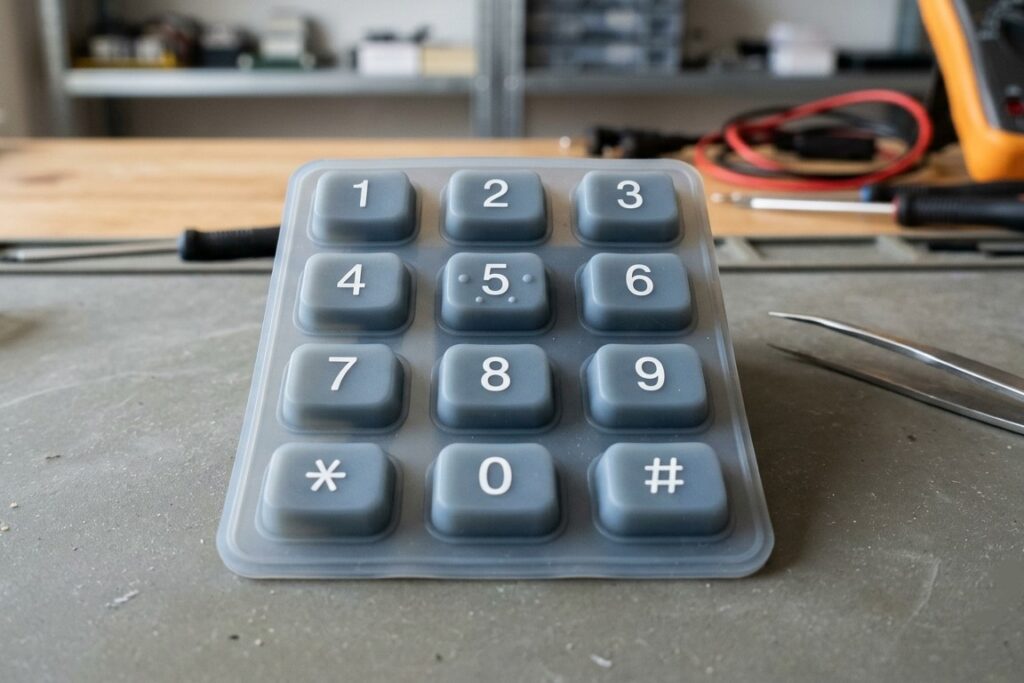
The reliability and expected lifetime of a switch or user interface with a silicone keypad depend on the post-curing cycle, snap ratio, actuation force, and hardness of the keypad. Thicker silicone rubber keypads decrease life cycle, curing time, and curing temperature.
FAQs
Is post-curing necessary for silicone keypad production?
No, but post-curing at 200°C (392°F) for two hours can remove catalyst and oxidant residue, enhancing the physical properties and thermal stability of silicone keypads.
Is curing required after printing legends on the silicone keypads?
Yes. Curing silicone keypads with printed legends in high-temperature ovens enhances the durability and wear resistance of these graphics.
What is addition-cure silicone rubber?
Addition-cure silicone rubber, also called platinum-cured silicone, uses a platinum agent mixed with the catalyst and silicone polymer during the curing process of silicone keypad manufacturing.
Have your silicone keypads gained the necessary certifications?
Yes. Our high-performance silicone keypads are durable and reliable, and are certified by RoHS and REACH standards. We can also design customizations and performance requirements for your rubber keypad project.
How can you ensure that the silicone keypads have undergone sufficient post-curing?
A weight loss test can be performed by measuring the weight of the keypads stored at room temperature for 24 hours, then measuring their weight after storing them at 200°F (93°C) for 24 hours. The weight loss should be controlled at 2% to pass this test.
What is the difference between curing and vulcanization?
Generally, they refer to the same cross-linking reaction in silicone keypad production.
Are there other curing methods?
In spite of heat curing and peroxide curing, there are also room temperature and radiation and microwave ways to apply the curing process to rubbers.
Final Thoughts
According to your specific requirements for custom silicone keypads, the curing process is designed for thermal stability, high performance, and environmental resistance with durable cross-linking for distinct applications.