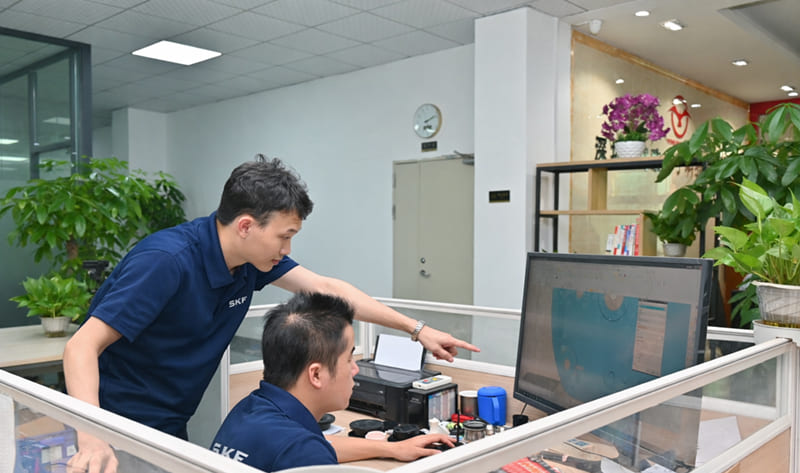
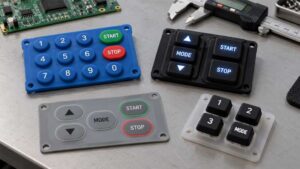
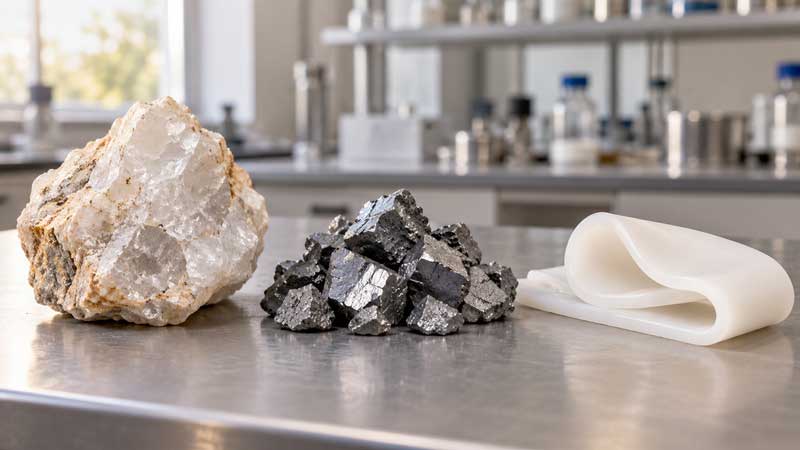
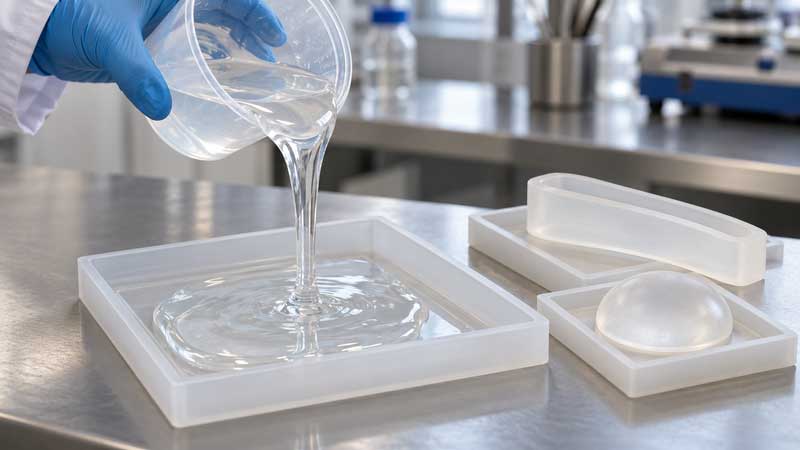
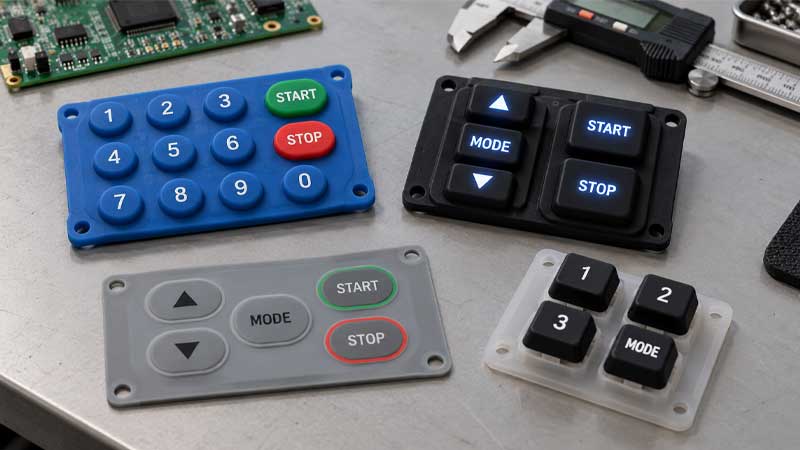
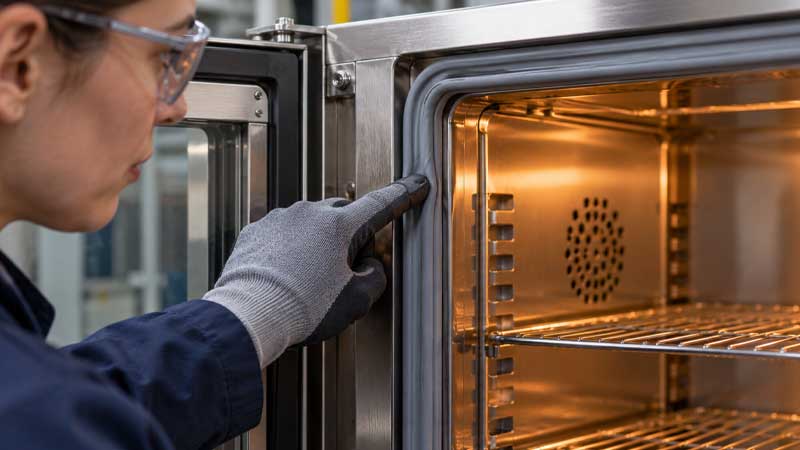
We have developed a silicone rubber keypad from initial prototypes to mass production. During this process, we have implemented DFM, manufacturability, engineering validation, quality control, and consistency in large-volume manufacturing. We will demonstrate the benefits of design improvements.
DFM & DFA & Design for Full-Scale Production
What Are Differences of DFM, DFA, and Design for Full-Scale Production?
You may have heard these three terms: “DFM,” “DFA,” and “design for full-scale production,” and they can be divided into different phases, from creating rubber keypad samples to improving and adjusting the design and finally achieving consistent mass production. Further, success or failure depends on the long-term reliability, durability, performance, and consistency of the product.
What Is DFM in Design? And What About DFA?
DFM stands for “design for manufacturing,” and DFA stands for “design for assembly. ” There is also a term that combines both: DfMA (design for manufacturing and assembly). DfMA improves the cost, reliability, and lead time of silicone keypads through modular design.
However, DFM and DFA focus on different aspects.
DFM aims to improve manufacturability by lowering the complexity of the manufacturing process, reducing component and quality control costs, and improving DFA.

DFA aims to simplify product structure and improve assembly efficiency by reducing the number of required components. Furthermore, manufacturers utilize specific keypads or parts and adjust their size, weight, stiffness, flexibility, and ease of dispensing to enhance assembly ease.
Manufacturers and designers consider these factors to strike a balance between manufacturability and ease of assembly for silicone rubber keypads, and SKF is committed to helping our customers achieve this balance.
How Can Design for Full-Scale Production support My Interfaces Project?
Design for full-scale production (DFS) refers to the engineering of products that can be produced repeatedly, durably, and reliably on a large scale. DFS combines rubber keypad design, capability, manufacturability, and quality assurance.
Unlike DFM, which focuses on decreasing the cost of individual parts, design for full-scale production ensures the consistency of entire elastomer keypads at scale.
Why Does Optimizing Design Early Prevent Expensive Tooling Rework?
Will Design influence The Scale of Production of Rubber Keypads?
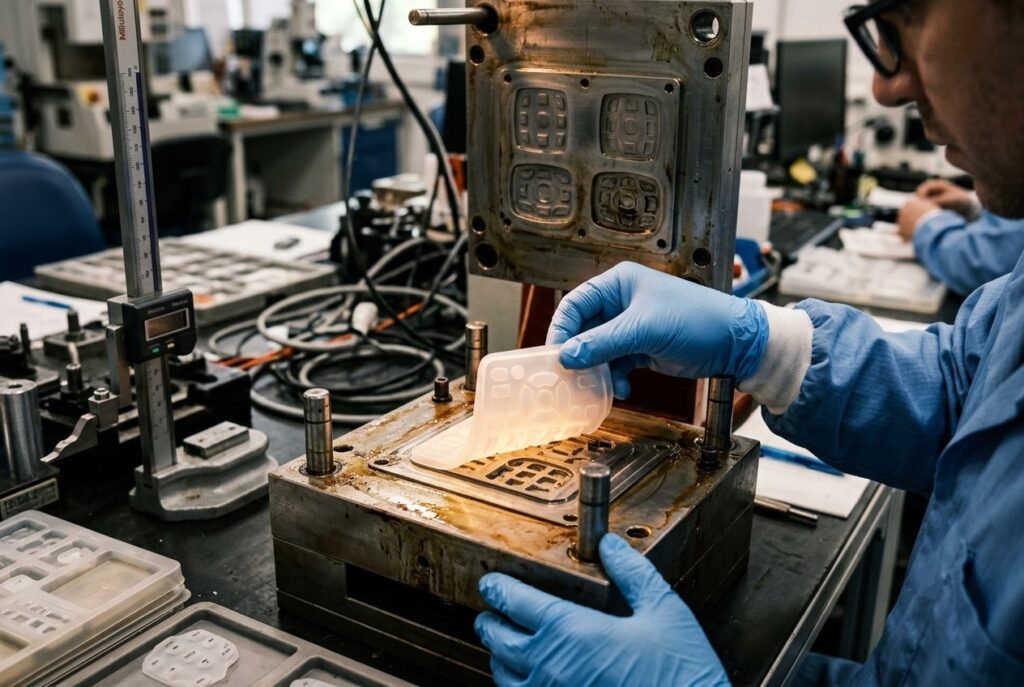
Initial design and key elements, referred to as material selection, thickness, tolerance, customization requirements, component assembly, and testing methods, have determined the expenses and life cycle of your physical buttons in user interfaces and panels.
Furthermore, proper design prevents potential issues resulting in rework, significant reduction in structural integrity over time, delays, or failures. The thickness and geometric structure of rubber keypads affect how uncured silicone materials flow to fill the cavities of the tooling.
Key Design Factors That Affect Performance and Long-Term Operation
To ensure the performance and durability of silicone rubber keypads withstanding millions of actuations, focus on the following:
- Elastic web geometry: This elastic structure influences the snap ratio, return force (rebound), and tactile response, as well as the key height, key profile, silicone button thickness, and web (sidewall) thickness and angle.
- Travel and contact force: Proper travel distance is important to prevent accidental activation, while excessive key travel lowers the user experience and increases the mechanical stress on the silicone rubber.
- Tactile feedback: To meet response and haptic feedback requirements for activation recognition, tactile feedback enhances the user experience and operational safety.
Evaluation of Rubber Keypads & DFM
Design for Manufacturing (DFM) is essential for scalability, meaning products are designed to be manufactured efficiently. As an engineering approach, DFM focuses on ease of manufacturing, scalability, and economic improvements per unit for final products.
SKF takes manufacturability into consideration in the initial design phase from the perspective of a rubber keypad manufacturer before production.
Based on your design and needs, we can simplify the geometric structure to decrease tooling complexity and relevant expenses.
How Does a Prototype Bring the Idea to Reality?
Why Prototypes?
Prototypes are created in the early stages of product development and production. They include sample manufacturing and concept testing, which help bring your idea to reality.
Prototypes offer several benefits during the design process:
- Identifying design flaws early in the product development process
- Decreasing subsequent costs for rework and delays
- Enhance communication between designers, engineers, and clients by accelerating feedback loops
- User-oriented design improvements and multiple iterations
- Design validation and reduced tooling change costs
- Reducing development cycles and costs
How to Verify Your Rubber Button Design for Electronics and Interfaces?
When designing a new rubber button, consider the following:
- What are the requirements of your electronics or instruments with user interfaces?
- What will your rubber keypad go through to achieve the intended purpose?
- Ensure that design inputs are clear and feasible to avoid rework and development delays.
- Can these designs be verified later?
3D Printing Samples & Simple Molds
A silicone keypad prototype is a common, cost-effective way to create prototypes. 3D printing is also a rapid method to form an elastomer keypad in the initial phase. This method can identify potential flaws before they become issues in the production process, which can be expensive.
Furthermore, you can create rubber keypad samples with a simple mold with one or two cavities. This lowers the cost of multi-cavity tooling.
Design and Detail Improvements: From Short Runs to High-Volume Production
Improving the design of your rubber keypads for panels and user interfaces and examining the products are essential steps in the manufacturing process of silicone rubber keypads. These steps offer opportunities for design optimization after verification and validation.
The Transition from Prototypes to Steel or Aluminum Mold Production
When considering scaling your elastomer keypads, selecting the appropriate mold is also crucial for your project. There are typically stainless steel and aluminum mold options, which differ in cost, material, strength, precision for formed parts, tolerance, and lifetime.
More information about choosing a suitable mold can be found here.
Design Validation for Scaling Your Elastomer Keypads
Design validation is an ongoing process that determines whether the specifications meet clients’ intended requirements. This process includes:
- As a silicone keypad manufacturer, SKF evaluates your rubber keypad samples to ensure they comply with your intended needs and applications.
- Our evaluation is carried out in specific operational environments that simulate user conditions.
- It relates to usability validation.
- We test whether your elastomer keypad meets the product requirements, not whether you have designed your device correctly.
Furthermore, it should be noted that validation has a wider scope than verification, which refers to design input. Design validation occurs at the end of the development cycle, while design verification occurs throughout the entire cycle.
SKF will apply a series of tests, including reliability and lifecycle tests for long-term operation, salt corrosion, color matching, dimension determination, tactile feedback, and mechanical and electrical response.
Scaling to Mass Production of Silicone Rubber Keypads
Multiple Cavities Mold in Compression Molding for Large Batches
Perhaps you began with three-dimensional printing or rapid prototypes of your rubber keypad design with one or two cavities in the mold. If you require pilot production or preparation for large batches, a mold with multiple cavities can increase productivity.
Post-Curing Ensuring Quality and Reliability
The “post-curing process” refers to the thermal post-treatment that is essential for achieving excellent mechanical properties, enhanced robustness, removal of by-products, improved performance, and safer applications.
This treatment accelerates thermal stability, temperature resistance, and stiffness. When silicone rubber keypads are exposed to high heat, repeated pressure, and external shocks during operation, they can retain their structural integrity and performance over the long term.
Traceable Quality Systems and Defect Prevention
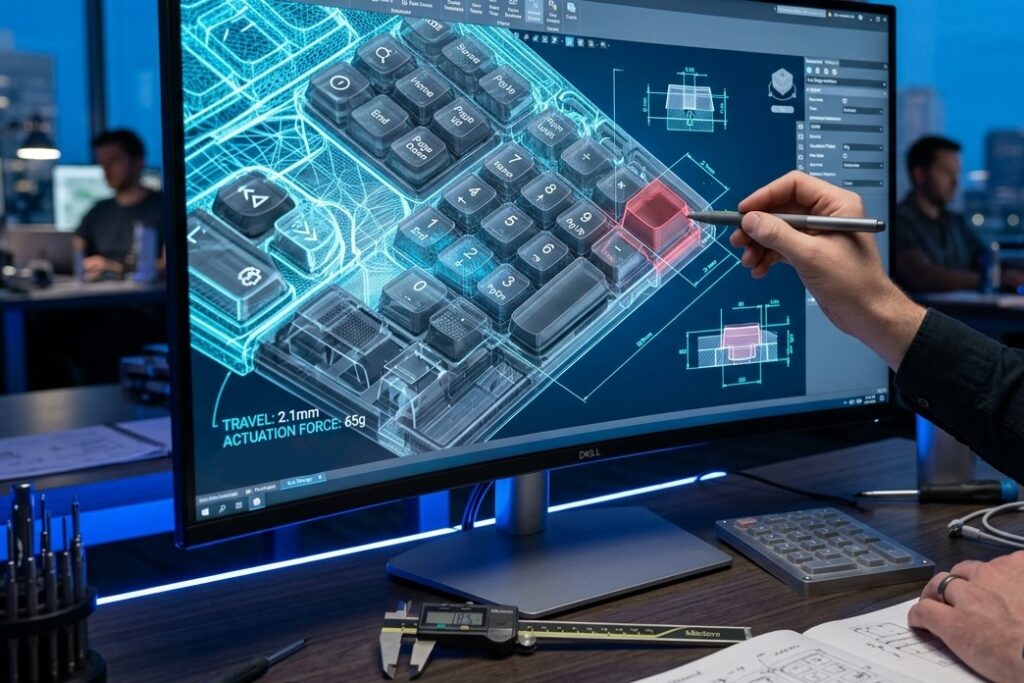
SKF has established and adheres to traceable quality systems for:
- Quality assurance & control
- Defect prevention in the initial stage with less loss
- The precision and tolerance needs of your silicone rubber keypads
- Strict testing
- Mechanical strength
- Structural integrity for long-term operation
In lab and medical settings especially, physical buttons embedded in user interfaces or electronics are directly exposed to human touch. Thus, biocompatibility and operational safety are crucial to ensuring the health of operators and patients. Additionally, the chemical resistance and durability of legends on elastomer keypad keytops relate to the ability of these silicone buttons to withstand the risk of corrosion and sterilization with disinfectants and detergents over time.
FAQs
When should mass production of rubber keypads begin?
Consider design stability for standardized silicone keypads, increased market demand, the budget for initial investment (i.e., molds for high-volume production), scalability, a traceable quality system, and economies of scale.
What are the differences between DFM and design for full-scale production?
DFM is limited to lowering per-unit cost, whereas design for full-scale production focuses on the full product lifecycle, including assembly, materials, quality, supply, consistency, and scaling.
What design factors influence the mass production of rubber keypads?
Factors such as silicone material selection, tactile feedback, color quantity, backlighting methods, component assembly, and tolerance may influence productivity, performance, testing, and subsequent delivery.
How can I gain production benefits from DFM?
Troubleshooting and simplified manufacturing prior to scaling production can reduce costs and identify potential production challenges in the initial project phase.
How do you ensure regulatory compliance?
SKF manufactures silicone rubber keypads that adhere to standards and restrict risk management.
Final Thoughts
SKF’s engineering team offers silicone keypad solutions for panels and interfaces. They strive to meet your requirements for initial designs, devices, and prototypes; pilot production; moderate-volume manufacturing; and mass production.