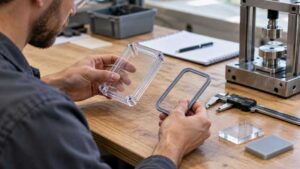
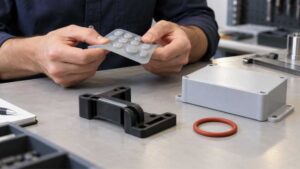
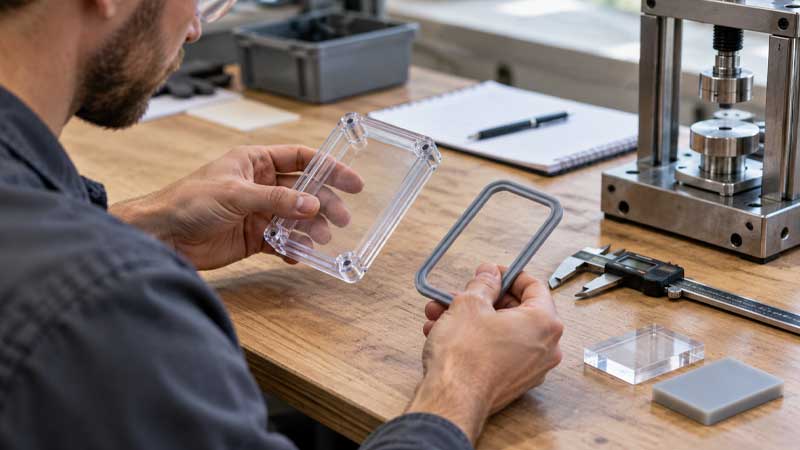
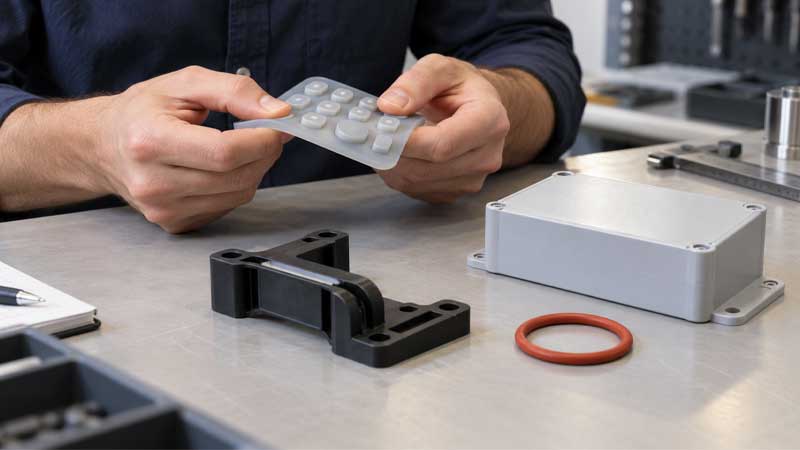
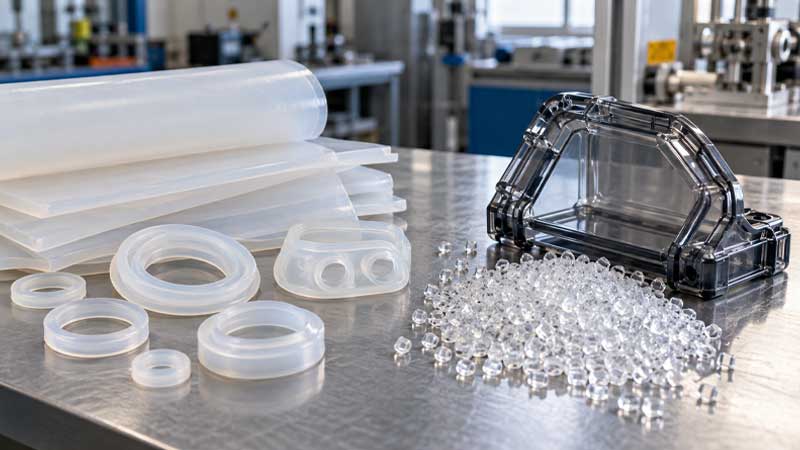
The selection of molds determines the cost of molds and components, process times, and supported materials. The wrong option may result in additional costs, delays in lead time, or design flaws in your silicone keypads. The following content discusses the advantages and disadvantages of aluminum and steel molds, as well as mold material selection to support your elastomer keypad development with shorter cycle times, rapid prototyping, and high production volume.
Mold Types & Creation for Silicone Rubber Keypad Manufacturing
Types of Molds: Soft & Hard Molds
When your elastomer keypads are in the stage from the initial prototypes into the mass production phase, mold selection and reliability requirements are essential prior to silicone rubber keypad manufacturing. Soft mold typically refers to aluminum molds, whereas steel molds are applied as a common type of hard mold.
Mold Creation By Machining
Mold creation, based on your layout, sizes & shapes of keys, desired functionality, and specific requirements, involves conventional die casting, CNC machining with high precision, and 3D printing for rapid prototypes. In CNC machining, the materials for tooling creation will be milled to withstand cutting force from processing machinery. These molds are created and reusable for permanent mold casting.
Optional Surface Finish: Glossy Level for Molded Rubber Part
The cavities of molds can be processed according to your desired finishes on rubber keypads by diverse polishing methods. Moreover, metal molds require regular maintenance, including daily cleaning, inspection of surface, and re-polishing, since internal surface finishes of molds degrade over time.
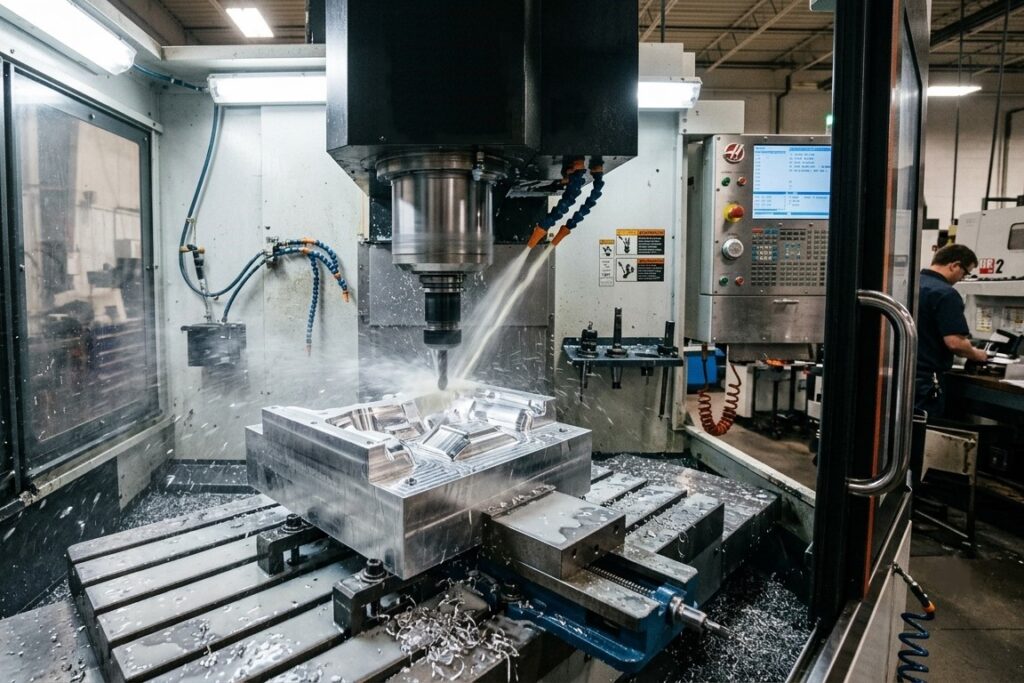
Aluminum Molds: Bridge Tooling with Cost-Effectiveness in Low-Volume
Advantageous Aluminum Molds
- Cos-Effectiveness: The lower cost of aluminum molds, unlike expensive steel molds, requires less processing time and is optimal for small batch production.
- Ease of Processing: Aluminum, referred to as a soft metal, has ease of processing rather than steel material without the costs from cooling lines due to excellent heat dissipation.
- Shorter Processing Times: The heating and cooling process of aluminum materials leads to short processing times owing to the high thermal conductivity of aluminum rather than steel.
Defects of Aluminum Molds
Unlike strengthened strength available for steel molds, aluminum is susceptible to wear, scratches, and physical damages. Thus, precision in subsequent molding processing decreases after long-term processing.
Since quick heat dissipation in aluminum molds results in temperature fluctuation and uneven cooling, it may result in warping, voids, burn, and sink marks.
Steel Molds: Robust and Strengthened Hard Tooling
Benefits of Steel Molds
- Superior Mechanical Strength: Steel has higher stiffness and quality, withstanding abrasive materials, high temperature, intricate geometry, and high-volume production.
- Larger Loads for Large-Scale Production: Steel enables withstanding larger loads during regular maintenance and for rubber keypads of large-scale manufacturing.
- Long-Term Reliability: The resilience, robustness, precision, and stability of steel are outstanding, which make it optimal for complex silicone keypad geometry with long-term reliability.
- High Precision of Molds: Steel molds can reach tight tolerances of rubber parts and design flexibility of surface finish, which support your elastomer keypad project with enough precision and desired finish.
Limitations of Steel Molds
Steel mods have lower thermal conductivity, which results in longer cooling and heating processes, higher difficulty of processing, and longer cycle phases. Moreover, the expensive initial investment of steel molds still accounts for a significant portion and cannot be ignored.
Although steel has superior stiffness and replaces deformation easily, once a steel mold is damaged, repair expense can be high. But steel is robust enough to minimize the conditions of repairs.
Differences between Aluminum & Steel Molds
| Features | Aluminum Molds | Steel Molds |
|---|---|---|
| Lead Time | Several Days | Several Months |
| Lifetime | 10, 000 cycles or more | Millions cycles |
| Strength | Moderate | Superior, resilient due to high carbon content |
| Heat Resistance | Moderate, 660 ℃ (1220℉) of melting point | Outstanding, 1440 ℃ (2624℉) of melting point |
| Malleability | More flexible and ductile | Poor relativelyCo |
| Corrosion Resistance | Excellent, protective aluminium oxide | Poor, can be enhanced by chromium or zinc (stainless steel) in harsh conditions |
| Cavities Number | 1~8 cavities | >8 cavities |
| Surface Finish Flexibility | Moderate | Excellent |
| Machining Cost | Moderate | Higher |
| Repair Cost | Lower | Higher |
| Suited Production Volume | Low-to-medium volume | Large volume |
Which Materials of Molds Creation for Rubber Keypads Molding Process should I option?
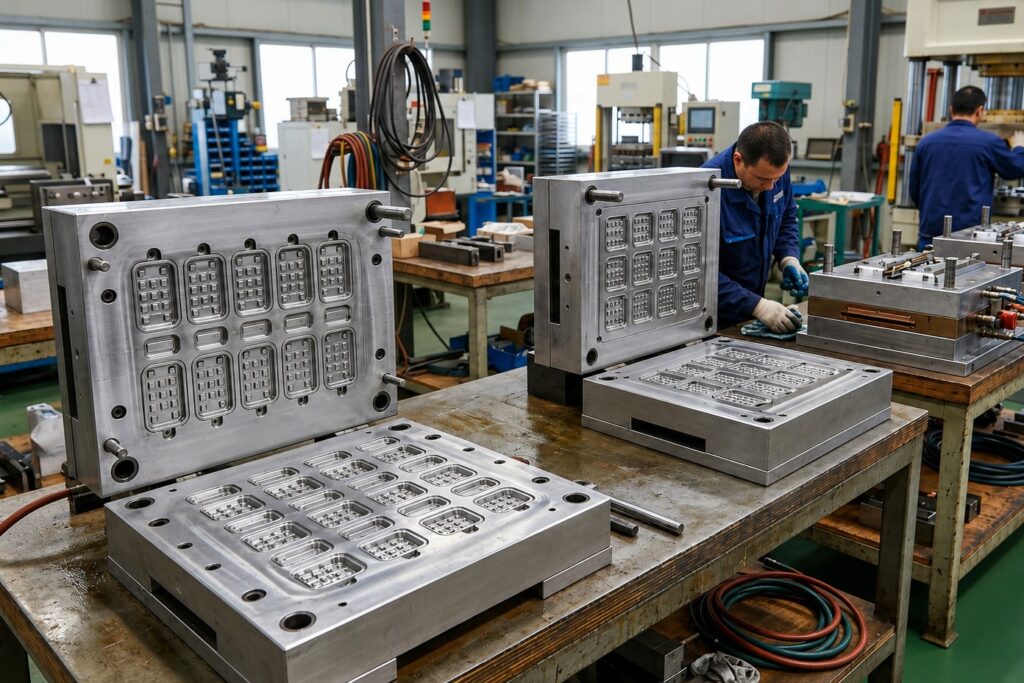
Crucial Considerations of Mold Material Selection between Aluminum & Steel
For some PM or engineers, production requirements are essential to start up a elastomer keypad project, which determine cavities volume in molds, small batch or mass production mold. In addition to cost efficiency, mechanical strength, functionability and long-term reliability also should be taken into considerations prior to molds selection between aluminum or steel.
When to Choose Aluminum Molds?
When you focus more on price control, aluminum is optimal with less initial cost, which make it suitable for low scales, pilot runs, and prototypes for your rubber keypad project. Lower adjustment costs and rapid processing times reduce effectively overal cost of per rubber part.
In terms of processing productivity in molding process and cycle time during molds creating, this mold support upfront development of rubber keypad product, eliminating overall costs and design flaws by initial keypad performance and reliability testing.
When to Choose Steel Molds?
Comparing to economic solution with aluminum molds in small or medium batches, steel molds are processed targeted to high-volume production of silicone rubber keypads.
If you have strict precision and tolerance control of rubber parts, resilient steel molds are optimal to meet your requests. The internal finish and structural integrity won’t eliminate significantly like partical molds that made of soft metals.
FAQs
Is it still possible to modify the aluminum mold during the initial rubber keypads design phase?
Yes. As a soft metal with ease of machining, aluminum mold can be modified to fix with potential issues, which will be processed rapidly and economically than hard molds (steel molds).
Which material is optiaml for mold creation by die casting?
Silicone rubber mold is optimal and polyurethane is suitable for large scale manufacturing. But materials selection depends on volume and casting medium.
Is aluminium a metal or alloy?
Aluminium is a chemical element and aluminium mold is made from aluminum alloy.
Does aluminium mold rust?
No, oxide layer, formed on the surface, protect the mold against wear and chemical corrosion. On the contrary, steel is relatively easier to rust without alloy in formulation.
Can I modify formulations for improved molds?
Yes, reinforced fiber, glass, and additives can integrated with steel mateirals to enhance wear resistance and chemical corrosion resistance further.
Final Thoughts
Production volume is still one of the crucial factors to option mold materials for your silicone keypad project.
Steel molds are optimal for rubber keypads manufacturing in high-volume, which offer reliability in long-term processing, accuracy needs of rubber part, and cost efficiency. And aluminum molds are suitable for low-volume and simple processing with moderate mechanical strength, rapid cycle time, and moderate precision requirements.
From initial rubber keypad design for DFM, molds creation, testing, to delivery, SKF offers professional service for your silicone button idea into reality.