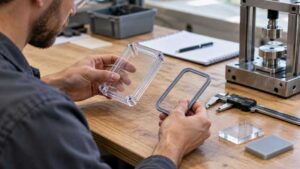
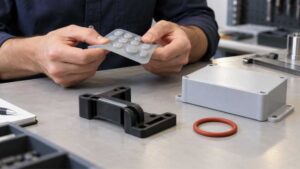
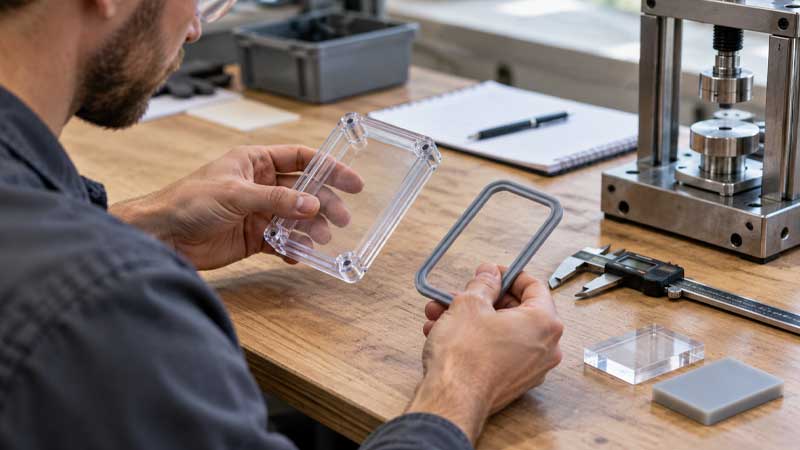
The mold creation supports the molding process for various materials, involving silicone rubber, and the quality and efficiency of compression molding or injection molding are influenced by the construction and design of the molds in silicone rubber keypads manufacturing. The following article will talk about how the molds for keypad production are made, material selection, and productivity improvement.
Molds: Considerations for Enhanced Rubber Keypad Production
Molds, also called ‘toolings,’ aim to shape malleable materials into a fixed and pre-designed structure with multiple cavities. Rubber keypads typically are formed via compression molding or injection molding processes, and the structure and designs of these molds relate to final results and forming quality in the process. After creation, cleaning, and development, toolings are installed in the molding instrument and form the added silicone raw materials into solidified and stable products.
Types and Materials of Molds for Keypad Manufacturing
Injection molding, transfer molding, and compression molding are typical molding techniques for elastomer keypad production and rely on molds. Diverse molds offer distinct solutions for the manufacturing processes.
In terms of classification, molds can be classified into one-part, two-part, multi-part, and multi-cavity molds. Among these, molds with multiple cavities are applied in rubber keypad production with higher productivity in a single production cycle and better cost control.
To meet your specific needs about tooling precision and durability, molds can be created into permanent molds that are divided into high-stiffness ones for large volumes and soft ones for small-scale production. Rigid molds are typically made of steel or other hard metals with superior reliability and wear-resistance. In contrast, plastics, silicone, aluminum, or other soft materials are applied for soft mold creation for cost-effectiveness in low-volume production of rubber keypads.
Stiffness & Reliability of Molds
Molds for rubber keypad manufacturing require being stiff and reliable, withstanding extreme temperature changes and high pressure in compression or injection molding processes in repeated molding processes. Distinct materials result in diverse mechanical strength and durability in the subsequent cyclic molding process and performance of rubber parts.
Cost Considerations
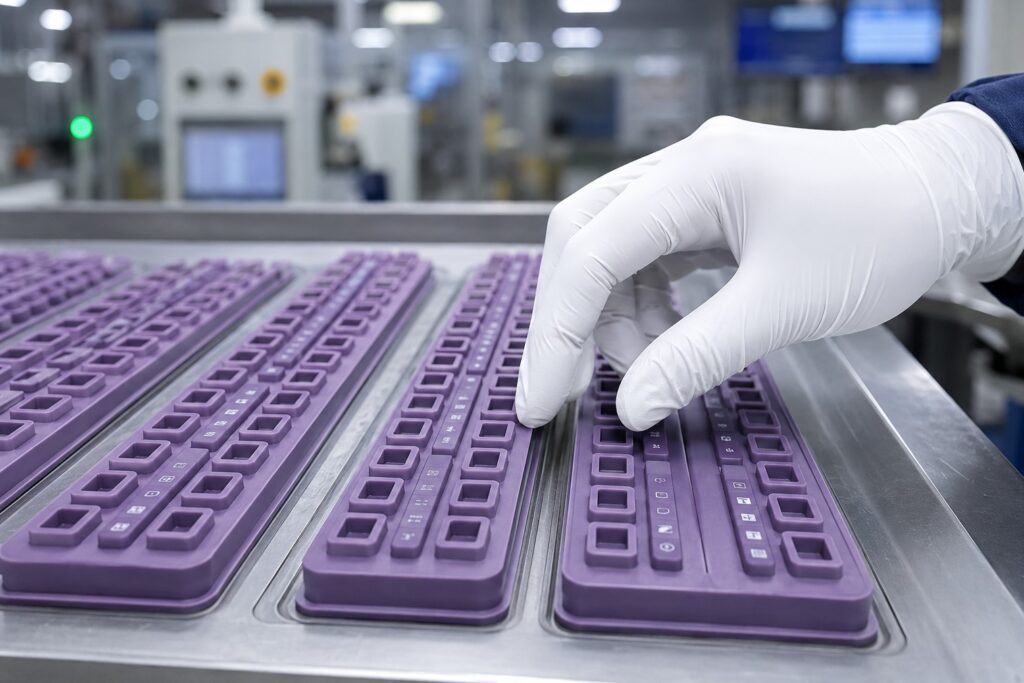
The cost of mold creation can be expensive in elastomer keypad and rubber component manufacturing, which relates to the complexity of parts, material selection, machining times, and advanced EDM (electrical discharge machining) technology, optionally. For instance, keypad design with undercuts and complex geometries can increase the costs.
Initial investment in tooling design and manufacturing can be pretty high; you require taking diverse factors into consideration. As a type of hard mold, a steel mold with a higher upfront cost and lower unit cost is optimal for large-scale rubber keypad manufacturing. Moreover, aluminum mold creation is cheaper than hard molds, which have cost-effectiveness in low-to-medium production runs.
Maintenance and Lifecycle of Molds
In the process of molding, molds are operating in harsh conditions like extreme heat and high pressure. Preventive maintenance is essential for the long-lasting lifetime of tooling and the elimination of rubber part defects, which include regular cleaning, lubrication, and inspection for wear or thermal conditions. Proper maintenance extends the lifecycle of molds and ensures stability and productivity.
How do we treat molds before the molding process?
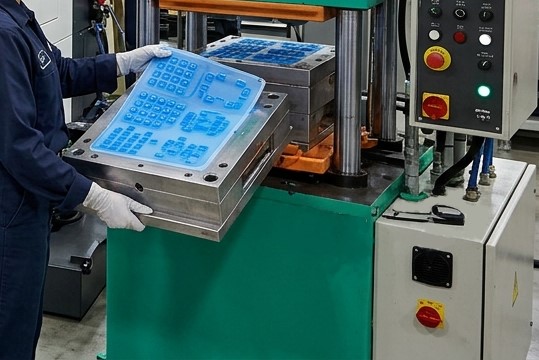
- Molds Creation: After mold material & manufacturing process selection, cavities determination, and tooling design, the molds are created based on your demands and custom elastomer keypads project.
- Mold Cleaning: Before injection or placement of silicone raw materials, contamination and release agent removal are applied per cycle.
- Machine Setup: When your elastomer keypads are processed by compression machines, the mold is preheated to a specific temperature for shaping and curing treatments. Besides, cycle times and pressure should be determined and set up when machinery is implemented.
- Charge Preparations: Uncured silicone raw materials, curing agents, pigments, fillers, and optional additives are mixed and performed.
- Charge Insertion: Charge is placed carefully into the cavities of the tooling.
- Rubber Part Compression: The applied pressure forces these silicone materials to fill cavities of the tooling completely, improving the elastomer into a cured, stable, and solidified state.
How do we fabricate a mold for your silicone rubber keypads project?
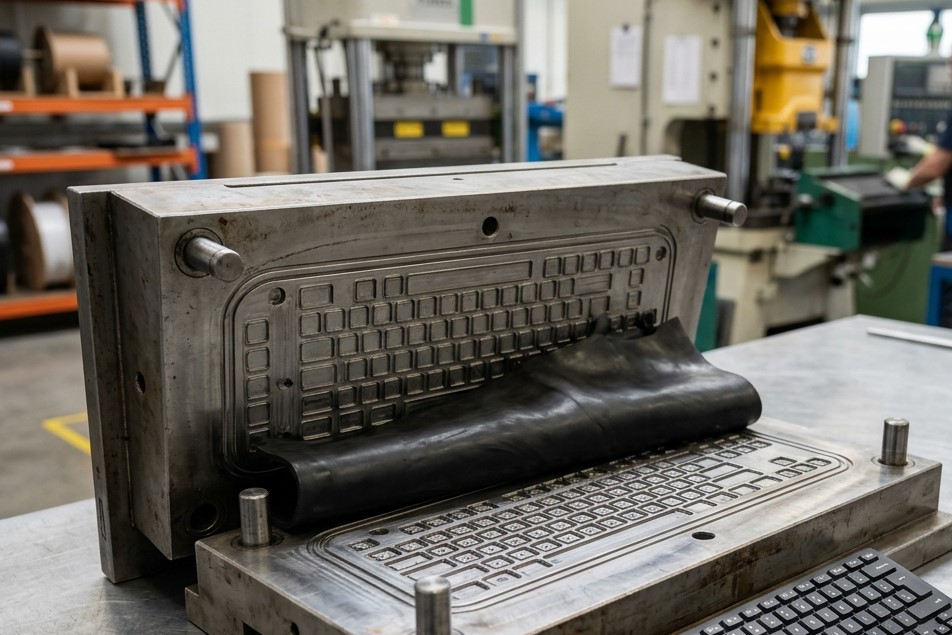
Mold creation ways include multiple ways, like machining, die casting, and 3D printing.
Conventional Molds Machined by Expensive CNC
CNC machining is suitable for tooling creation with high precision owing to improved control by the computerized components.
Though CNC machining is expensive for tooling creation, it can be combined with die casting to decrease the costs.
If your rubber parts require the injection molding process for silicone keypad forming, molds are typically created by machining methods, which increase the costs for specialized equipment, skilled labor, and relevant software for manufacturing.
Die Casting: A Common and Cost-Effective Option
Die casting refers to one of the most general methods to create a mold for the molding process, especially compression molding. This fabrication method refers to injection molding for metals by melting metals with extreme high pressure and forcing materials to fill intricate mold features, which create robust and precision mold parts for subsequent rubber keypad production.
Moreover, materials of molds created by die casting ways are limited in non-ferrous metals (like zinc, aluminum, magnesium., etc ) and other alloys due to their low melting points.
3D Printing Molds in Low Volume Rapidly for Prototypes but with Lower Precision
3D printing is a rapid and cost-effective solution for mold fabrication in low volume, which enables the creation of molds with high speed and flexibility and improves production force to support subsequent rubber molding processes.
However, it’s noticed that 3D printing offers benefits but also limitations. Owing to the difficulty of precision control, molds created by 3D printing cannot reach the high precision that machined metallic toolings achieve.
Whatever functional prototypes or parts during pilot production to end-use part manufacturing, 3D printing is still an economic and rapid method to create molds on a small scale.
FAQs
What is the difference between compression molding and pressure die casting?
Compression molding involves forming rubbers, polymers, and composite materials at high temperatures and pressures. Pressure die casting, on the other hand, is an injection molding process for metals.
Is mold creation by machining only suitable for manufacturing silicone keypads in mass production?
Yes, molds are generally durable, withstanding high heat and pressure without deforming or needing to be replaced. To enhance productivity, use a mold with multiple cavities to reduce costs.
Is mold creation by machining only suitable for silicone keypad manufacturing in mass production?
No. Based on the quantities of your desired silicone keypads and the progress of your project, molds can be created through 3D printing. This is an economical solution for prototypes or R&D support and eliminates the time and cost associated with creating mass production molds.
Which 3D fabrication ways are optimal for keypad prototypes?
SLA (stereolithography) 3D printing is the optimal choice due to its high precision, smooth surface, ease of demolding, lower maintenance costs for machines, and simplified tools.
How does the state of the mold differ between the compression and injection molding of rubber keypads?
In compression molding, the mold is closed and contains the required charge. In injection molding, the prepared charge is injected into the cavities of a closed mold.
What is the typical time required to create a mold for silicone keypad molding?
Metal molds generally take five to nine weeks, depending on the mold’s geometrical construction and design complexity.
Final Thoughts
As a part of the high cost in mold creation for supporting subsequent silicone rubber keypad production, tooling creation selection should take budget, desired precision, volume values, elastomer keypad & cavity design, and complexity into your consideration for the rubber keypad project.