You may have heard the terms “low resistance” and “contact resistance” in relation to silicone rubber keypad design or processing. Resistance indicates how difficult it is for electrons to flow through contact points in a material, including a silicone keypad (which is inherently non-conductive). This section will discuss resistance and the importance of low resistance in rubber keypads, as well as carbon pill and metal dome selection for your elastomer keypad project.
The Importance of Low Resistance in Rubber Keypads and Keypad Circuit Design
The Definition of Resistance in Switches and User Interfaces
Resistance, also called electrical resistance, is a measurement of a material’s or device’s ability to restrict the flow of current in an electrical circuit. It is measured in ohms (Ω).
This property of a circuit or element is essential for signal transmission and functionality when you press specific silicone buttons or physical keys.
What Does A Low Resistance Do? Exactly what?
A low resistance measurement is typically below 1.00 ohm and is measured by low-resistance ohmmeters or multimeters based on the Kelvin bridge.
What exactly does low resistance indicate? In short, high and low resistance show how easily energy flows through a system. High resistance restricts electron flow to protect wires and prevent short circuits, while low resistance allows for power transmission with less energy loss.
Common Problems with Identifying and Utilizing Resistance
Electrical resistance can help identify common problems, including:
- Short circuits: Very low or zero resistance indicates a short circuit, while excessive resistance indicates an open circuit.
- Failed component identification: Testing the resistance of components with known resistance is not enough. If the resistance exceeds the specified range, the component can be deemed defective.
- Overheating issue: An overheated component has high resistance and is at risk of failing.
- Voltage drop: Voltage drop helps the tester identify parts that need to be replaced or reconnected.
Detect Degradation Issue: Low Resistance Measurement
Low resistance measurements in various devices and user interfaces on panels can indicate to users whether degradation has occurred in the electronics.
The resistance value in your machines and switches with rubber keypads will deteriorate over time due to factors such as vibration, impact, temperature, chemicals, fatigue, heavy use, and improper operation. Changes in the low resistance value can then help operators identify degradation conditions of two contact points as reliable indications.
Various Factors Affecting the Value of Electrical Resistance
As one of the essential specifications of silicone rubber keypads, resistance affects the efficiency of signal transmission and the long-term performance of switches and instruments. Various factors affect the value of electrical resistance, including:
- Material: Different materials have different inherent resistivity based on their atomic structure. Conductors have low resistance, allowing electrons to move easily, while insulators restrict the flow.
- Length: Increasing the length of conductors leads to higher resistance.
- Cross-sectional area: The larger the cross-sectional area, the lower the resistance.
- Temperature: Temperature also affects the measurement of resistance values in machines. For example, the results of testing hot equipment differ from the results at the time of installation.
How can you design silicone rubber keypads that meet low-resistance requirements for user interfaces and switches?
Lower Resistance Design in the Contact Points of Elastomer Keypads
Low resistance is beneficial at the contact point where electrical contacts (such as snap domes, carbon pills, or conductive ink printing) close and transmit electrical signals in elastomer keypads. This ensures rapid responsiveness and an accelerated operational experience.
Metal Dome Silicone Keypad with Stable and Reliable Connection in Rubber Keypads
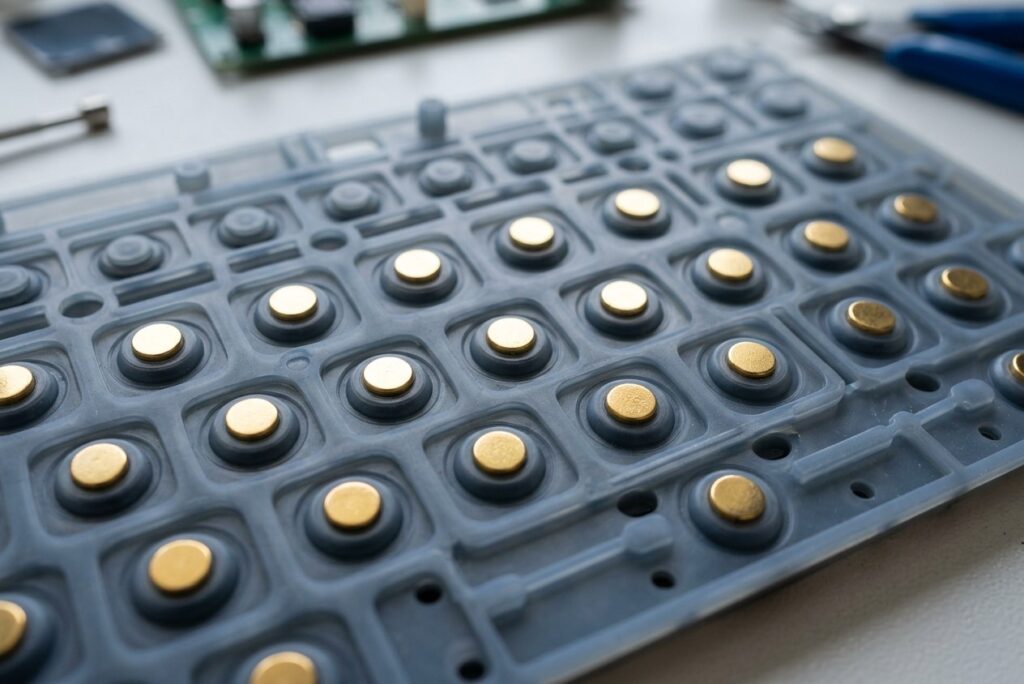
Metal domes provide not only crisp tactile feedback but also improved stability and reliability of connection for each activation.
Stainless steel domes have a resistance of less than 10 ohms. Metal domes plated with nickel, silver, or gold can reach a resistance of less than one ohm. The decreased electrical resistance of rubber keypads prevents harsh conditions from affecting the long-term performance of elastomer keypads, enabling the creation of reliable electrical connections.
Carbon-filled silicone keypads
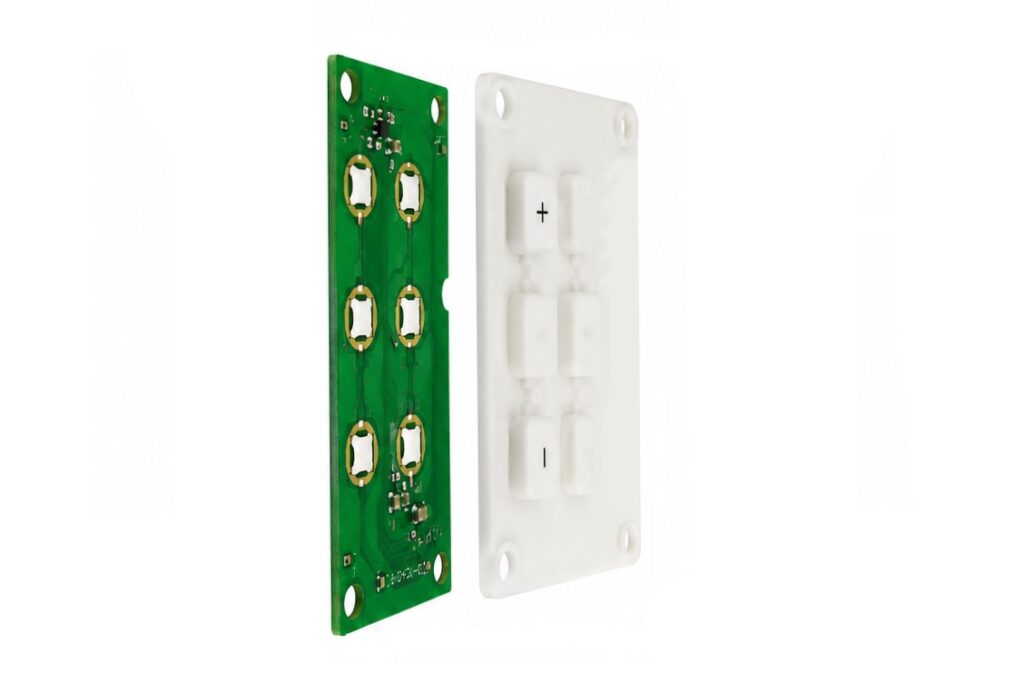
A carbon pill, which consists of rubber and graphite (carbon), is inserted under the back of a silicone button on a rubber keypad. The amount of resistance depends on the quantity and properties of the carbon. A smaller carbon pellet results in lower electrical resistance.
Furthermore, the minimum resistance of carbon pills is 10 ohms, and the maximum is less than 100 ohms. This resistance is low enough for common elastomer keypads, making them cost-effective.
Despite metal domes, SKF offers low-resistance carbon pills, such as gold-plated and metal pills, which are more reliable and are used in single silicone buttons, conductive rubber keypads, and switches for aerospace, military, sensitive imaging equipment, and medical instruments.
Additionally, metal or gold-plated pills can have a resistance of less than 1.00 ohm, ensuring stable and rapid activation and an improved user experience.
FAQs
What problems can high resistance cause with silicone rubber keypads?
Higher resistance, typically due to contamination or wear of contacts in the PCB or actuators, may result in missed presses or recognition failure.
Is low resistance good or bad for silicone keypads?
In terms of rubber keypads, low resistance in contact parts means energy saving for your devices, and high resistance of insulated silicone keypads (keys and keymats) prevents short circuits and accidents.
Is electrical resistance similar to contact resistance in elastomer keypads?
Contact resistance refers to the amount of resistance to the flow of electricity between one contact and another, which also determines the minimum amount of force required to remain the electrical contact connected during a silicone keypad collapse. And resistance is a property to evaluate the difficulty of electron flowing through specific materials.
Does excessive resistance damage electronics or machines?
Yes, excessive resistance leads to long-term damage and more energy waste as heat for your electronics and equipment. Periodic tests support evaluation conditions of machines and forecast potential failures.
Will distinct textured carbon pills affect the resistance of rubber keypads?
No, whatever the matte, glossy, or textured carbon pills, the resistance won’t increase or reduce.
Final Thoughts
The high dielectric strength of the main part of the silicone rubber keypad, which involves the keys and keymats, ensures protection of the components against environmental factors and guarantees operational safety. However, high resistance at the contact point can result in a frustrating user experience, such as poor responsiveness and recognition failure.
Low resistance between the PCB contacts and the carbon pill or metal dome enhances the stability, reliability, and performance of silicone rubber keypads.
SKF’s engineering team provides professional services for designing silicone rubber keypads, including PCB layout, electrical resistance, contact resistance, and user experience.