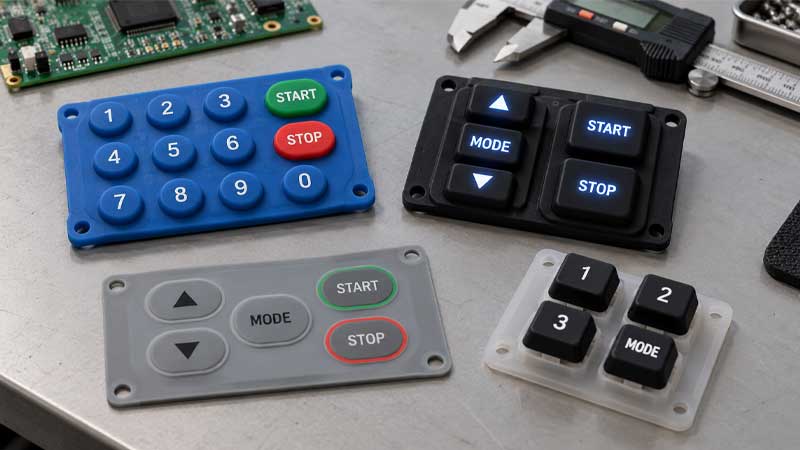
Perhaps you already have some ideas about custom silicone keypads, and design is essential from the beginning. A proper design based on the specifications of the silicone keypad provides a better user experience and input efficiency with specific functions.
The entire structure of the silicone keypad must be taken into consideration, including the main part, electrical contacts, optional plastic keycaps and light elements, and the mounting part, to ensure that the design meets your specific requirements. These components have concrete specifications that influence the final user experience and integration flexibility.
Traditional Silicone Keypad Structure
In order to adjust the concrete specifications of silicone keypads, both the external and internal parts must be considered.
Silicone Keypad
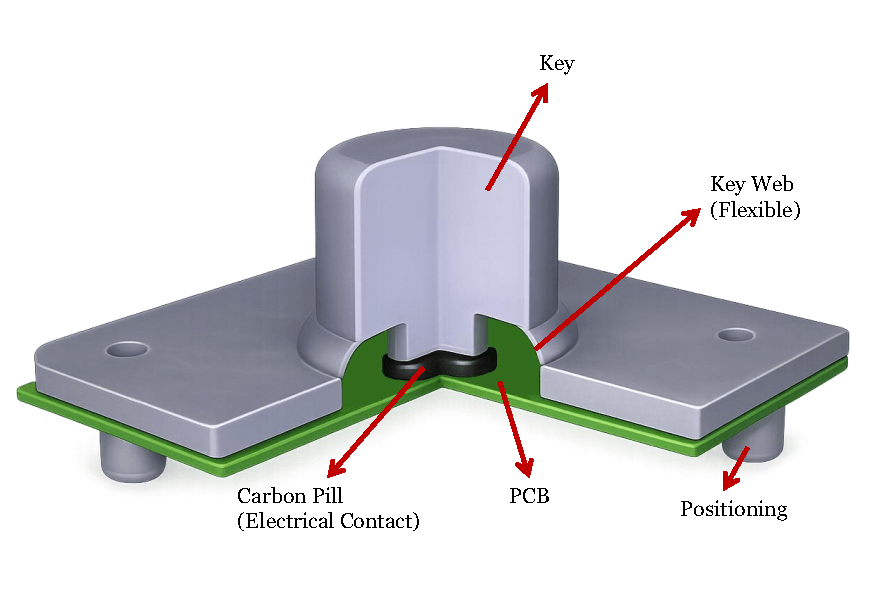
In terms of structure, a silicone keypad consists of a keytop on the exterior, internal electrical contacts, webbing, and a base pad.
The webbing is an angled structure that creates a cavity between the printed circuit board (PCB) and the main body of a single silicone keypad. When pressing the keytop, the silicone material deforms vertically upward and downward. This morphological change makes electrical contact with the conductive pill on the back of the keypad or the domes on the PCB surface.
Electrical Contacts
Electrical contacts include conductive pills, a conductive printing layer, and conductive domes. These components create a connection between the keytop of the silicone keypad and the contacts on the surface of the printed circuit board (PCB), enabling electrical signal transmission.
Optional Plastic Keycap
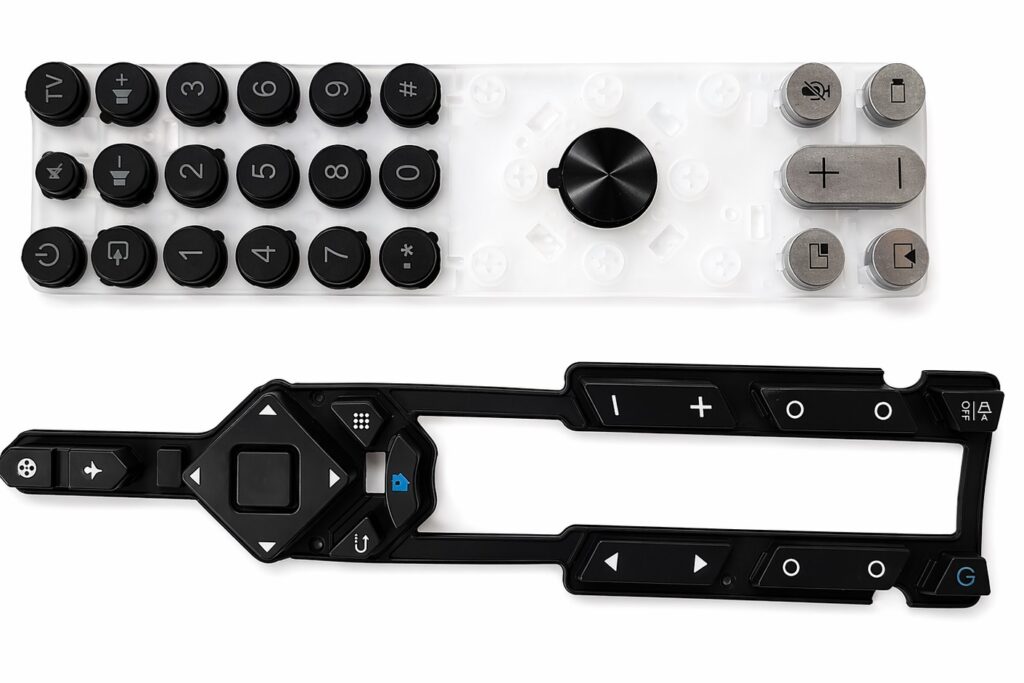
To enhance the environmental sealing and protection rating of the entire button, plastic keycaps can be inserted into the silicone keypad keycaps while maintaining the original tactile feedback.
Mounting Part
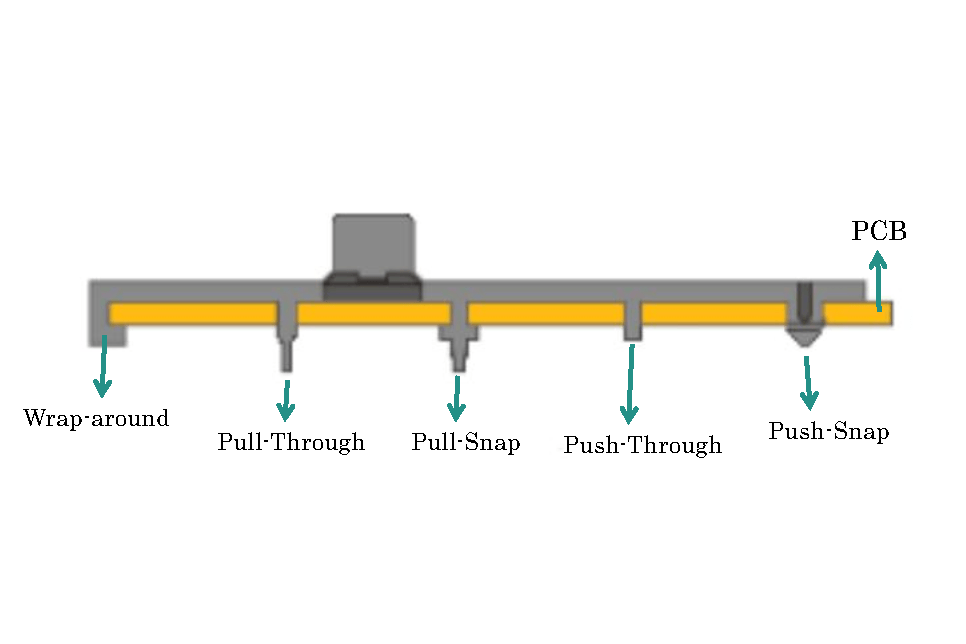
Keypads must be integrated with PCBs. Thus, we manufacture silicone keypads with bosses that align with the locating holes in the circuits. When you push the silicone keypad, the mounting bosses will match and fix well to the circuit.
The mounting bosses come in different diameters, including pull-through, push-through, pull-snap, and push-snap. Additionally, the wrap-around method provides strengthened ingress protection (IP) against liquid and dust.
Specifications relate to Tactility
The specifications, including stroke, actuation force, and snap ratio, are relevant to tactile feedback and the final user experience. These specifications also relate to the structure of the entire silicone keypad.
Stroke (Travel)
Stroke, also called travel, measures the distance a button moves before activation when pressed by the user. It is one of the factors affecting the user experience regarding actuation force, tactile feedback, and finger fatigue.
A shorter stroke (typically under 2 mm) allows for rapid and consistent input and a fast rebound of the pressed key. A longer stroke (over 2 mm) decreases accidental keystrokes, providing better control.
Actuation Force
Actuation force determines how much pressure or load is required to activate a switch in silicone keypads. In addition to the hardness of the silicone keypad keytop, actuation force influences the tactile experience. Silicone keypads with low actuation force are easier to press. At the same time, keys with a higher actuation force provide more tactile feedback and reduce accidental keystrokes.
Low force (50–200 g), moderate force (200–450 g), and high force (>450 g) are the three main categories of actuation force. The ideal actuation force, which ranges from 80 to 150 grams, can be designed for silicone keypad performance and operating experience. Actuation force tolerance is typically +/- 25 grams.
For a membrane keyboard, adjusting the actuation force is more complex due to the multiple-layer structure and footprint of the membrane switch.
Snap Ratio: Measure the Relation of Stroke & Actuation Force
The snap ratio measures the relationship between force and travel to determine the tactile feedback of the final silicone keypad. The snap ratio is calculated as the difference between the actuation force and the contact force of the switch divided by the actuation force. Additionally, contact force is the force required to maintain contact closure with a PCB.
For an optimal interaction experience, the snap ratio should be kept between 40% and 60%.
Key Designs of Silicone Keypad
External Interface Part of Silicone Rubber Keypad
The keytops of silicone rubber keypads can be customized with a personalized surface finish and thickness, as well as multiple thicknesses in specific keys.
Key-Webbing & Base Pad of Silicone Rubber Keypad
The key webbing structure and base pads consist of the internal space of the silicone rubber keypad and create a cavity inside. Conductive pills are inserted into the buttons of the silicone pad in the upper half of the cavity.
The thickness and slope of the inclined walls of the webbing determine the tactile feedback and user experience. Generally, the thickness of the inclined wall is limited to a range of 0.2–0.6 mm, and the slope is 45°.
Different key shapes can be achieved by adjusting the curve, thickness, and slope of the inclined wall. These adjustments impart keypads with diverse actuation force, stroke (“travel”), and life cycles. These shapes include flat cone, double cone, single cone, flat bell, single bell, and double bell.
Additionally, the thickness of the base pad is essential for the accuracy of the silicone keypad dimensions, which influence the subsequent mounting and installation of switches.
“Stroke” refers to the distance that a user pushes the top of a silicone keypad and is measured from the bottom of the conductive pills or the keytop button to the surface of the PCB. This measurement includes the base pad thickness. For silicone keypads with conductive pills or carbon dip printing, the base pad thickness can be increased by about 0.3 mm to accommodate the extra pill thickness compared to keypads without carbon pills.
Air Path
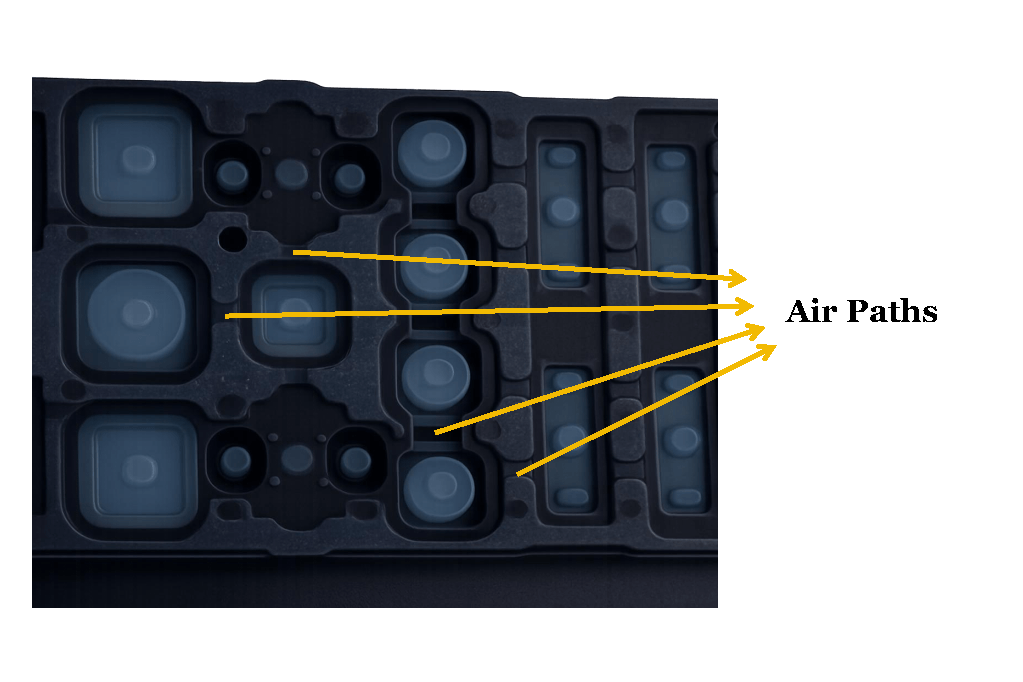
When you push the top of a silicone keypad, the silicone material deforms due to the actuation force and the keypad’s rebound. With air paths on the bottom of the keypad, air is allowed through when the keypad is pressed. Otherwise, the keypad won’t rebound as expected.
Electrical Circuits
Different types of electrical circuits provide diverse performance for specific applications. Gold-plated PCBs are preferred for high-reliability scenarios.
Contact resistance is the resistance to current flow due to surface conditions and other causes when electrical contacts touch one another. Due to the properties of precious metals like gold, gold-plated PCBs have lower contact resistance on their contact surfaces.
Electrical Contacts
The size, material characteristics, and resistance of electrical contacts influence the haptic and acoustic effects, cost, durability, tactile response, and specific needs of electronic devices or silicone keypad applications.
Material Characteristics of Electrical Contacts
Conductive carbon particles are inserted into silicone keypads via an over-molding process. The resistance ranges from ≤1 to ≤200 ohms for electrical contacts made of different materials. Reliable electrical contacts ensure optimum performance, electrical stability, and corrosion resistance.
Custom Shapes and Sizes of Carbon Pills
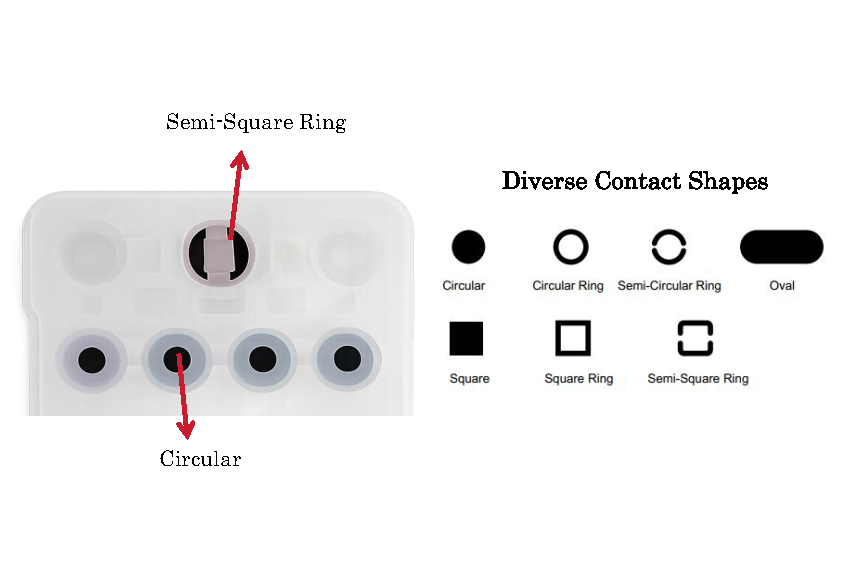
Different shapes and diameters of electrical contacts can be accommodated, but this may incur additional costs for specific carbon pills.
Contact shapes are not limited to circles but also include shapes such as circular rings, semi-circular rings, ovals, squares, square rings, and semi-squares. Different sizes of carbon pills match specific design schemes due to contact area. For smaller electrical contacts, a compact key density is suitable for a small contact area. Larger electrical contacts provide a larger contact area and enhanced electrical signal transmission efficiency.
Contacts Design of Metal Domes: Better Electrical Performance
As electrical contacts, metal domes are designed to connect with the switch contact on the surface of the PCB. This connection may be beside the solder mask, which is a green coating that aims to protect the copper traces inside. The solder mask must be designed entirely outside of the switch contact area. To ensure performance, metal domes are engineered to be dimpled, non-dimpled, or RCG domes with a ring feature.
Dimpled domes concentrate the actuation force into a smaller area, ensuring reliable contact, but wearing out the soft PCB plating more easily. Due to this concentrated actuation force, dimpled metal domes can overcome inconsistent solder masks.
No-dimple domes spread the force evenly across the contact area. This reduces localized wear on the PCB pads and enhances the lifespan of the domes, ensuring reliable contacts in the long term. However, an uneven solder mask may result in inconsistent actuation.
Additionally, ring contact domes (RCG) have a ring feature that establishes electrical contact across the entire dome surface rather than at a single point. These types of metal domes provide ideal contact for high-force applications, offering outstanding durability and support for larger actuator surfaces. They also provide reliable off-center performance for off-center presses by spreading the force more evenly.
FAQs
What are the advantages of silicone keypads?
Silicone keypads are used for interfaces because they are temperature-resistant, easily designed, electrically insulated, and highly customizable.
Can I design my own silicone keypad layout?
Yes. You can design the layout, printing options, and surface finish of the keytops of your silicone keypads.
Can I adjust and customize all of these silicone keypad specifications?
Yes. However, an improper design may affect the function of the keypads, so our engineers will offer design advice to support your project.
Can I custom the brightness of backlit silicone keypads?
Certainly. You can choose the quantity and brightness of the LED bulbs.
Q: What is the life cycle of an electrical contact?
What is the life cycle of an electrical contact?
It depends on the material, usage frequency, environmental conditions, and electrical load. The life cycle of electrical contacts is generally 5-15 years.
Conclusion
Functional silicone keypads that are compatible with electrical components consist of a silicone keypad, electrical contacts, optional light elements, and a mounting part. The concrete specifications of the main parts of silicone keypads and electrical contacts, including dimensions, sizes, thicknesses, slopes, setups, etc., influence the final snap specifications. The aforementioned tips can help optimize the design of silicone keypads and provide customized services according to your specific requirements.