When you’re designing an integrated silicone keypad, tactile feedback and aesthetics are what most designers focus on. But internal circuits, which connect with conductive contacts and complete signal transmission, are an essential part of the entire functional integrated rubber keypad or keypad switch. Selection of circuits is crucial in the stage of keypad circuit design and specific performance.
How does a silicone keypad contact circuits?
Actuator Integrated with Silicone Keypads: Conductive Pills & Inks
The silicone keypad itself acts as an actuator to connect with electrical circuits when conductive pills or carbon-based composite conductive ink is present in the keypad. In terms of processing, the conductive pills are molded into the bottom of the silicone keypad and make contact with the circuit during deformation. Conductive inks are printed using a dip-printing process, but they are difficult to adhere to the smooth surface of silicone material.
Dome on the circuit acting as an actuator
Along with conductive pills and inks, domes are durable, withstanding millions of keystrokes, and they provide distinct tactile “click” feedback. They can be soldered directly onto the PCB, captured in a pocket design, or attached with pressure-sensitive adhesive tape. Flexible domes collapse when a keystroke is pressed, contacting the circuit and transmitting an electrical signal.
Distinct Types of Circuits for Integrated Silicone Keypads
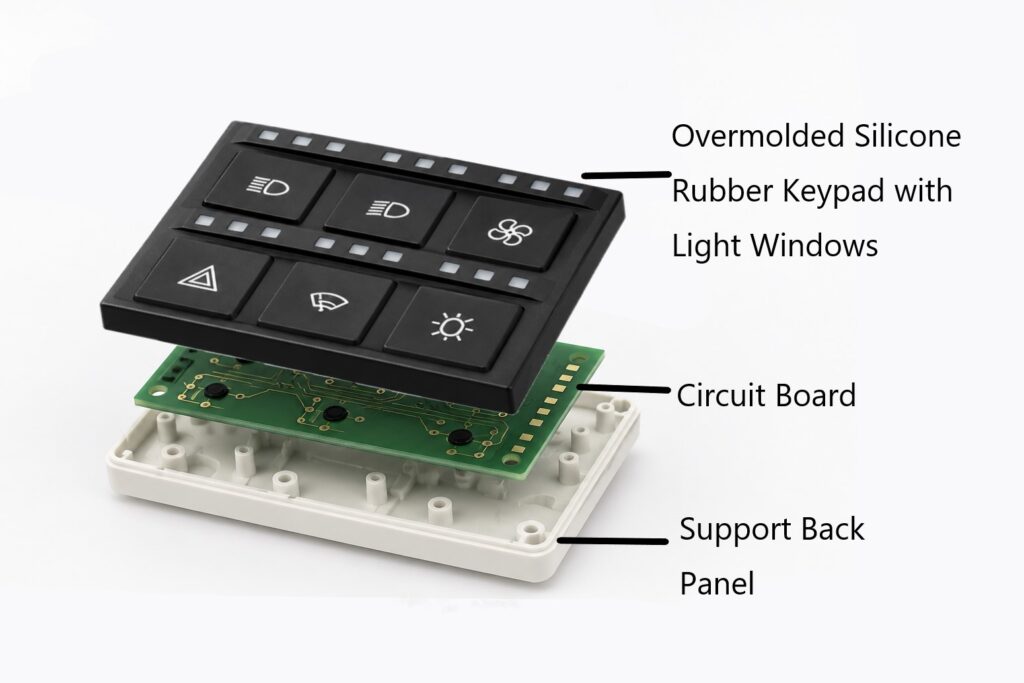
Rigid Circuit: Excellent Stiffness
A rigid circuit, also called a rigid PCB, indicates a stiffer and inflexible design in multi-layer construction, including a copper layer, substrate layer, solder mask layer, and silkscreen layer, which is bonded by heat and additives.
Flexible Printed Circuit (FPC): High Flexibility and Bendability
Flexible printed circuit (FPC) refers to a thin and flexible insulating polymer film with conductive circuit patterns, featured with high flexibility, bendability, and connection stability in compact construction.
It’s noticed that additional layers for solving constrained circuit design issues can enhance performance and stability but also result in crack resistance and flexibility due to thicker circuits and additional copper layers, as well as extra costs. Excessive thickness in FPC makes it lose its original mechanical benefits that cannot match distinct shapes and dynamic flex design of electronics.
For some unique and intricate shapes of rubber keypads (not just convex or concave surfaces of keys), FPC is optimal to match distinct three-dimensional structures and rubber parts.
Moreover, limitations in space of keypad circuit design typically lie in increased density of electronic components, tight tolerance mechanically, and size demands.
Rigid-Flex Circuit: High Efficiency in Compact Construction
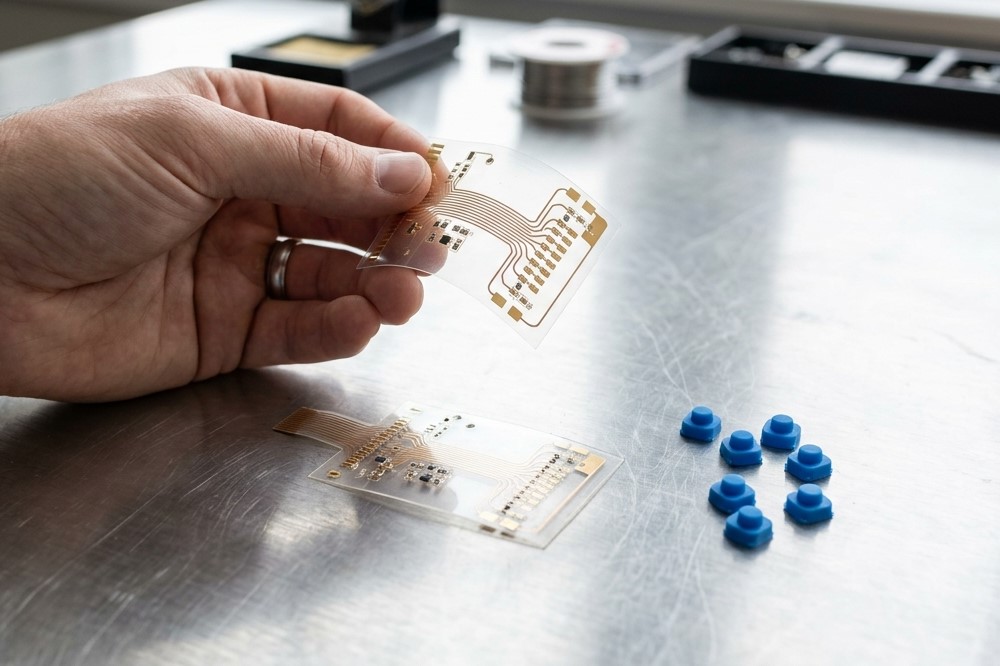
A rigid-flex circuit is a hybrid construction with an FPC board and polyimide or FR-4 (FR indicates “flame retardant,” and the number “4” refers to higher reliability) for extra stiffening into an independent component, which features the flexibility of an FPC board and the stiffness of a rigid circuit board.
As the requirements arose for smaller sizes and higher reliability of circuits, rigid-flex circuits are widely used in specific electronics. This hybrid circuit with flex and rigid circuits can save space for other crucial components by the removal of cables, connectors, and separate rigid circuit boards and reach higher efficiency with a simplified layout, enhanced routing, and higher reliability.
In a compact layout and internal limited space, both rigid PCBs and FPCs can be adjusted with increased layers, which reduce trace complexity in circuits. Or you can choose rigid-flex for your project, offering superior reliability in limited construction.
However, selecting rigid-flex circuits means higher expenses from high design complexity, longer lead times, increasing material costs, and limited EMI shielding solutions.
Differences of Rigid, FPC, and Rigid-Flex Circuits
| Features | Rigid PCB | FPC (Flexible printed circuit) | Rigid-Flex PCB |
|---|---|---|---|
| Materials | FR-4, metal cores, teflon, or ceramics, optional aluminum | Polyamide films with 0.5~2.0mils (0.0005¬0.0002 inches) | Polyimide as substrate layer, FR-4 in rigid part, copper in flex part |
| Flexibility | Moderate | Outstanding, R=7 180℃ no broken crease (single panel) at 100K times bending | Moderate flexibility |
| Reliability | Good | Great durability and light-weight | Superior, great stability and strength |
| Design Complexibility & Processing Difficulty | Simple ralatively | Moderate | Higher |
| Compatibility in Unique Shapes | Poor | Superior, compatable with unique and intricate shapes of parts | Outstanding |
| Compatibility in Compact Space | Moderate | Great in unique 3D structure | Excellent |
| Temperature Resistance | Great | Excellent with copper flex circuitry | Superior |
| Impact & Movement Resistance | Moderate | Excellent with flexible polyimide films | Excellent |
| Cost | Moderate and cost-effective with enough stiffness and low requirements about size | High cost with benefits in size and weight | Higher cost with complex construction and high-performance |
| Applications | GPS devices, healthcare monitors, diagnostic equipment, scanners, huge instruments, and non-portables | Consumer electronics, communication devices, heraing aids, smart electronics, portables, wearables, automotive and medical equipment | CT scans, digital cameras, military, aerospace, and high-performance applications |
Integration with Silicone Rubber Keypads in Electronics or User Interfaces
Reliable and Economic Option: Rigid PCB
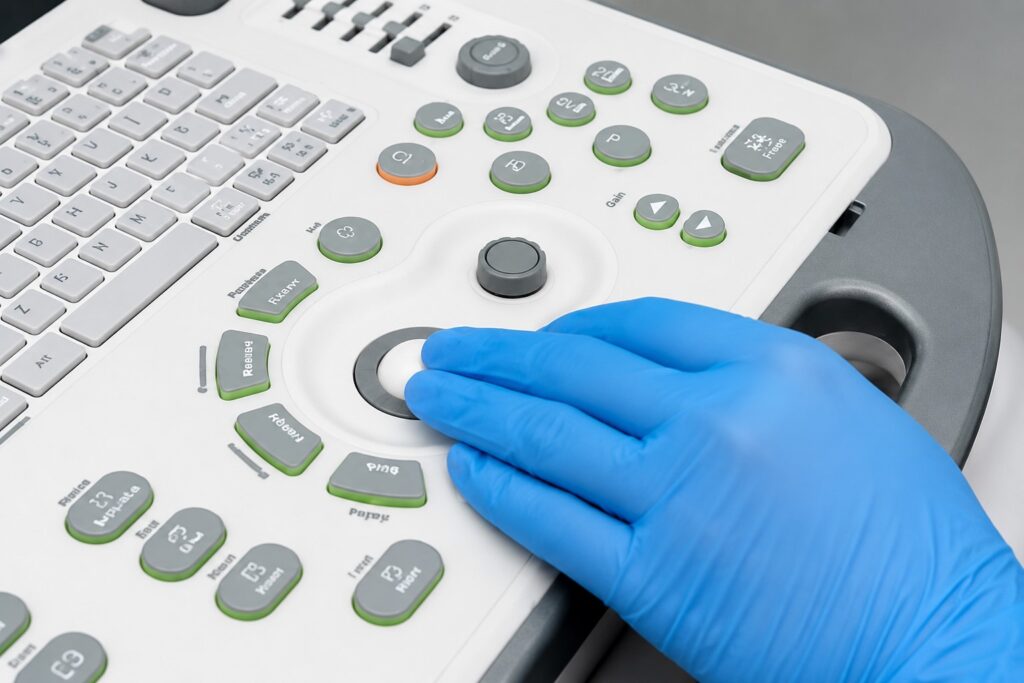
If your user interfaces are flat and space isn’t strictly restricted, rigid PCB is a suitable option to integrate with silicone rubber keypads by simple alignment or mounting. For instance, rigid-PCB-based non-portable devices and HIMs in instrument support customize rubber keypads and specific performance with desired numeric and functional silicone buttons, like an integrated numeric keypad or general 4×4 matrix keypad.
Metal domes can be mounted on rigid PCBs directly, offering durable fixing of snap domes and reliable tactile feedback for your user interfaces as an economic choice. Same as carbon-filled silicone keypads, rigid PCBs also provide cost-effectiveness in medical devices, industrial control consoles, and consumer electronics.
Further, rigid circuit boards feature an excellent lifetime, lower cost of assembly, simple keypad circuit design, and enough stability for your integrated silicone keypads.
Design Flexibility for Unique & Curved Shapes and Tight Space: Choose FPC
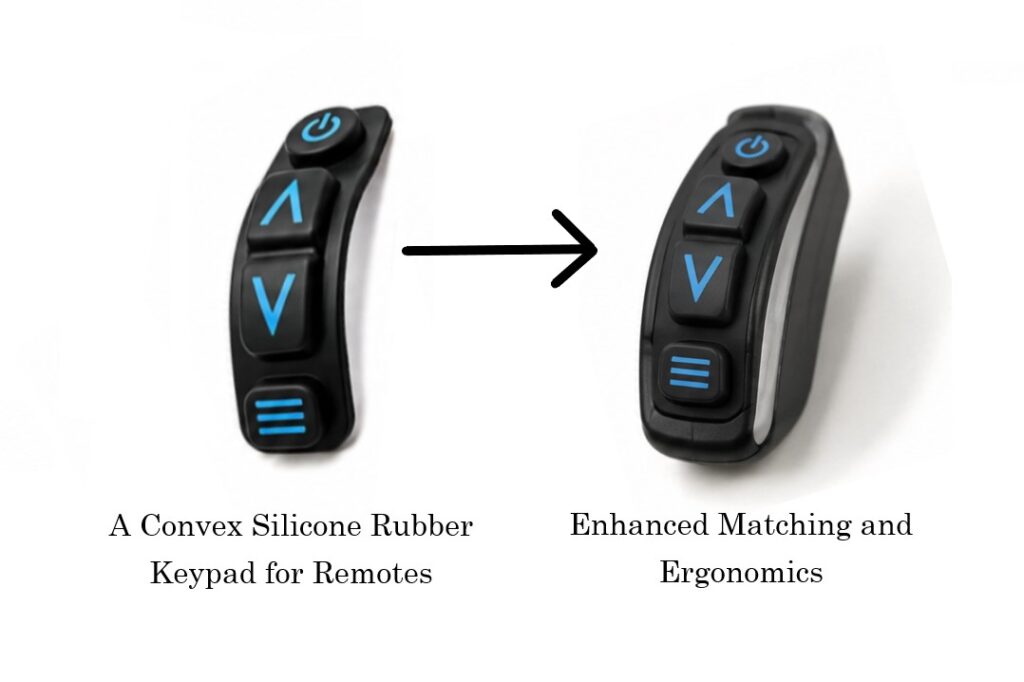
In terms of curved user interfaces and unique shapes of parts and tight space in rubber keypad construction, FPC can handle ultra-slim construction and curved user surfaces and unique and intricate shapes of parts for silicone rubber keypad projects, which provide less design complexity of devices and user interfaces and excellent flexibility & bendability for handheld devices, portables, smart electronics, and wearables. A low-key profile and slim structure meet your requirements for high-end rubber keypad products.
Rigid-Flex Circuits
Combining benefits of rigid circuits and flexible printed circuits, integrated rubber keypads gain benefits from keypad circuit design with selection of rigid-flex circuits, involving superior reliability, durability, input stability, vibration and impact resistance, and high design flexibility in military and aerospace settings. At the same time, higher expenses and design complexity can not be ignored.
FAQs
What is an FSR (force-sensitive resistor) used for in silicone rubber keypads?
FSR is a flexible thin sensor whose electrical resistance reduces predictably as force is applied to its surface, which can be integrated into IoT electronics with silicone rubber keypads.
What is an integrated numeric keypad?
An integrated numeric keypad consists of a numeric keypad (including silicone rubber, plastics, and metal options), a circuit board, optional protective housings, and connectors or cables, which support rapid data entry, calculation, control panels, or other requirements.
Are there any specific requirements for LED-illuminated silicone keypad designs integrated with a PCB?
Wires for connection with LED assemblies are soldered with lead-free solder.
Can I use copper or silver inks in keypad circuit design for rubber keypads?
Yes, copper flex circuits and silver flex circuits are widely applied in silicone rubber keypads integrated with membrane keypad switches for your electronics or user interface in machinery.
Is a copper flex circuit more advantageous than silver for keypad circuit design?
Yes, copper flex circuit has enhanced creasability, adhesion of soldered components on PCB, thermal resistance, conductivity, and tighter spacing for circuit design of rubber keypads.
Final Thoughts
Overall, there is not a most suitable circuit for your electronics or user interfaces. Based on required mechanical strength, integrated electronic components, shapes and sizes of devices, application and operation environments, as well as your budget.