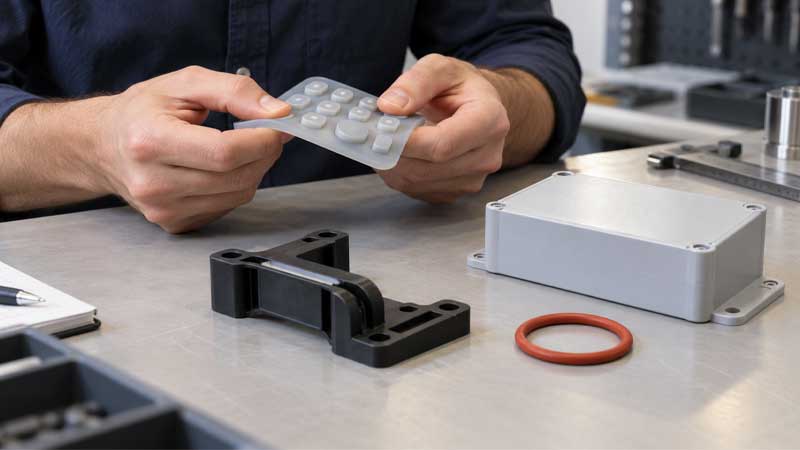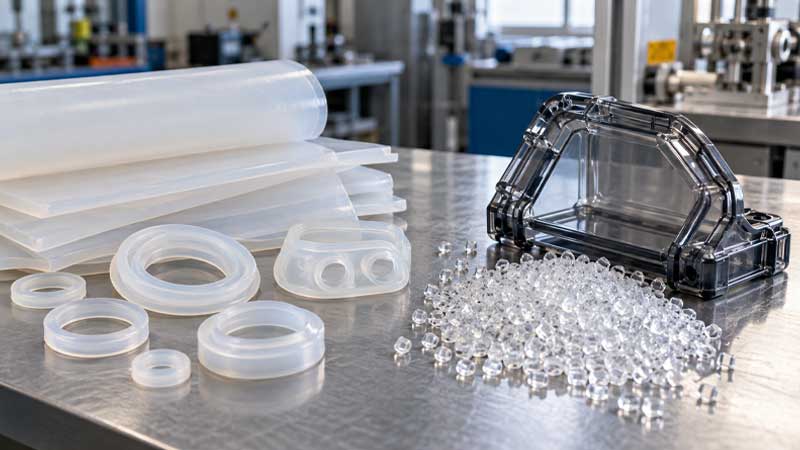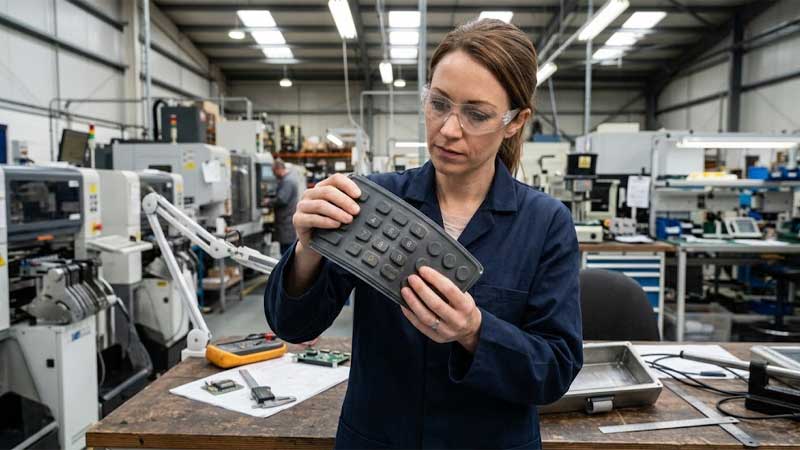
Silicone keypad cracking is a common durability issue in long-term use. The main causes are usually related to coating compatibility, silicone material performance, keypad design, and manufacturing consistency. Understanding these factors helps engineers reduce failure risks during product development and supplier selection.

Can Silicone Keypad Coatings Cause Cracking?
Silicone keypad coatings can contribute to cracking when the coating properties do not match the flexibility requirements of the silicone substrate. However, coating itself is not always the cause of failure. The actual risk depends on the coating type, application conditions, surface requirements, and how the coating interacts with the silicone material.
Many silicone keypads use coatings to improve surface durability. Applications with frequent user contact may require better abrasion resistance, while some industrial environments may require additional protection against chemicals or external conditions.
The challenge is that silicone rubber is designed to flex repeatedly during operation, while some coating materials may have different flexibility characteristics. If the coating cannot follow the movement of the silicone substrate during repeated pressing, stress may develop on the surface or at the interface between the coating and silicone.
Balancing Surface Protection and Flexibility
A harder coating can provide better surface protection, but increased hardness does not always improve overall keypad durability.
For example, a coating that performs well against abrasion may not be suitable for a keypad that experiences frequent bending or large deformation. The coating needs to provide the required protection while still allowing the silicone structure to move naturally during operation.
The correct coating choice depends on the actual application requirements, including:
- How frequently the keypad is operated
- The type of surface wear expected
- Exposure to chemicals or environmental conditions
- The flexibility requirements of the keypad structure
A surface treatment should be evaluated as part of the complete keypad design rather than as an independent feature.
SKF Approach to Coating Selection
SKF evaluates coating requirements together with silicone material selection and keypad structure.
During development, engineers consider how the surface treatment will affect:
- Long-term flexibility
- Tactile performance
- Surface durability
- Application-specific requirements
Selecting a suitable coating requires understanding both the protection requirements and the mechanical behavior of the silicone keypad.
How Does Silicone Material Affect Keypad Durability?
Silicone material selection directly influences how well a keypad performs under repeated mechanical stress. However, durability is not determined by hardness alone. The material needs to provide the right balance between flexibility, strength, recovery, and environmental resistance.
During normal operation, silicone keypads repeatedly deform and return to their original shape. Over time, this continuous movement creates mechanical stress within the material. If the silicone compound does not provide suitable resistance to fatigue or crack growth, small defects may gradually develop into visible cracks.
Why Silicone Properties Matter
Different silicone properties influence different aspects of keypad performance.
Tear resistance affects how well silicone can resist crack expansion once damage begins. Elastic recovery influences how effectively the keypad returns to its original shape after pressing. Compression behavior affects long-term deformation when the material experiences repeated or continuous loading.
However, these properties should not be evaluated separately. A silicone compound with one strong characteristic may not be suitable if it does not meet the overall requirements of the application.
Why Hardness Alone Is Not Enough
Silicone hardness is often one of the first specifications considered during keypad development because it affects tactile response and operating feel.
However, hardness does not fully represent durability. A harder silicone compound is not automatically more resistant to cracking, and a softer compound is not always better.
The suitable material depends on the complete application, including:
- Required tactile response
- Operating frequency
- Mechanical stress
- Temperature conditions
- Chemical exposure
Material selection should focus on how the silicone performs within the complete keypad structure.
SKF Approach to Silicone Material Selection
SKF considers silicone material selection based on the actual application requirements rather than a single specification.
Engineers evaluate how the material needs to perform together with:
- Keypad structure
- Surface treatment
- Operating environment
- Manufacturing requirements
The goal is to select a silicone compound that supports both the required user experience and long-term mechanical performance.
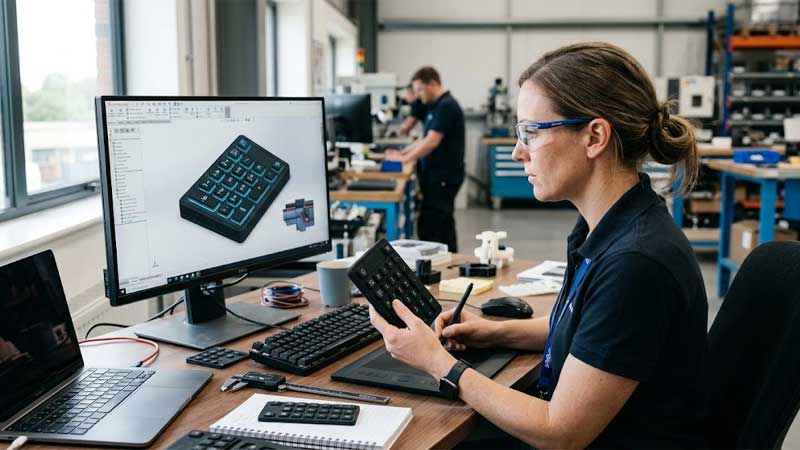
How Does Keypad Design Influence Cracking?
Silicone keypad cracking is not always caused by material limitations. The keypad structure determines how mechanical stress is distributed during every press, and poor design choices can create areas with higher stress concentration.
A silicone keypad must balance tactile response, operating force, and durability. A design optimized for only one performance target may create additional risks if other requirements are not considered.
How Diaphragm Design Affects Durability
The diaphragm is one of the most important structural areas because it repeatedly bends and recovers during operation.
When a key is pressed, the diaphragm controls the movement and tactile response of the keypad. If the structure creates excessive stress in certain areas, repeated deformation may gradually reduce durability and increase the possibility of cracking.
Factors that influence diaphragm performance include:
- Diaphragm geometry
- Thickness consistency
- Transition areas around the key
- Required key travel
- Actuation force requirements
The correct design depends on the application. A keypad used frequently in industrial equipment may require different structural considerations compared with a keypad used occasionally.
Balancing Tactile Response and Mechanical Reliability
Silicone keypad design often involves balancing different requirements.
Reducing actuation force may improve user comfort, but the structure still needs enough support to withstand repeated operation. Increasing flexibility may improve tactile feel, but excessive deformation can increase mechanical stress.
A reliable design considers how the keypad will be used throughout its service life rather than focusing only on initial feel.
SKF Approach to Keypad Design
SKF engineers review keypad structure with consideration for both performance requirements and manufacturing feasibility.
During development, factors such as:
- Application requirements
- Tactile expectations
- Silicone behavior
- Structural design
are evaluated together.
By reviewing potential stress areas during the design stage, SKF helps customers identify durability risks before tooling and production.

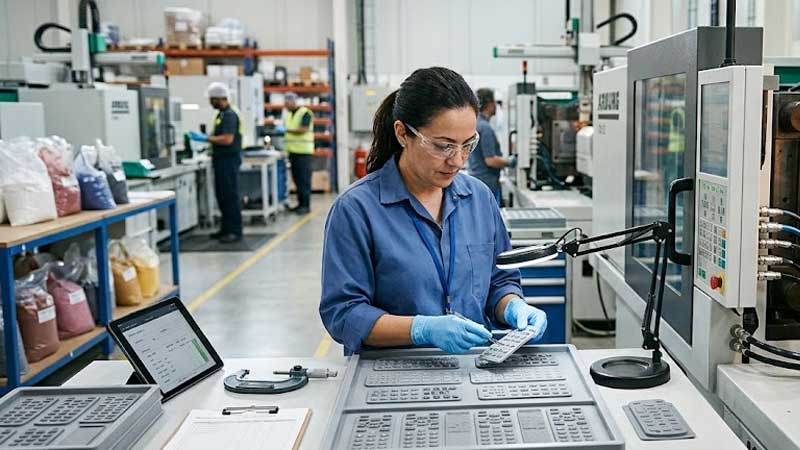
How Does Manufacturing Quality Affect Silicone Keypad Cracking?
A well-designed silicone keypad can still experience reliability issues if manufacturing consistency is not controlled.
Silicone keypads contain flexible structures that depend on accurate geometry and stable production conditions. Small variations in critical areas may affect how the keypad performs during repeated use.
Why Manufacturing Consistency Matters
Manufacturing variation can influence:
- Diaphragm thickness
- Key dimensions
- Surface quality
- Tactile consistency
For example, uneven diaphragm dimensions may change how stress is distributed when the key is pressed. Over time, areas with higher stress may become more vulnerable to fatigue.
The goal of manufacturing control is not only to produce parts that meet drawings, but also to maintain consistent performance from part to part.
Factors That Influence Production Consistency
Several manufacturing factors can affect silicone keypad quality:
- Tooling Design: The mold design influences how silicone material fills the cavity and forms the final structure.
- Process Control: Stable production conditions help reduce variation between individual parts.
- Inspection and Validation: Checking critical dimensions and functional performance helps identify potential issues before products reach the field.
SKF Approach to Manufacturing Control
SKF focuses on controlling the complete manufacturing process, from design review and tooling considerations to production inspection.
Engineers consider:
- Part requirements
- Material behavior
- Mold design
- Quality checkpoints
This helps maintain consistency and supports reliable performance in custom silicone keypad production.
How Can You Prevent Silicone Keypad Cracking?
Preventing silicone keypad cracking starts before production. The most effective approach is to evaluate design, material, surface treatment, and manufacturing requirements together.
During Design Development
Review the keypad structure based on:
- Expected usage frequency
- Required tactile performance
- Mechanical stress points
- Environmental conditions
A design that works in one application may not perform the same way in another.
During Material and Coating Selection
Choose materials based on actual operating requirements.
Consider:
- Flexibility requirements
- Surface protection needs
- Chemical exposure
- Temperature conditions
Material and coating decisions should be evaluated together because they directly affect long-term performance.
During Manufacturing
A reliable production process helps maintain consistency.
Important considerations include:
- Tooling accuracy
- Process stability
- Dimensional control
- Functional inspection
Manufacturing quality is not only about appearance. It directly affects how the keypad performs after repeated use.

What Should You Ask a Silicone Keypad Manufacturer?
Choosing the right manufacturer can reduce the risk of durability problems before production begins.
A capable supplier should be able to discuss more than basic specifications. They should understand how design, material, and manufacturing decisions affect final keypad performance.
Can the Manufacturer Review Your Design?
A manufacturer with engineering capability should be able to review:
- Keypad structure
- Application requirements
- Potential stress areas
- Manufacturing considerations
Design review before tooling can help identify risks early.
Does the Manufacturer Understand Silicone Material Selection?
The supplier should understand that silicone selection involves more than hardness.
They should consider:
- Mechanical requirements
- Environmental conditions
- Surface treatment needs
- Expected usage conditions
Can the Manufacturer Support Quality Improvement?
When a keypad fails, the supplier should be able to help analyze possible causes instead of only replacing parts.
A useful engineering partner can review:
- Failure symptoms
- Design factors
- Material selection
- Manufacturing conditions
This approach helps improve future designs and reduce repeated issues.
FAQ
Why do silicone keypads crack after repeated use?
Silicone keypads can crack after repeated use when mechanical stress accumulates beyond what the material, structure, or coating can withstand. Common factors include unsuitable material selection, stress concentration in the design, coating compatibility issues, or manufacturing variation.
Can silicone keypad coatings cause cracking?
Yes, coatings can contribute to cracking if the coating properties do not match the flexibility requirements of the silicone keypad. However, the risk depends on the coating type, application conditions, and how well the coating works with the silicone substrate.
Does silicone hardness affect keypad durability?
Silicone hardness affects tactile feel and deformation behavior, but it is not the only factor that determines durability. Other properties, such as tear resistance, elasticity, and environmental resistance, also influence long-term performance.
How can I improve my silicone keypad design?
Improving keypad durability usually requires reviewing multiple factors together, including structure design, silicone material selection, surface treatment, and manufacturing process control.
Conclusion
Silicone keypad cracking is usually the result of several factors working together. Coating compatibility, silicone material properties, keypad structure, and manufacturing consistency all influence long-term durability.
Reducing the risk of cracking requires evaluating the complete design instead of focusing on only one specification. By reviewing the application requirements, material selection, structural design, and production process early, potential reliability issues can be identified before they become field problems.
SKF works with customers to review silicone keypad requirements, evaluate design considerations, and support custom keypad development from engineering review through production. If you are experiencing silicone keypad durability issues or developing a new keypad design, contact SKF to discuss your application requirements.