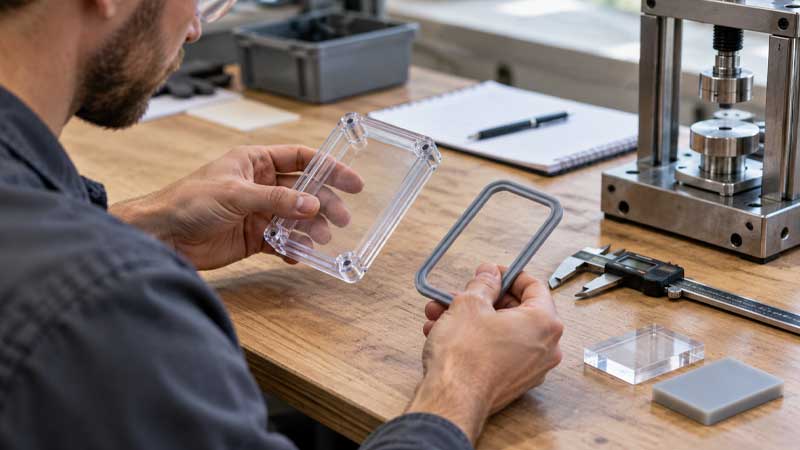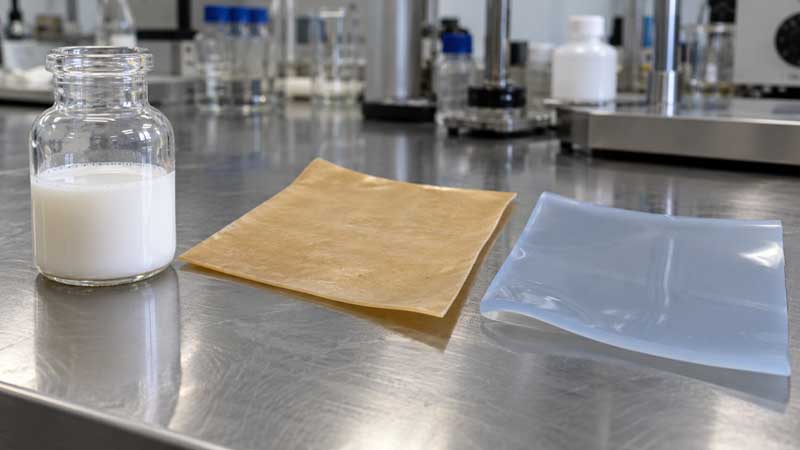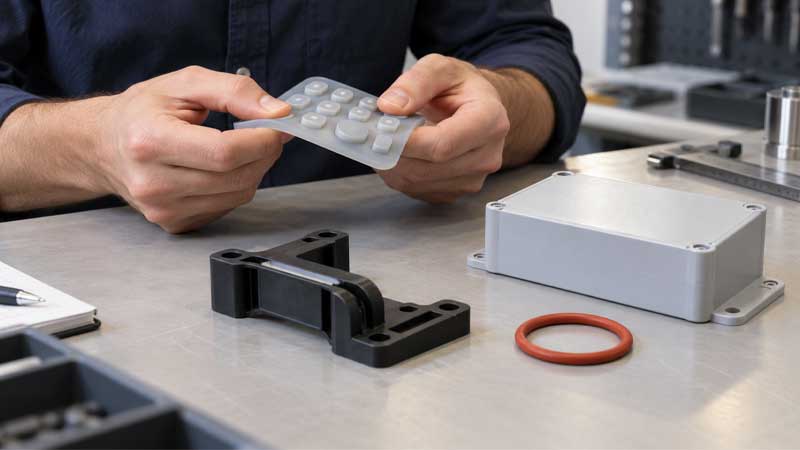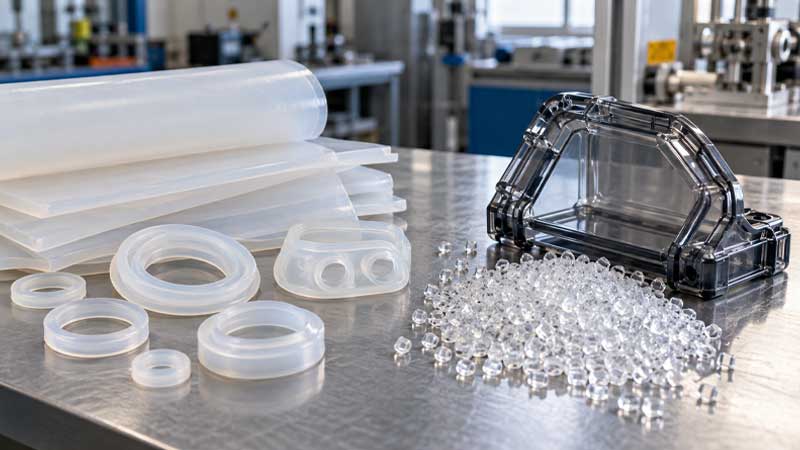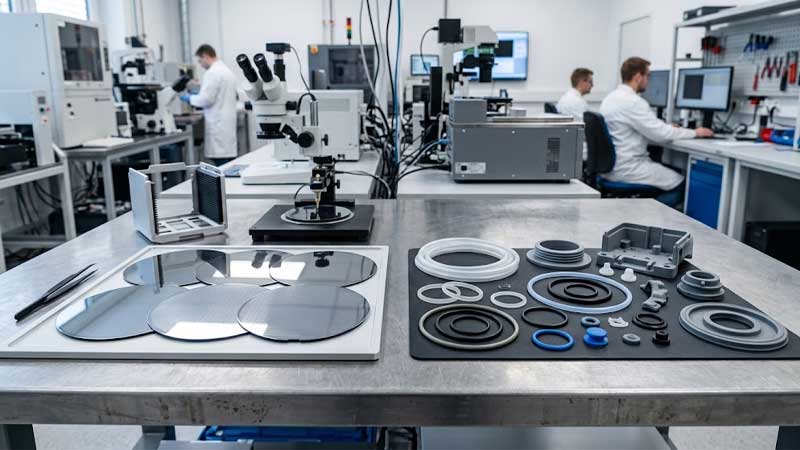
Silicon and silicone are two materials with very similar names. However, they have completely different structures, properties, and industrial applications.
Silicon is a chemical element used mainly in semiconductor and electronic industries. Silicone is a synthetic polymer used for flexible components, sealing products, protective parts, and many industrial applications.
This guide explains the differences between silicon and silicone, their material properties, common applications, and how engineers select the right material for different requirements.
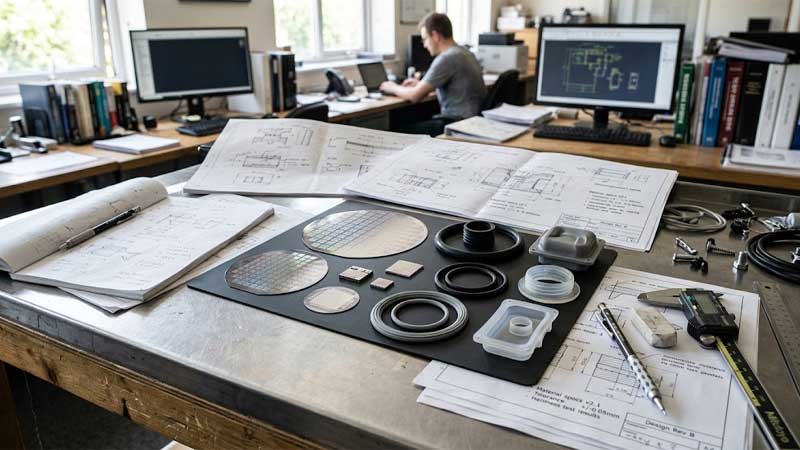
What Is Silicon?
Silicon is a chemical element with the symbol Si.
It is a crystalline material with semiconductor properties. These properties allow engineers to control electrical behavior during manufacturing processes.
Silicon has a stable atomic structure. It can provide consistent performance in electronic applications.
Unlike silicone rubber, silicon is hard and rigid. It does not provide flexibility, elasticity, or recovery after deformation.
Because of these characteristics, silicon is mainly used for electronic and energy applications rather than flexible mechanical components.
What Are the Key Properties of Silicon?
Semiconductor Performance
The most important property of silicon is its semiconductor behavior.
Pure silicon has limited electrical conductivity. Engineers can modify its electrical characteristics through processes such as doping.
This allows silicon to control the movement of electrical signals.
This property makes silicon a key material for:
- Integrated circuits
- Transistors
- Memory devices
- Sensors
Crystal Structure and Mechanical Behavior
Silicon has a strong crystalline structure.
This structure provides:
- Dimensional stability
- Precise manufacturing performance
- Consistent material behavior
These characteristics are important in semiconductor production because electronic components require high manufacturing accuracy.
However, silicon is also a brittle material compared with many metals and polymers.
It has limited deformation capability. It cannot repeatedly bend, compress, or recover like silicone rubber.
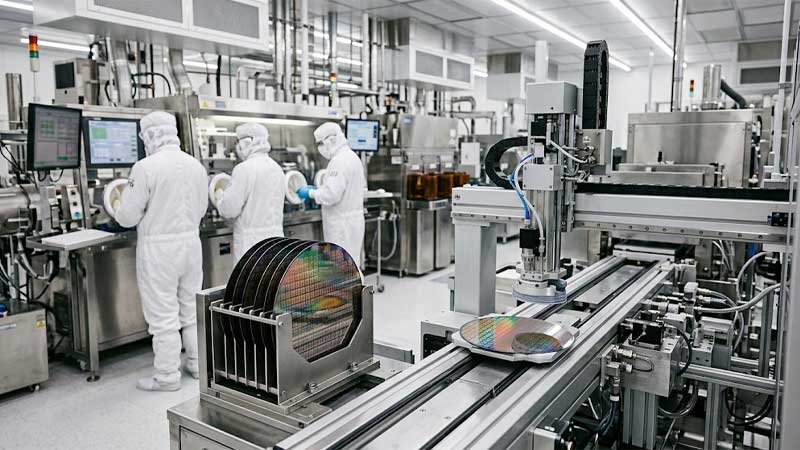
Thermal Characteristics
Silicon has good thermal stability.
It can maintain its properties during many semiconductor manufacturing processes.
Thermal performance is important because electronic devices often generate heat during operation.
However, engineers still need to consider thermal expansion, heat dissipation, and operating conditions during product design.
Electrical Properties
Silicon can behave between a conductor and an insulator.
Its electrical characteristics can be adjusted through material processing.
This ability allows engineers to design electronic components with controlled electrical functions.
What Are the Common Applications of Silicon?
Silicon is mainly used in applications that require semiconductor performance.
Semiconductor Devices
The semiconductor industry is the largest application area for silicon.
Silicon wafers are used to manufacture:
- Integrated circuits
- Microprocessors
- Memory chips
- Sensors
These products depend on silicon’s ability to control electrical signals.
The quality of silicon material and manufacturing processes directly affects electronic component performance.
Solar Cells
Silicon is also widely used in photovoltaic applications.
Silicon solar cells convert sunlight into electrical energy through semiconductor processes.
Common types include:
- Monocrystalline silicon
- Polycrystalline silicon
Different manufacturing methods can affect efficiency, cost, and product performance.
Sensors and Electronic Components
Silicon is used in many electronic sensing applications.
Examples include:
- Pressure sensors
- Image sensors
- Power management components
These applications use silicon because it can combine electronic functions with precise manufacturing processes.
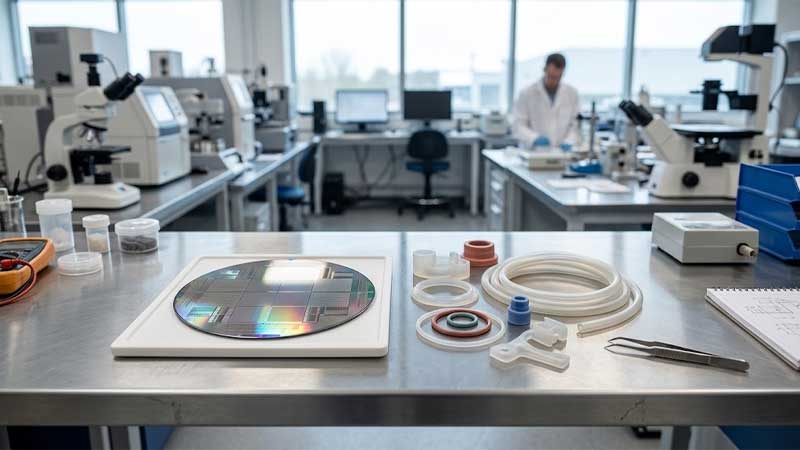
What Is Silicone?
Silicone is a synthetic polymer material.
It contains silicon atoms, but it is not the same material as elemental silicon.
Silicone has a polymer structure based on silicon and oxygen bonds. This structure gives silicone its unique flexibility and stability.
Silicone can be produced in different forms, including:
- Silicone rubber
- Silicone oil
- Silicone coatings
- Silicone gels
Among these forms, silicone rubber is widely used for flexible industrial components.
What Are the Key Properties of Silicone?
Flexibility and Elastic Recovery
One of the main characteristics of silicone is its ability to deform and recover.
When silicone rubber is compressed or stretched, it can return to its original shape after the force is removed.
This property makes silicone suitable for:
- Seals
- Gaskets
- Flexible components
- Vibration control parts
The actual recovery performance depends on the silicone formulation and product design.
Temperature Resistance
Silicone can maintain its physical properties under a wide temperature range.
This makes it useful for applications with temperature changes.
Common applications include:
- Automotive components
- Industrial seals
- Outdoor equipment parts
However, temperature performance depends on the silicone grade and operating environment.
Chemical and Environmental Resistance
Silicone provides good resistance against many environmental conditions.
It can maintain performance under exposure to:
- Moisture
- Ozone
- Weather changes
Chemical resistance depends on:
- Chemical type
- Concentration
- Exposure time
- Temperature
Material selection should consider the actual working environment.
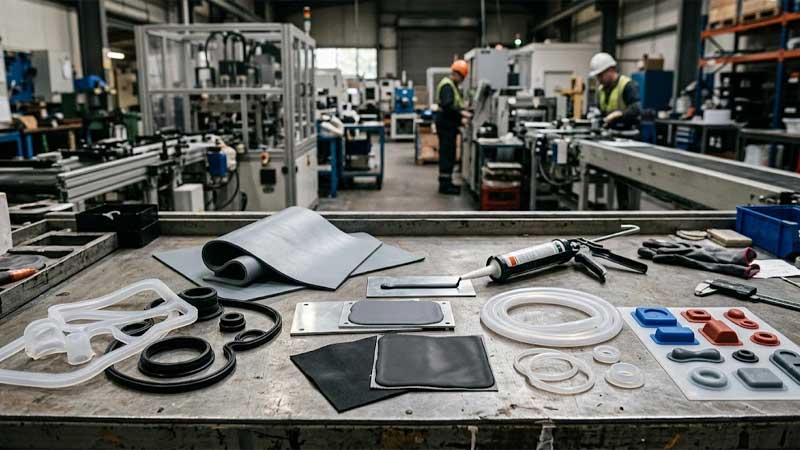
Electrical Insulation
Many silicone materials have good electrical insulation properties.
This makes silicone useful for electrical protection applications.
Common uses include:
- Cable protection
- Insulating components
- Electronic protection parts
Special silicone formulations can also provide conductive properties for specific applications.
Surface Characteristics
Silicone has low surface energy characteristics.
This affects:
- Adhesion
- Coating performance
- Printing processes
Some applications require surface treatment to improve coating or bonding performance.
What Are the Common Applications of Silicone?
Silicone is used in many industries because of its flexibility, stability, and environmental resistance.
Sealing Products
Sealing is one of the most common applications of silicone rubber.
Silicone can compress under pressure and recover after deformation.
This makes it suitable for:
- O-rings
- Gaskets
- Protective seals
- Equipment sealing parts
Medical Products
Silicone is used in medical-related products that require flexibility and stable material performance.
Applications may include:
- Tubing
- Flexible components
- Protective parts
Different applications require different silicone grades and manufacturing controls.
Electronic Applications
Silicone is used in electronic products for protection and insulation.
Examples include:
- Protective covers
- Flexible interfaces
- Insulation components
Its flexibility allows designers to create products that need both protection and mechanical movement.
Consumer and Industrial Products
Silicone is also used in many daily and industrial products.
Examples include:
- Kitchen products
- Wearable accessories
- Industrial rubber components
- Protective covers
The material selection depends on the required flexibility, durability, and environmental conditions.

What Is the Difference Between Silicon and Silicone?
Although silicon and silicone have similar names, they serve different engineering purposes.
| Silicon | Silicone | |
| Material type | Chemical element | Synthetic polymer |
| Chemical symbol | Si | No element symbol |
| Structure | Crystalline structure | Polymer structure |
| Main properties | Semiconductor performance | Flexibility and elasticity |
| Physical behavior | Hard and rigid | Flexible and elastic |
| Common forms | Solid crystal | Rubber, oil, coating, gel |
| Main applications | Electronics, solar cells, sensors | Seals, medical products, industrial components |
The main difference is the function of the material.
Silicon is selected when electrical and semiconductor performance are required.
Silicone is selected when flexibility, sealing, insulation, and repeated deformation are required.
How Do Silicon and Silicone Perform in Different Engineering Applications?
Material selection depends on the product requirements.
| Requirement | Suitable Material |
| Semiconductor functions | Silicon |
| Electronic signal control | Silicon |
| Solar energy conversion | Silicon |
| Flexible movement | Silicone |
| Sealing performance | Silicone |
| Repeated compression | Silicone |
| Protective coatings | Silicone |
Neither material is better than the other.
The suitable choice depends on the required function, operating environment, and product design.
Frequently Asked Questions
Is silicon the same as silicone?
No.
Silicon is a chemical element used mainly in semiconductor and electronic applications.
Silicone is a polymer material used for flexible components, seals, coatings, and protective products.
Is silicone made from silicon?
Yes, silicone contains silicon atoms.
However, silicone is not silicon. The two materials have different structures and properties.
Is silicon a type of rubber?
No.
Silicon is a rigid chemical element. It does not have the flexibility and elastic recovery required for rubber materials.
Silicone rubber is the material used for flexible rubber components.
Why is silicon used for electronics?
Silicon is used for electronics because of its semiconductor properties.
It can control electrical behavior and support the production of electronic circuits and devices.
Why is silicone used for seals and flexible components?
Silicone is used because it can deform and recover.
Its flexibility, stability, and environmental resistance make it suitable for products that require repeated movement or compression.
Which material is better, silicon or silicone?
Neither material is universally better.
Silicon is suitable for semiconductor and electronic applications. Silicone is suitable for flexible and protective applications.
The correct choice depends on the product requirements.
Conclusion
Silicon and silicone have similar names, but they are different materials with different functions.
Silicon is mainly used for semiconductor applications because of its electrical properties and precise manufacturing performance. Silicone is widely used for flexible industrial components because of its elasticity, stability, and mechanical behavior.
Understanding the differences between silicon and silicone helps engineers choose the right material for different applications. The final selection should consider product requirements, operating conditions, and manufacturing needs.