Silicone products are used in many industries, including food-contact products, medical devices, electronic equipment, and industrial applications. However, compliance requirements vary depending on the product application, target market, and material composition.
Different compliance standards focus on different areas, such as restricted substances, chemical safety, food-contact suitability, and biological evaluation.
This guide explains common silicone compliance requirements, how manufacturers verify compliance, and what OEM buyers should consider when selecting silicone components, including silicone keypads.

LFGB Compliance for Silicone Products
What Does LFGB Control?
LFGB (Lebensmittel- und Futtermittelgesetzbuch) is a German food safety regulation commonly referenced for materials intended for food-contact applications.
For silicone products, LFGB evaluation focuses on whether the material is suitable for its intended food-contact use.
The evaluation may consider:
- Material composition The silicone formulation, additives, pigments, and other substances used during manufacturing.
- Extractable substances Substances that may be released from the silicone material under defined testing conditions.
- Migration behavior Whether substances from the silicone material may transfer into food during contact.
- Odor and taste impact Whether the material affects the sensory properties of food.
The evaluation conditions depend on factors such as:
- Food-contact type
- Contact duration
- Temperature exposure
- Intended use
LFGB focuses on food-contact safety evaluation rather than general silicone performance.
Why Do Silicone Products Need LFGB Evaluation?
Silicone products used in food-contact applications need to demonstrate that the selected material is suitable for contact with food under the intended conditions.
Silicone formulations can vary depending on the required properties, manufacturing process, and application. Different formulations may contain different additives or processing components.
LFGB evaluation helps manufacturers and buyers confirm that the silicone material is appropriate for the specific food-contact application.
For example, a silicone product used repeatedly at high temperatures may require different evaluation considerations from a product used only for short-term contact.
LFGB requirements depend on:
- Intended food-contact application
- Operating conditions
- Customer requirements
- Applicable regulations
How Is LFGB Compliance Verified?
LFGB compliance is usually supported through testing and material evaluation.
Depending on the application, verification may include:
- Migration testing
- Sensory evaluation
- Material safety assessment
- Supplier documentation
The required testing conditions depend on the intended use of the silicone product.
What Does LFGB Compliance Not Mean?
LFGB compliance only addresses food-contact safety considerations.
It does not confirm:
- Medical suitability
- Electrical performance
- Mechanical durability
- Chemical resistance
- Long-term service life
A silicone product may meet LFGB requirements while still requiring additional evaluation for other applications.

FDA Requirements for Silicone Materials
What Does FDA Control?
FDA-related silicone requirements are mainly associated with applications where silicone materials are intended for regulated uses, especially food-contact applications.
The evaluation focuses on whether the material is suitable for its intended use under applicable FDA requirements.
For silicone materials, evaluation may consider:
- Material formulation
- Applicable regulatory requirements
- Extractable substances
- Migration considerations
- Supplier documentation
The specific requirements depend on the application and contact conditions.
Why Do Silicone Products Need FDA Evaluation?
Silicone products used in food-contact applications may directly contact materials intended for consumption.
Because silicone formulations can contain different additives, pigments, and processing components, manufacturers need to verify that the selected material is suitable for the intended application.
A silicone material that has good mechanical properties does not automatically mean it is suitable for food-contact use.
FDA-related evaluation helps manufacturers and buyers confirm that the material meets the requirements for its specific application.
The need for FDA evaluation depends on:
- Intended use
- Contact conditions
- Customer requirements
- Applicable regulations
How Is FDA Compliance Verified?
FDA-related compliance may be supported through:
- Material documentation
- Supplier declarations
- Applicable test reports
- Customer-specific compliance records
The required verification depends on the final application.
What Does FDA Compliance Not Mean?
FDA-related compliance does not automatically confirm:
- Medical device approval
- Sterilization compatibility
- Mechanical durability
- Electrical performance
It only addresses suitability for the applicable FDA-related use.

REACH Compliance for Silicone Products
What Does REACH Control?
REACH is a European Union regulation that manages chemical substances used, produced, and imported within the EU market.
The purpose of REACH is to improve chemical safety information and control substances that may present risks.
One important part of REACH is the management of Substances of Very High Concern (SVHC).
For silicone products, REACH evaluation may involve reviewing:
- Silicone polymer materials
- Additives
- Pigments
- Processing chemicals
- Coatings
- Adhesives
The focus is not on the physical performance of silicone but on chemical substance management.
Why Do Silicone Products Need REACH Evaluation?
Silicone products are manufactured using different formulations depending on the required properties and application.
Different formulations may contain different additives or processing materials.
When products enter markets with REACH requirements, manufacturers need to understand the chemical composition of the supplied material and communicate relevant information through the supply chain.
For OEM buyers, REACH evaluation helps confirm that the selected silicone material meets the required chemical compliance expectations.
How Is REACH Compliance Verified?
REACH compliance may be supported through:
- REACH declarations
- SVHC statements
- Material composition information
- Supporting test data when required
The required documentation depends on:
- Customer requirements
- Product application
- Target market
What Does REACH Compliance Not Mean?
REACH compliance does not confirm:
- Food-contact suitability
- Medical suitability
- Chemical resistance
- Mechanical durability
- Long-term product reliability
It only addresses chemical substance requirements.

RoHS Compliance for Silicone Products
What Does RoHS Control?
RoHS (Restriction of Hazardous Substances) controls certain restricted substances used in electrical and electronic equipment.
The purpose of RoHS is to limit the use of specific hazardous substances in electronic products and components.
The restricted substances include:
- Lead (Pb)
- Mercury (Hg)
- Cadmium (Cd)
- Hexavalent chromium (Cr VI)
- Polybrominated biphenyls (PBB)
- Polybrominated diphenyl ethers (PBDE)
- Certain restricted phthalates
For silicone products, RoHS evaluation focuses on whether the material system contains restricted substances above applicable limits.
The evaluation may involve:
- Silicone compounds
- Pigments
- Coatings
- Conductive materials
- Adhesives
- Other materials used in the final component
RoHS focuses on substance control rather than the mechanical or functional performance of a product.
Why Do Silicone Products Need RoHS Evaluation?
Many silicone products are used as parts of electronic assemblies.
Although silicone rubber itself is mainly a polymer material, finished silicone components may include additional materials introduced during manufacturing.
For example, a silicone component may contain:
- Conductive materials for electrical contact
- Printed graphics
- Protective coatings
- Bonding materials
These additional materials may affect the overall compliance evaluation.
For this reason, OEM customers supplying electronic products may request RoHS documentation to confirm that the complete component meets applicable substance requirements.
How Is RoHS Compliance Verified?
RoHS compliance is commonly supported through:
- Supplier declarations
- Material compliance statements
- Laboratory testing when required
The verification method depends on:
- Product category
- Customer requirements
- Supply chain expectations
Some customers may require only a declaration, while others may request additional test documentation.
What Does RoHS Compliance Not Mean?
RoHS compliance only addresses restricted substances.
It does not confirm:
- Silicone durability
- Temperature resistance
- Chemical resistance
- Mechanical performance
- Product lifetime
A RoHS-compliant silicone product still requires separate engineering evaluation for its intended application.

ISO 10993 Requirements for Medical Silicone Materials
What Does ISO 10993 Control?
ISO 10993 provides a framework for evaluating the biological safety of materials used in medical devices.
Unlike material compliance regulations such as RoHS or REACH, ISO 10993 focuses on how materials interact with the human body.
The evaluation may consider biological endpoints such as:
- Cytotoxicity
- Sensitization
- Irritation
- Other biological effects based on risk assessment
The required evaluation depends on:
- Type of body contact
- Contact duration
- Intended medical application
- Device classification
ISO 10993 does not define one fixed test requirement for every medical silicone product.
Why Do Silicone Products Need ISO 10993 Evaluation?
Silicone products used in medical devices may come into contact with patients or body tissues. Therefore, manufacturers need to evaluate whether the material is biologically suitable for its intended use.
A silicone material may have suitable mechanical properties, such as flexibility and elasticity, but these properties alone cannot determine biological safety.
ISO 10993 evaluation helps medical device manufacturers assess potential biological risks before using silicone materials in medical applications.
The need for evaluation depends on the actual use of the component, including:
- Whether the material contacts the body
- The duration of contact
- The type of medical device
- The intended application
ISO 10993 requirements are therefore determined by the final medical application rather than simply by the silicone material itself.
How Is ISO 10993 Compliance Verified?
ISO 10993 evaluation may involve:
- Biological evaluation plans
- Test reports
- Material information
- Risk assessment documentation
The final medical device manufacturer usually determines the required evaluation based on the complete device application.
What Does ISO 10993 Compliance Not Mean?
ISO 10993 evaluation does not confirm:
- Medical device approval
- Mechanical performance
- Chemical resistance
- Product lifetime
- Functional reliability
It focuses on biological safety evaluation.

How Do Silicone Manufacturers Provide Compliance Documentation?
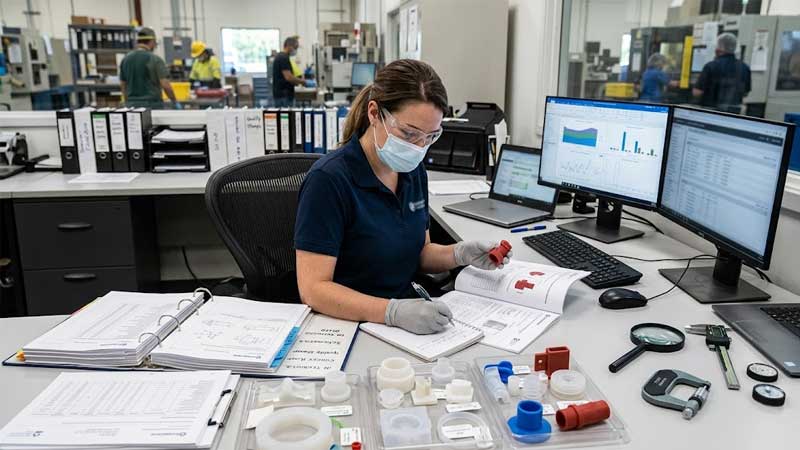
Compliance documentation helps OEM buyers understand whether a silicone material or component meets their project requirements.
However, the required documents depend on the application.
A food-contact product, medical component, and electronic component may require different documentation.
Material Documentation
Material documentation provides information about the silicone material used in production.
It may include:
- Material specification
- Technical data
- Material identification
- Relevant compliance information
This information helps buyers evaluate whether the selected silicone material matches the application requirements.
Compliance Declarations
Manufacturers may provide declarations related to applicable requirements, such as:
- RoHS declaration
- REACH statement
- FDA-related compliance documentation
- LFGB-related documentation
- Other customer-required declarations
A declaration confirms the supplier’s statement regarding the supplied material or component.
Test Reports
Testing should support a defined requirement.
Depending on the application, test documentation may relate to:
- Chemical substance evaluation
- Food-contact safety
- Biological evaluation
- Customer-specific requirements
Testing should be connected to the actual product application rather than collected without a defined purpose.
Traceability and Quality Documentation
For OEM projects, buyers may also need information showing that approved materials and processes are maintained during production.
Relevant documentation may include:
- Material records
- Production records
- Inspection documentation
- Quality control information
The required level of documentation depends on the industry and customer requirements.
Do Silicone Keypads Have Different Compliance Requirements?
Silicone keypads follow the general principles of silicone compliance, but their evaluation can be more complex because they are functional components rather than simple silicone materials.
Unlike a basic silicone part, a silicone keypad is usually manufactured through multiple material combinations and processes. The complete component may include:
- Silicone rubber
- Conductive carbon pills
- Printed graphics
- Protective coatings
- Adhesive layers
These additional materials and processes can affect compliance evaluation. Therefore, compliance should be considered based on the complete keypad assembly rather than only the silicone rubber material.
What Compliance Requirements Apply to Different Silicone Keypad Applications?
Medical Silicone Keypads
Medical keypad requirements depend on the final medical device application.
Potential considerations include:
- Material safety requirements
- Cleaning and disinfection conditions
- Surface durability
- Required supplier documentation
A keypad integrated into a medical instrument does not automatically require the same evaluation as every other medical component.
The required compliance approach depends on:
- Device design
- Contact conditions
- Customer requirements
Industrial Silicone Keypads
Industrial keypad applications often focus on operating conditions and product reliability.
Important considerations may include:
- Chemical exposure
- Temperature range
- Environmental conditions
- Repeated operation
Compliance documentation supports supplier qualification, but it does not replace engineering validation.
For example, a protective coating may improve surface protection, but engineers should also evaluate whether it affects:
- Tactile response
- Printing durability
- Manufacturing consistency
Electronic Equipment Silicone Keypads
Electronic equipment applications commonly involve requirements related to:
- RoHS
- REACH
- Material declarations
The keypad should also meet functional requirements related to:
- Conductive contacts
- PCB interface
- Switching performance
Compliance review should include both material requirements and product functionality.

What Documents Should You Request From a Silicone Keypad Manufacturer?
For silicone keypad projects, OEM buyers should request documentation based on the actual application requirements.
Common documentation may include:
Material Information
Used to understand:
- Silicone compound information
- Material suitability
- Technical characteristics
Compliance Documentation
Depending on the project, suppliers may provide:
- RoHS declaration
- REACH statement
- Applicable material compliance documents
Manufacturing and Quality Information
Depending on customer requirements, documentation may include:
- Inspection records
- Production validation information
- Quality documentation
Application-Specific Documentation
Certain projects may require additional information related to:
- Medical applications
- Environmental requirements
- Customer qualification processes
Conclusion
Silicone compliance requirements depend on the material, application, and target market. Standards such as RoHS, REACH, FDA-related requirements, LFGB, and ISO 10993 focus on different aspects of product safety and should be evaluated based on the intended use rather than applied as general certifications for all silicone products.
For silicone keypads, compliance evaluation requires consideration of the complete component, including silicone materials, conductive elements, coatings, printing, and other assembled parts. Selecting the right compliance approach during the design stage helps avoid material selection issues and supports smoother product qualification.
SKF works with OEM customers to evaluate silicone keypad requirements, select suitable materials and manufacturing processes, and provide the necessary compliance documentation for different applications. If you are developing silicone keypads for electronic, medical, industrial, or other specialized equipment, contact SKF to discuss your project requirements.