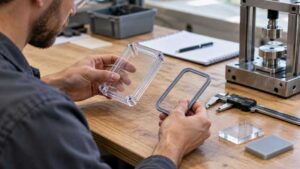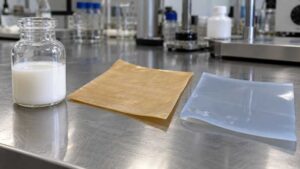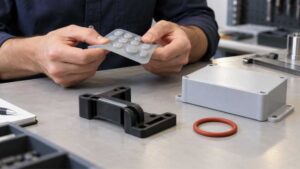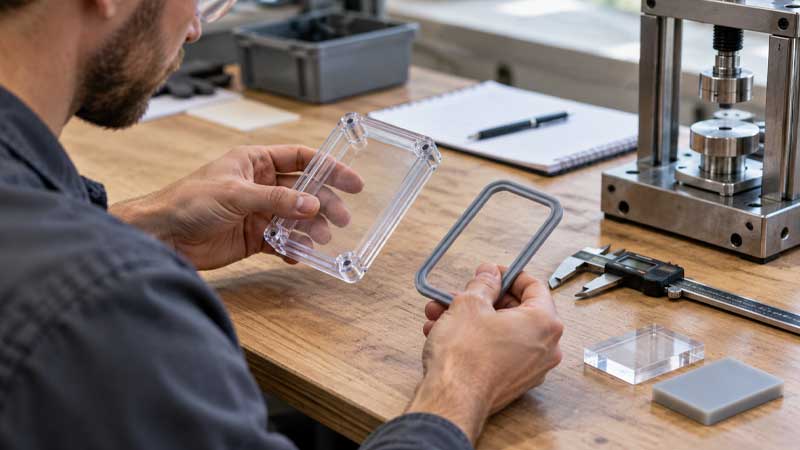
Vulcanization temperature is one of the most important factors in rubber manufacturing. During molding, heat activates the curing reaction that changes raw rubber compounds into elastic products with stable mechanical properties.
Many manufacturers try to increase vulcanization temperature to shorten molding cycles and improve production efficiency. A higher temperature can accelerate curing, but it does not always create better results. When the temperature exceeds the suitable range of a rubber compound, the material structure may become unstable, leading to reduced elasticity, lower strength, or premature failure.
Different rubber materials require different vulcanization conditions because their polymer structures and curing systems are not the same. Natural rubber, NBR, EPDM, and silicone rubber each have their own temperature requirements.
For silicone rubber products such as silicone keypads, accurate temperature control is especially important. The curing process affects not only the material strength but also tactile response, dimensional accuracy, sealing performance, and long-term durability.
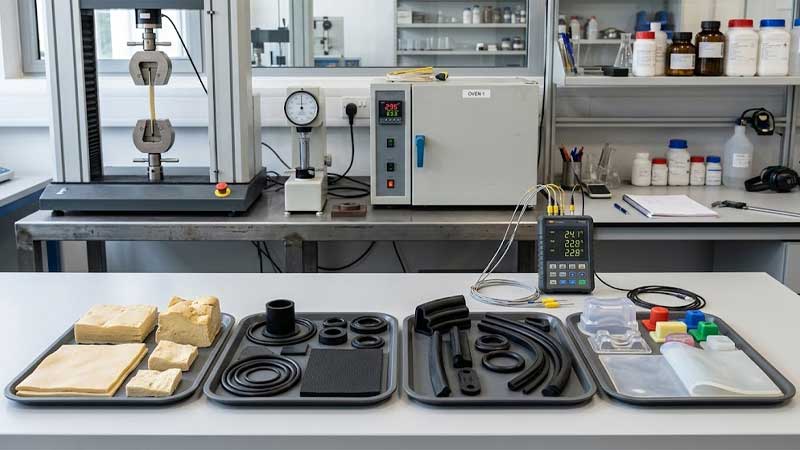
How Vulcanization Temperature Changes Rubber Properties
Vulcanization is the process that creates crosslinks between rubber polymer chains. These crosslinks give rubber products their elasticity and allow them to recover after deformation.
During molding, temperature controls how quickly this crosslinking process occurs. When the temperature is within the recommended range, the rubber compound can achieve a stable structure within the designed curing time.
Increasing temperature usually speeds up the curing reaction. This helps manufacturers reduce molding time and improve production efficiency. However, curing speed is not the only factor that determines product quality.
If the temperature is too low, the rubber may not achieve complete curing. The material can remain too soft and may not provide the required strength or recovery performance.
If the temperature is too high, excessive heat can affect the polymer network. In some rubber systems, the crosslink structure may start to break down, causing a reduction in mechanical properties. This condition is often called reversion in sulfur-cured rubber.
For this reason, manufacturers need to balance curing speed with material performance instead of simply increasing the molding temperature.
Recommended Vulcanization Temperatures for Common Rubber Materials
Different rubber materials require different vulcanization temperatures. The actual production parameters depend on the rubber formulation, curing system, product thickness, and mold design.
The following ranges are common references for industrial rubber molding:
| Rubber Material | Typical Vulcanization Temperature |
| Natural Rubber (NR) | 140–160°C |
| Butadiene Rubber (BR) | 150–170°C |
| Isoprene Rubber (IR) | 150–170°C |
| Chloroprene Rubber (CR) | 150–170°C |
| Styrene Butadiene Rubber (SBR) | 150–190°C |
| Nitrile Rubber (NBR) | 150–190°C |
| Butyl Rubber (IIR) | 160–180°C |
| EPDM Rubber | 160–180°C |
| Silicone Rubber (HTV) | 170–180°C |
These values should be treated as general guidelines rather than fixed settings. Experienced manufacturers adjust curing parameters based on material behavior and final product requirements.
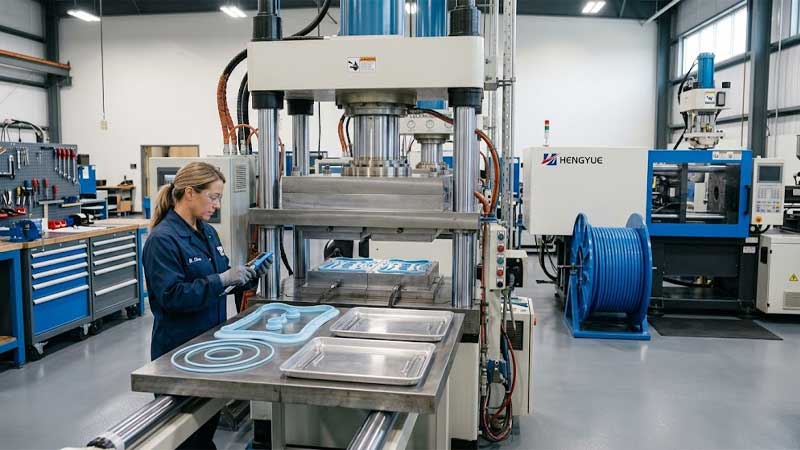
Vulcanization Temperature of Natural Rubber
Natural rubber is known for its excellent elasticity, resilience, and tear resistance. It is widely used in applications that require flexible and dynamic performance.
Natural rubber is commonly vulcanized at around 140–160°C. Within this range, the material can achieve a good balance between strength and elasticity.
However, excessive temperature can accelerate aging and reduce the physical properties of natural rubber. For products exposed to repeated stress, controlling heat exposure during curing is important for maintaining service life.
Vulcanization Temperature of NBR, SBR, and Other Synthetic Rubber Materials
Synthetic rubber materials often have different curing requirements because their chemical structures are designed for specific applications.
Nitrile rubber (NBR) is commonly selected for applications requiring oil and chemical resistance. Its vulcanization temperature is often above 150°C, but the final curing conditions depend on the compound formulation.
Styrene butadiene rubber (SBR) is widely used for general industrial rubber products. It can tolerate higher curing temperatures, but manufacturers still need to avoid excessive heat that may reduce elasticity.
EPDM rubber is valued for weather resistance and outdoor durability. It is commonly cured around 160–180°C. Proper temperature control helps maintain its resistance to heat, ozone, and environmental exposure.
Each rubber type requires a different balance between curing speed and final performance. A temperature that works well for one material may not be suitable for another.
Silicone Rubber Vulcanization Temperature in Silicone Product Manufacturing
Silicone rubber generally requires higher molding temperatures compared with many traditional rubber materials.
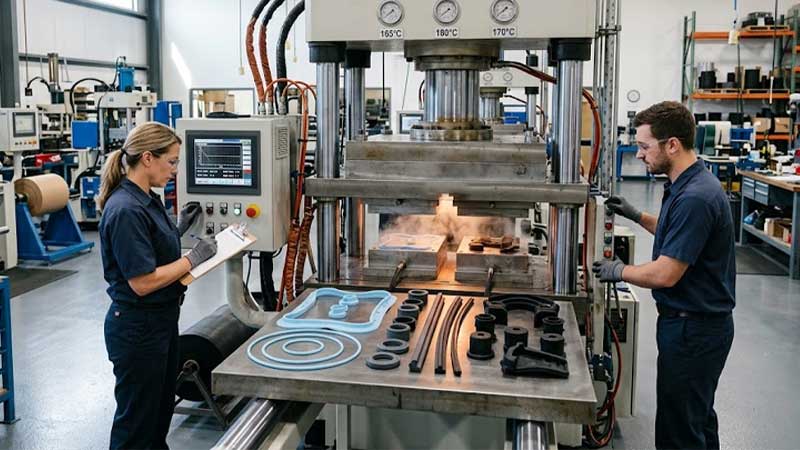
For HTV silicone rubber products, the typical vulcanization temperature is around 170–180°C. During compression molding, heat activates the curing reaction and forms the elastic silicone network.
In silicone keypad manufacturing, temperature control has a direct influence on product performance.
A silicone keypad depends on carefully designed rubber structures to create tactile feedback. The rubber web, key height, and material hardness work together to determine pressing force and return response. If the curing process is not properly controlled, these characteristics may change.
Under-cured silicone rubber may have insufficient strength and unstable elasticity. Over-cured silicone rubber may become harder and lose some flexibility, which can affect the user’s pressing experience.
For custom silicone keypads, SKF engineers evaluate molding conditions together with material selection, product structure, and performance requirements. Factors such as web thickness, button geometry, and conductive contact design are reviewed before mass production.
Secondary Vulcanization of Silicone Rubber
Some silicone rubber products require secondary vulcanization after the initial molding process.
Secondary vulcanization is a post-curing process that uses additional heat treatment to further stabilize silicone rubber properties. It is often used when products require improved heat resistance, cleaner material performance, or reduced residual volatile content.
The secondary curing temperature is usually higher than the original molding temperature. In many cases, silicone products are post-cured at around 200°C, with the actual time depending on the material grade and application requirements.
For silicone components used in medical equipment, electronics, and other demanding applications, secondary vulcanization can help improve long-term consistency.
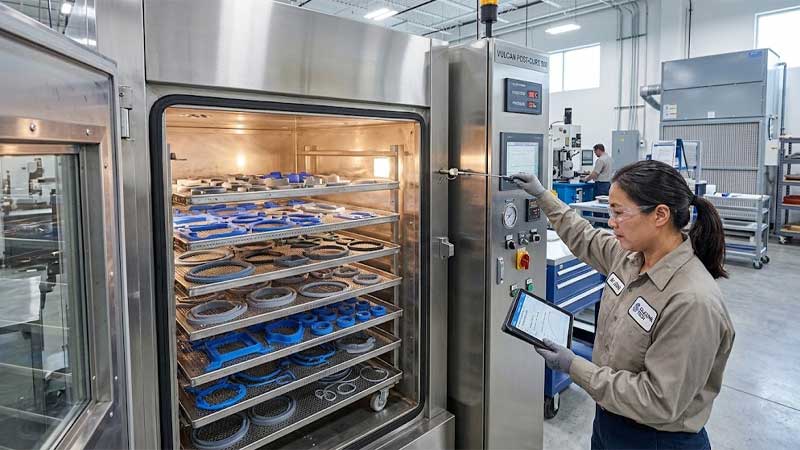
Problems Caused by Incorrect Vulcanization Temperature
Choosing the wrong vulcanization temperature can create problems during production and after the product enters service.
When the temperature is too low, the rubber compound may not fully cure. The finished product may show poor elasticity, unstable dimensions, or reduced mechanical strength.
When the temperature is too high, the material may experience thermal degradation. Rubber products can become harder, less flexible, or more likely to crack after repeated use.
Temperature uniformity is also important. In compression molding, uneven heat distribution can create differences between areas of the same product. For silicone keypads with multiple buttons, inconsistent curing may result in different tactile responses between keys.
Stable temperature control helps manufacturers achieve consistent product quality from prototype production to mass manufacturing.
How Manufacturers Control Vulcanization Temperature
Successful rubber molding requires more than selecting a temperature value. Manufacturers need to control the entire curing process from material preparation to final inspection.
Before production, engineers review the rubber compound, product design, and application requirements. The selected material must match the expected hardness, environmental conditions, and mechanical performance.
During molding, stable mold temperature is essential. Mold design, heating system performance, and product geometry all affect how heat transfers through the rubber material.
After molding, manufacturers verify whether the curing process achieves the required performance. Testing may include hardness measurement, compression set evaluation, dimensional inspection, and functional testing.
For silicone keypads, SKF validates important characteristics such as actuation force, tactile response, sealing performance, and durability. These checks help ensure that the final product performs consistently during long-term operation.
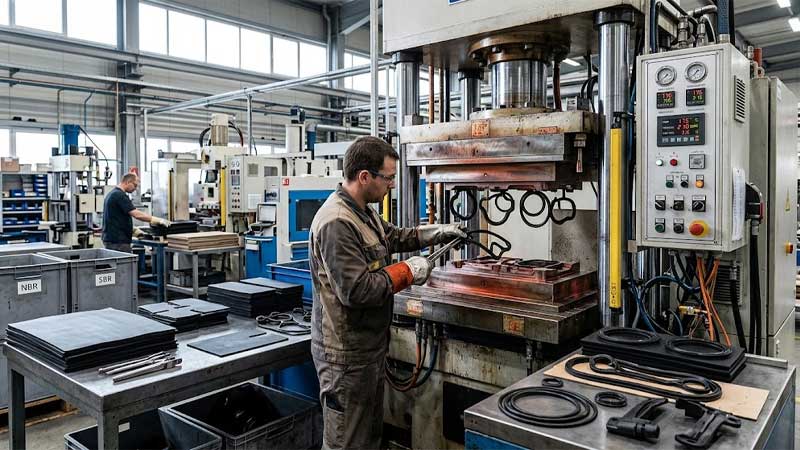
FAQ About Rubber Vulcanization Temperature
What is the normal vulcanization temperature for silicone rubber?
HTV silicone rubber is commonly molded at approximately 170–180°C. The exact temperature depends on the silicone compound, mold design, and product requirements.
Can increasing vulcanization temperature improve production efficiency?
Higher temperature can shorten curing time, but excessive heat may reduce rubber performance. Manufacturers need to find the correct balance between productivity and product quality.
Why do different rubber materials need different vulcanization temperatures?
Different rubber materials have different polymer structures and curing systems. The optimum temperature depends on how each material forms its crosslink network.
Why is vulcanization temperature important for silicone keypads?
Because curing conditions affect the silicone rubber structure, which influences tactile feedback, dimensional accuracy, sealing performance, and service life.
Need Silicone Keypads with Stable Molding Performance?
SKF controls silicone molding parameters through material selection, tooling review, and production validation. From initial design analysis to final performance testing, SKF helps customers develop silicone keypads with consistent tactile response and reliable long-term operation.
For custom silicone keypad projects requiring precise molding control, SKF provides engineering support based on application requirements, assembly conditions, and performance targets.