Bringing a product to market does not always require owning a manufacturing facility. Many businesses work with third-party manufacturers to develop or produce products under their own brands. Two common approaches are contract manufacturing and private label manufacturing.
Although both models rely on an external manufacturing partner, the working relationship can be very different. Contract manufacturing generally starts with buyer-defined specifications, designs, or product requirements. Private label manufacturing usually starts with an existing product or supplier-developed platform that can be sold under the buyer’s brand.
The right choice depends on more than production price. Customization, product development, tooling, quality control, intellectual property, investment, and time to market can all affect the decision.
This guide explains the key differences between contract manufacturing and private label manufacturing and the factors businesses should consider before selecting a production model.
What Is Contract Manufacturing?
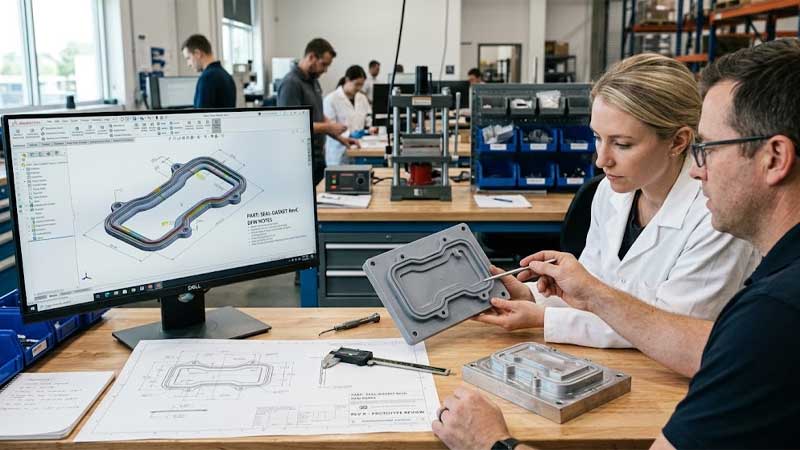
Contract manufacturing involves hiring an external manufacturer to produce components or finished products according to agreed requirements. The buyer may provide complete product drawings and specifications, or the manufacturer may support engineering and development based on the buyer’s product concept.
A typical contract manufacturing project can involve several stages:
Product requirements → Engineering review → DFM analysis → Prototyping → Tooling → Sampling → Validation → Mass production
The buyer normally has significant influence over the final product. Requirements may cover dimensions, materials, performance, appearance, tolerances, testing methods, packaging, and other production details.
The manufacturer provides production expertise and may identify potential manufacturing problems before tooling begins. For example, engineers can review part geometry, material selection, wall thickness, draft angles, tooling structure, and assembly requirements.
The exact division of responsibilities depends on the project. Some buyers provide fully developed designs and need production support only. Others rely on the manufacturer for engineering development, tooling, prototyping, and production validation.
This flexibility makes contract manufacturing suitable for products that require specific performance, customized structures, or tighter control over the manufacturing process.
What Is Private Label Manufacturing?
Private label manufacturing generally starts with an existing product, product platform, or supplier-developed design. The buyer purchases the product and sells it under its own brand.
Customization may include branding, packaging, colors, labels, or selected product options. Some manufacturers also allow modifications to materials, dimensions, or features. The available customization depends on the supplier’s existing product range and manufacturing capabilities.
The main advantage is that much of the product development work has already been completed. Buyers may not need to develop the entire product from the beginning or invest in completely new tooling.
A typical private label process may look like:
Select existing product → Confirm available options → Customize branding/packaging → Approve samples → Production
This approach can shorten the path from product selection to market launch. It can also reduce initial development work for businesses that do not need extensive product differentiation.
However, the existing product platform can also create limitations. If the product needs major structural or functional changes, private labeling may no longer be the most efficient approach. At that point, custom manufacturing or another development model may provide greater flexibility.
Private Label vs. White Label
Private label and white label are sometimes used interchangeably, but they can describe slightly different business models.
White label products are generally standardized products supplied to multiple businesses, with each business applying its own branding. Private label products can also be based on existing products but may allow more customization for the specific brand.
Because manufacturers use these terms differently, buyers should confirm exactly what can be changed, who owns the product design, and whether the same product is supplied to other customers.
Contract Manufacturing vs. Private Label: Key Differences
The most important difference is the starting point of the project.
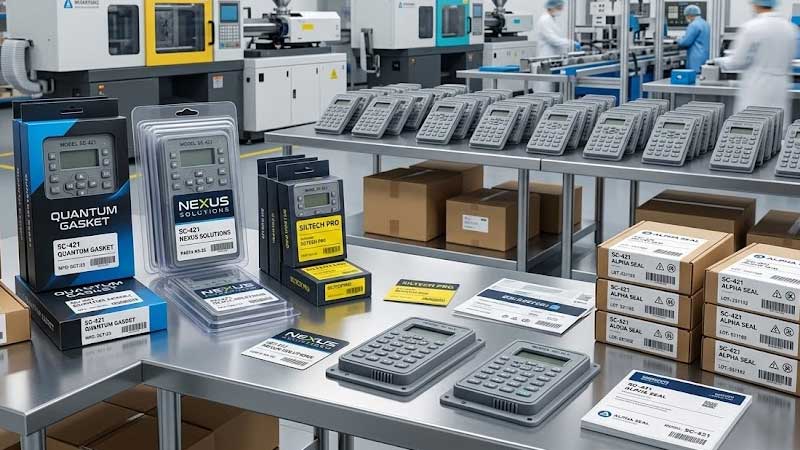
Contract manufacturing usually starts with buyer-defined requirements or a product that needs to be manufactured to specific specifications. Private label manufacturing usually starts with an existing product that already has an established design and production process.
| Factor | Contract Manufacturing | Private Label Manufacturing |
| Starting point | Buyer specifications, design, or product requirements | Existing supplier product or platform |
| Product design | Usually buyer-controlled or jointly developed | Usually supplier-developed |
| Customization | High potential | Low to moderate, depending on supplier |
| Product development | Often required | Usually limited |
| Tooling | May require custom tooling | Existing tooling may be available |
| Upfront investment | Usually higher for custom projects | Usually lower |
| Time to market | Generally longer | Generally faster |
| Product differentiation | High potential | More limited |
| Buyer control | Higher | Lower to moderate |
| Quality requirements | Can be project-specific | Often based on supplier standards plus agreed requirements |
| Best suited for | Custom and differentiated products | Faster launch using existing products |
These differences do not mean one model is universally better.
For example, a business launching a highly specialized silicone component may need control over material hardness, dimensions, tactile response, sealing structure, or conductive performance. Contract manufacturing would generally provide more room for this type of development.
A business selling a standard accessory with limited differentiation may benefit more from an existing private label product.
The actual scope should always be confirmed with the manufacturer because manufacturing terminology is not standardized across every industry.
Cost and Time-to-Market Considerations
Cost and development time are two of the most important factors when choosing between these models.
Upfront Costs
Contract manufacturing can involve more initial investment because the project may require engineering work, prototypes, custom tooling, testing, and production validation.
For custom silicone products, tooling can be an important part of the initial budget. Design changes made after tooling can also increase development costs and extend the schedule. This is why experienced manufacturers often perform a DFM review before mold development.
Private label manufacturing can reduce these initial costs when the supplier already has the product design, tooling, and established production process. The buyer may only need to pay for samples, branding, packaging, or selected modifications.
However, lower upfront investment does not automatically mean lower total cost.
A private label product may have limited differentiation, which can make price competition more difficult. A custom product may require more investment at the beginning but provide stronger product differentiation and better control over long-term specifications.
Time to Market
Private label manufacturing generally offers a shorter route to market because the product already exists.
The buyer can select an available product, confirm specifications, approve branding and packaging, and move toward production.
Contract manufacturing usually requires more development stages. Engineering review, tooling, sampling, testing, and design approval can all add time.
The additional development time can be worthwhile when the product requires unique specifications or when long-term product performance is more important than the fastest possible launch.
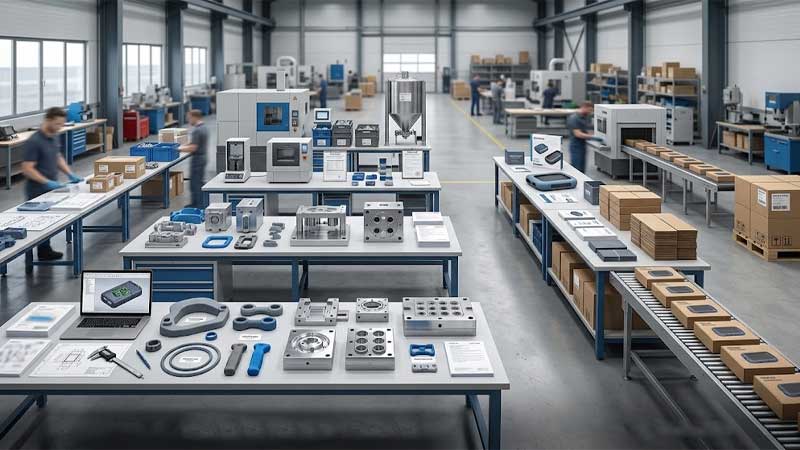
Customization, Quality, and Product Control
Customization is one of the clearest differences between the two models.
With contract manufacturing, the product can be developed around specific technical requirements. Depending on the manufacturer, this may include material selection, dimensions, structural features, tolerances, surface finishes, assembly methods, and functional testing.
For silicone products, engineering details can have a direct effect on performance. Keypad projects, for example, may require careful control of web geometry, diaphragm thickness, conductive pill position, actuation force, and tactile response. These factors are difficult to optimize if the buyer is limited to an existing product platform.
Private label products normally offer less freedom because the basic product structure has already been established. Customization may still be possible, but major changes can require new tooling or engineering work.
Quality control also deserves attention.
Contract manufacturing allows buyers to define project-specific requirements such as material specifications, dimensional tolerances, inspection criteria, testing procedures, and acceptance standards. The manufacturer can then validate production against those requirements.
Private label buyers generally depend more heavily on the supplier’s established quality system, although additional inspection or testing requirements can often be negotiated.
For both models, buyers should confirm quality requirements before production begins rather than relying only on product samples.
IP, Tooling, and Ownership Considerations
Intellectual property and tooling ownership are often overlooked when comparing manufacturing models.
For custom contract manufacturing projects, the buyer may provide or jointly develop product drawings, CAD files, specifications, and other technical information. The agreement should clearly state who owns these materials and how they can be used.
Tooling ownership is equally important.
Before paying for custom molds or tooling, buyers should clarify:
- Who pays for the tooling?
- Who owns the tooling?
- Where is the tooling stored?
- Can the tooling be transferred to another manufacturer?
- Can the manufacturer use the tooling for other customers?
The same principle applies to product design and engineering work. Ownership should not be assumed simply because the project is described as contract manufacturing.
Private label products may use supplier-owned designs and existing tooling. In that situation, the buyer’s rights may be limited to branding, distribution, and agreed product modifications.
Confidentiality and product exclusivity should also be discussed when differentiation is commercially important.
The manufacturing label alone does not determine these rights. A clear agreement should define ownership, confidentiality, usage rights, tooling responsibilities, and change-control procedures.
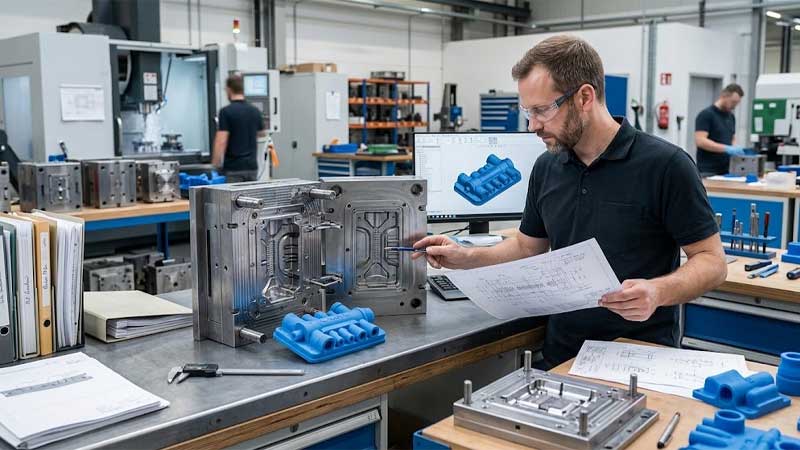
Which Manufacturing Model Fits Your Business?
The best model depends on what the business needs from the product.
Contract manufacturing may be the better choice when:
- You already have product drawings or detailed specifications.
- The product requires substantial customization.
- Product differentiation is important.
- Specific materials or performance requirements must be met.
- You need greater control over engineering and quality requirements.
- The product will be produced as part of a long-term supply relationship.
Private label may be a better fit when:
- You want to launch quickly.
- An existing product already meets most of your requirements.
- You have limited product development resources.
- Initial investment needs to remain relatively low.
- Branding and packaging provide enough differentiation.
- You want to test market demand before developing a fully customized product.
Five questions can help narrow the choice:
- Do you already have a product design or technical specification?
- How much customization does the product require?
- How quickly does the product need to reach the market?
- What level of upfront development and tooling investment can you support?
- How important are product differentiation, engineering control, and ownership?
The key is to start with the product requirements rather than choosing a manufacturing label first.
How to Choose a Contract Manufacturing or Private Label Partner
Selecting the right manufacturing partner is important under either model.
Start by evaluating whether the supplier has the technical capabilities required for the product. Ask about materials, production processes, tooling capabilities, tolerances, testing, and expected production volumes.
For custom projects, engineering support can make a major difference. A capable manufacturer should be able to review product designs before tooling and identify potential production risks. Early DFM feedback can help reduce unnecessary tooling changes and improve production consistency.
Buyers should also confirm which services are included in the quoted price. These may include prototyping, tooling, testing, assembly, packaging, and quality inspection.
For private label projects, clarify which product modifications are available and whether those modifications require additional tooling or development.
Finally, discuss tooling, design ownership, confidentiality, quality standards, and engineering changes before placing a large production order.
A reliable manufacturing relationship should be based on clearly defined technical and commercial expectations, not only on the initial unit price.
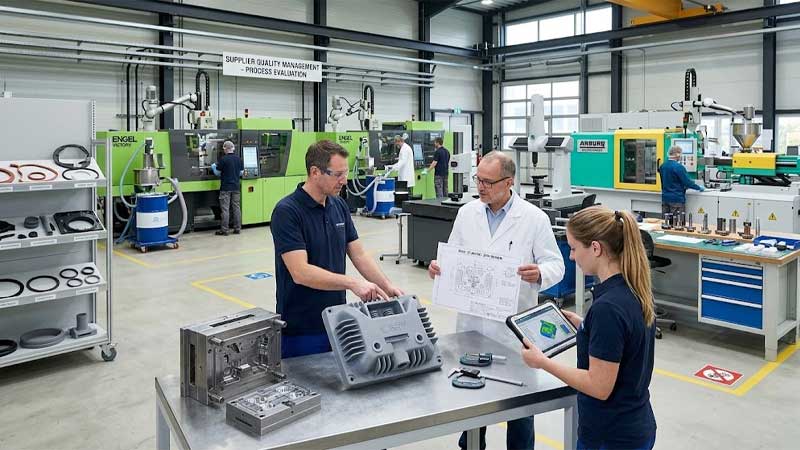
Frequently Asked Questions
What is the main difference between contract manufacturing and private label?
Contract manufacturing typically involves producing products according to buyer-defined specifications, designs, or requirements. Private label manufacturing usually starts with an existing supplier product or platform that is sold under the buyer’s brand. Contract manufacturing generally offers greater customization and product control, while private label can provide faster market entry with less product development.
Is private label cheaper than contract manufacturing?
Private label manufacturing often requires less upfront investment because the product, tooling, and production process may already exist. Contract manufacturing can involve additional engineering, prototyping, tooling, and testing costs. However, total cost depends on the product, production volume, customization level, tooling requirements, and supplier.
Is contract manufacturing better for custom products?
Contract manufacturing is generally better suited to products with specific design, material, performance, or functional requirements. The manufacturer can work with buyer specifications and provide engineering support during development. The exact level of customization depends on the manufacturer’s capabilities and the project agreement.
Does contract manufacturing require custom tooling?
Not always. Some contract manufacturing projects can use existing tooling or standard manufacturing processes. Custom tooling is more likely when the product requires unique dimensions, geometry, or functional features. Tooling requirements should be confirmed during the engineering and quotation stage.
Who owns the product design and tooling?
Ownership depends on the project agreement. The buyer may own designs and custom tooling, while the manufacturer may own its existing product designs, manufacturing know-how, or standard tooling. Buyers should clearly define design ownership, tooling ownership, usage rights, confidentiality, and related responsibilities in the agreement.
How do I choose between private label and contract manufacturing?
Consider five factors: customization requirements, development budget, time to market, desired level of product control, and product differentiation. Private label may be suitable when an existing product meets your requirements and speed is important. Contract manufacturing may be better when the product requires custom engineering or specific performance requirements.
Conclusion
Contract manufacturing and private label manufacturing provide two different ways to bring products to market.
Private label can simplify product launch by using an existing product or manufacturing platform. It can reduce development work and shorten the path to production.
Contract manufacturing provides greater potential for customized product development, engineering control, and product-specific manufacturing requirements. It can require more upfront investment and development time, but it may provide stronger differentiation and greater control over the final product.
For businesses developing custom silicone products, the right manufacturing partner can support the process from design review and tooling through production validation and mass manufacturing. SKF provides engineering support and custom silicone manufacturing services to help customers turn product requirements into production-ready solutions. Contact SKF to discuss your product specifications, customization needs, and manufacturing requirements.