A user interface connects your electronic products or equipment to technology. The final user experience, risk of machine failure, and cost of designs are affected by environmental sealing and the selection of physical buttons in your HMIs (human-machine interfaces) to withstand operation environments and potentially harsh conditions. Environmental sealing can help both silicone keypads and membrane keypads to reinforce protection from ambient factors.
What is the environmental sealing?
Environmental sealing usually refers to ingress protection (IP) sealing. It involves creating a barrier that protects electronic equipment from dust, water, moisture, chemicals, contaminants, and other hazardous substances.
How does environmental sealing matter for user interfaces?
Environmental seals are important because they enhance reliability, ensure consistent operation, extend the lifetime of machines with user interfaces, and reduce maintenance and failure costs.
Enhanced Reliability
A sealed user interface with well-sealed physical buttons can prevent contaminant ingress, which can result in short circuits, chemical corrosion, machine failure, and downtime.
Operational Consistency
Well-designed, sealed equipment enables consistent performance during operation and eliminates interference from ambient factors and adverse conditions.
Extended Lifetimes
Sealed physical buttons protect against ambient elements and extend the lifetimes of electronic devices and instruments with user interfaces. Sealing decreases shock, vibration, impacts, noise, scratches, wear, and erosion—common factors during operation. Well-designed sealing on silicone or membrane keypads isolates keys and sensitive components while absorbing mechanical elements.
Lower Costs from Maintenance & Failure of Machines with User Interfaces
An environmental seal protects your electronic devices and sensitive equipment, reducing costs associated with unplanned downtime, maintenance, and delayed delivery timelines.
Many devices and facilities use reactive maintenance methods, which seem cost-effective in the short term but increase costs in the long term. Our environmental sealing aims to provide preventive protection for your equipment’s user interfaces, enhancing their longevity and reliability.
Environmental Sealing in User Interfaces
In addition to its use in vehicles and renewable energy facilities, environmental sealing is widely used in electronics, industrial settings, marine equipment, and machinery. Most equipment and devices function normally at room temperature and indoors. However, user interfaces in specific applications that involve extreme temperatures, high humidity, wet conditions, or adverse environments require higher protection levels to prevent damage to structural integrity and reduce related costs.
Environmental Factors that Influence Sealing of User Interfaces
Environmental factors that influence the sealing of user interfaces include water splashes or spraying on exposed interfaces; vibration and shock; chemical, dust, and dirt contamination; UV radiation, and extreme temperatures.
Comparison between Silicone Keypads & Membrane Keypads: Focus on
| Features | Silicone Keypads | Membrane Keypads |
|---|---|---|
| Expected Lifetime | 5~10 million cycles | 1 million cycles |
| UV Resistance | Great, optional UV coatings | Poor, require UV hardcoats on the surface |
| Resistance to Extreme Temperature | Outstanding | Moderate, require protective coatings on the surfaces |
| Splash Resistance (Water Resistance) | Waterproof silicone inherently, extra design for improvements | Moderate, require extra watertight designs |
| Tactile Feedback | Excellent | Moderate |
| Tactility Components | Carbon pills, carbon dip printing, or metal domes | Polydomes, metal domes |
| Travel distance (stroke) | 1.0~3.5 mm | 0.1~0.5 mm |
| Actuation Force (For Activation) | 50~500g | 150~400g |
| Compatibility with Three-Dimensional Shapes | Superior, molded silicone keypads can match distinct heights and shapes | Poor, flat membrane structure is limited in only two-dimensional surface |
Environmental Sealing Methods for Silicone & Membrane Keypads
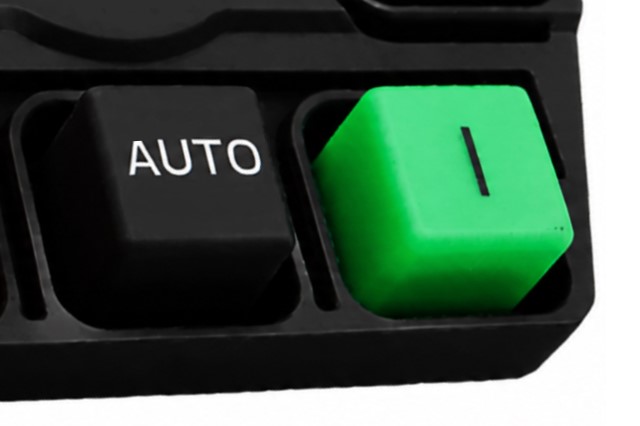
Common Ways of Environmental Sealing
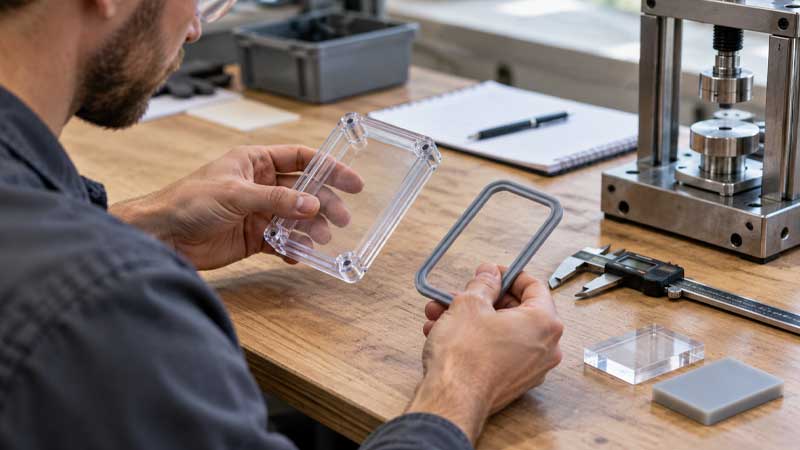
To achieve effective environmental sealing, several methods are employed, including the use of physical barriers, coatings or encapsulation, hermetic sealing, and vents and filters.
Rubber gaskets and silicone seals are common options for isolating environmental factors in silicone and membrane keypads. These gaskets are resistant to UV radiation, high and low temperatures, rain, and high humidity. Leaking in wind-driven rain or melting snow and ice should be considered in the design of silicone keypads or membrane switches, which is common in outdoor, marine, agricultural, and heavy-duty vehicle applications.
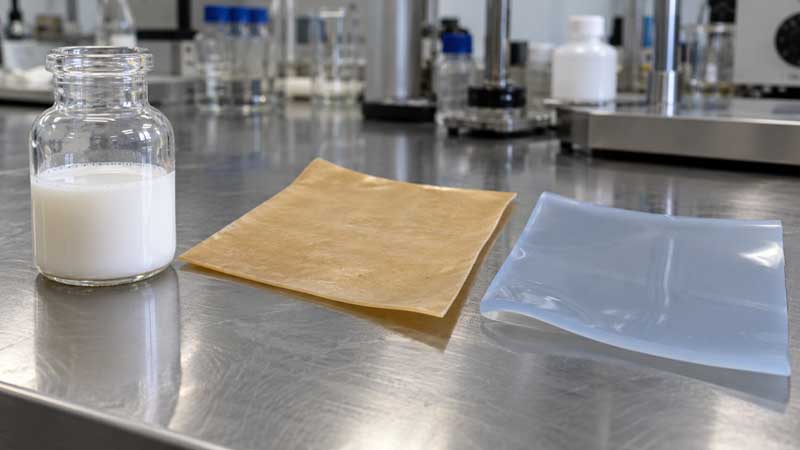
Coatings and encapsulation are effective for protecting internal PCBs (printed circuit boards) from the ingress of chemicals, dust, and moisture through coating application and compound potting.
Environmentally sealed Silicone Keypads
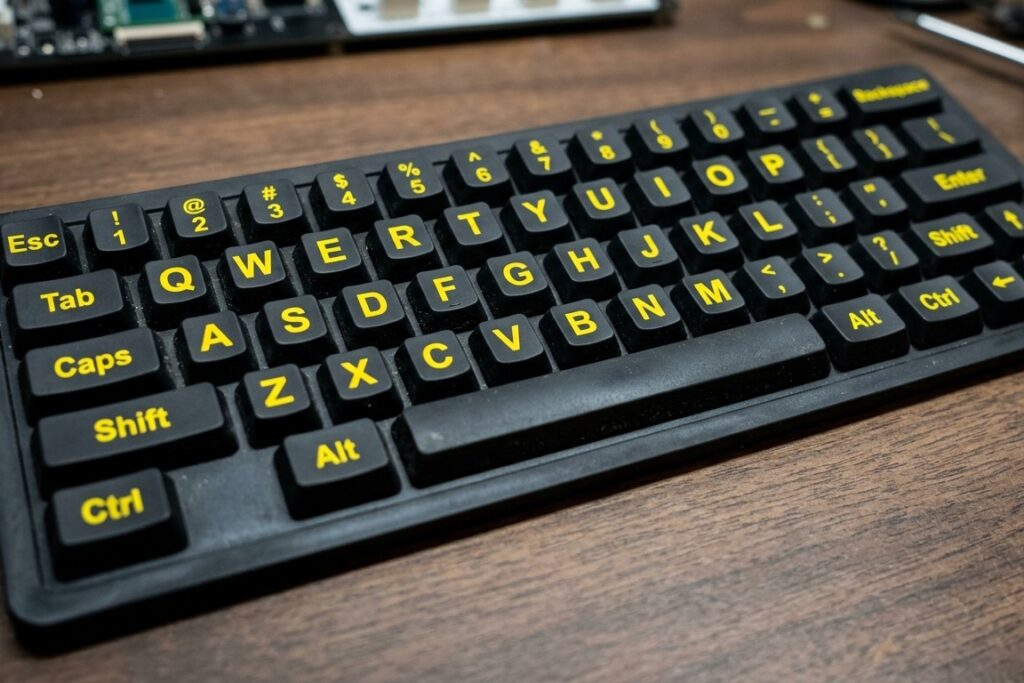
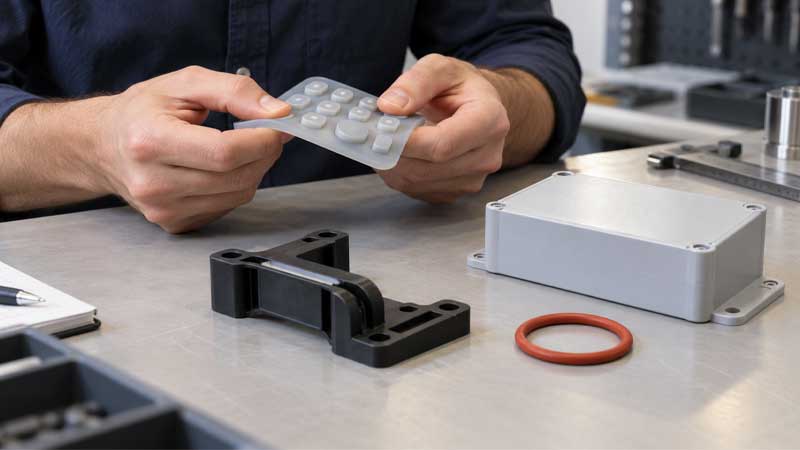
In terms of splash resistance on exposed interactive surfaces, the waterproof design of silicone keypads requires sealing the exposed edges with special silicone rubber walls. This can be done through the co-molding process used in silicone keypad manufacturing or with an extra sealing frame, gasket wrapping, or adhesive. More information about specs and selection guides of waterproof silicone keypads can be found in SKF.
Moreover, silicone is closed-cell and environmentally sealed for thermal insulation, cushioning, and damping vibration and impacts. Thus, the silicone keypad inherently features a specific environmental sealing effect integrated with diverse protective treatments.
For applications involving frequent vibration and occasional impacts, user interfaces can be designed into overmolded silicone keypads featuring wrap-around silicone rubber sealing without any gaps or seams.
Environmentally sealed Membrane Keypads
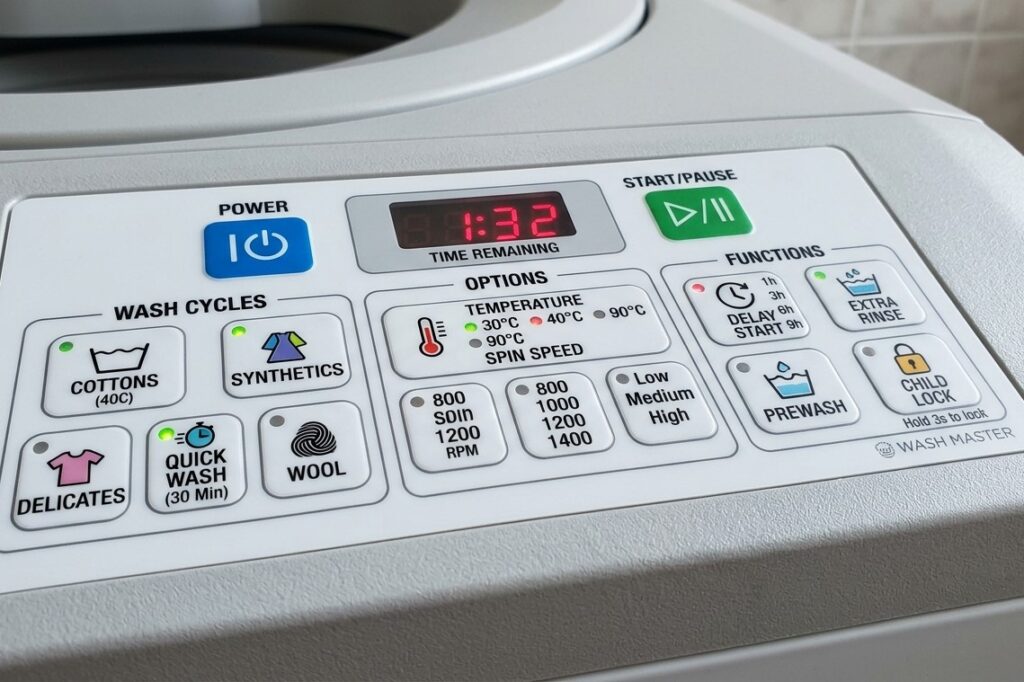
In terms of environmental sealing, user interfaces with membrane keypad switches include membrane keypad switch designs, seal frame designs, circuitry, polyester technology with environmental resistance, and specific sealing techniques.
The keypad assembly in membrane switches can be processed with a rubber waterproof seal and a metal backing for support and mounting. Depending on your IP protection needs and desired applications, membrane switches can be integrated with environmentally sealed rubber. This rubber has been used in medical equipment, navigation controls, food processing, and industrial control consoles.
Additionally, the circuitry can be sealed with a specific potting solution that provides a firm, complete seal between the interactive surface and circuit board, preventing moisture and contamination.
Compared to molded silicone keypads, which are formed in a molding and curing process, membrane keypads have a more complex structure with multiple layers. This is one of the main differences between the two types of keypads. Adhesives bond the different layers into a functional keypad with excellent adhesion. Special adhesives that resist moisture, UV light, water, temperature, and chemicals are an effective way to achieve environmental sealing for membrane keypads.
How to validate the Environmental Resistance of Silicone Keypads and Membrane Keypads?
Reliability Testing for Long-Term Operation
SKF will also conduct relevant product validation testing for your silicone keypads. This testing includes a series of reliability tests, such as accelerated aging and environmental simulations (e.g., salt spray testing), as well as other evaluations to ensure the durability and reliability of your keypads during actual operations.
Functional Testing for Proper Working
Functional testing can evaluate whether your silicone keypads or membrane keypads can meet all individual functional needs as intended, which enables examining relevant electronic components for intended functions of user interface designs.
Performance Testing for Weaknesses Identification
The performance testing is intended to assess the performance of your keypads under distinct conditions, including pressure, humidity, temperature, and load, which is helpful to figure out any limitations or problems in product design.
FAQs
Can I customize textured surfaces or specific finishes on silicone keypads with environmental sealing?
Yes. Surface finishes and texture designs are not limited for your silicone keypads while environmental sealing is still functional.
What is the difference between hermetically sealed and environmentally sealed?
Hermetical sealing refers to pretty superior protective sealing in most harsh conditions, including extreme altitude and pressure, which creates an airtight seal by the prevention of gases or moisture with either a low or high pressure. But environmental sealing is an affordable solution, making a balance between performance and cost-effectiveness.
Can I design keypads both with silicone keypads and membrane keypads?
Yes. A silicone rubber membrane keypad with a hybrid combination has superior tactile feedback, ergonomics for enhanced user experience, a backlighting effect, and environmental sealing.
What are materials for environmental gaskets for sealing?
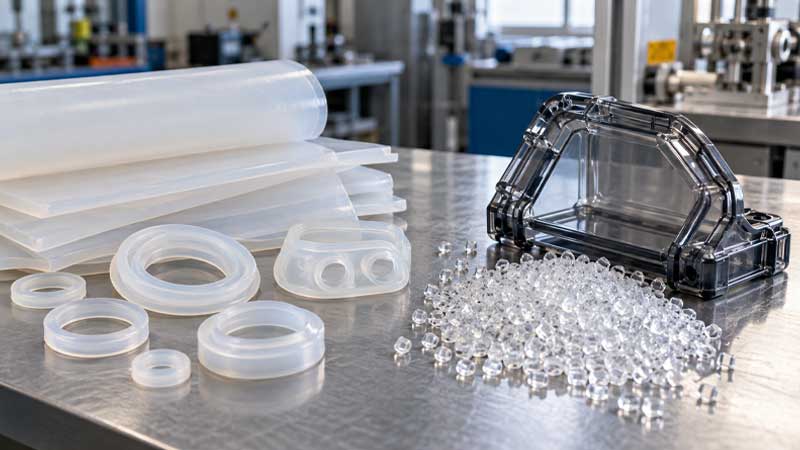
– Silicone foam: flame rated, cost-effective option with low compression set.
– Silicone sponge: tougher choice with wide temperature spectrum and low compression set.
– EPDM sponge: excellent UV resistance for outdoor, marine, agricultural, and vehicle applications.
– Neoprene sponge: oil resistance for lab, medical, and industrial settings.
– Solid silicone: outstanding sealing for watertight design.
Can I wash the user interfaces with silicone keypads?
For IP68 silicone keypads, the answer is yes. Occasional water splashes on the user interface are fine, but the screen and cables should be isolated away from moisture.
Final Thoughts
Membrane keypad switches are ideal for flat, low-profile interactive keypads. They require minimal force and are easy to clean and disinfect. Silicone keypads offer highly flexible design options for appearance, structure, integrated components, and optional protection levels for environmental sealing. For more information about custom silicone keypads, see SKF.