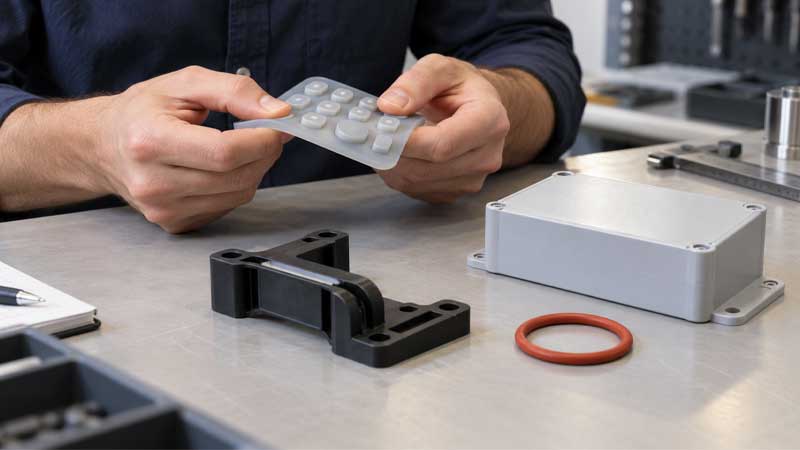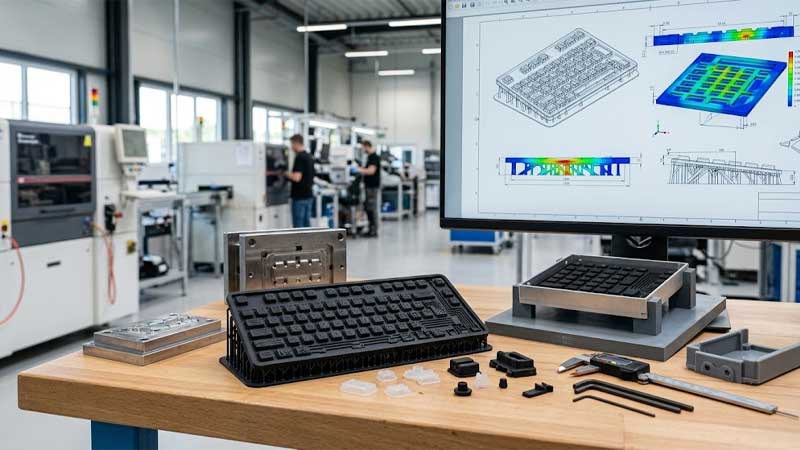
Silicone keypad web structures play an important role in controlling key movement, pressing force, and tactile response. Although the web is only a small part of the keypad structure, its design directly affects how users interact with the product.
During development, engineers need to balance several requirements, including operating feel, durability, available space, and manufacturing feasibility. A web design that works for one application may not be suitable for another.
SKF reviews silicone keypad web structures together with key geometry, material selection, contact design, and molding requirements. This helps create designs that meet performance expectations while reducing risks during production.

What Does the Web Structure Do in a Silicone Keypad?
The web is the flexible silicone area that connects the keytop with the base of the keypad. When a user presses a key, the web deforms to allow downward movement. After the key is released, the elastic recovery of the silicone helps return the key to its original position.
The main function of the web is to control the mechanical movement of the key. Its structure influences how much force is needed for activation, how the key feels during pressing, and how consistently it returns after operation.
A silicone keypad does not rely on the web alone. The final performance is also affected by key shape, silicone hardness, contact structure, and overall keypad layout. For example, changing the web design may reduce operating force, but the result also depends on the size of the key and the required travel distance.
Because of this interaction, web design should be considered as part of the complete keypad structure rather than as a separate component.
During the design stage, SKF engineers review factors such as:
- Required operating force
- Key movement requirements
- Product application environment
- Available installation space
- Manufacturing feasibility
Early review helps identify potential design issues before tooling and production begin.
How Does Web Design Affect Silicone Keypad Performance?
The web structure has a direct influence on how a silicone keypad feels and performs during operation. When a keypad does not provide the expected user experience, the cause is often related to the balance between web design, material properties, and key structure.
Actuation Force
The web controls part of the resistance during key movement. A more flexible web structure generally requires less force to activate, while a stronger structure can provide more resistance.
A lower-force design can be useful for products that require frequent operation or reduced user fatigue. However, reducing resistance too much may make the key feel less defined or reduce structural support.
A higher-support web structure can provide stronger feedback and prevent unintended activation. This approach is often considered for equipment where users need a more noticeable key response.
The limitation is that actuation force cannot be controlled by web design alone. Silicone hardness, key size, travel distance, and contact structure also affect the final result.
Tactile Feedback
Tactile feedback describes how clearly users feel the key activation point. It is not created by one single dimension but by the interaction between the web structure, silicone elasticity, and the complete keypad design.
A well-balanced structure creates a noticeable transition during pressing. If the web is too soft or the structure is not properly matched, the keypad may feel less responsive.
Increasing material hardness is not always the best solution for stronger feedback. In many cases, adjusting the web geometry provides better control because it changes how the key moves during activation.
Key Return
After activation, the key needs enough recovery force to return to its original position.
A suitable web design provides controlled elastic recovery. If the structure is not balanced, the key may return slowly or provide inconsistent response between different keys.
For this reason, SKF evaluates web design together with the complete keypad structure instead of adjusting a single factor separately.

Which Web Design Factors Should Be Reviewed Before Tooling?
Before silicone keypad tooling begins, engineers need to confirm that the web structure can achieve the required performance and remain practical for manufacturing. A design that looks suitable in CAD may still require adjustment if it creates problems with force, durability, or molding.
The web should not be defined by one fixed dimension. Different applications require different balances between flexibility, support, and available space.
The following factors are commonly reviewed during the design stage.
Web Thickness
Web thickness affects how easily the silicone structure deforms during key operation.
A thinner web can make the key easier to press because less force is required to bend the silicone structure. This can be useful for applications where users operate the keypad frequently and prefer a lighter touch.
The limitation is that reducing thickness too much may weaken structural support. The keypad may have reduced tactile definition or become more sensitive to dimensional variation during production.
A thicker web can provide stronger support and a firmer operating feel. This may be suitable for industrial control interfaces where users need clearer feedback.
However, increasing thickness may also increase actuation force. The final design needs to consider the required operating feel, key size, and available installation space.
Web Geometry
Web geometry determines how the silicone material moves during pressing. The shape and position of the web affect deformation direction, force response, and consistency between keys.
A suitable geometry allows the silicone to flex in a controlled way. This helps reduce unnecessary stress and creates a more stable operating response.
Poor geometry balance may result in:
- Higher-than-expected pressing force
- Uneven response between keys
- Reduced tactile consistency
For example, a compact keypad with limited height may require a different web structure from a large industrial keypad. The design approach depends on the product requirements rather than using the same structure for every application.
Transition Area
The transition area between the web and surrounding silicone structure is an important location for stress distribution.
During repeated operation, the web continuously bends and recovers. If the geometry changes too sharply, stress can concentrate in specific areas.
A smoother transition can help distribute deformation more evenly and improve structural reliability.
The limitation is that transition design also needs to consider mold structure and available space. Increasing the transition area is not always possible in compact designs.
Design Review Before Tooling
Web parameters should be evaluated together before production tooling starts.
SKF engineers review:
- Target actuation force
- Required tactile response
- Key dimensions
- Installation space
- Material selection
- Molding considerations
This early review helps identify possible conflicts between product requirements and manufacturing limitations. Adjusting a web structure before tooling is usually more efficient than modifying the design after production tools are completed.

How Can Engineers Balance Low Force, Tactile Feedback, and Durability?
Silicone keypad development often involves balancing different performance goals. Customers may want a keypad that is easy to press, provides clear feedback, lasts through repeated operation, and fits into a compact product design.
These requirements can influence each other. A change that improves one area may create limitations in another.
Lower Force vs Strong Feedback
A softer web structure can reduce the force required for operation. This can improve comfort for users who press keys frequently.
However, reducing resistance may also reduce the feeling of activation. If the structure becomes too flexible, the keypad may feel less defined.
A stronger web structure can create clearer feedback, but it may require more operating force. The suitable balance depends on how the product will be used.
Feedback vs Lifetime
A stronger tactile response usually requires a more noticeable change during the pressing process. However, the structure must still control stress during repeated operation.
A design focused only on stronger feedback may create excessive stress in certain areas.
For products requiring frequent operation, engineers need to consider:
- Web deformation
- Silicone recovery
- Stress distribution
- Operating environment
Application Requirements Influence Design Choices
Different products may require different web designs.
Medical Equipment
Medical interfaces often require predictable operation and reduced user fatigue. A smoother pressing response may be preferred when operators perform repeated actions.
Industrial Control Panels
Industrial interfaces may require stronger tactile indication, especially when operators wear gloves or work in environments where clear feedback is important.
Portable Devices
Compact products often have limited internal space. The web design needs to achieve acceptable performance within a smaller structure.
There is no universal silicone keypad web design that fits every application. The correct approach is to define the required user experience first, then optimize the web structure around performance requirements and manufacturing conditions.

What Manufacturing Issues Should Be Considered in Silicone Keypad Web Design?
A silicone keypad web design needs to achieve the required operating performance while remaining suitable for production. Some designs may work well in a digital model but create problems during molding or long-term use if manufacturing factors are not considered early.
For this reason, web design should include both functional requirements and production considerations.
Excessively Thin Web Structures
Reducing web thickness can help lower actuation force and create a softer operating feel. However, an extremely thin structure may reduce the stability of the keypad during production and use.
Possible issues include:
- Inconsistent key response
- Reduced structural support
- Higher sensitivity to dimensional variation
The suitable web thickness depends on the complete keypad design, including key size, material selection, and required performance.
SKF reviews the relationship between web flexibility and production stability during design evaluation rather than adjusting thickness only to achieve a target force.
Sharp Geometry Transitions
The transition between the web and surrounding silicone structure affects how stress is distributed during repeated pressing.
Sharp changes in geometry can create concentrated stress areas. Over time, repeated deformation may affect the consistency of key operation.
A smoother transition design can help the silicone flex more evenly. However, the design still needs to consider available space and mold requirements.
This is why web geometry should be reviewed during the early design stage instead of being treated as a simple CAD detail.
Lack of Design Validation Before Tooling
One common development risk is moving directly from a CAD design to production tooling without validating the keypad structure.
The actual pressing feel depends on multiple factors working together:
- Web geometry
- Silicone hardness
- Key dimensions
- Contact structure
- Manufacturing process
Prototype validation allows engineers to evaluate whether the design meets the intended requirements before full production.
SKF typically reviews key performance factors during development, including:
- Actuation force
- Key travel
- Tactile response
- Structural consistency
Early validation helps reduce unnecessary tooling changes and improves communication between design and manufacturing teams.

How Does SKF Support Silicone Keypad Web Design Optimization?
Silicone keypad web design requires cooperation between product requirements, mechanical design, and manufacturing experience. A supplier’s role is not only to produce the final keypad but also to help identify design risks before production.
SKF supports web design optimization through several development stages.
Requirement Review
The first step is understanding how the keypad will be used.
Important design inputs include:
- Required operating force
- User operation method
- Product environment
- Space limitations
- Expected performance requirements
These details help determine whether the web should prioritize flexibility, stronger feedback, or structural support.
Design and DFM Review
Before tooling, SKF engineers review the keypad structure from both performance and manufacturing perspectives.
The review may include:
- Web geometry
- Key structure
- Silicone flow considerations
- Tooling feasibility
The purpose is to identify possible issues early, when design adjustments are easier to make.
Prototype Evaluation
Prototype testing provides practical feedback on the actual keypad behavior.
Engineers can evaluate:
- Pressing feel
- Force response
- Key movement
- Design consistency
If the result does not meet the target requirements, the web structure can be adjusted before moving into mass production.
Production-Oriented Design Approach
A successful silicone keypad design needs to balance user experience with manufacturing reality.
A structure that performs well but is difficult to produce may create unnecessary development risks. On the other hand, a design focused only on manufacturing simplicity may not provide the required user experience.
SKF combines design review and manufacturing knowledge to help customers develop silicone keypad structures that are practical for production and suitable for the final application.

What Should Engineers Prepare Before Designing a Silicone Keypad Web?
A clear set of design requirements helps engineers develop a silicone keypad web structure more efficiently. Many design adjustments happen because the initial requirements do not fully define how the keypad will be used.
Before starting web design, engineers should consider both product requirements and user operation conditions.
Operating Requirements
The expected user experience should be defined first.
Important factors include:
- Required actuation force
- Preferred tactile response
- Key travel requirements
- Frequency of operation
For example, a keypad used for frequent input may require a smoother pressing feel, while an industrial interface may need stronger feedback to confirm activation.
Product Environment
The operating environment can influence web design decisions.
Engineers should consider:
- Indoor or outdoor use
- Temperature conditions
- Exposure to cleaning chemicals or fluids
- User operation conditions
A keypad used in a controlled environment may have different design priorities from one used in harsh industrial conditions.
Mechanical and Electrical Requirements
The keypad structure needs to match the complete product design.
Important information includes:
- Available installation height
- Key layout and spacing
- PCB contact method
- Backlighting requirements
- Housing structure
These factors influence the available space for web geometry and the overall keypad design.
Manufacturing Considerations
Web design should also consider how the keypad will be produced.
Early discussion with the manufacturer can help evaluate:
- Tooling feasibility
- Material selection
- Structural limitations
- Prototype requirements
Providing these details before tooling helps reduce design changes later in the development process.
SKF works with customers to review these requirements during the design stage and evaluate how web structure decisions may affect performance and production.

FAQ
How does silicone keypad web thickness affect actuation force?
Web thickness changes how easily the silicone structure deforms during pressing. A thinner web generally reduces resistance and can lower actuation force, while a thicker web usually provides more support and a firmer response.
However, thickness should not be adjusted alone. Key size, silicone hardness, travel distance, and overall structure also affect the final operating feel.
What factors affect silicone keypad tactile feedback?
Tactile feedback is influenced by the complete keypad structure, including:
- Web geometry
- Silicone hardness
- Key shape
- Travel distance
- Force curve
The web plays an important role because it controls how the silicone deforms during pressing. A suitable design balances clear feedback with comfortable operation.
Can SKF help optimize an existing silicone keypad design?
Yes. Existing designs can be reviewed based on performance requirements and manufacturing considerations.
SKF engineers can evaluate factors such as web structure, force response, material selection, and tooling feasibility to identify possible improvements before production.
Should silicone keypad web design be completed before tooling?
Web design should be reviewed before production tooling begins.
Changes after tooling may require additional modification time and cost, especially when they involve major structural changes. Early design review and prototype validation help reduce these risks.
Is there one standard silicone keypad web design for all applications?
No. Different applications require different design priorities.
Medical equipment, industrial controls, portable devices, and other products may have different requirements for force, feedback, space, and durability. The web structure should be optimized based on the specific application.
Improve Silicone Keypad Performance Through Engineering-Focused Design
A silicone keypad web structure affects more than key movement. It influences operating feel, tactile response, durability, and production feasibility.
By reviewing web geometry, material selection, application requirements, and manufacturing conditions together, engineers can develop a keypad design that performs reliably in the final product.
SKF supports customers from early design review through prototype evaluation and production preparation, helping optimize silicone keypad structures before mass manufacturing.
Discuss Your Silicone Keypad Web Design Requirements with SKF
If you are developing a new silicone keypad or improving an existing design, SKF can review your requirements and provide engineering suggestions for web structure, performance targets, and production considerations.