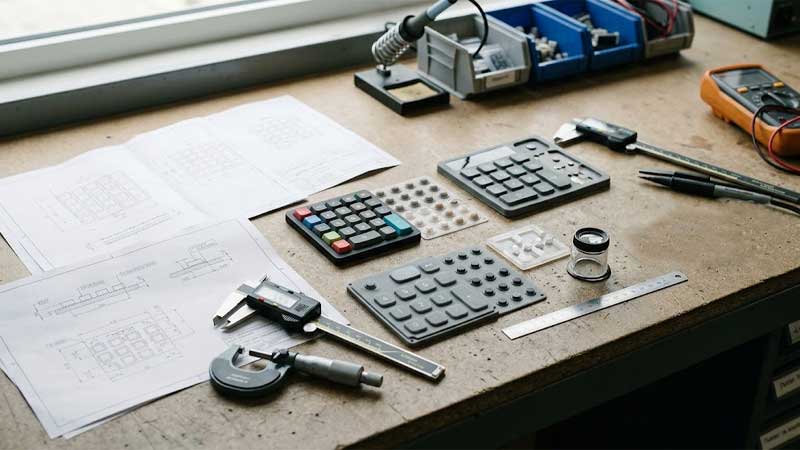
Choosing a silicone keypad supplier often starts with building a shortlist of manufacturers. However, manufacturers differ in the types of keypads they produce, their molding and finishing capabilities, engineering support, and the industries they serve.
This guide looks at 10 silicone keypad manufacturers with publicly documented keypad-related capabilities. The order is not intended as a quality ranking. The purpose is to help buyers understand what each manufacturer produces and which capabilities may be relevant to different keypad projects.
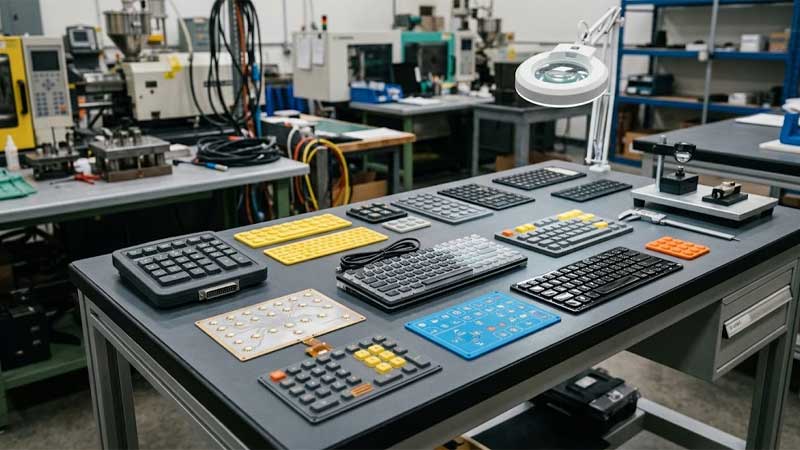
Top 10 Silicone Keypad Manufacturers
1.Silicone Technology Corporation (SiTech)
Silicone Technology Corporation, also known as SiTech, is based in Virginia, USA and manufactures custom silicone components, including silicone rubber keypads.
The company’s published capabilities include liquid injection molding, insert molding, prototyping, decorating, assembly, and design-for-manufacturability support. It also lists applications in markets including medical, industrial, marine, aerospace, and aviation.
For keypad projects, the combination of silicone processing and additional manufacturing services can be useful when the product requires more than a simple molded keypad. The actual suitability still depends on the required keypad structure, material, tolerances, finishing, and production volume.
2.Fecision Silicone
Fecision Silicone provides custom silicone keypad manufacturing for different electronic and industrial applications. Its published capabilities include conductive silicone keypads, multi-color keypads, backlit keypads, tooling, molding, finishing, and inspection.
The company also describes engineering considerations such as keypad geometry, tactile response, silicone hardness, and color matching. Its published manufacturing information includes compression molding and related silicone processing.
For projects involving custom keypad geometry or several secondary processes, the relevant point is whether the manufacturer can support the complete process rather than only the molding step. Printing, coating, conductive contacts, and inspection may all need to be coordinated with the molded structure.
3.GUME GmbH
GUME is a German manufacturer of custom silicone switch mats and keypads. Its products include customized silicone switch mats, individual buttons, and keypad assemblies with different mechanical structures.
One notable aspect of its published technical information is the focus on force-displacement behavior. The company discusses switching force, stroke, tactile feedback, dome geometry, and measurement of force-displacement curves during development.
This information is particularly relevant when tactile performance is part of the product specification. A keypad should not be evaluated only by whether a key can make electrical contact. The force required to operate the key, the travel, and the change in force during the stroke all affect how the interface feels.
4.Hongju Silicone
Hongju manufactures custom silicone rubber products, including silicone rubber keypads and conductive keypads. Its published manufacturing capabilities include compression molding and silicone injection molding.
The company serves a broad range of silicone product requirements in addition to keypads. This can be useful when a project includes several molded silicone components that need to be sourced from the same supplier.
For a keypad project, buyers should still confirm the specific structure and performance requirements with the manufacturer. General silicone molding capability does not automatically indicate experience with every keypad configuration, particularly when the project requires controlled tactile performance, conductive contacts, backlighting, or complex surface finishing.
5.Niceone-Keypad
Niceone-Keypad is a manufacturer in Dongguan, China that produces silicone rubber keypads, membrane switches, and related human-machine interface products.
Its published silicone keypad capabilities include custom shapes and colors, backlit designs, waterproof structures, and integration with membrane keypad technologies. The company also describes engineering and quality-control activities for silicone keyboards and membrane switches.
This combination can be relevant when a product uses silicone keypads together with membrane switch structures or other HMI components. Buyers should confirm the actual construction, contact method, graphics, and environmental requirements before selecting the production process.
6.RSP, Inc.
RSP is a U.S. manufacturer of custom silicone rubber keypads and related components. The company describes custom keypad design, silicone molding, tactile requirements, color options, chemical resistance, and other material and finishing requirements.
Its published keypad information also discusses working with desired dimensions and snap ratio, as well as reviewing existing designs or developing keypads around an existing product assembly.
RSP also provides related manufacturing capabilities such as membrane switches, backlighting, and plastic injection molding. These capabilities can be relevant when the keypad needs to work with other HMI or molded components.
7.Silicone Keypad Factory (SKF)
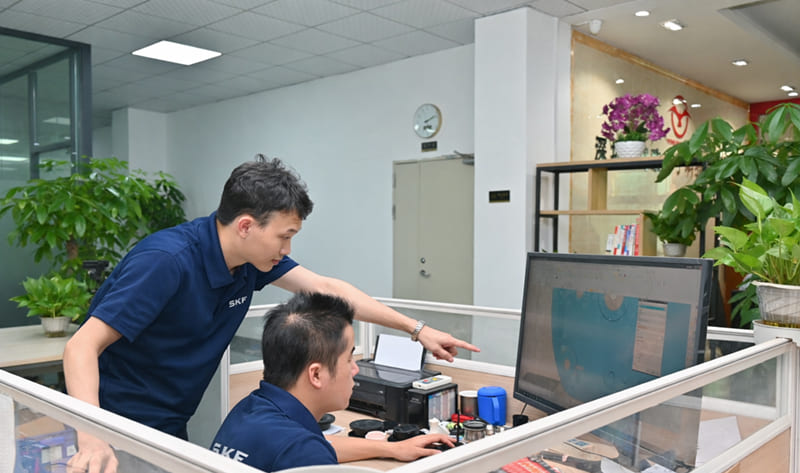
Silicone Keypad Factory (SKF) focuses on custom silicone keypad manufacturing in Shenzhen, China. Its published product range includes silicone rubber keypads, conductive silicone keypads, backlit keypads, industrial control keypads, screen printed keypads, and coated keypad designs.
SKF also provides tooling, prototyping, DFM review, and mass production for custom keypad projects. Its manufacturing information covers silicone molding, laser etching, surface treatments, conductive contacts, and keypad inspection.
Keypad projects often require several of these processes to work together. For example, the rubber web affects the actuation force and travel, while conductive pill positioning affects PCB contact. A coating or printed surface can also affect the finished key feel and wear behavior.
SKF therefore focuses on the keypad as a complete molded interface rather than treating the rubber component separately from its mechanical and electrical requirements.
8.PG Technologies
PG Technologies manufactures custom silicone keypads and related interface components. Its published capabilities include silicone key tops, carbonized silicone pills, screen printing, color matching, translucent silicone, spray and epoxy coatings, and other keypad finishes.
The company also describes assembly capabilities involving components such as PCBs, LEDs, and LCDs. This may be useful when the keypad is part of a larger electronic interface rather than an independent molded component.
For these projects, the manufacturing discussion needs to cover more than the rubber keypad itself. The contact structure, graphics, lighting, PCB interface, and assembly process can affect the final product.
9.YJC Polymer
YJC Polymer is a silicone and polymer manufacturer based in Xiamen, China. Its published silicone keypad capabilities include screen printing, laser etching, carbon pills, dome structures, adhesive integration, matte treatment, PU spraying, and epoxy finishes.
The company also describes compression molding, silicone injection molding, tooling, CNC machining, and plastic injection molding.
This broader process range may be relevant for projects that combine silicone keypads with plastic housings or other molded components. As with other manufacturers, the specific keypad requirements should be reviewed before production because different surface finishes and contact structures require different process controls.
10.DuraTech Industries
DuraTech Industries is a U.S. manufacturer of custom silicone rubber keypads and related components. The company describes keypad solutions using different silicone durometers and tactile designs, along with screen printing, laser etching, carbon contacts, translucent silicone, coatings, and other finishing options.
Its published capabilities also include backlit keypad structures, light pipes, and P+R construction. These options are relevant when the keypad needs to provide both mechanical input and visual functions.
For example, backlit keypads require attention to more than the silicone material itself. Legend construction, light transmission, LED position, and light leakage can all affect the finished interface. DuraTech’s published range of keypad and lighting-related processes makes it a supplier worth considering for projects with these requirements.
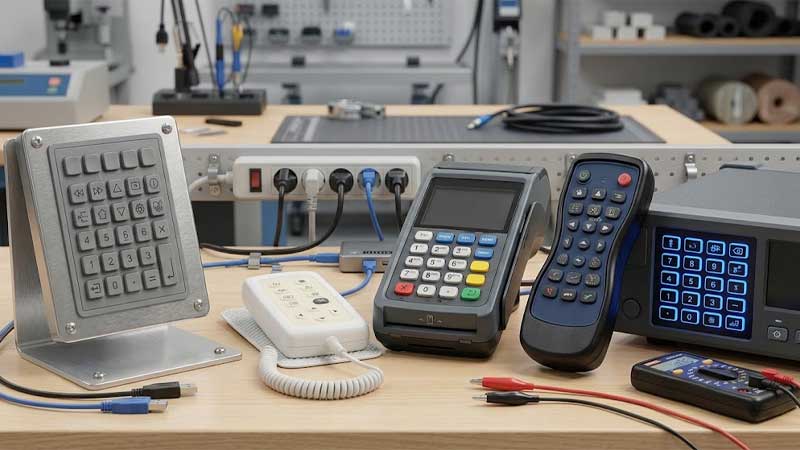
How Do These Silicone Keypad Manufacturers Differ?
The main differences are not simply factory location or company size. Manufacturers may have different strengths in keypad structures, finishing processes, electronics integration, tooling, or related molding technologies.
| Manufacturer | Location | Keypad-related capabilities | Other relevant capabilities |
| Silicone Technology Corporation (SiTech) | USA | Custom silicone keypads | LSR molding, insert molding, prototyping, assembly |
| Fecision Silicone | China | Conductive, multi-color and backlit keypads | Tooling, molding, finishing |
| GUME GmbH | Germany | Silicone switch mats, tactile structures | Force-displacement evaluation, molding |
| Hongju Silicone | China | Silicone rubber and conductive keypads | Compression and injection molding |
| Niceone-Keypad | China | Silicone, backlit and waterproof keypads | Membrane switches, HMI products |
| RSP, Inc. | USA | Custom silicone keypads and tactile designs | Membrane switches, backlighting, plastic molding |
| Silicone Keypad Factory (SKF) | China | Conductive, backlit, industrial, printed and coated keypads | Tooling, DFM, prototyping, mass production |
| PG Technologies | USA | Carbon pills, printing, coatings, translucent keypads | PCB/LED/LCD assembly |
| YJC Polymer | China | Printed, laser-etched, conductive and coated keypads | Tooling, CNC, silicone/plastic molding |
| DuraTech Industries | USA | Tactile/linear keypads, carbon contacts, backlighting, coatings | P+R, light pipes |
The table is a starting point for supplier research rather than a quality score. A manufacturer that has a broad list of capabilities may not use all of them for every project.
Which Manufacturer Capabilities Matter for Different Keypad Projects?
The required manufacturing capabilities depend on the product structure and operating environment.
| Project type | Capabilities to consider |
| Backlit keypads | Translucent silicone, laser etching, light transmission, lighting structure |
| Industrial keypads | Tactile response, sealing, environmental resistance |
| Medical keypads | Material selection, cleaning requirements, surface design |
| POS keypads | Conductive contacts, tactile consistency, wear resistance |
| Remote controls | Graphics, conductive contacts, tactile response |
| Coated keypads | Coating adhesion, wear resistance, surface and tactile requirements |
Not every project needs all of these processes. For example, a simple remote-control keypad may not need the same sealing or coating system as an industrial control interface.
What Should You Know Before Requesting a Quote?
A manufacturer can give a more useful quotation when the basic design information is available.
Useful information includes the keypad drawing or 3D model, dimensions, number and layout of keys, estimated quantity, contact method, surface finish, graphics, application, and operating environment.
If the project has defined performance requirements, include them as well. Actuation force, travel, or electrical contact requirements can affect the design and quotation.
If some specifications are not known yet, say so. A manufacturer can then identify which items need engineering review instead of treating an assumed value as a fixed requirement.
For a more detailed supplier evaluation process, see How to Choose a Silicone Keypad Manufacturer?.
What Affects Custom Silicone Keypad Cost?
Custom keypad pricing depends on the complete specification rather than the number of keys alone.
Common cost factors include:
- Tooling complexity
- Keypad size and structure
- Silicone material and hardness
- Conductive contacts
- Printing or laser etching
- Coatings
- Backlighting
- Metal domes
- Order quantity
- Inspection requirements
Tooling and engineering costs can have a larger effect on prototypes and small production runs. At higher volumes, production efficiency becomes a larger part of the unit cost.
For this reason, two quotations should only be compared directly when the specifications and included services are equivalent.
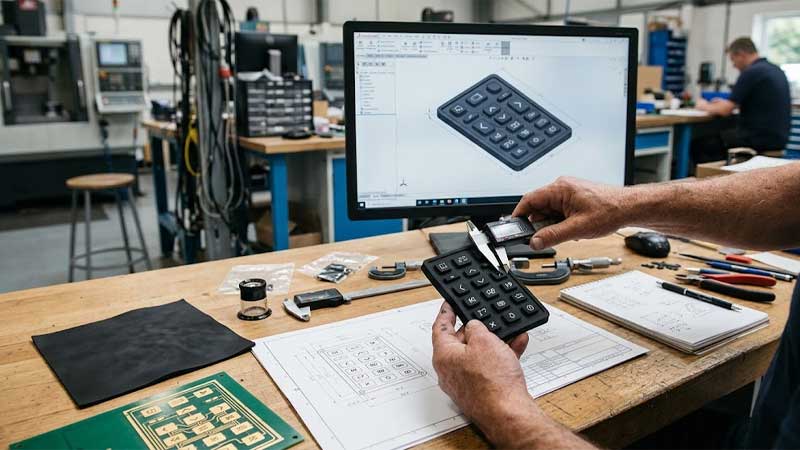
Why Does Keypad-Specific Engineering Experience Matter?
Silicone molding is only one part of keypad manufacturing.
The rubber web can affect actuation force and travel. Conductive pill geometry and position can affect electrical contact. Printing and coatings can affect surface durability and, depending on the design, the feel of the key.
These relationships mean that keypad geometry needs to be considered together with the required user interface performance.
There is no single actuation force, silicone hardness, or web structure that fits every application. The appropriate design depends on the equipment, PCB interface, enclosure, operating environment, and expected use.
For custom projects, SKF reviews these factors during design and tooling development so that the molded structure and keypad performance can be considered together.
Frequently Asked Questions About Silicone Keypad Manufacturers
How much does a custom silicone keypad manufacturer usually charge?
There is no single price that applies to all custom silicone keypads. Tooling, dimensions, materials, quantity, conductive contacts, printing, coating, and other processes can all change the quotation.
What is the typical MOQ for custom silicone keypads?
MOQ varies between manufacturers and projects. Prototype quantities, pilot production, and mass-production quantities may have different cost structures.
How long does custom silicone keypad production take?
The schedule normally includes tooling, sampling, possible design changes, and production. Mold complexity, finishing processes, quantity, and sample approval can all affect the actual lead time.
Can silicone keypad manufacturers make backlit keypads?
Yes. Backlit designs can use translucent silicone, laser-etched legends, and other structures designed around the lighting system. The required construction depends on the LED arrangement, legend design, light transmission, and enclosure.
What is the difference between a silicone keypad manufacturer and a general silicone rubber manufacturer?
A general silicone rubber manufacturer may have strong molding capabilities without specializing in keypad-specific requirements.
Silicone keypads can require controlled tactile response, conductive contacts, graphics, backlighting, sealing, and surface finishing. These requirements add engineering considerations beyond basic silicone molding.
Choose a Silicone Keypad Manufacturer for Your Project
The right manufacturer depends on the keypad structure, application, production volume, and required manufacturing processes.
SKF supports custom silicone keypad projects from design review and tooling through prototyping and production. If you already have a drawing, 3D model, sample, or basic project requirements, SKF can review the design and identify the main manufacturing considerations before tooling.