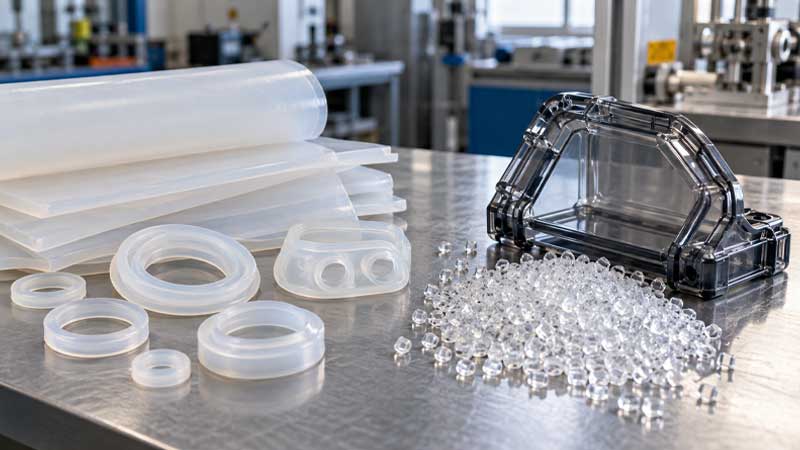
Choosing a silicone keypad manufacturer involves more than comparing unit prices. The manufacturer needs to understand the keypad structure, tactile requirements, electrical interface, tooling, surface finish, and production requirements.
A supplier may be able to produce the basic shape but still have limited experience with the performance requirements of your application. A better evaluation looks at how the manufacturer reviews the design, validates samples, controls production, and handles problems before they become production issues.
This guide explains the main points to check when comparing silicone keypad manufacturers and preparing a project for quotation and production.

What Should You Look for in a Silicone Keypad Manufacturer?
Start with the capabilities that can affect the finished keypad rather than the number of products shown on a supplier’s website.
A manufacturer should be able to review the keypad design, identify manufacturing risks, develop suitable tooling, and validate important specifications before production. The required capabilities depend on the design. A simple keypad with printed legends has different requirements from a sealed, backlit keypad with specific tactile and electrical targets.
The main areas to evaluate include:
| Area | What to check |
| Engineering | DFM review, keypad geometry, web structure, assembly requirements |
| Tooling | Mold development, modifications, production tooling control |
| Tactile performance | Actuation force, travel, snap ratio, consistency |
| Electrical interface | Carbon pills, metal domes, conductive contacts, contact requirements |
| Surface finishing | Printing, laser etching, coatings, graphics |
| Quality control | Dimensional, functional, electrical, and appearance inspection |
| Production | Prototype validation, production control, and repeatability |
| Documentation | Drawings, specifications, inspection criteria, and material information |
The right balance depends on the project. A manufacturer that is suitable for a simple low-volume keypad may not have the same capabilities required for a complex keypad used in a high-volume product.
How Can You Tell Whether a Manufacturer Has Real Engineering Capability?
A useful engineering review should do more than confirm that the drawing can be manufactured. It should identify problems that could affect tooling, assembly, tactile performance, or production.
For example, the rubber web around a key affects how the key moves and returns. Web geometry, key height, force cone design, and surrounding structure all contribute to the final tactile response. A drawing that looks acceptable in CAD may still need changes after the force target and travel are considered.
The same applies to the electrical interface. Carbon pill position, contact area, key travel, and PCB alignment need to work together. If the contact is not positioned correctly, the keypad may have acceptable mechanical movement but poor electrical performance.
Ask the manufacturer what they review before tooling starts. Useful questions include:
- Does the engineering team review the CAD model and drawing?
- Which keypad dimensions are checked before tooling?
- How are actuation force and travel considered during design?
- How are web structures reviewed?
- How are PCB and contact requirements incorporated into the design?
- How are design changes handled before tooling?
The important point is not whether a supplier says it provides engineering support. Ask for the type of design feedback the engineering team normally provides and whether potential problems are identified before tooling investment.
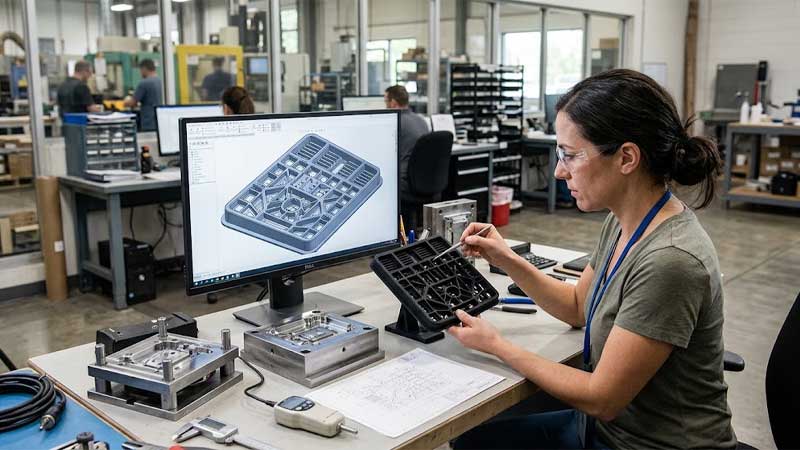
How Should You Evaluate a Manufacturer’s Tooling Capability?
Tooling affects more than the initial mold cost. It also affects whether design changes can be handled efficiently and whether the production process can remain consistent.
A keypad with many keys, complex geometry, inserts, special surface requirements, or tight assembly constraints may require more tooling consideration than a simple single-color keypad.
Before placing a tooling order, clarify who is responsible for mold development and how modifications are handled. Ask what happens if the first sample does not meet the agreed requirements.
A useful tooling discussion should cover:
- Mold design and review
- Cavity arrangement where applicable
- Tooling modifications
- Sample changes after the first trial
- Tool maintenance
- Tool ownership and storage
- Production tooling requirements
Tooling decisions should follow the part requirements. A more complex mold is not automatically better, and a lower tooling quotation does not necessarily represent a lower total project cost. The comparison is meaningful only when the tooling scope and required production specifications are the same.
How Do You Know if a Manufacturer Can Meet Your Tactile and Electrical Requirements?
Tactile performance should be treated as an engineering specification rather than a general description such as “good feel.”
Actuation force, travel, and snap ratio are related. The rubber geometry, material hardness, key dimensions, and web structure all influence the force required to operate a key. Changing one part of the structure can change the resulting tactile response.
For example, a target actuation force of 150 g is not a complete specification by itself. The buyer and manufacturer should also agree on how the force is measured, the relevant travel, and the acceptable tolerance.
The same principle applies to electrical performance. Carbon pills, metal domes, and other contact structures have different design and testing requirements. Contact resistance should be evaluated using a defined test method rather than comparing isolated numbers from different suppliers.
When comparing manufacturers, ask:
- How is actuation force measured?
- How are travel and snap ratio defined?
- What tolerances are used for tactile requirements?
- How are electrical contacts tested?
- How is consistency checked between keys or production batches?
- Are the requirements validated on samples before mass production?
The exact specifications should come from the product requirements. Medical equipment, industrial controls, consumer products, and other applications may require different tactile and electrical targets.
What Should You Check When Reviewing a Silicone Keypad Sample?
A sample should be checked for both appearance and function.
Visual approval is useful for confirming color, graphics, key shape, surface finish, and overall appearance. It does not confirm that the keypad meets its mechanical or electrical requirements.
Depending on the application, sample validation may include:
- Overall dimensions
- Key height and geometry
- Actuation force
- Travel
- Snap response
- Electrical contact
- Graphic position
- Printing or coating
- Backlighting
- Assembly fit
- Sealing features
The exact list should match the product requirements.
A useful sample approval process defines the important acceptance criteria before the sample is approved. This gives the production team a measurable reference instead of relying only on visual comparison.
This is particularly important when tactile response is part of the product specification. Two keypads can look almost identical while producing different operating forces or travel.
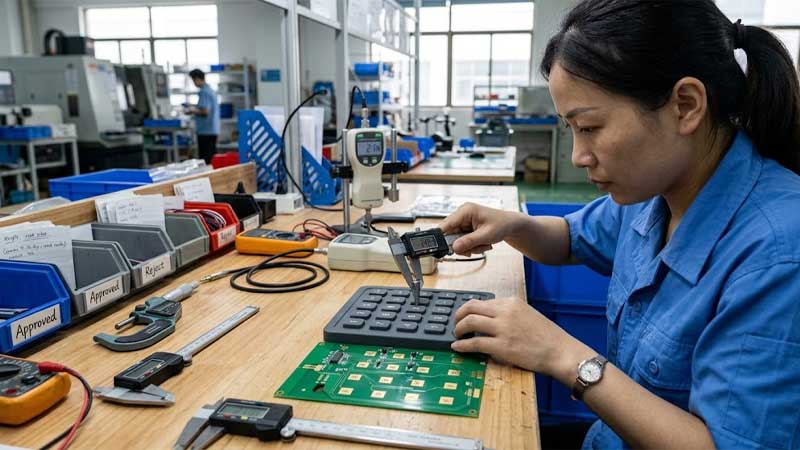
How Can You Compare Silicone Keypad Manufacturer Quotes Fairly?
Supplier quotations are difficult to compare when the specifications are different.
Before comparing prices, make sure each manufacturer is quoting against the same basic information:
- Same drawing or CAD data
- Same material requirements
- Same hardness
- Same quantity
- Same contact system
- Same printing or coating requirements
- Same inspection requirements
- Same packaging requirements
Then separate the quotation into its main cost elements. Tooling, prototype work, unit price, secondary processing, inspection, and packaging may all affect the final project cost.
A lower unit price can be useful, but it should not be considered separately from the rest of the project. Tooling changes, additional sampling, rejected parts, or production delays can create costs that are not visible in the initial unit quotation.
For this reason, compare the scope behind each quotation rather than comparing only the final price per keypad.
What Quality Control Should You Expect From a Silicone Keypad Manufacturer?
Quality control should be connected to the characteristics that affect the keypad’s actual function.
For silicone keypads, these can include dimensional accuracy, appearance, tactile performance, electrical contact, printing, coating, and material requirements. Not every project needs the same inspection plan.
A useful quality system should define what is checked and when it is checked.
Material requirements may be reviewed before production. Dimensions and appearance can be checked during and after molding. Tactile and electrical characteristics can be validated according to the product specification. Final inspection can then confirm that the finished parts meet the agreed acceptance criteria.
When evaluating a manufacturer, ask for the inspection approach rather than accepting a general statement about “strict QC.”
Useful questions include:
- Which dimensions are treated as critical?
- How is actuation force checked?
- How are electrical contacts inspected?
- How are printed or coated surfaces checked?
- How are production samples compared with the approved reference?
- What happens when a part does not meet the specification?
The inspection method should be appropriate to the product risk. A simple keypad does not necessarily require the same inspection program as a keypad with tight tactile, electrical, environmental, or sealing requirements.
How Can You Tell if a Manufacturer Can Scale From Prototype to Mass Production?
A successful prototype is only one stage of the project.
The important question is whether the requirements established during development can be carried into production. The approved sample should provide a reference for dimensions, appearance, tactile performance, electrical function, and other agreed characteristics.
The production process then needs controls that allow the finished parts to be compared with those requirements.
A typical development path is:
Design review → Tooling → Prototype → Sample approval → Production validation → Mass production
Problems can appear when a manufacturer treats the prototype as a separate activity from production. For example, the prototype may meet the intended tactile response, while the production process does not have a clear method for maintaining that requirement.
When evaluating a supplier, ask how sample requirements are transferred into production documents and inspection criteria.
The exact production controls depend on the product and quantity. High-volume programs generally require more attention to repeatability and process control than occasional low-volume production.
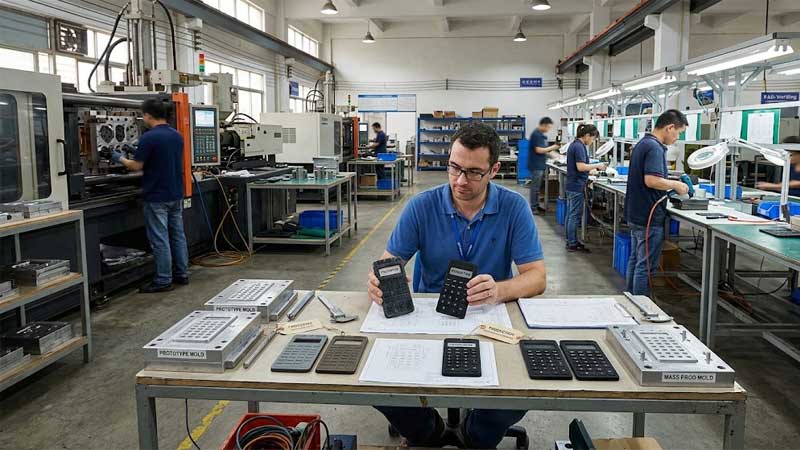
What Questions Should You Ask a Silicone Keypad Manufacturer Before Placing an Order?
The questions should focus on evidence and project requirements rather than general claims about experience.
Useful questions include:
- Can your engineering team review the CAD and drawing before tooling?
- What design issues do you normally check during DFM?
- How will the required actuation force and travel be validated?
- How will the electrical contact be tested?
- Who develops and modifies the tooling?
- What happens if the first sample needs a design or tooling change?
- Which characteristics are checked during production?
- How is the approved sample used as a production reference?
- What information is included in the inspection criteria?
- What information do you need to prepare an accurate quotation?
The answers should be specific to your project. A useful supplier response should explain how a requirement will be handled rather than simply confirming that the supplier “can do it.”
What Information Should You Prepare Before Requesting a Silicone Keypad Quote?
The more clearly the product requirements are defined, the easier it is for a manufacturer to identify tooling and production requirements.
Useful information may include:
- 2D drawing
- 3D CAD model
- Keypad dimensions
- Key layout
- Target actuation force
- Travel requirements
- Material hardness
- Contact method
- PCB or electrical interface
- Surface finish
- Printing or graphics
- Coating requirements
- Operating environment
- Estimated production quantity
Not every project will have all of these details available at the first RFQ stage. If the tactile target, contact structure, or surface process is still under development, tell the manufacturer rather than leaving the requirement unclear.
A manufacturer can then identify which points need engineering review before the quotation or tooling stage.
How Should You Verify a Manufacturer’s Claims Before Choosing a Supplier?
The most useful approach is to compare what a manufacturer claims with what the manufacturer can actually demonstrate.
For example, if a supplier says it provides DFM support, ask what the DFM review covers. If it says it controls tactile performance, ask how actuation force is measured and validated. If it says it has strict quality control, ask which characteristics are inspected and how the approved sample is used during production.
The same approach can be applied to tooling, electrical testing, printing, coating, and production capacity.
Think of the evaluation as:
Manufacturer claim → Evidence → Verification
The evidence does not always need to be a large collection of documents. Depending on the project, it may be a clear engineering review, sample test result, inspection method, tooling explanation, or defined production specification.
The level of verification should match the project risk. A simple keypad may need a relatively straightforward review, while a complex keypad with tight tactile, electrical, environmental, or sealing requirements may require more detailed validation.
Frequently Asked Questions
What should I ask a silicone keypad manufacturer before placing an order?
Ask about DFM review, tooling, tactile and electrical testing, sample validation, production inspection, and how approved requirements are controlled during production.
How do I compare quotes from different silicone keypad manufacturers?
First make sure the manufacturers are quoting the same material, design, quantity, contact system, surface processes, inspection requirements, and tooling scope. Then compare tooling, unit price, secondary processes, and other project costs separately.
What information does a manufacturer need to quote a custom silicone keypad?
A drawing or CAD model, dimensions, quantity, material requirements, tactile requirements, contact method, surface requirements, and application conditions are useful starting information. The exact requirements depend on the keypad design.
How do I verify the quality of a silicone keypad manufacturer?
Look beyond general quality claims. Ask how the supplier checks dimensions, tactile performance, electrical contact, appearance, printing, coating, and other characteristics that are important to your product.
Should I request a prototype before ordering production tooling?
A prototype can be useful when the design, tactile response, electrical interface, sealing, coating, or assembly requirements need validation. Whether it is necessary depends on the complexity and risk of the project.
What should be tested on silicone keypad samples?
Testing should follow the product requirements. Common areas include dimensions, actuation force, travel, electrical contact, graphics, surface finish, assembly fit, and other application-specific requirements.
Does ISO certification guarantee silicone keypad quality?
No single factory certification can by itself establish that every keypad meets your product requirements. Factory management systems, material requirements, and product-specific testing address different aspects of compliance and quality.
Can the same manufacturer support both prototypes and mass production?
Some manufacturers can support both stages, but this should be verified during supplier evaluation. Ask how prototype requirements are transferred into production tooling, inspection criteria, and mass-production controls.
How SKF Approaches Silicone Keypad Manufacturing
At SKF, the evaluation starts with the keypad requirements rather than treating every project as the same molded part.
SKF engineers can review the keypad structure before tooling to identify issues related to geometry, rubber web structure, tactile requirements, contact position, sealing, and assembly. The design review is intended to identify potential problems while changes are still easier to make.
After the design is defined, tooling and prototype development provide an opportunity to verify the actual keypad structure. Tactile response, electrical contact, appearance, dimensions, and other project-specific requirements can then be checked against the agreed specifications.
For production, the approved requirements need to remain clear from the development stage through manufacturing and inspection. This gives the production team a defined reference instead of relying on appearance alone.
For buyers comparing manufacturers, the same evaluation method can be applied to SKF as to any other supplier: review the engineering process, clarify the specifications, validate the sample, understand the inspection requirements, and compare quotations based on the same project scope.
Ready to Discuss Your Silicone Keypad Requirements?
A useful supplier discussion can start with the information already available, even if the design is not completely finalized.
Share your drawing or CAD model, keypad requirements, application environment, estimated quantity, and any known tactile or electrical targets. SKF can review the available information and identify which details need to be defined before tooling and production.
The goal is to establish the right specifications early, so the quotation, prototype, tooling, and production stages are based on the same requirements.