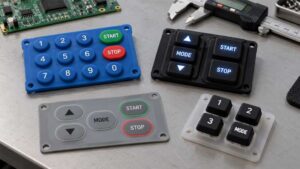
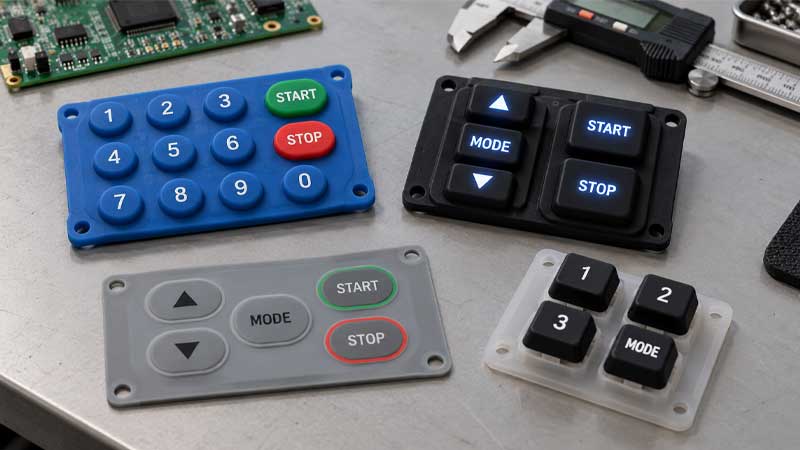
Compared to TV controllers or office input devices, silicone keypads used in electronics or equipment have an expected lifetime and are easier to treat in harsh and even hazardous conditions. User interfaces with silicone buttons are often exposed to adverse elements that cause inconvenience, unwanted downtime, damage to electronic equipment, and safety risks during operation.
For your application’s specific protection needs in hazardous conditions, SKF offers silicone keypads designed for durability, robustness, and resistance to environmental factors.
Which properties of silicone keypads change in harsh or hazardous conditions?
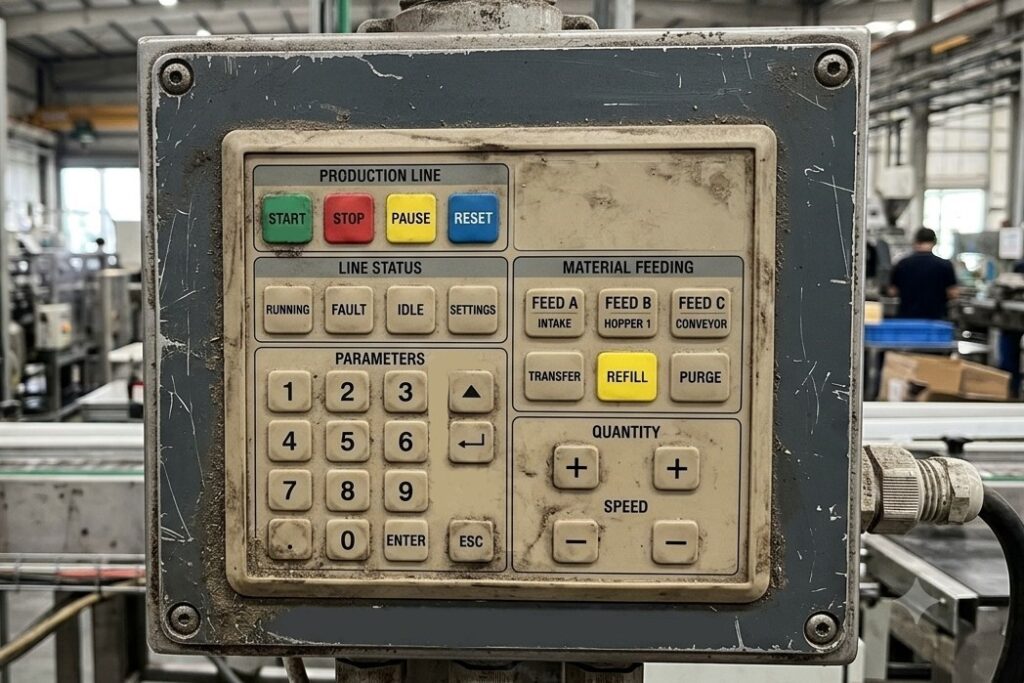
Durometer Hardness & Elasticity
Exposure to extreme temperatures can cause a change in the hardness of a silicone keypad.
An increased temperature improves the cross-linking reaction in silicone keypads, accelerating hardness and brittleness while reducing elasticity significantly.
In extremely cold conditions, the hardness of the keypad increases while its elasticity decreases. At the same time, the keypad becomes difficult to operate as normal.
Structural Integrity
The physical properties and structural integrity of silicone rubber in silicone keypads may change due to temperature, compressive stress, and chemical exposure, ultimately leading to varying degrees of aging.
Clarity of Printed Legends or Symbols
The keytops of silicone keypads are repeatedly touched and pressed by our fingers. Over time, this leads to fading of the printed legends due to prolonged abrasion and vibration. Legends and symbols with low clarity on the keytop may confuse users about the functions corresponding to the silicone buttons.
Harsh Conditions for User Interfaces
The environment is the main factor that contributes to degradation and failure for machinery. Multiple harsh conditions result in distinct environmental damages, which last continuously and subtly. Understanding these harsh and hazardous conditions can be helpful to design targeted treatments for silicone keypads.
Chemical Exposure
Fuels, oily substances, and solvents can affect silicone rubber, resulting in altered performance and degradation. These are common issues for input devices in laboratory, medical, industrial, chemical manufacturing, and heavy pharmaceutical settings. User interfaces that lack chemical resistance can malfunction or pose safety hazards.
Flammability and Fire Risks
In industrial and biochemical processing sectors, materials used for user interfaces in instruments should be tested for flammability. Flame-retardant silicone rubber is mixed with flame-retardant additives to prevent the spread of flames.
High humidity With Moisture
Moisture in the atmosphere is always a tricky problem for electronics and machines in high-humidity conditions, and the same is true for silicone keypads integrated into instruments.
More information about waterproof silicone keypads and a watertight selection guide is here.
Liquid and Dust Ingress
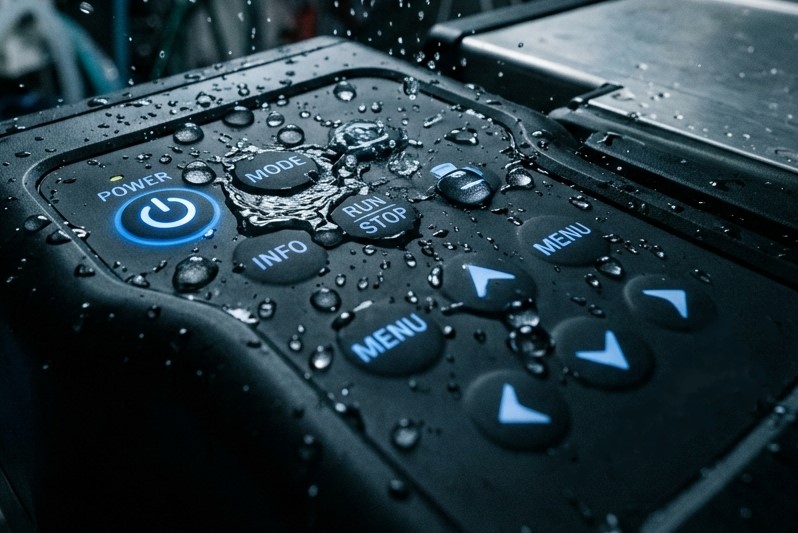
Almost all electronic components are sensitive to water. Moisture can lead to rapid corrosion, short circuits, and even permanent electrical shorts. At the same time, the ingress of dust and contaminants into electrical circuits threatens circuit closure and response.
Ingress of liquid and particulates (such as dust, dirt, or sand) is common in wet or dusty conditions, such as in industrial, construction, laboratory, and outdoor applications. These elements also act as common points of failure for machines.
While mechanical keyboards offer almost no protection against liquids, dirt, sweat, and contamination in the gaps between the keys, silicone keypads provide ingress protection (IP) ratings ranging from IP65 to IP68, which can meet your specific protection needs.
Weather Resistance
For user interfaces in terminals, security and access control, and portable diagnostic devices, long-term exposure to various and complex environmental factors should also be taken into consideration for your rubber keypad project. These factors may cause irreversible degradation of silicone rubber.
Furthermore, exposure to ultraviolet (UV) rays from daylight and extreme temperatures affects the features and performance of silicone keypads in user interfaces of machinery. Additionally, salt fog or spray in a marine environment accelerates the degradation of silicone keypads.
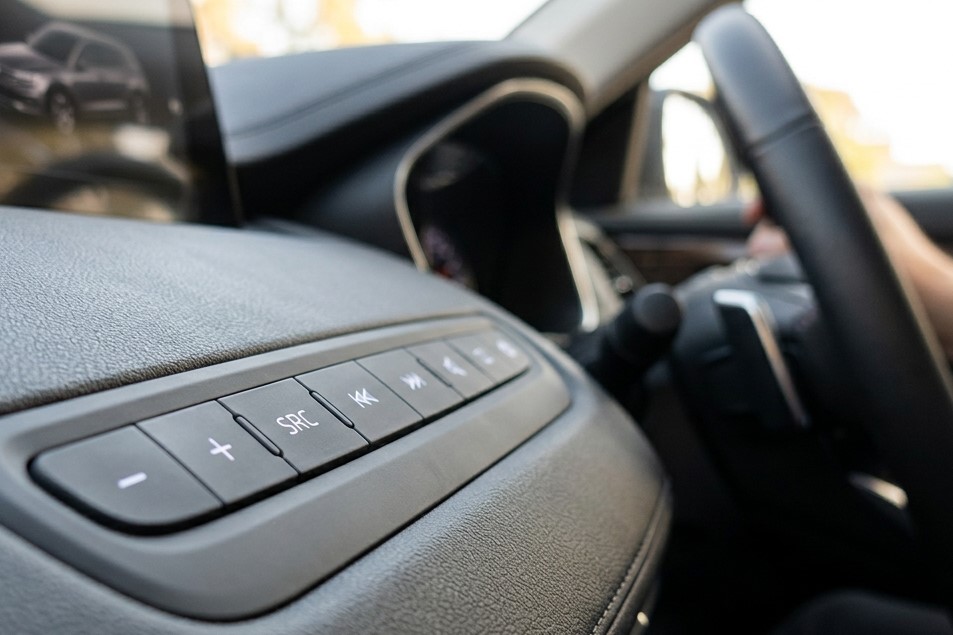
Long-lasting exposure to sunlight will result in yellowing, discoloration, and surface cracking of outdoor terminals and automotive control panels, as well as a decrease in elongation at break and tensile strength due to the photo-oxidation susceptibility of silicone rubber.
Improved Silicone Keypad against Harsh Situations
Environmental Seal against Liquid & Dust
Watertight silicone gaskets are inserted into user interfaces with silicone keypads. This simple, cost-effective solution enhances resistance to liquids and dirt.
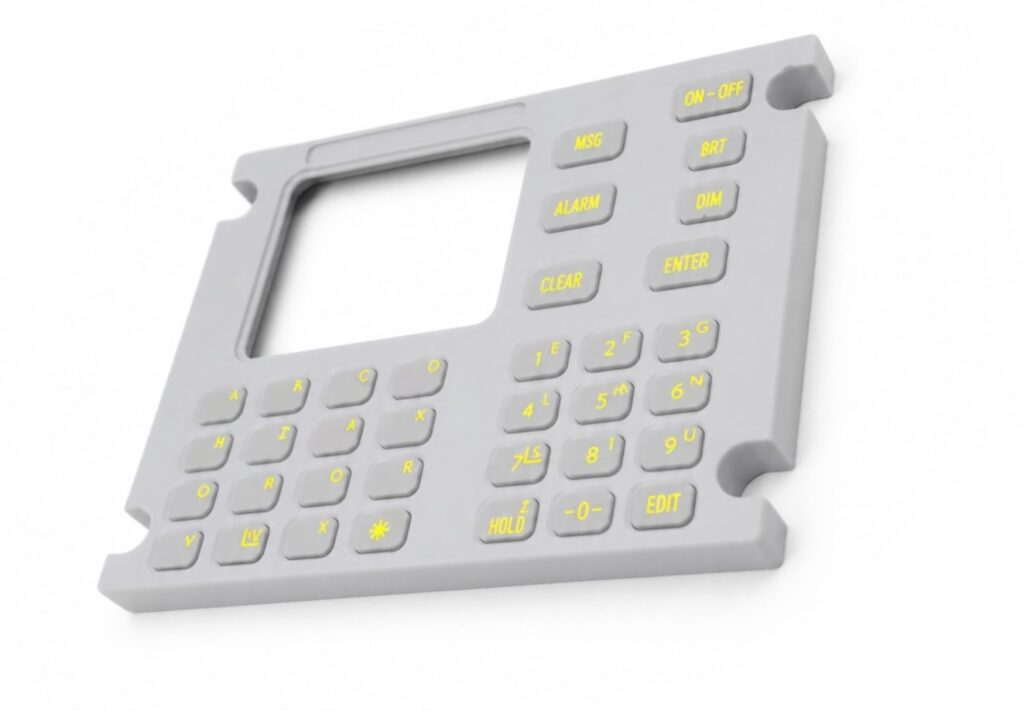
The compression seal creates a 0.5 mm radius around the perimeter of the silicone keypad through compression and a sealing process.
Furthermore, over-molded silicone keypads are processed into fully sealed rubber keypads that isolate most liquid and dust ingress.
SKF silicone keypads offer different IP-rated options, including IP65, IP66, IP67, and IP68.
These ratings indicate the degree of protection against liquid or dust, including resistance to dirt, dust, spray, spills, splashes, and even immersion in water. A fully sealed, waterproof silicone keypad with an IP68 rating can perform when immersed in liquids for a specific amount of time.
UL 746 Rated Silicone Keypad
UL stands for Underwriters Laboratories. The UL 746 standard evaluates the safety, reliability, and performance of polymer products, such as silicone keypads made of silicone rubber. Flammability, mechanical properties, environmental resistance, and electrical tests are performed for UL 746 standard testing. UL 746-rated silicone keypads are designed and produced to ensure long-term performance and lower maintenance costs.
UV-Resistant Silicone Keypads
To resist UV light from the sun, a PU-coated silicone keypad is a cost-effective solution that improves UV resistance, eliminating the influence of UV radiation via coatings applied to the surface. Similarly, an acrylic-based UV-resistant coating can be applied to the silicone keypad. This coating contains additional UV absorbers and stabilizers to enhance protective performance.
These UV-resistant silicone keypads support actual use in outdoor environments, automotive control panels, and the aerospace sector. They ensure long-term performance and reliability.
In addition, additives such as zinc oxide (ZnO) or titanium dioxide (TiO₂) can be mixed into the raw material used to produce silicone keypads, thereby improving their expected lifetime.
Heavy Chemical Corrosion
If your device’s user interface has physical buttons that may come into contact with heavy chemical corrosion involving strong solvents or heavy oils, standard silicone keypads cannot withstand these chemicals while maintaining structural integrity, performance, and an expected lifespan.
There is a fluorosilicone rubber (FVMQ) keypad with excellent chemical resistance, though it is more expensive. Additionally, parylene or polyurethane coatings can provide resistance to specific solvents.
Though the cost will be significantly accelerated by these coatings and FVMQ keypads, the cost of machine downtime, failure, and hazardous accidents also can be minimized by reliable performance under harsh environments.
Treatments for Durable Legends for Silicone Keypads
To improve the durability of printed legends on silicone keypads, it is effective to select a more reliable printing process. Laser-etched silicone keypads offer a durable, wear-resistant legend solution for your rubber keypad project that will withstand heavy use.
Besides, the P+R rubber keypad handles wear and tear by fixing plastic keycaps to the silicone keypad.
FAQs
Is silicone flame retardant inherently?
Yes. As a material of silicone keypads, silicone won’t burn or combust when exposed to flames.
What is a suitable material for a silicone keypad that is exposed to heavy chemicals and solvents?
Standard silicone keypads degrade during contact with strong chemicals. A tough, expensive cost, FVMQ keypad, or PU-coated silicone keypad maintains structural integrity, mechanical strength, and performance.
Will a silicone keypad be more rigid in extreme temperatures?
Yes. Extreme temperatures decrease elasticity and increase hardness.
Can I integrate a metal keycap with a silicone keypad?
Yes. Stainless steel keycaps or other metal keycaps can be integrated with silicone keypads, improving resistance to abrasion, wear, and vandalism.
Is all waterproof silicone keypad workable during immersion underwater?
Yes. An IP67-rated silicone keypad can be immersed under water for about 30 mins, and an IP68-rated keypad offers an advanced seal under specified pressure in the water.
Final Thoughts
SKF offers specific solutions to meet your requirements for a silicone keypad project involving harsh or hazardous conditions. These solutions provide environmental sealing, liquid and dust ingress protection, a UL rating, UV resistance, chemical exposure resistance, and durable printed legends.