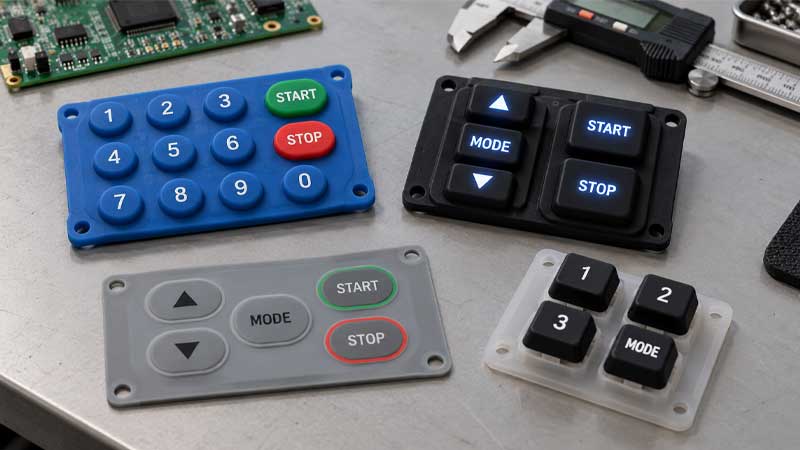
The selection of low or high force for silicone keypads impacts not only how much force your finger applies, but also the key profile design, lifetime against mechanical wear, and compatibility with compact or functional layout designs.
Low force silicone keypads can be designed to provide a pleasant tactile response for reliable machine input and an improved user experience. The following articles discuss the individual features and applications of low- and high-force silicone keypads to help you choose the right keypads for your rubber keypad project.
What Does Low Force mean for Silicone Keypads?
What Are the Forces in a Rubber Keypad Switch?
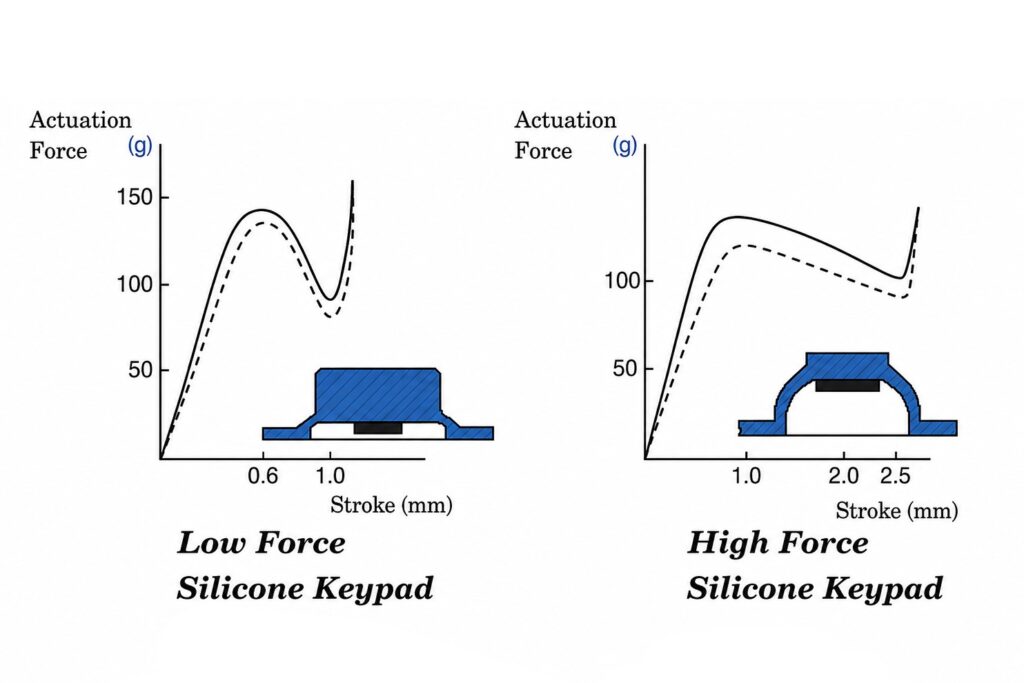
The low forces of silicone and other rubber keypad switches refer to the actuation force. Actuation force is typically measured in grams (g) or newtons (N).
Different silicone keypads with distinct key profiles, key heights, pressures, and tactile feedback provide different user experiences. The pressure needed to activate a silicone button in a user interface depends on the actuation force. Refer to the evaluation of how much force is needed to press down and release electrical signal transmission, tactile response, and the option of which electrical contacts are used.
You may have also heard the term “operating force,” which is sometimes similar to “actuation force,” but they are actually different. Actuation force is the pressure needed to register a keystroke, while operating force is the pressure needed to fully press a key, which usually reaches the key’s travel distance. However, actuation force is sufficient to activate a button switch.
What does low force bring to the user experience?
At first, you may be curious about how much force is required to operate a silicone keypad.
Is a lower actuation force better for all silicone keypads? Definitely not. The application, input precision, and sensitivity of the silicone keypad’s keys should be considered in rubber keypad design.
If you want to reduce finger fatigue for operators and enable easier interaction, you should consider a lower actuation force.
What factors affect the force of silicone keypads?
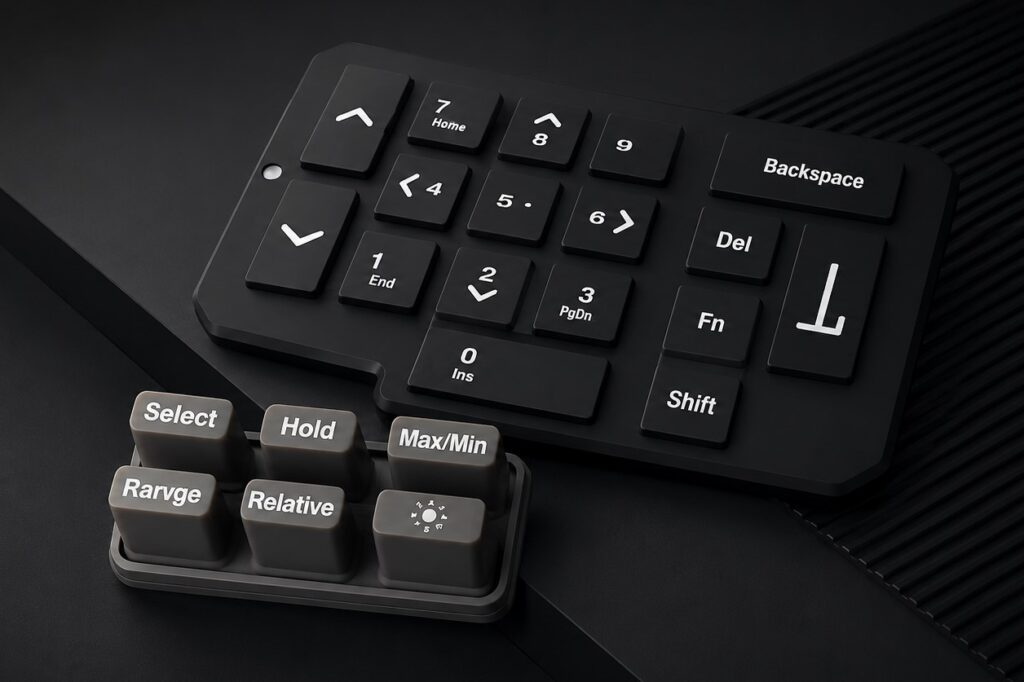
The actuation and operating forces will change based on the design, material hardness, web structure, keytop height, and travel distance.
Durometer Hardness of Silicone Rubber Material
Different hardnesses of silicone rubber affect the final silicone products, and higher hardness means more actuation force to activate, whereas lower hardness requires less force.
Usually, low-force silicone keypads are around 30~50 Shore A with a more flexible structure and soft touch.
Web Structure
The web structure is a flexible wall at the base of the button that deforms and rebounds when you press the silicone buttons. Webbing integrated with carbon pills or metal domes offers tactile feedback, indicating that a keystroke has been completed and establishing a connection between the electrical contacts and the circuit board.
To lower the force required for the final silicone keypad, decrease the web thickness and make the web angle shallower to allow for easier collapse.
Height of Key
Key height refers to the distance from the keytop to the bottom of the silicone keymat. A high-profile key offers a stronger sense of spatial depth and a higher center of gravity, which makes it difficult to connect with contacts on a circuit board due to increased travel and wobble issues.
There is a table showing the different ranges of key height and the corresponding actuation force for silicone keypads. Generally, a range of 30-100 g refers to low force.
| Height (mm) | Actuation Force (g) |
|---|---|
| 0~10 | 50~60 |
| 10~20 | 61~80 |
| 20~30 | 81~100 |
| 30~40 | 101~120 |
| 40~50 | 121~150 |
| 50~60 | 151~200 |
| >60 | >201 |
Travel Distance (Stroke)
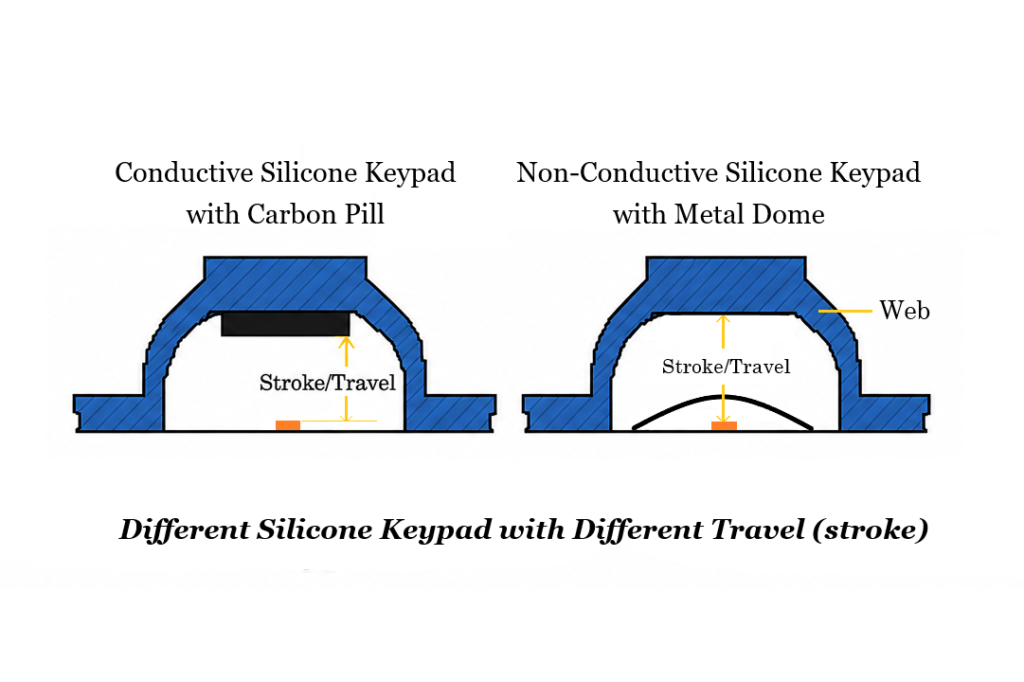
Travel distance, also called stroke, refers to how far the key must move downward before it makes contact with the electrical contacts below. Shorter travel requires less force, and vice versa.
How can I customize Low Force Silicone Keypads?
Compact Layout or Functional Modular Design for Low Force Silicone Keypads
A compact layout can be designed for an ergonomic silicone keypad to improve the user experience by decreasing fatigue, optimizing key spacing, and ensuring consistent and well-designed key sizes.
Moreover, modular designs enable integration with low-force silicone keypads for ease of operation and noticeable colored legends for better recognition.
These compact layouts and functional modular designs are optimal for applications in industrial machinery, gaming controllers, and portable electronics, offering durability, reliable strength, and design flexibility.
Sizes and Shapes of Keys in Low-Force Silicone Keypads
The dimensions and shapes of the keytops on silicone keypads not only demonstrate the design but also result in different tactile feedback and user experiences due to the distinct forces required to activate them.
A compact layout with small key spacing and low-profile keys with low activation force creates a smooth, high-end user interface for electronics and control panels.
Colored Low-Force Silicone Keypads
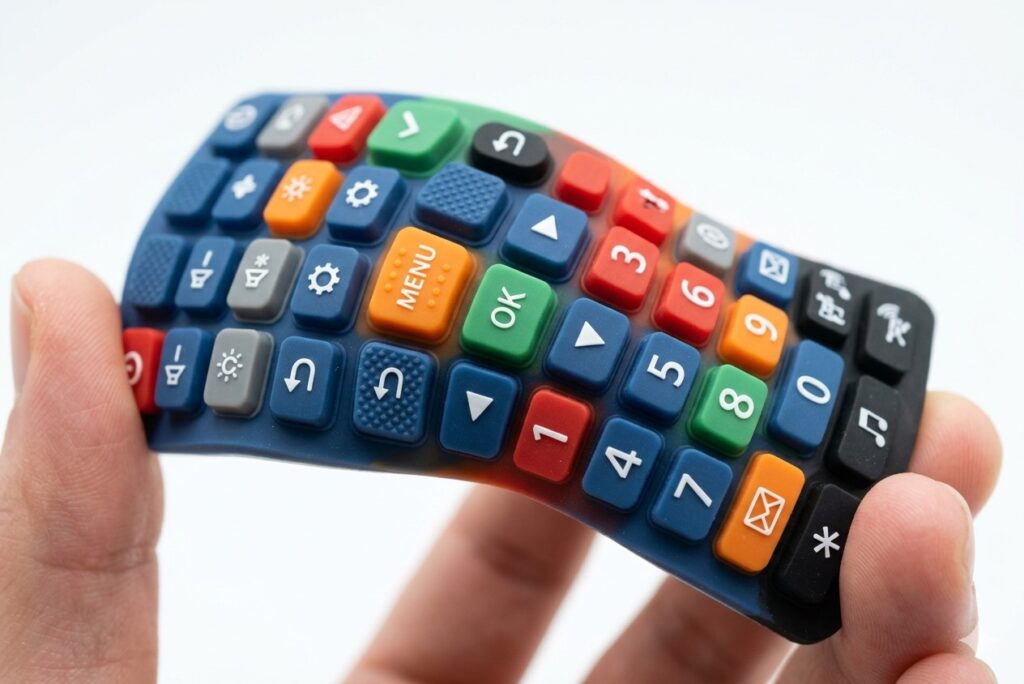
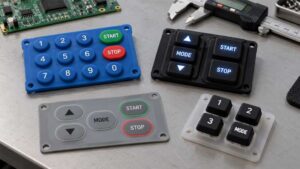
Dual-color, multi-color, and transparent custom silicone keypads are also available. Our unlimited color options can be customized according to your desired layout, functions, and backlighting effect.
More information about dual color silicone keypads or transparent silicone keypads also can be found in SKF.
Low-Force Silicone Keypad Applications
Handheld Devices
Some handheld devices involve portable electronics, portable measuring instruments, and diagnostic devices. These devices require ease of operation, a customized functional layout, and a rapid tactile response.
Consumer Electronics
The slim, thin keys of a low-force silicone keypad provide a rapid response and ease of pressing for consumer electronics, including massagers, electric toothbrushes, digital kitchen scales, espresso machines, coffee makers, and doorbells.
Office and Data Entry Instruments
Low-force silicone keypads are widely used in offices because they provide pleasant operation during extended use, optional quiet typing, and slim, interactive interfaces. Moreover, data entry equipment, such as calculators, POS machines, cash registers, and other terminals, ensures the speed, convenience, and accuracy of data entry with low-force silicone keypads. A smooth user experience with specific mechanical strengths is offered.
Automotive control panels
Low-force silicone keypads integrated with touchscreens are used in automotive control panels. These physical buttons generally have larger surface areas to eliminate driver distraction while driving. Furthermore, the customization of the key layout supports your automotive electronics systems with reliable silicone keypads from SKF.
FAQs
What is the lifetime of silicone rubber with different actuation forces?
Generally, higher actuation force leads to much mechanical wear and decreased lifespan, whereas low actuation force makes rubber keypads have a long-lasting lifespan with reduced wear.
Can I customize a low-force silicone keypad with a compact layout and multi-color design?
Yes. Your low-force silicone keypad can be customized with a desired compact layout and multiple color options without key-sticking or wobble issues.
Will the backlighting function be obstructed in low-force silicone keypads?
No, a low-force silicon keypad can be customized with a transparent keytop to allow a better backlighting effect.
What is the lifespan of a low-force silicone keypad and a high-force keypad?
In general, low-force silicone keypads have 1~10 million cycles, and high-force keypads have 100,000~1,000,000 actuations. Lower force refers to less mechanical wear and increased expected lifetime.
Are low-force silicone keypads suitable for computer keyboards?
Yes. A high frequency of typing applications can match well with a low-force silicone keypad, which realizes an improved user experience and less finger fatigue.
Are low-force silicone keypads suitable for medical precision devices?
No. Medical precision devices require high input precision to prevent accidental activations and hazardous events. Higher force ensures that only when the operator intends to press a button is it activated.
Final Thoughts
Whether you select low or high force for your silicone keypads depends on your requirements regarding the keypads’ lifespan, tactile response, ease of activation, and user experience. Low-force silicone keypads offer a longer lifespan and a faster tactile response without fatigue during prolonged use. Conversely, high force requires more pressure to make contact with the circuits, resulting in a shorter lifetime of the silicone keypad due to increased wear.
Both types of silicone keypads can be manufactured at SKF, and our engineering team will assist you with your project.