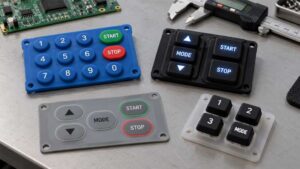
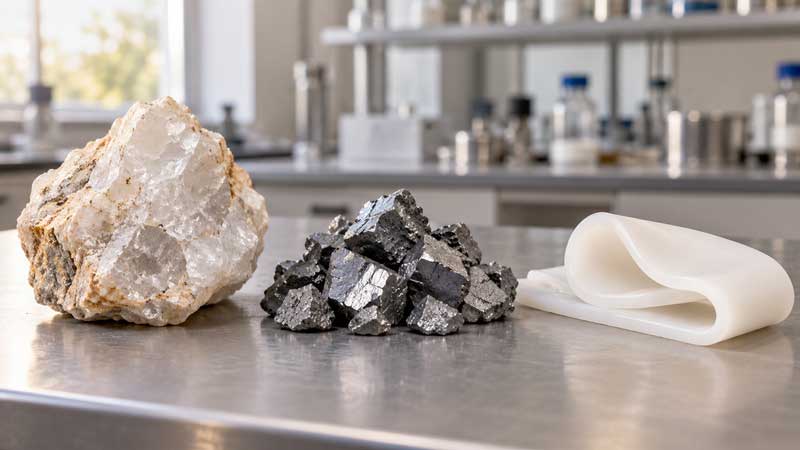
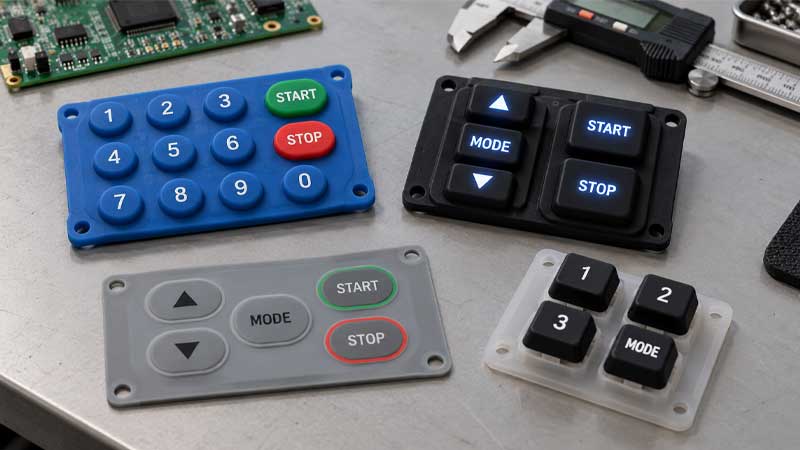
Some elastic polymer materials are used in industrial applications, and silicone rubber stands out due to its resistance to temperature and weather, design flexibility, waterproofing properties, ability to integrate optical elements and durability — it can withstand millions of keystrokes. The raw materials for both HCR and LSR can be processed into final silicone products that are highly resilient to chemicals, UV rays and temperature, odourless, steriliseable and pleasant to the touch, especially in silicone keypads.
However, the material selected for silicone keypads affects user experience, life cycle and production costs directly. The following will discuss comparisons and raw material selection references for silicone keypads.
HCR and LSR for Silicone Keypad
What’s HCR (High Consistency Rubber) Silicone?
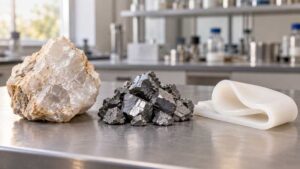
HCR (high consistency rubber), also known as HTV (high temperature vulcanising), refers to silicone elastomers. Solid silicone products molded from HCR exhibit excellent mechanical strength at temperatures ranging from -58℉ to 572℉ (-50℃ to 300℃). HCR silicone can be processed by compression molding at high temperatures and pressures, and cured using a peroxide catalyst, which is the most common method for manufacturing silicone keypads.
What’s LSR (Liquid Silicone Rubber)?
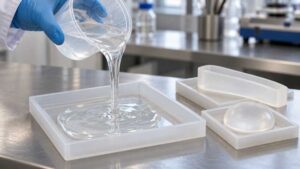
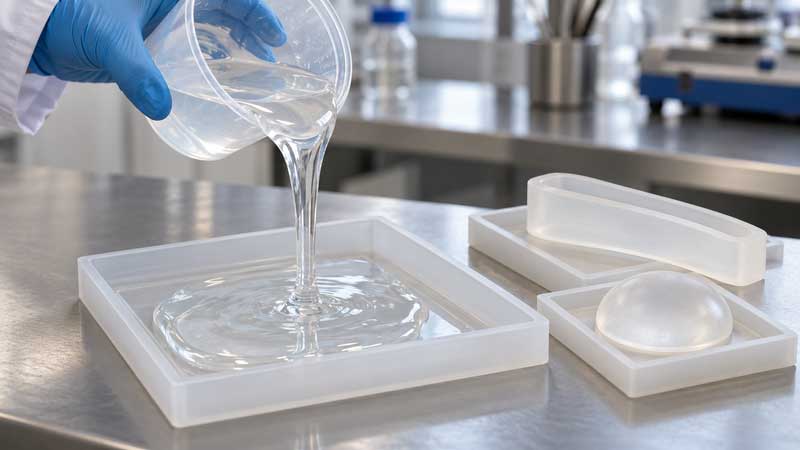
LSR (liquid silicone rubber) is classified as a subcategory of room-temperature vulcanised silicone (RTV), but is generally considered a separate type due to its special injection molding capabilities. Additionally, due to its outstanding flowability and viscosity at room temperature, LSR is also an ideal material for injection molding.
Comparison between HCR and LSR
Curing Process
Different types of silicone rubber have specific curing processes involving temperature, added curing catalysts, required pressure, and curing time. Curing process is to lead the long polymer chains to cross-link and bond together, which is accelerated by a catalyst. The following is a comparison of the curing processes of HCR and LSR:
| Features | HCR | LSR |
|---|---|---|
| Material State | Solid | Liquid |
| Curing Temperature | 320~356℉(160–180 °C) | 176~248℉(80–120 °C) |
| Curing Mechanism | Peroxide or platinum chemical reaction | Platinum chemical reaction |
| Curing Pressure | 10~20MPa | 5~10MPa |
| Average Curing Time | 3~10min (180~600s) | 30~180s |
| Material Waste | Greater | Less |
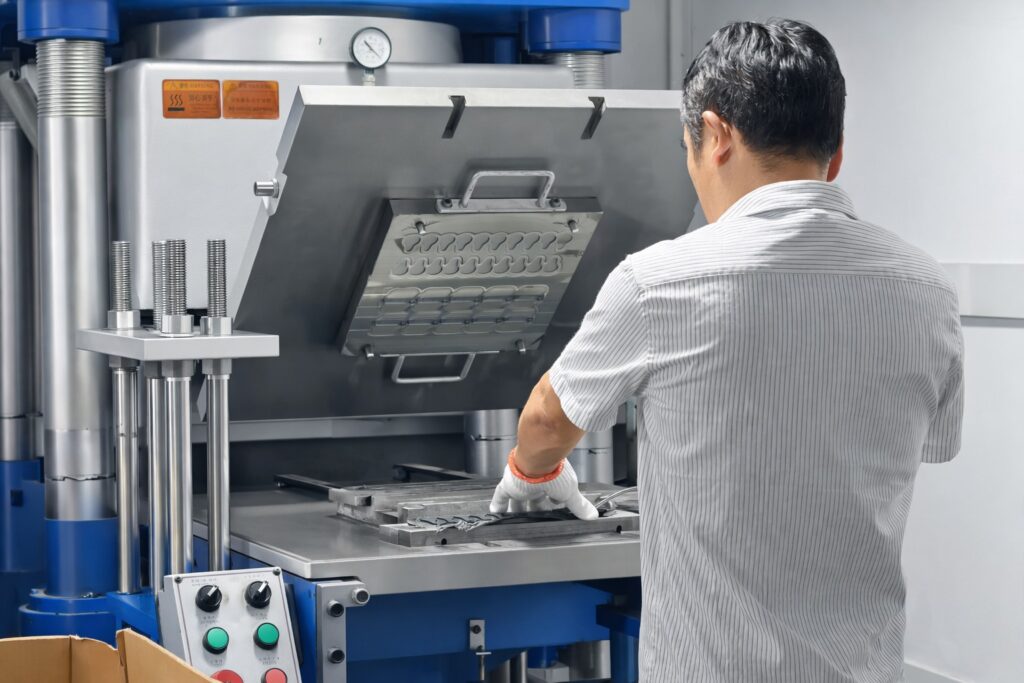
Viscosity & Manufacturing Techniques for Backlight
Viscosity determines the physical and flow behavior of a material. A low viscosity means a material is less viscous with high flowability, while a more viscous material has a higher viscosity and lower flowability.
Viscosity is also one of the distinctions between HCR and LSR. LSR has a lower viscosity than HCR. Due to its low viscosity, LSR is commonly processed via injection molding, also called liquid injection molding (LIM), to manufacture silicone keypads. HCR, on the other hand, is more suitable for compression molding.
HCR is the optimal option for silicone keypads, offering high mechanical strength, temperature resistance, flexibility, and standardization for small-to-medium production. LSR is processed via injection molding with high precision to produce complex silicone products in low volumes, including silicone keypads and infant products.
When should you choose HCR or LSR for Your Silicone Keypad?
Better Mechanical Strength with HCR
The mechanical properties of silicone products are affected by cross-linking, which determines elongation at break, strain recovery, and tensile strength.
Strain recovery of HCR can match LSR, but HCR requires more time to attain a state of complete stability.
HCR generally has better mechanical strength than other types of silicone elastic polymers, including LSR. Due to its high molecular weight and curing process involving high pressure and temperature, HCR enables significant bonding of the polymer chains.
| Features | HCR | LSR |
|---|---|---|
| Elongation at Break | Lower | Higher |
| Tensile Strength | Stronger | Poorer |
| Elasticity | Poorer | Stronger |
Improved Production Speed with LSR
HCR processing involves several steps, including compounding, preforming, and curing at high temperatures and pressures, as well as post-curing. At the same time, LSR processing includes a high-automation injection molding system with rapid and precise molding.
As a low-viscosity raw material, LSR requires a shorter cycle time and faster production speed than HCR due to its high curing speed. Additionally, LSR has lower per-part costs at higher volumes, which improves manufacturing efficiency.
However, the tooling cost for LSR is higher than for HCR, indicating that HCR is more beneficial for initial investments in small- to medium-volume production and prototypes.
Backlit Silicone Keypad with LSR
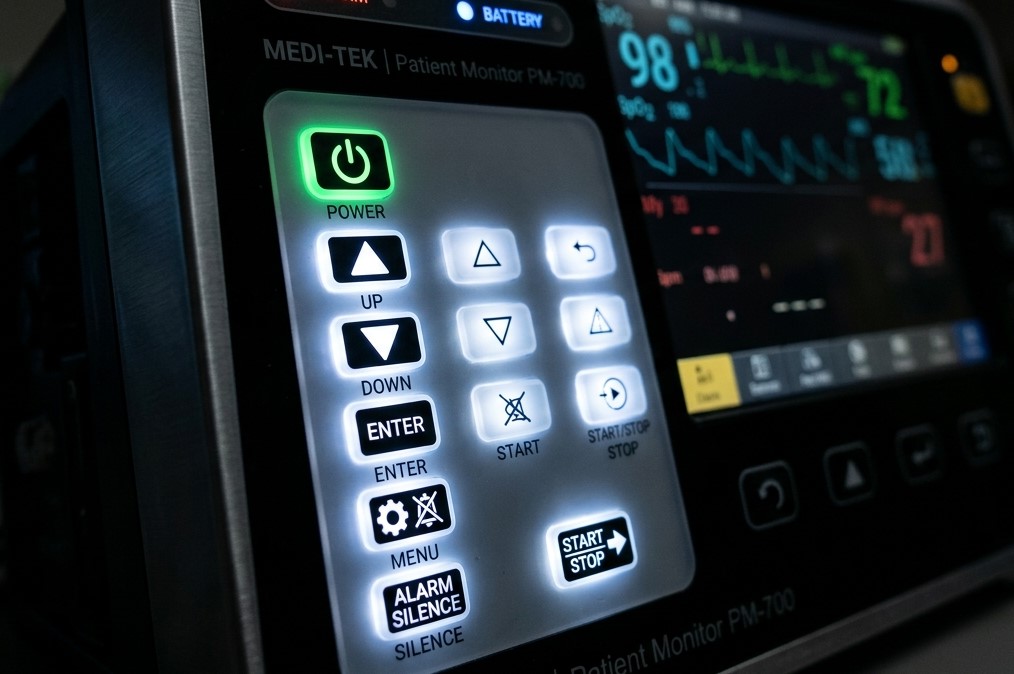
LSR, also called optical silicone, is resistant to scratches and cracks and retains its transparency when exposed to heat or UV light. For backlit designs, a translucent or transparent silicone keypad molded from LSR is the base for subsequent treatment to create a backlighting effect. The light source underneath the silicone keypad enables light to pass through the translucent silicone material.
Application like gaming controller, specific remotes, medical devices, and some consumer electronics, can integrate with silicone keypads molded from LSR.
High Consistency with LSR for Silicone Keypad
The LSR molding process ensures a consistent product without bubbles or dimensional variation, which are common defects in the compression molding process. Due to the controlled injection molding process, LSR can be manufactured into consistent silicone keypads with tactility on each key, as well as high design flexibility for color customization and backlighting effects.
Durability with LSR in Harsh Conditions
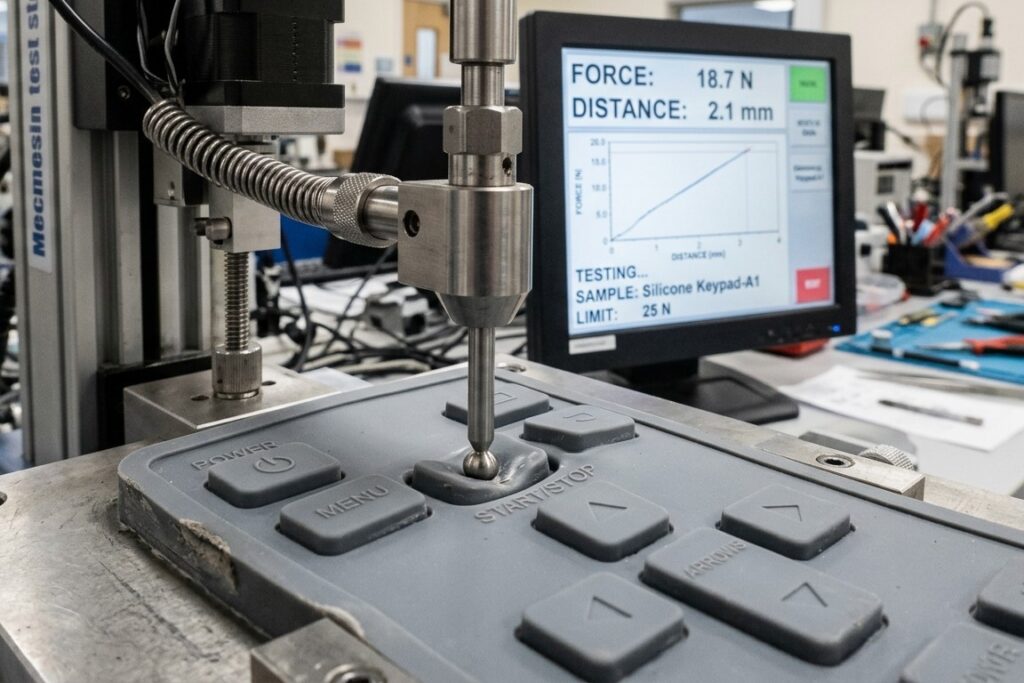
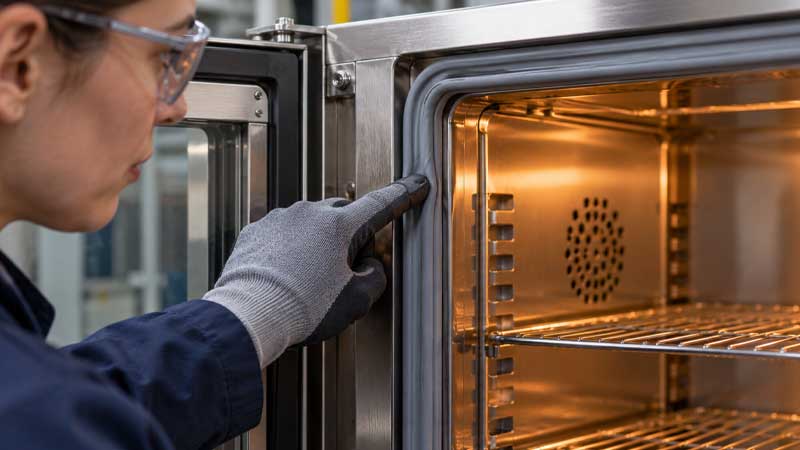
If your project focuses on long-term performance and durability in harsh conditions for industrial and medical equipment, electronics, and outdoor machinery that experiences weather changes during operation, LSR is a suitable option.
In addition, for silicone keypads requiring strict tolerances and fine geometric designs in mass production, LSR is a reliable choice.
FAQ
Will the LSR shrink in the final silicone keypad product?
Yes. Generally, the linear shrinkage of an LSR silicone keypad is 2-3%. However, the design of the geometry and processes like overmolding can affect the shrinkage.
Is LSR the same as RTV?
Technically, LSR is a subtype of RTV, but it is considered a distinct silicone category in manufacturing.
What dimensional tolerance can LSR achieve?
LSR enables tight dimensional tolerances of ±0.02 mm.
What is RTV used for?
RTV cures at room temperature and is used for encapsulation and electronic potting.
Which one is more suitable for enhanced tactile feedback?
HCR silicone keypads enable reaching a crisp click sensation with more distinct tactile feedback, higher actuation force, and stronger rebound.
Conclusion
For your prototypes, low, or medium volume production, HCR is optimal for your silicone keypad project with exceptional mechanical strength. But if you focus more about resilience to harsh environment, high consistency in complex geometry design, translucent state and backlight effect for silicone keypads, LSR is more suitable option.
The material between LSR and HCR for silicone keypad is selected by balance of overall cost, your desired functions and application, requirements of precision and quantity
We provide professional service for your idea and design about the silicone keypad project with a cost-effective and workable solution from the professional engineering team at SKF.