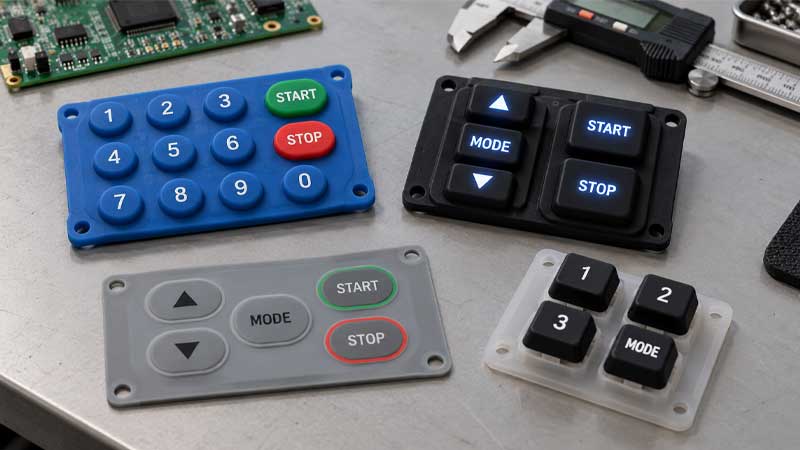
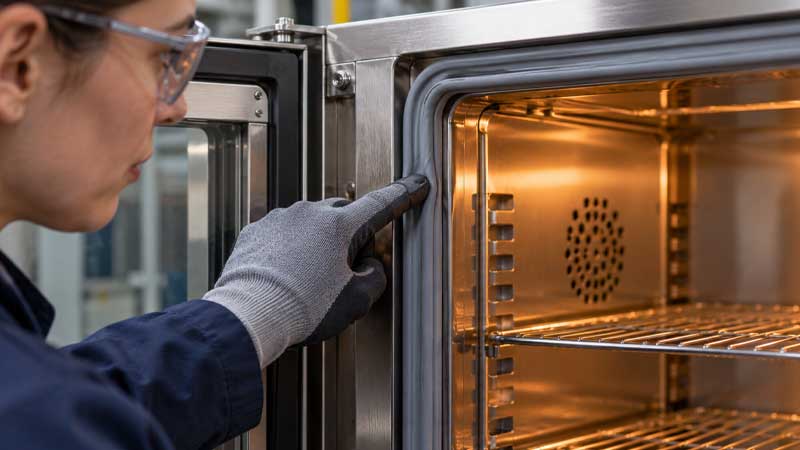
Different switches, buttons, and knobs are a common feature of our daily lives. From simple on/off power switches and laptop keyboards to data input into complex control systems, they are necessary for the interaction between humans and machines.
The performance and comfort of operating silicone keypads relate to the characteristics of the object, such as tactility, shape, surface finish, durability, precision, and usability.
Understanding the emotional aspects of silicone keypads helps you to design keypads that meet specific requirements.
What Is Designed by Human Feeling?
Relationship between Sensation and User Experience
Kansei Engineering aims to connect users’ emotional requirements to the development of your silicone keypads. We want to maximize user satisfaction. This is a goal we also strive to achieve for your project. Specific tactile and haptic stimulation enhances sensory perception, thereby enriching the user experience.
Silicone Keypad Design and Tactile Response
The tactility of silicone keypads influences their appearance and the way they respond to human interaction, creating a dynamic user experience. A user-oriented design that combines visual and tactile elements improves the connection between human and machine, creating an effortless and immersive experience.
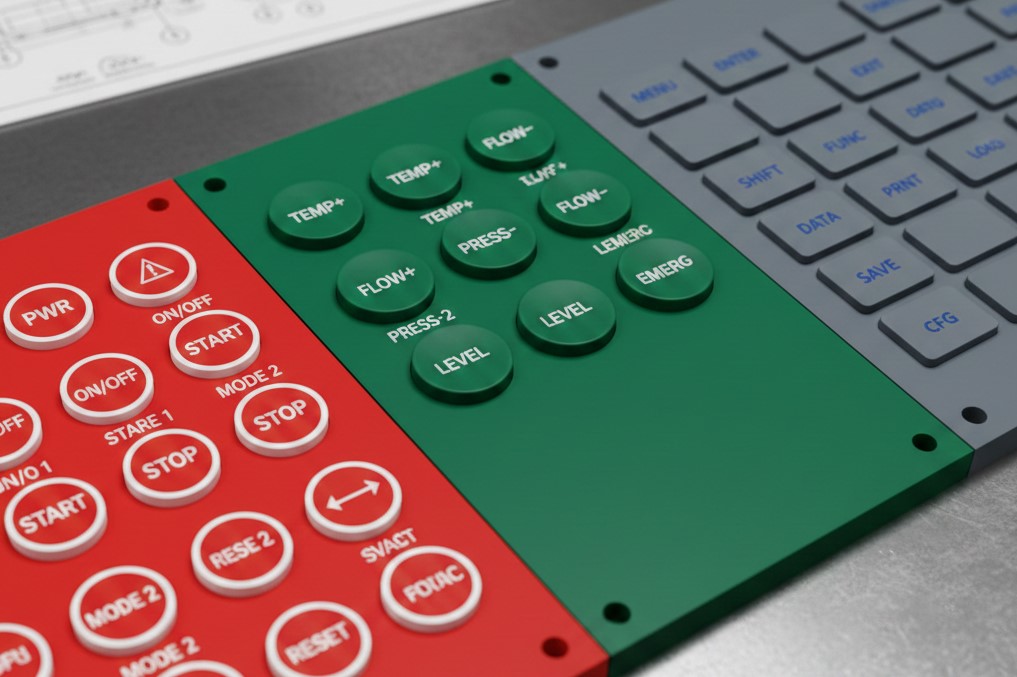
Key Factors for Operation Experience in Silicone Keypads
Actuation Force
Actuation force determines the amount of pressure required to activate a button. It affects the touch sensitivity and responsiveness of a silicone keypad. A lower actuation force improves input speed and responsiveness and reduces finger fatigue during frequent use.
However, a silicone keypad with a low actuation force and a light touch can lead to accidental pressing, which can cause problems with typing and gaming controllers and may even pose a risk with industrial equipment.
Therefore, for competitive gaming devices and office input devices, a silicone keypad with a relatively low actuation force is preferable.
Contact Force
Actuation and contact forces are used to assess the durability, reliability, and smoothness of silicone rubber keypads. In silicone keypads, contact force refers to the pressure required to maintain closure between the actuator and the circuit, ensuring consistent electrical contact.
The difference between the two forces provides a better assessment of the sharpness of the click than the snap ratio discussed below.
Snap Ratio
The snap ratio is an optimal measure of the tactility of silicone keypads, indicating whether they feel pleasant to the touch.
Durometer Hardness
We offer silicone keypads with a durometer hardness of 40–70 Shore A, and 50 Shore is preferred for a soft touch.
Higher hardness values indicate a more flexible button, while lower hardness values indicate a firmer keytop. Additionally, silicone rubber keypads can be produced with dual or multiple hardness levels in specific keytops.
Experience-orientation design in Silicone Keypads
Snap Ratio
To enhance the user experience, the snap ratio, travel, actuation force, and contact force are all designed to fall within specific ranges, ensuring less finger fatigue and providing sufficient tactile feedback.
While a higher snap ratio provides a stronger sensation, silicone keypads with a high snap ratio tend to degrade faster than those with a lower ratio. To balance durability and tactile feedback, a snap ratio of around 40–60% is usually recommended.
Travel Distance Design
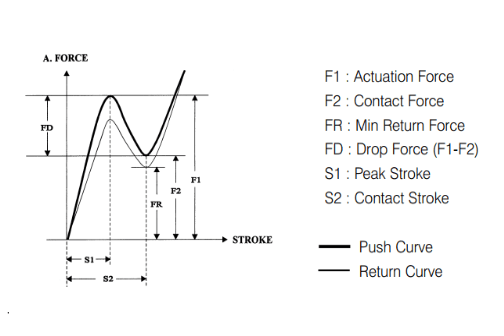
The travel distance is also an essential parameter in silicone keypad design. This refers to the distance between the electrical contacts. In the default state of a silicone keypad, these two contacts are separated, but they connect together when the keytop is pressed and collapsed by a finger. A longer travel distance requires a greater actuation force to activate a silicone keypad. Responsive silicone keypad design offers real-time feedback and decreases cognitive friction.
A silicone keypad with low travel usually has a travel distance of less than 1 mm. However, this is also affected by the size of the keytop on a rubber keypad. Larger travel requires larger keys than a low-travel keypad.
Actuation Force
The thickness of the keys on the silicone keypad should be taken into consideration when determining the actuation force value. Generally, keys measuring 10–15 mm require an actuation force of 80–150 g, whereas high keys measuring 15–25 mm require an actuation force of 150–175 g.
Web Angle and Thickness
The web is applied to the silicone keypad and is called a diaphragm key. It flexibly deforms when pressed and rebounds when released and is positioned at the base of the keypad. The thickness and angle of the web affect the actuation force values and usability.
For a silicone rubber keypad, a web at around a 40° angle and 0.02 inches in thickness is typically recommended to ensure comfort, balance, durability, and performance.
In some cases, we also offer a rubber keypad solution without a webbing structure or flexible side walls, which requires additional metal domes to provide tactile feedback. Further options can be discussed with us.
Low or High Keycap Profile
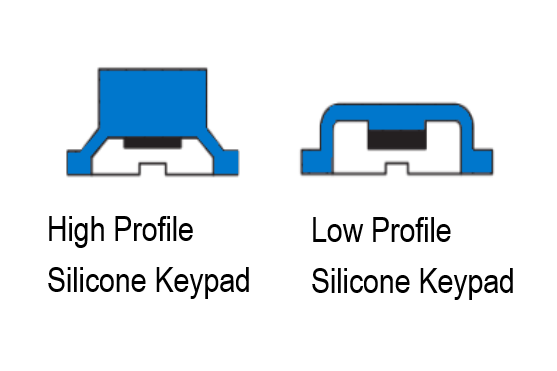
The keycap is the part of the silicone keypad with which your fingers come into direct contact when pressing a key. Keycap profiles determine the physical shape and size of the keycaps on your silicone keypads. A well-designed keycap profile accommodates the natural flexion and extension of your fingers, thereby meeting ergonomic requirements.
Unlike normal plastic buttons, silicone keypad keytops can be designed with a flat surface or a curved one, including concave and convex shapes. The choice depends on your visual preferences, aesthetics, and the specific user experience you want to create.
- High profile
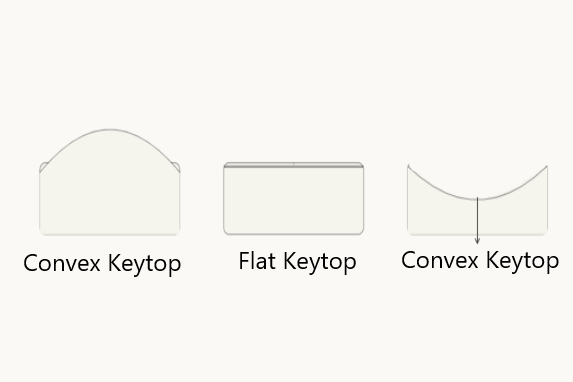
A high profile with a convex or concave surface on silicone keypads offers a pronounced raised part for control panel systems, medical devices, and industrial machinery.
- Low profile
Low-profile silicone keypads are optimal for input operation on handheld electrical devices, remotes, and some consumer electronics, as well as for high-frequency applications such as keyboards for typing.
- Flat Surface of Keycap
A flat keycap surface is more suitable for compact silicone keypads with legend-heavy layouts, helping users to identify the legends on the keytops and press the desired one.
FAQ
Which is harder, the Shore A or D scale?
The Shore A scale is used for softer materials, while the Shore D scale is used for harder ones. They use different measurement systems. Our silicone keypads offer a hardness option ranging from 40 to 70 Shore A.
Is a lower actuation force better?
No, because a silicone keypad with an actuation force that is too low makes keystrokes and mistakes easier. The correct actuation force reduces finger fatigue during prolonged typing, particularly with silicone keyboards.
Is actuation force similar to operating force?
Sometimes they refer to the same thing, but there is a distinction. Actuation force is the specific pressure required to register a keystroke, whereas operating force is the force required to press the key all the way down.
What is the importance of contact force for silicone keypads?
Contact force ensures precise input, meaning that if the pressure alters slightly during one keystroke, the key won’t send multiple signals.
Does a higher snap ratio result in a shorter lifespan for silicone keypads?
Yes. As the snap ratio rises above 60%, the lifespan of silicone keypads decreases significantly outside of the recommended range (40–60%) without premature wear.
What does ‘stroke’ mean in typing or input?
‘Stroke’ means the act of depressing a key on a keypad or keyboard and is also known as a ‘keystroke.’
Conclusion
Grounded in human feeling and actual experience, the design of silicone keypads takes into full account factors including actuation force and snap ratio via stroke, angle & thickness of web, travel distance of keys, and profile of keycap with recommended parameters.
By understanding how these parameters affect the user experience and performance of silicone keypads, you can identify the key elements for your rubber keypad design.