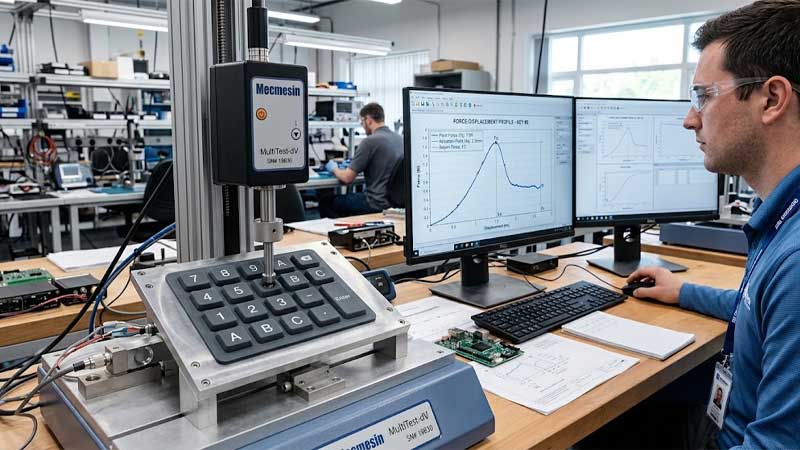
Selecting the correct actuation force is an important part of silicone keypad design. The force required to press a key directly affects how users feel the input response, how easily the keypad can be operated, and whether accidental presses may occur.
A keypad with very low force may feel too sensitive in industrial environments, while excessive force can cause fatigue during repeated operation. Engineers need to balance pressing force with tactile feedback, key structure, travel distance, and application requirements.
SKF works with customers to optimize silicone keypad force performance through structural design review, prototype testing, and force validation. The goal is to achieve a consistent operating feel that matches the equipment requirements.
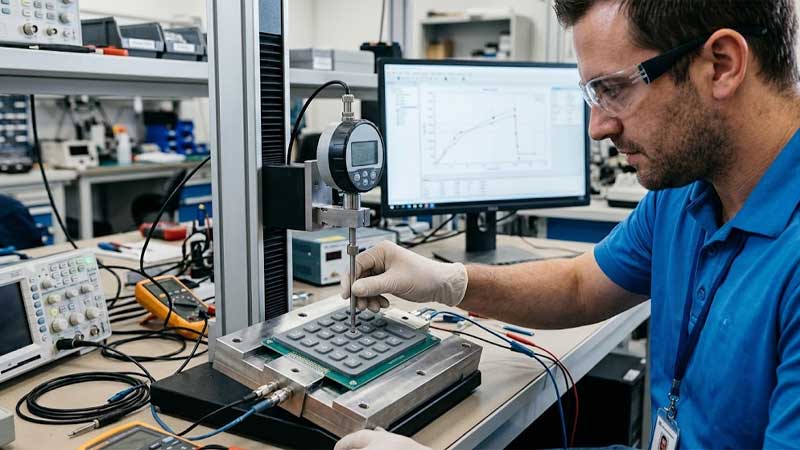
What Is Actuation Force in Silicone Keypads?
Actuation force is the amount of force required to press a silicone keypad button until the internal structure collapses and the conductive contact reaches the PCB or circuit layer.
During pressing, the force usually increases until it reaches the peak point, known as the F1 force. After the silicone web structure collapses, the force drops and creates the tactile snap feeling that confirms the key has been activated.
The force-displacement curve helps engineers evaluate:
- Peak actuation force
- Travel distance
- Tactile response
- Return force
- Pressing consistency
Actuation force is not determined by silicone hardness alone. The key geometry, web structure, button size, and travel design all influence the final pressing performance.
For more information about the relationship between force curves and tactile response, see our guide on Snap Ratio in Silicone Keypads.
Common Silicone Keypad Actuation Force Ranges
There is no single standard actuation force for all silicone keypads. The suitable force depends on how the keypad will be used, who will operate it, and the environment where the equipment is installed.
The following ranges are commonly used for different applications:
| Actuation Force | User Feeling | Typical Applications |
| 50-80g | Soft and highly sensitive response | Remote controls, consumer electronics, lightweight handheld devices |
| 80-150g | Balanced tactile feedback and comfortable operation | Medical devices, portable instruments, diagnostic equipment |
| 150-200g | Firmer pressing response with stronger confirmation | Industrial control panels, automation equipment, testing instruments |
| 200-300g+ | High resistance and strong input confirmation | Outdoor equipment, glove operation, heavy-duty industrial interfaces |
These values are general references rather than fixed specifications. The final force requirement depends on factors such as key size, silicone material, web design, travel distance, and operating conditions.
For example, a small button may require a different force design compared with a large emergency control button, even when both keypads use the same silicone material.
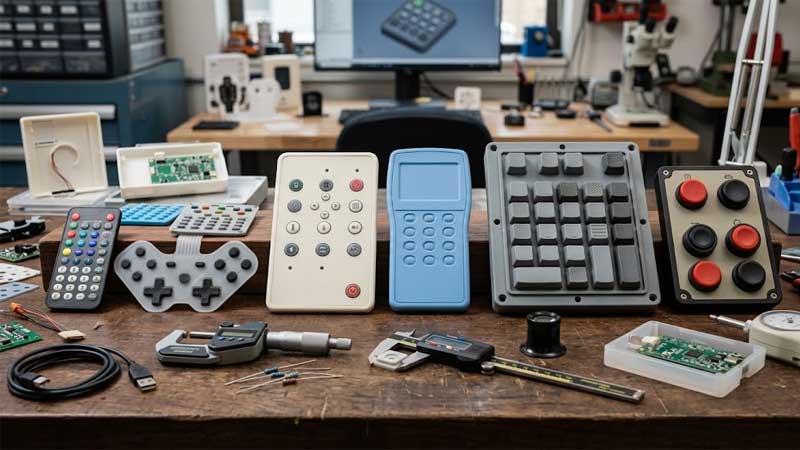
How to Select Actuation Force Based on Application
Medical Equipment: 80-150g
Medical equipment often requires frequent operation and clear user feedback without creating excessive finger fatigue. Operators may need to press buttons hundreds of times during daily use, so the keypad should provide a comfortable and predictable response.
A moderate actuation force between 80g and 150g is commonly selected for devices such as patient monitors, diagnostic instruments, and infusion equipment.
The design focus is usually:
- Comfortable repeated operation
- Clear tactile confirmation
- Stable force performance over product life
A force that is too low may cause unintended activation when users handle the equipment quickly. A force that is too high can reduce operating comfort, especially during long procedures.
SKF engineers evaluate the button size, web structure, and target force range during development to achieve the required balance between sensitivity and feedback.
Industrial Control Panels: 150-250g
Industrial equipment usually requires stronger tactile confirmation because operators may work in environments with vibration, gloves, or reduced attention during operation.
Applications such as CNC equipment, automation systems, and testing machines often use higher actuation forces to reduce accidental activation.
A stronger pressing response helps operators recognize that a command has been entered. However, excessive force may slow operation and increase hand fatigue during repeated use.
Industrial silicone keypads often require careful adjustment of:
- Silicone web thickness
- Button geometry
- Travel distance
- Tactile snap performance
SKF reviews these structural factors during the design stage to achieve the required operating force without affecting keypad durability.
Glove Operation: Higher Force Requirements
Equipment operated with gloves usually requires higher actuation force because gloves reduce finger sensitivity and make small tactile changes harder to recognize.
For outdoor equipment, industrial machines, and protective environments, engineers may increase the force level to provide clearer feedback.
However, higher force is not always better. A keypad that requires excessive pressure may reduce operating speed and cause operator fatigue.
The correct design approach is to create enough resistance for reliable operation while maintaining comfortable pressing performance.
Other factors, such as button size, key spacing, and tactile snap characteristics, also affect how easily operators can recognize input through gloves.
Portable Devices and Consumer Electronics: 50-100g
Portable devices and consumer products usually prioritize fast and comfortable operation. Users often expect keys to respond with light pressing effort and smooth movement.
Lower actuation force ranges are commonly used for:
- Remote controls
- Handheld equipment
- Small electronic devices
The challenge is preventing the keypad from feeling too sensitive. If the force is too low, users may accidentally activate keys while carrying or handling the device.
A well-designed silicone keypad combines low operating force with sufficient tactile feedback, allowing quick input without reducing user confidence.

What Factors Affect Silicone Keypad Actuation Force?
The same silicone material can produce different actuation forces depending on the keypad structure and design parameters. Engineers usually adjust several factors together rather than changing only one specification.
Key Geometry
The size and shape of the button directly influence pressing force.
A larger key usually distributes pressure over a wider area and may require different structural support compared with a small button. Key height, shape, and support structure also affect how the silicone material deforms during pressing.
During design review, SKF evaluates the button geometry to ensure the required force can be achieved without creating uneven response between keys.
Silicone Web Structure
The silicone web is one of the most important factors affecting keypad force performance.
Web thickness, angle, and diaphragm structure determine how the rubber material bends and collapses during pressing. A thinner web may reduce force, while a thicker or reinforced structure may increase resistance.
Small changes in web geometry can significantly affect:
- Peak force
- Snap feeling
- Return performance
- Long-term durability
SKF engineers adjust the web structure during tooling development to meet the target actuation force while maintaining reliable mechanical performance.
Silicone Hardness
Silicone hardness influences the overall resistance of the keypad material.
A harder silicone compound generally creates a firmer pressing feel, while softer silicone can provide a lighter response. However, material hardness alone does not define the final actuation force.
The relationship between hardness, geometry, and tactile structure must be considered together to achieve the required performance.
Travel Distance
Travel distance affects both operating feeling and force perception.
Short travel provides faster response and is often preferred for compact devices. Longer travel can create a stronger confirmation feeling and more noticeable key movement.
Engineers select travel distance together with actuation force to create the desired user experience.
Actuation Force vs Tactile Feedback: Finding the Right Balance
Higher actuation force does not always mean better keypad performance.
A well-designed silicone keypad needs a balance between pressing force, tactile snap, travel distance, and return force.
For example, medical equipment often benefits from moderate force with comfortable repeated operation. Industrial equipment may require higher force with stronger tactile confirmation to prevent accidental input.
The best specification depends on the equipment function and user expectations rather than simply choosing the highest possible force value.
A complete force analysis usually considers both actuation force and snap characteristics. Engineers can learn more about tactile performance in our Silicone Keypad Design Guide.
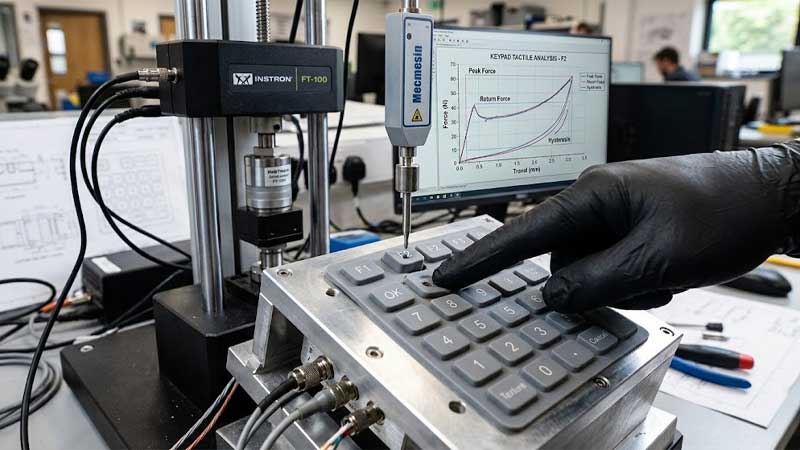
How SKF Engineers Optimize Silicone Keypad Force Performance
Actuation force is usually defined during the early design stage and verified through prototype testing.
SKF engineers review:
- Target actuation force
- Key dimensions
- Silicone web structure
- Material hardness
- PCB contact requirements
- Expected operating environment
During prototype development, force measurement helps confirm whether the keypad meets the required pressing performance. If the measured force differs from the target value, structural adjustments can be made before mass production.
This approach helps reduce tooling risks and improves consistency between prototype samples and final production parts.
SKF also evaluates related factors such as conductive contact reliability and long-term pressing durability to ensure the keypad performs consistently throughout its service life.
FAQ About Silicone Keypad Actuation Force
What is the normal actuation force for silicone keypads?
A common actuation force range for silicone keypads is around 80-150g, but the suitable value depends on the application. Industrial controls and glove-operated equipment often require higher force, while portable devices may use lower force.
Is higher actuation force better for silicone keypads?
No. Higher force can provide stronger confirmation, but excessive force may increase operator fatigue. The correct force depends on the equipment environment and user requirements.
What actuation force is suitable for medical equipment?
Medical equipment commonly uses around 80-150g actuation force because it provides clear feedback while supporting repeated operation.
How does silicone hardness affect keypad force?
Silicone hardness affects material resistance, but actuation force also depends on button geometry, web structure, travel distance, and overall keypad design.
Can SKF customize silicone keypad operating force?
Yes. SKF can adjust silicone keypad force performance through structural design optimization, material selection, tooling adjustment, and prototype validation to meet different application requirements.
Custom Silicone Keypad Force Design Support
Choosing the right actuation force requires more than selecting a number from a specification sheet. The final keypad performance depends on the relationship between structure, material, tactile response, and operating conditions.
SKF supports OEM projects from design review to production validation, helping customers develop silicone keypads with the required pressing feel and long-term reliability.
Contact SKF to discuss your target actuation force, keypad structure, and application requirements.