Undercuts can provide additional design options for silicone keypads, but their use requires careful consideration of function, material properties, and tooling requirements. This article explains how undercuts support silicone keypad designs and what engineers should consider before production.
What Are Undercuts in Silicone Keypad Design?
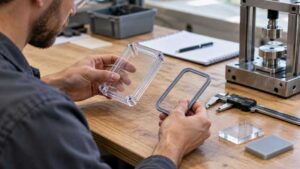
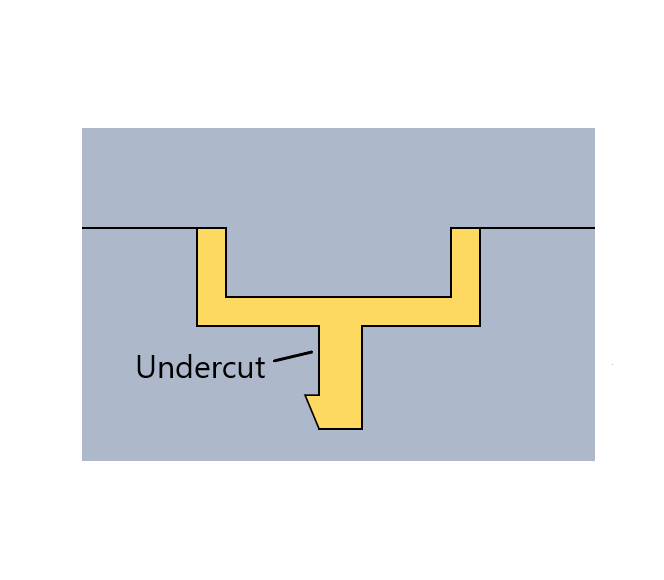
Undercuts are design features that cannot be removed from a mold by a simple straight pulling direction. These features extend into areas that would normally block the part from being released during demolding.
In silicone keypad designs, undercuts can include grooves, retaining edges, hooks, recessed areas, or other structures that help connect the silicone part with surrounding components. Unlike rigid materials, silicone rubber can temporarily deform during removal and return to its original shape after demolding.
This material behavior makes some undercut designs possible in silicone molding. However, silicone flexibility alone does not mean every undercut can be manufactured easily. The feasibility depends on the undercut geometry, silicone material selection, part structure, and mold design.
For example, a shallow groove used for positioning may be easier to manufacture than a deep internal feature that requires significant deformation during demolding. Complex structures may require additional tooling considerations or design adjustments before production.
For silicone keypad projects, undercuts should be considered as part of the overall product design rather than as an isolated molding feature. The best results come when the functional purpose of the undercut is clear and the molding requirements are reviewed early in the design process.
Why Are Undercuts Useful in Silicone Keypad Designs?
Undercuts are useful when they help integrate functions that would otherwise require additional components or assembly steps. The main benefit is not simply creating a more complex shape, but improving how the silicone keypad works with the complete product structure.
Integrating Mounting Features
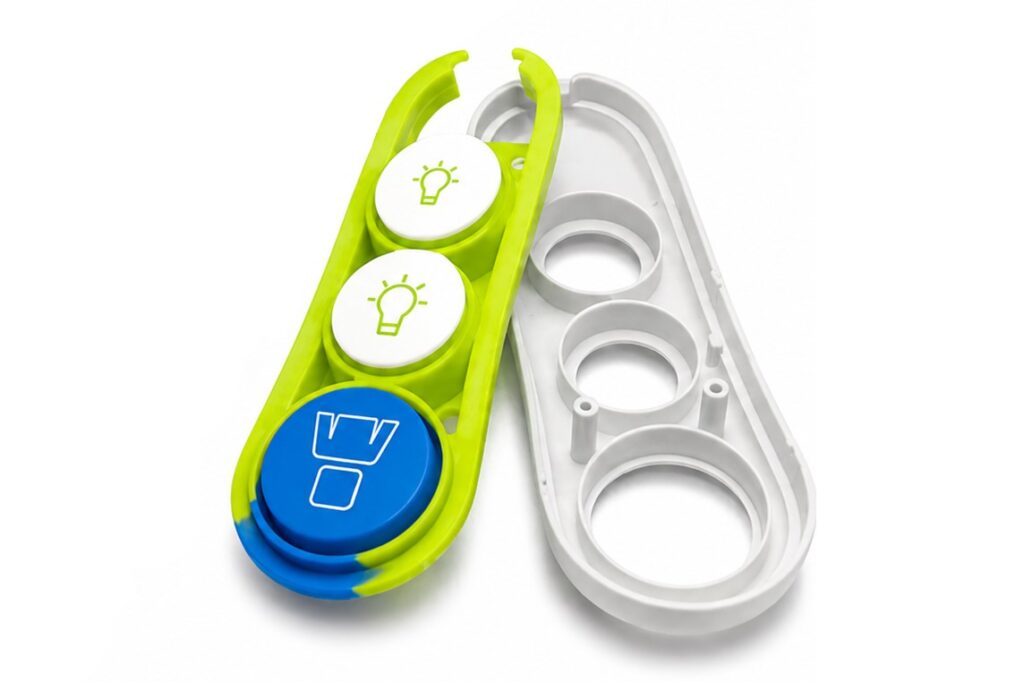
Silicone keypads often need to be positioned accurately relative to a PCB, housing, or other mechanical components. An undercut structure can provide additional retention or alignment features that help maintain the keypad position during assembly.
This approach can be useful when the design requires the silicone part to perform both user interface and mechanical support functions. However, the undercut should only be added when it provides a clear assembly benefit. If a simpler mounting method meets the product requirements, a simpler structure may be preferred.
Combining Sealing and Retention Functions
Undercuts can also support designs where the silicone keypad needs to interact closely with the product housing or surrounding components.
By integrating retaining features into the silicone structure, designers may reduce the number of separate interfaces between components. Fewer interfaces can simplify assembly and reduce potential gaps between parts.
The actual sealing performance still depends on the complete product design, including compression conditions, mating components, and environmental requirements. An undercut alone does not guarantee a specific sealing level.
How Can Undercuts Reduce Additional Assembly Components?
Undercuts can help simplify silicone keypad assemblies when they replace separate mechanical features. Instead of using additional brackets, retainers, or sealing parts, some functions can be integrated into the silicone component itself.
For example, a silicone keypad may need to stay aligned with a PCB or housing during assembly. A suitable undercut feature can help create a locating or retaining structure within the silicone part. This can reduce the number of separate components and make the assembly process more straightforward.
However, undercuts are not always the best way to reduce assembly complexity. A more complex silicone structure may increase tooling requirements or affect manufacturing feasibility. The decision should be based on the overall product design, including assembly requirements, production volume, and tooling considerations.
A good undercut design balances two factors:
- the additional function provided by the silicone part
- the manufacturing complexity required to produce that feature
For this reason, undercuts are most valuable when they solve a specific design challenge rather than being added only to create a more complex geometry.
How Do Undercuts Improve Environmental Protection for Silicone Keypads?
Undercuts can support environmental protection by allowing silicone keypads to integrate more closely with surrounding components. When the silicone structure provides both user input and mechanical interface functions, fewer separate joints may be required in the assembly.
This can be useful for products that operate in environments where the interface may be exposed to dust, cleaning processes, or regular user contact. Integrated silicone structures can help reduce additional assembly interfaces that may become design considerations during product development.
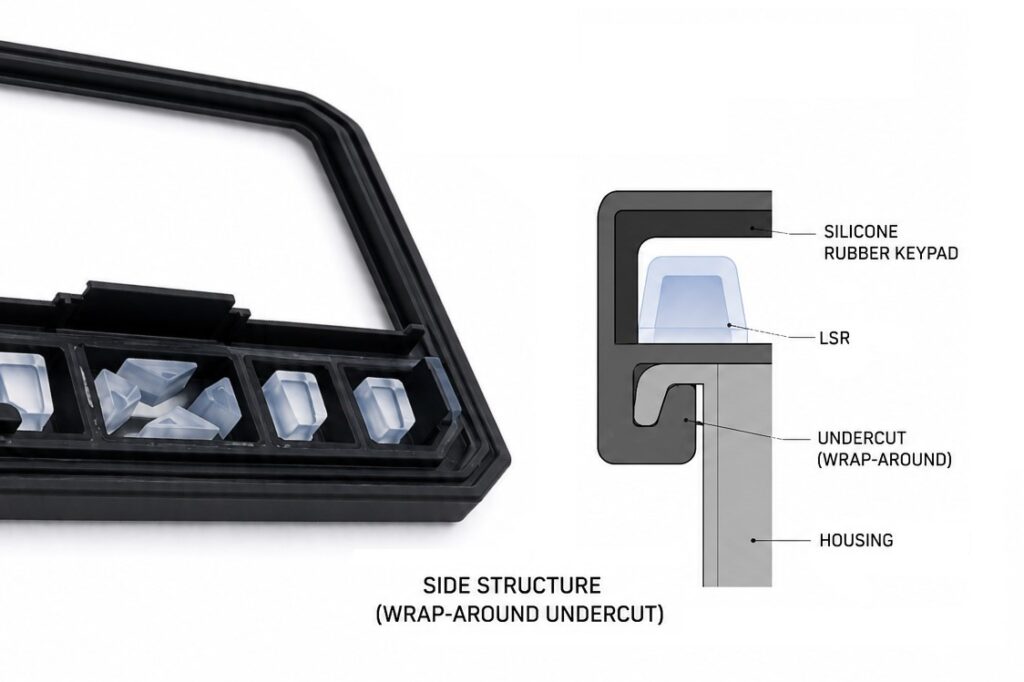
For example, an undercut design can help create a closer fit between a silicone keypad and a product housing. It may also support features that retain surrounding components, such as display windows or protective elements.
The actual environmental performance depends on the complete system design. Factors such as housing design, compression conditions, material selection, and assembly tolerance all affect the final result. Undercuts are one design option that can support these requirements, but they do not work independently.
What Types of Undercut Structures Can Be Used in Silicone Keypads?
Undercuts can take different forms depending on the function required in the final product. The right structure depends on the relationship between the silicone keypad, the housing, and other components.
External Undercuts
External undercuts are located on the outside surface of the silicone part. Common examples include grooves, retaining edges, and hook-like structures.
These designs are often used when the silicone keypad needs to connect with another component or maintain a specific position during assembly.
External undercuts are generally easier to evaluate because the feature is visible and accessible during tooling review. However, the shape and depth of the feature still need to be considered to ensure reliable demolding.
Internal Undercuts
Internal undercuts are located within enclosed areas or recessed sections of the silicone component. These structures can provide additional retention or functional features but may require more careful mold design.
Internal features can be more challenging because the tooling must provide a suitable method for removing the molded part without damaging the silicone.
When internal undercuts are required, engineers should review:
- the direction of demolding
- the amount of silicone deformation required
- the tooling approach needed for production
How Does Silicone Material Affect Undercut Design?
Silicone material selection has a direct influence on how undercut structures can be designed. A silicone compound that works well for one geometry may not be suitable for another structure with greater deformation requirements.
Silicone Hardness
Softer silicone materials generally allow more deformation during demolding. This can provide more flexibility when designing certain undercut features.
However, softer materials may provide less structural support in some applications. If the keypad requires stronger shape retention or a specific tactile response, the material choice needs to be evaluated together with the design.
Elastic Recovery
Silicone rubber can temporarily deform during demolding and recover its original shape afterward. This property allows some undercut structures to be released without additional mechanisms.
The effectiveness of this approach depends on:
- the amount of deformation required
- the geometry of the undercut
- the material properties of the silicone
Large deformation areas or sharp transitions may increase the risk of part damage or inconsistent production.
Tear Strength
Tear strength is another factor when evaluating complex undercut designs. Features that require silicone to stretch significantly during demolding need sufficient material strength to maintain part integrity.
A suitable design should avoid unnecessary stress concentration areas, especially around sharp corners or thin sections.
What Design Factors Should Be Considered Before Adding Undercuts?
Undercuts can provide useful functions in silicone keypad designs, but they should be evaluated during the early design stage. A feature that works well in a concept model may create manufacturing challenges if the molding requirements are not considered.
The main goal is to find a balance between functional requirements and production feasibility.
Undercut Geometry
The shape and size of an undercut directly affect mold release and part deformation during demolding.
Simpler geometries, such as shallow grooves or small retaining features, are usually easier to evaluate. Deeper or more complex undercuts may require additional tooling considerations.
Important design factors include:
- undercut depth
- feature shape
- transition areas
- corner design
Sharp transitions should be avoided when possible because they can create stress concentration during deformation. Rounded transitions usually provide better material flow and reduce stress during demolding.
Demolding Direction
The demolding method should be considered before finalizing the undercut structure.
A silicone part may be able to stretch over an undercut feature during removal, but the required deformation must remain within a reasonable range. If the part needs excessive stretching or complex movement during demolding, the tooling design may become more complicated.
For this reason, engineers should review the relationship between:
- undercut location
- mold opening direction
- part flexibility
- production requirements
Product Function Requirements
An undercut should support a specific product function.
For silicone keypads, the design may need to consider:
- tactile performance
- button movement
- PCB positioning
- housing integration
- sealing requirements
A structure that improves assembly may not always be suitable if it negatively affects button movement or user interaction.
The best designs consider both manufacturing and product performance at the same time.
Do Undercuts Increase Silicone Keypad Tooling Complexity?
Undercuts can increase tooling complexity, but the impact depends on the structure and the function they provide.
A simple undercut may be handled through careful mold design and silicone material selection. More complex structures may require additional tooling features or a different molding approach.
The reason is that the mold must allow the silicone part to be removed without damaging the undercut area. When the feature blocks normal release, engineers may need to consider alternative tooling solutions.
Possible approaches include:
- adjusting the parting line
- changing the undercut geometry
- using additional tooling features
- modifying the design for easier demolding
However, increased tooling consideration does not always mean undercuts should be avoided. In some applications, the benefits of integrating mounting, sealing, or retention functions can outweigh the additional design complexity.
The correct decision depends on the complete product requirement.
For example:
- If an undercut eliminates several separate assembly components, it may provide overall design advantages.
- If the same function can be achieved with a simpler structure, a simpler design may be more practical.
When Should Engineers Review Undercuts With a Silicone Keypad Manufacturer?
Undercut designs should be reviewed before tooling begins. Early discussion helps identify potential manufacturing issues while design changes are still easier to make.
During the design review stage, engineers should evaluate:
Functional Requirements
The manufacturer should understand why the undercut is needed.
Questions include:
- Is it used for mounting?
- Is it required for sealing?
- Does it replace another component?
- Does it affect user operation?
Understanding the purpose helps determine whether the structure is necessary.
Mold Feasibility
The tooling team should review:
- demolding direction
- part geometry
- tooling approach
- potential manufacturing challenges
This evaluation helps avoid situations where a design meets functional requirements but creates difficulties during production.
Production Considerations
Before tooling release, the design should also consider:
- dimensional requirements
- material selection
- assembly method
- expected production consistency
A design that is suitable for manufacturing usually considers these factors together rather than focusing only on the molded shape.
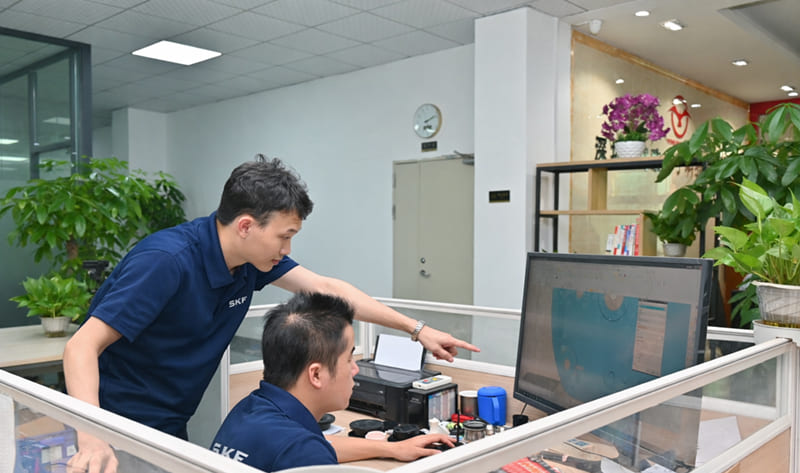
How Does SKF Evaluate Silicone Keypad Designs With Undercuts?
At SKF, undercut evaluation starts with understanding the function of the design rather than only reviewing the geometry.
The engineering review considers how the silicone keypad will work within the complete product assembly, including:
- user interaction requirements
- mounting method
- housing interface
- environmental conditions
- molding feasibility
During design review, SKF engineers evaluate whether the undercut provides a meaningful benefit and whether the structure can be manufactured consistently.
If adjustments are needed, recommendations may include:
- modifying feature geometry
- improving demolding conditions
- simplifying the tooling approach
- balancing product requirements with manufacturing considerations
This early engineering communication helps reduce unnecessary design changes after tooling development begins.
FAQs
Can silicone keypads be designed with undercuts?
Yes, silicone keypads can include undercut features when the material properties, part geometry, and tooling approach support the design.
The suitability depends on factors such as undercut shape, required deformation during demolding, and the function of the feature.
Are undercuts always recommended for silicone keypad designs?
No. Undercuts should be used when they provide a clear functional benefit, such as improving mounting, integration, or sealing design.
If a simpler structure can achieve the same result, avoiding an undercut may reduce tooling complexity.
Do undercuts affect silicone keypad tactile performance?
Undercuts can influence the surrounding silicone structure, including areas related to button movement and tactile response.
The effect depends on the location, size, and relationship between the undercut and the keypad web or button structure. These factors should be reviewed during design development.
Can undercuts improve silicone keypad sealing?
Undercuts can support integrated sealing structures by improving how silicone components connect with surrounding parts.
However, the final sealing performance depends on the complete assembly design, including material, compression, housing structure, and tolerance control.
Should undercut designs be reviewed before silicone keypad tooling?
Yes. Reviewing undercuts before tooling helps identify possible demolding and manufacturing issues while design changes are still easier to implement.
Early DFM discussion can help create a more practical balance between product function and manufacturing requirements.
Final Thoughts
Undercuts give silicone keypad designers more options for integrating mounting, sealing, and functional features into a single component. They can reduce additional assembly requirements and support more compact product designs when the structure is carefully planned.
However, successful undercut designs require a balance between material properties, geometry, tooling requirements, and product performance. Reviewing these factors early helps create designs that are both functional and manufacturable.
SKF engineers support silicone keypad projects from design evaluation through manufacturing, helping customers review complex structures and develop practical solutions before tooling begins.