To design a custom silicone keypad that meets your individual needs, it is essential to understand the physical properties of silicone rubber. These properties determine not only the mechanical strength of the keypad, but also the rebound during operation, reliability, touch and tactility, user experience, and suitability for heavy-duty applications.
Physical Properties of Silicone Rubber & Performance of Silionce Keypads
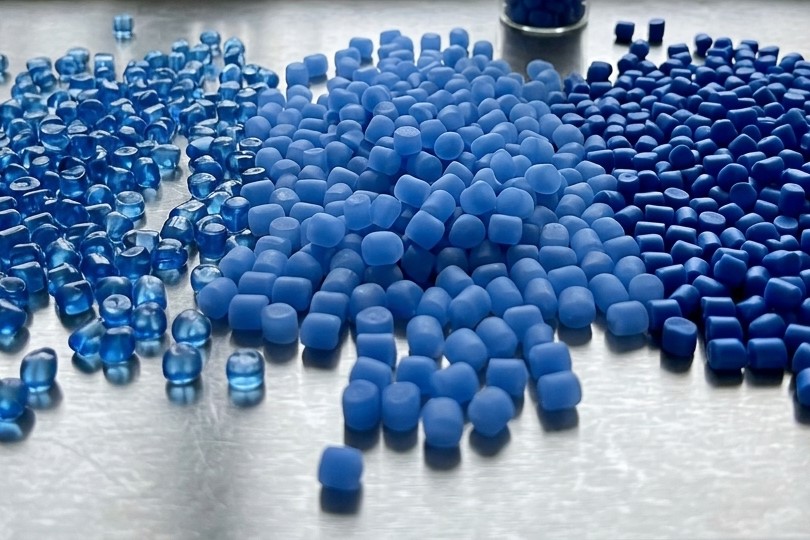
Physical Properties Parrameter of Silicone Rubber
| Physical Features | Silicone Rubber |
|---|---|
| Durometer Hardness | 30~90 Shore A |
| Compression Set | 10% (180℃/356℉ and 22hrs.) |
| Tensile Strength | 9.8 kN/m |
| Elongation at Break | >100% in conductor; >250% in insulator |
| Linear Shrinkage | 3~5% in conductor; 3~4.5% in insulator |
| Operation Temperature | -75 ℉ to 400 ℉ (-60 ℃ to 200 ℃) |
| Water Vapor Permeability | 15-51 |
| UL Flammability Rating | 94HB |
Despite its physical properties, silicone rubber has outstanding non-stick properties and high optical transparency for backlit icons or graphics on keytops. It is also impact-resistant.
Mechanical Characteristics in Silicone Keypads
There is a general specifications about mechanical characteristics of silicone rubber keypads:
| Mechanical Properties | Silicone Keypads |
|---|---|
| Travel Distance (Stroke) | 0.8~1.5 mm (0.031~0.059 inches) |
| Actuation Force | 60~300 g |
| Operating Temperature | -40~+302℉ (-40~+150 ℃) |
| Storage Temperature | -58~+338℉ (-50~+170 ℃) |
| Contact Bounce | <5MS |
| Contact Resistance | <200 Ohms |
| Insulation Breakdown | 26 V/mm |
Relationship between Physical Properties of Silicone Rubber & Performance of Silicone Keypads
Tensile Strength: Stiffness & Durability
Tensile strength refers to the maximum stress a material can withstand while stretching before breaking or permanently deforming. These properties ensure the structural integrity of silicone rubber.
The tensile strength of silicone rubber is generally about 9.8 kN/m. Optional high-strength types have 30-49 kN/m of tear strength via polymer modification, fillers, or crosslinking agents. This makes silicone optimal for common applications as well as those requiring high mechanical strength.
Compression Set: Rebound & Snap Ratio
Compression set refers to a material’s ability to rebound or recover its original shape when compressed. This property is important for high-performance rubber or plastic materials.
A higher compression set indicates that a material will rebound less effectively. For example, a compression set of 35% indicates that the material can rebound to 65% of its original thickness.
Although natural rubber has an excellent compression set, it is more difficult to integrate graphics printing, a backlit effect, a surface finish, and other customized performance features. Silicone rubber is the optimal material for silicone rubber keypads in user interfaces and electronics.
Excellent Mechanical Strength & Reliability Against Cyclic Presses
The mechanical strength of the silicone material, which is defined by its outstanding elongation at break and tensile strength, affects the lifecycle, stiffness, and reliability of the elastic and flexible web structure when pressing a silicone button. This is beneficial for molding a high-performance rubber keypad.
Superior High- & Cold-Temperature Resistance for Keypad Operation in Harsh Environments
The excellent thermal resistance of silicone rubber provides stable and normal performance for silicone keypads in outdoor, laboratory, mechanical manufacturing, and industrial settings where they are exposed to harsh environmental conditions.
Optional Hardness of Silicone Rubber for Desired Actuation Force
Hardness refers to a material’s resistance to surface deformation, which relates to actuation force for switch activation and snap ratio for rebound. A higher hardness level requires more force to press down a silicone button on a keypad.
How do improvements in the mechanical strength and performance of silicone keypads work?
Shapes & Sizes of Silicone Buttons: Relate to Mechanical Performance
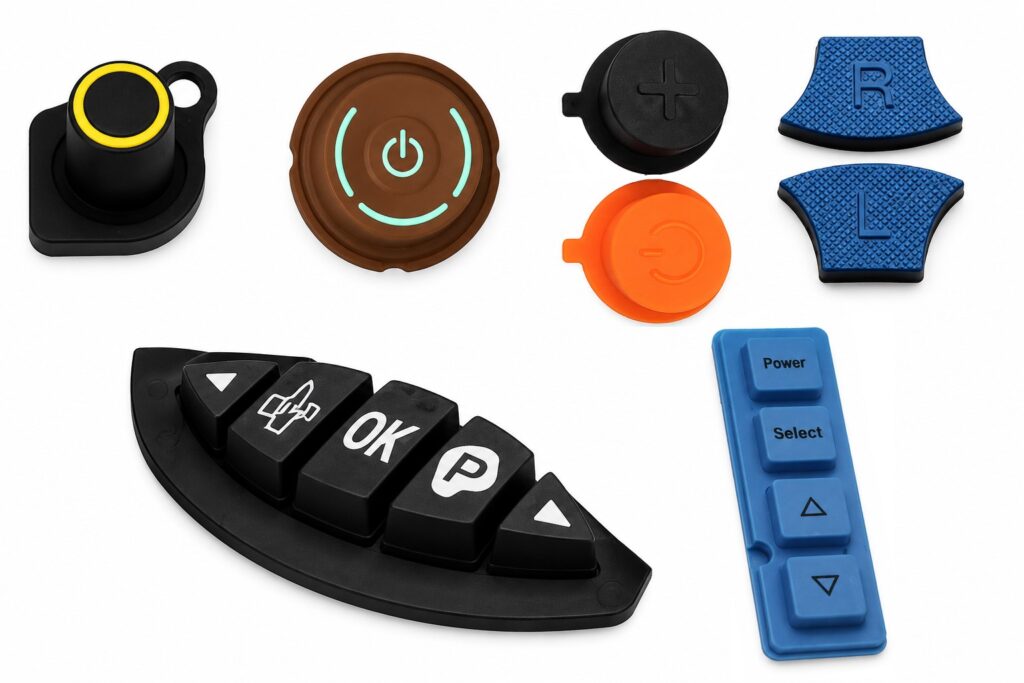
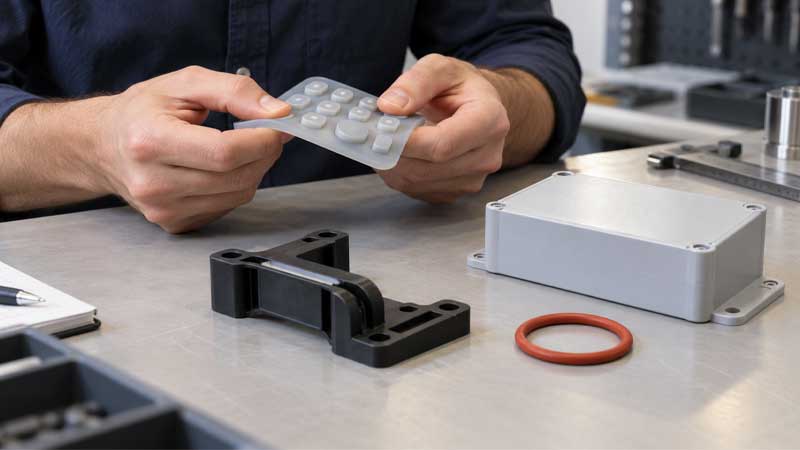
The shapes and sizes of the silicone buttons on silicone rubber keypads affect mechanical performance and the ultimate user experience compared to the key profile of keys. SKF offers soft-touch single keys, ribbed and concave surfaces on raised navigation clusters, embossed silicone buttons, and other custom keytop designs.
Despite the spacing and functional zones of the silicone buttons for better recognition, the flush or recessed keytop design impacts the enhanced user experience and tactile feedback of silicone keypads. Our precise web structure designs integrate raised and concave key areas with key profiles (referring to the thickness, length, and angle of the sidewall), offering the desired rebound effect from the elastic silicone rubber material.
Hardness Ajustment for Acutaion Force in Rubber Keypads
The table below shows the durometer hardnesses of silicone rubber keypads ranging from 40 to 70 Shore A. It also shows how these hardnesses affect elongation, tensile strength, compression set, tactility, applications, and the corresponding additional cost.
| Features | 40 Shore A | 50 Shore A | 60 Shore A | 70 Shore A |
|---|---|---|---|---|
| Elongation at Break | 742% | 645% | 504% | 450% |
| Tensile Strength | 1257 psi | 1583 psi | 1632 psi | 1450 psi |
| Compression Set | 25% | 18% | 20% | 57% |
| Tactility | Soft touch and keystroke | Balance between feedback and touch | Noticeable tactile response | Firm and rigid press |
| Applications | Medical equipment or consumer electronics with frequent use | Laboratory, common comsumer electronics, automotive, industrial settings | Industrial control panel, security & access user interface, ourdoor machinery, terminals | Heavy-duty, excellent strength and reliability requests |
| Additional Cost | Moderate cost | No | No | Relatively higher |
Moreover, 20-30 Shore A rubber keypads have a flexible and soft tactile feel, require low force, and are suitable for medical devices. However, they increase the cost of silicone materials due to longer curing times and tighter tolerances. In contrast, firm silicone rubber (referred to above as 70 Shore A) requires a longer curing process, complex mixing, and extra additives.
A middle ground is found in medium-hardness silicone rubber (50-60 Shore A), which balances outstanding mechanical strength, curing time, ease of demolding, and cost-effectiveness.
More information about the hardness of silicone rubber keypads and its relation to performance and lifecycle can be found in SKF. Additionally, dual durometer rubber keypads can be offered to support ergonomics and the desired user experience. These keypads have specific key layouts and desired actuation forces in specific areas for functionality zones.
Improved Tensile & Tear Strength: Heavy-Duty Rubber Keypads
The tensile and tear strength of silicone material is utilized for silicone rubber keypad production to provide highly improved mechanical strength against pulling, stretching, and mechanical stress. This is achieved through a reliable web structure during repeated and cyclic presses. These high-performance keypads are optimal for heavy-duty machinery control panels, industrial controllers, military equipment, and construction gear.
How to detect Physical Properties of Silicone Rubber Keypads?
To ensure quality control and optimal performance, silicone rubber keypads must undergo a series of tests to measure and evaluate their life cycle, actuation force, snap force, abrasion resistance, dimensional tolerance, and tensile strength. Environmental simulation chamber testing evaluates the physical properties and performance of silicone keypads.
FAQs
Is material specification absolute in actual operation?
Material specification isn’t absolute and is measured under ideal environmental conditions. However, these specs still show values as a reference during silicone keypad design and production.
What is the difference between carbon conductors and silicone insulators in the physical properties of silicone rubber?
“Carbon conductor” refers to electrically conductive silicone, whereas standard silicone acts as a silicone insulator.
How is the compression set of a silicone keypad measured?
Typically based on ISO 815 and ASTM D395 standards, the compression set of silicone keypads is measured by compressing the keypad to a specified percentage of its original thickness and then exposing it to an elevated temperature for a period of time. And release it and measure the final thickness.
What is the ideal Shore A hardness for a silicone keypad?
40~60 shore silicone rubber keypads offer reliability and rapid tactile response.
How do silicone keypads perform against environmental factors like moisture, dust, and chemicals?
Silicone rubber is inherently waterproof and creates watertight protection for internal sensitive circuitry, achieving IP65 to IP68. Besides, stain-resistant silicone material protects your user interfaces from damages and the influence of dust and chemical corrosion.
Final Thoughts
The excellent physical properties of silicone rubber optimize the performance of silicone rubber keypads. These properties balance hardness, tensile strength, tear strength, and compression set and provide environmental resistance in harsh conditions. SKF offers high-performance, custom rubber keypads for your project.