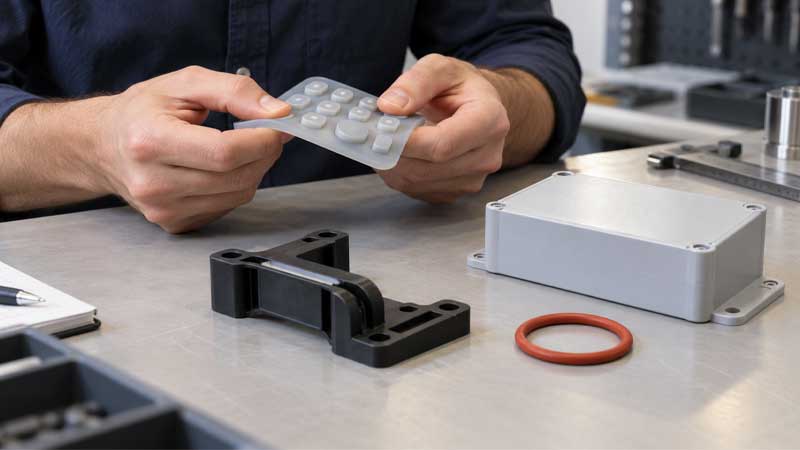
Screen-printed silicone keypads provide durable legends, unlimited color options of patterns, high precision, design flexibility, and a cost-effective solution for your silicone keypad project.
The following content explains the screen printing procedures used in silicone keypad manufacturing, the advantages of this method, and how to troubleshoot. This information will support your silicone keypad design and production.
What Is the Screen Printing Technique?
Screen printing uses stencils, special inks, squeegees, tape, screens, mesh, and emulsion to create characters, logos, symbols, and images on substances by forcing thick ink through screens to make prints on surfaces.
This technique is widely used for printing on cloth and silicone products, such as silicone keypads with durable graphic legends in bright colors. Due to the low surface energy of silicone, special silicone-based inks are used in screen printing to create more durable legends and colors. This improves the appearance and design flexibility for customization and the user experience.
The screen printing process can be manual or automated with squeegees that use a rubber blade to push ink through the screen. Additionally, the screen and mesh are essential components of the printing process, providing the physical framework to hold your designs and allowing ink to pass through the mesh.
How to print Legends on the Silicone Keypads by the Screen Printing Technique?
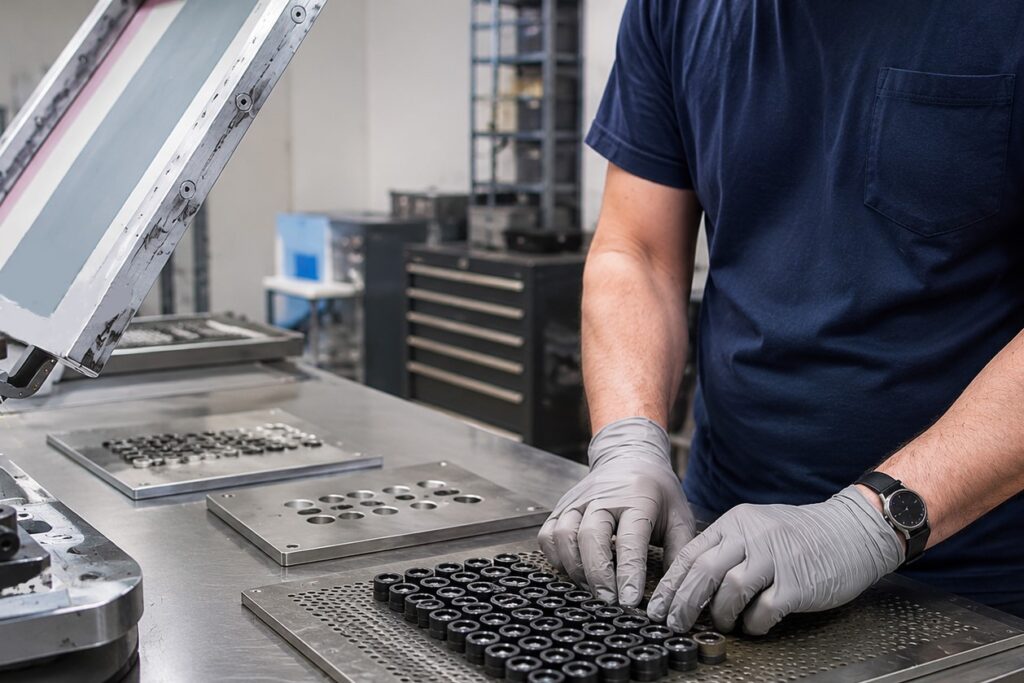
Creation of Film Positives with Your Desired Legends or Symbols
Prior to printing, film positives are created. Information about the desired colors, legends, graphics, size, typeface, and positions should be provided in advance.
Your legends or design symbols will be placed on the mesh as black portions that block light. Light-sensitive emulsion is then applied, which hardens under UV light and becomes waterproof.
Coating and Drying the Screen
By pulling and pressing a squeegee across the screen, the mesh will hold the image to the screen while allowing ink to pass through.
Exposure of the Image onto a Screen
After coating and drying, place the screen with an aligned film positive and expose it to a light bulb. The hardened parts are coated with emulsion and become waterproof, while the washable positive parts do not contact the light.
Stencil & Water Rinsing
Once rinsed with water, the portions of the mesh without emulsion wash away, leaving open holes that match the stencil design.
Legends Printing on the Silicone Keypads
Next, it goes to the printing stage. The top of the screen is set on the printing board and covered with the necessary colored silicone ink. Our operator spreads the ink along the screen’s length using a squeegee. The ink then transfers to the underlying silk by pressing through the stencil’s open sections. Then, the legends are printed on the keytop of your silicone keypad.
Prior to the next cycle of the screen printing process, a special washing fluid is used to remove the hardened ink from the mesh.
Benefits of Screen Printing for Silicone Keypads
Durable Legends Withstanding Repeated Presses
Silicone keypads act as physical buttons in electronics and user interfaces, withstanding repeated and cyclic presses from fingers. However, this mechanical wear can affect the clarity and integrity of the legends over time, especially if the legends have poor adhesion with the keytops.
Available on the Concave or Convex Keytops of Silicone Keypads
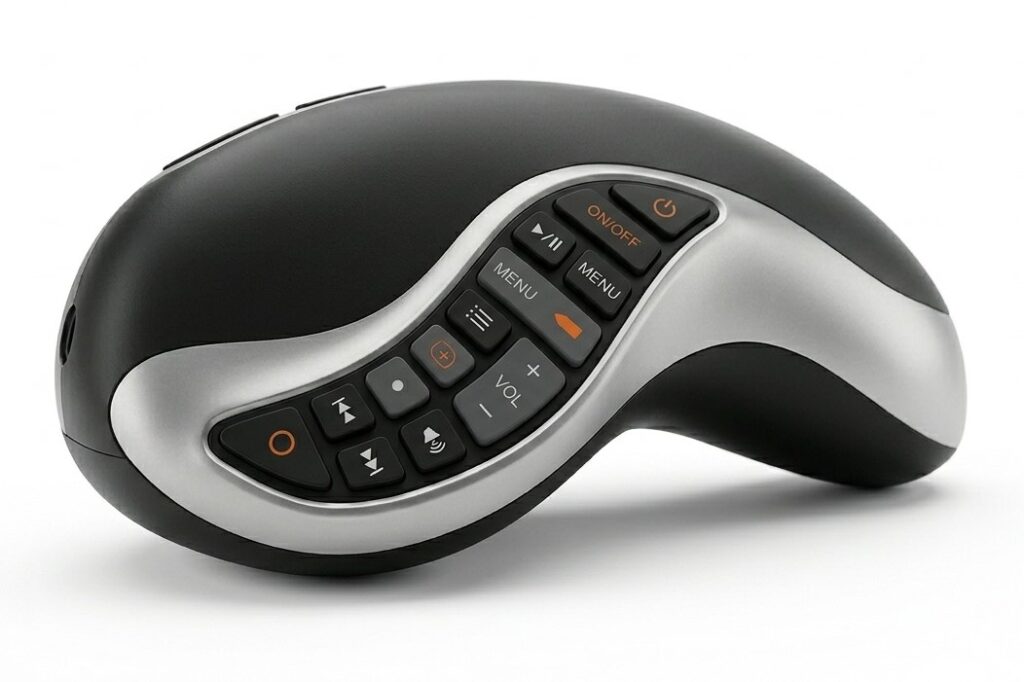
Tough screen printing is optimal for printing legends on flat surfaces, such as standard silicone keypads, and can also handle slightly curved keytops.
To ensure better adhesion and graphic quality of legends on silicone keypads, the maximum depth or height of the concave or convex keytops is 0.06 inches (1.524 mm).
Cost-Effective Screen Printing in High-Volume Production of Silicone Keypads
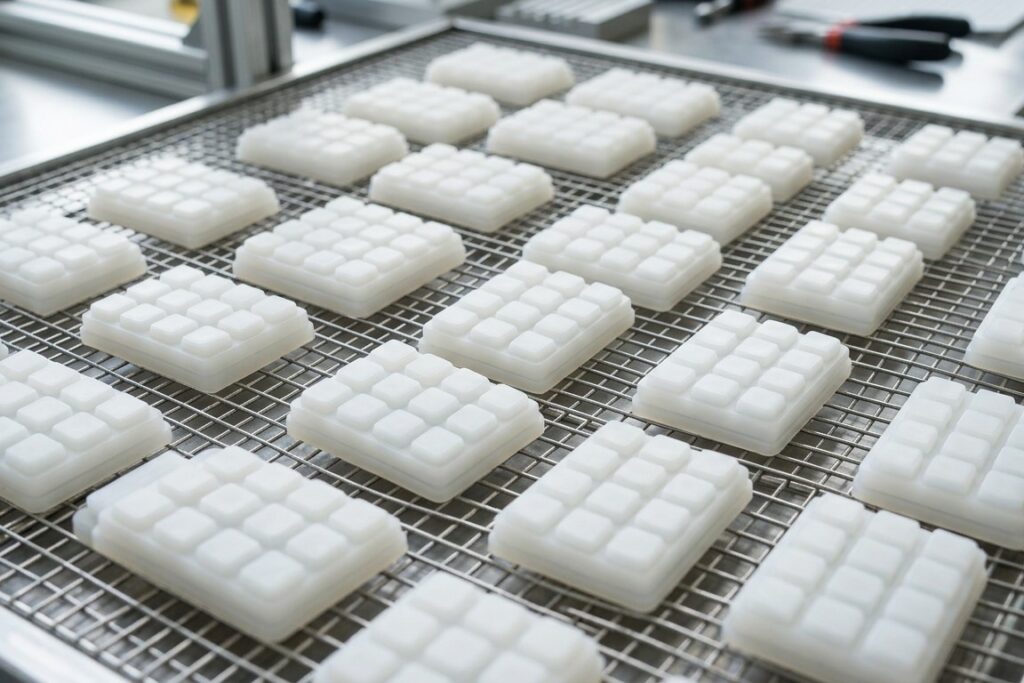
When selecting a printing technique for silicone keypads, consider the shape and number of colors.
Screen printing is more cost-effective for printing graphics on silicone keypads in high volumes. Screen-printed silicone keypads do not require a multi-layer coating in laser etching to create contrast. Additionally, this technique prints legends directly onto rubber keypads with pressure, which is efficient for simple legends, one of the features of legends on keypads.
In contrast, laser etching and complex patterns with precise details are unnecessary for silicone keypad graphics.
Pad printing and laser etching are suitable for single-color logos or patterns in low-volume production. However, they are less productive for printing legends on silicone keypads, which require higher color consistency across many keys.
Toubleshooting in Screen Printing for Silicone Keypads
The screen stuck with heated inks: pressure monitoring and extra consumables for issues.
When it comes to the large-volume production of your silicone keypads, the consistency of the printed legends may be affected by heated inks due to the friction of the squeegees moving at high speeds, as well as by thicker inks that get stuck in the screen.
SKF has relevant experience with this issue and can ensure the clarity and precision of printing legends on your silicone keypads. We focus on ink consistency, pulling pressure, thorough screen cleaning after each print, and extra screen wash solutions. Screens are always ready. Furthermore, according to the sizes and shapes of the legends and keytops of the silicone keypads, we select appropriate mesh counts and ink types to eliminate this issue.
Productivity of Legends Printing with different detail requirements
The boldness of your design depends on how coarse the screen mesh is. For large patterns with few details, a 150 mesh screen is sufficient. However, for legends with fine lines and small characters, a 305 or 310 mesh screen is necessary.
For designs with different detail requirements, creating templates can accelerate printing with excellent consistency and productivity, especially in large-scale production.
Inconsistancy of Legends Printing
Inconsistent legends on silicone keypad keytops may result from uneven squeegee pressure, decreased screen tension over time, or incorrect contact height.
SKF is committed to addressing these potential issues in graphics printing for silicone keypads by adjusting the squeegee angle and pulling pressure and regularly checking for uneven mesh and keytop surface conditions. Our strict standards and quality control ensure the quality of graphics printing in silicone keypad manufacturing.
FAQs
Can you only print legends in the center of the keytop?
No, we can also print solid colors up to the edge of a flat keytop on your silicone keypad.
What is the minimum size for printed legends on silicone keypads?
The minimum line width for a legend is 0.01 inches (0.254 mm), and the text height should be at least 0.05 inches (1.27 mm). This ensures the quality of the legends printed on your silicone keypad.
Can I get custom screen-printed silicone keypads with a backlighting effect?
Laser etching is more recommended. More information about laser-etched silicone keypads and differences between them and screen printing can be found here.
Can I custom screen-print silicone keycaps with the desired surface finish?
Certainly. You can choose glossy, matte, PU, epoxy, or antimicrobial coatings for your silicone keypad project.
Is it possible to print high-resolution graphics on screen-printed silicone keypads?
Yes. Using specific inks and high-mesh-count screens, we can print high-resolution graphics on silicone keypads.
Conclusion
The graphics printing method for silicone keypads depends on various factors, such as durability, productivity, color complexity, and the number and shade of colors in the legends.
Screen printing is optimal for bulk silicone keypads with simple designs and multiple bright colors. It is also cost-effective and durable.
For more information about graphics printing for silicone keypads, please contact our engineering team at SKF.