
Manufacturing custom silicone keypads since 2012

POS Machine & Terminal Silicone Keypad Manufacturer

Silicone keypads for POS machines, payment terminals, PIN pads and handheld terminals. Custom key geometry, tactile force, conductive contacts, backlighting, legends and sealing features for reliable daily operation.

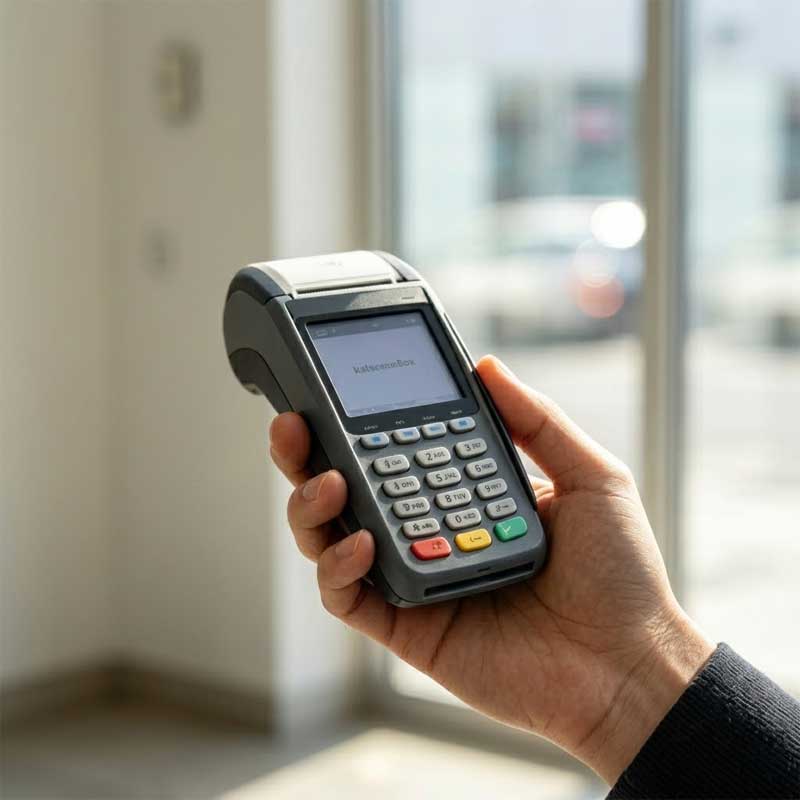
A hand holding a POS machine with silicone keypads set against a softly blurred bright background

What Are POS Machine & Terminal Silicone Keypads?

POS machine and terminal silicone keypads are flexible rubber key interfaces that provide tactile input and electrical contact for point-of-sale systems, payment terminals, PIN pads and other transaction equipment. A custom POS silicone keypad is developed around your terminal housing, PCB contact layout, key positions, required actuation force, legend system, backlighting and environmental requirements.

These keypads combine the tactile structure of molded silicone with conductive contact elements that close the circuit when each key is pressed. The silicone body can also support molded keycaps, printed legends, laser-etched graphics, translucent windows and sealing features around the keys.

SKF manufactures custom silicone keypads for POS machines and terminals in China, supporting OEM and ODM projects from engineering review and tooling through sampling, production, inspection and packaging. Our engineering team reviews the keypad together with the PCB, housing and user interface rather than treating the rubber sheet as an isolated component.

POS Machine & Terminal Silicone Keypad Manufacturing at a Glance

MOQ

Production quantities start from 500 pieces for suitable existing tooling or repeat configurations. New custom tooling projects are normally planned from 3,000 pieces, depending on keypad structure, tooling investment and customization requirements.

Lead Times

Initial samples can be developed in 5–10 working days after design information is confirmed. Custom tooling generally requires 10–20 working days, followed by mass production in 15–25 working days after sample approval.

Tactile & Electrical Performance

Key force, travel, snap ratio, return force and conductive pill position are tuned to the terminal interface. Common silicone keypad hardness ranges from 40–70 Shore A, with the final compound selected according to structure and operating requirements.

Graphics & Backlighting

Key legends can use screen printing, pad printing or laser etching. Translucent silicone, clear windows and controlled light paths can be incorporated when illuminated keys or night-use visibility are required.

Who We Manufacture POS Machine & Terminal Silicone Keypads For

POS equipment places different demands on keypads depending on how the terminal is installed, cleaned and operated. The keypad structure is therefore matched to the terminal type and user interaction.

A customer uses a silicone keypad on a black countertop POS terminal to enter details during a retail transaction

Countertop POS Terminal Brands

Countertop POS systems often use dedicated numeric or function key layouts for cashiers and staff. We develop keypads around the housing, PCB and display interface, with tactile force selected for frequent repetitive operation. Large legends, stable keycaps and defined tactile feedback help operators distinguish functions quickly during transactions.
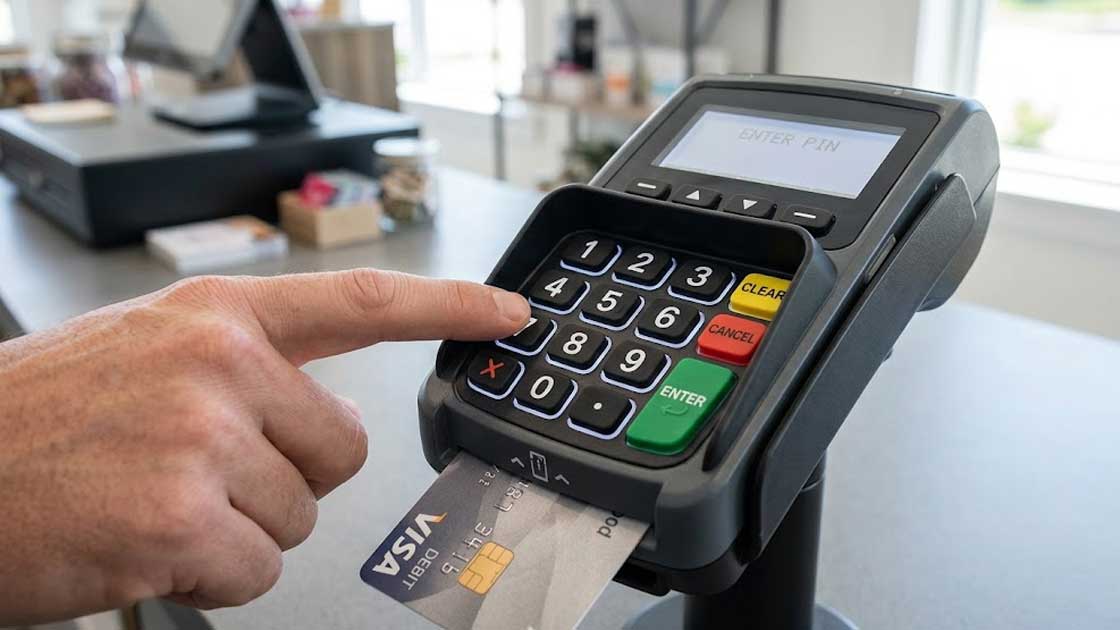
A customer enters a security code on a payment terminal silicone keypad with high contrast numeric buttons

PIN Pad & Card Reader Manufacturers

PIN pads place greater emphasis on clear numeric identification, tactile feedback and controlled key spacing. The keypad can use molded or printed numerals, high-contrast legends and optional backlighting. The surrounding silicone structure can also be designed to reduce the chance of debris entering around the key interface.

A hand presses a silicone key on a payment terminal while a credit card is inserted into the card reader

Payment Terminal Manufacturers

Payment terminals need compact interfaces with consistent key response across the entire keypad. Silicone keypads can integrate numeric keys, navigation keys, confirmation keys and function buttons into one molded structure. Conductive pill positioning is matched to the PCB contact points to maintain reliable electrical switching throughout the keypad.
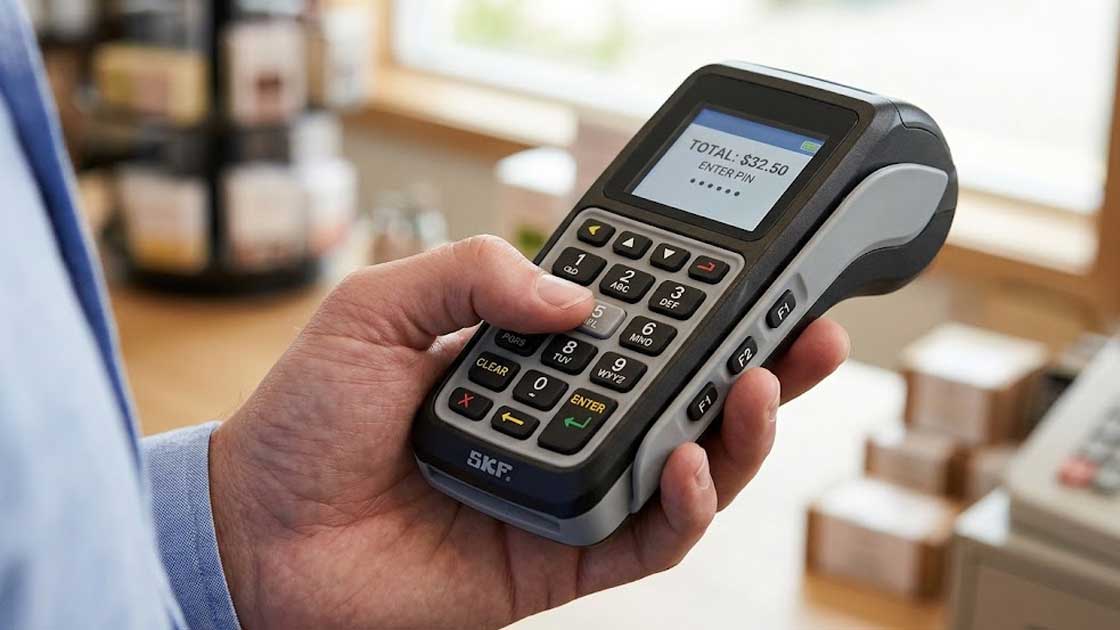
A user holds a compact handheld POS terminal and operates its custom silicone keypad with side auxiliary buttons

Handheld POS Terminal Brands

Portable POS terminals need compact keypads that fit limited enclosure space without sacrificing tactile response. SKF can adjust key height, key pitch, web geometry and overall keypad thickness to fit handheld housings. The design can also accommodate side-mounted or auxiliary buttons where the PCB layout requires additional controls.
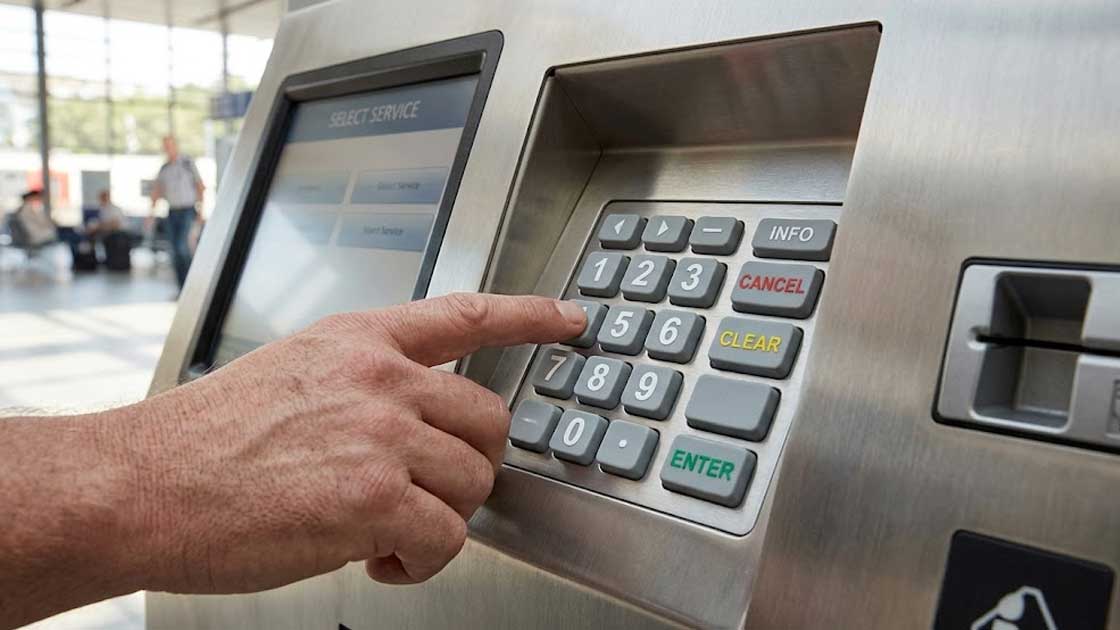
A person uses a durable silicone keypad built into a stainless steel self service kiosk terminal

Self-Service & Kiosk Equipment Manufacturers

Self-service terminals may operate in public environments where users have different pressing habits.Keypads for these systems can use durable legends, reinforced key structures and surface treatments selected for repeated cleaning and frequent public use. The housing interface is reviewed to reduce exposed gaps around the keypad.
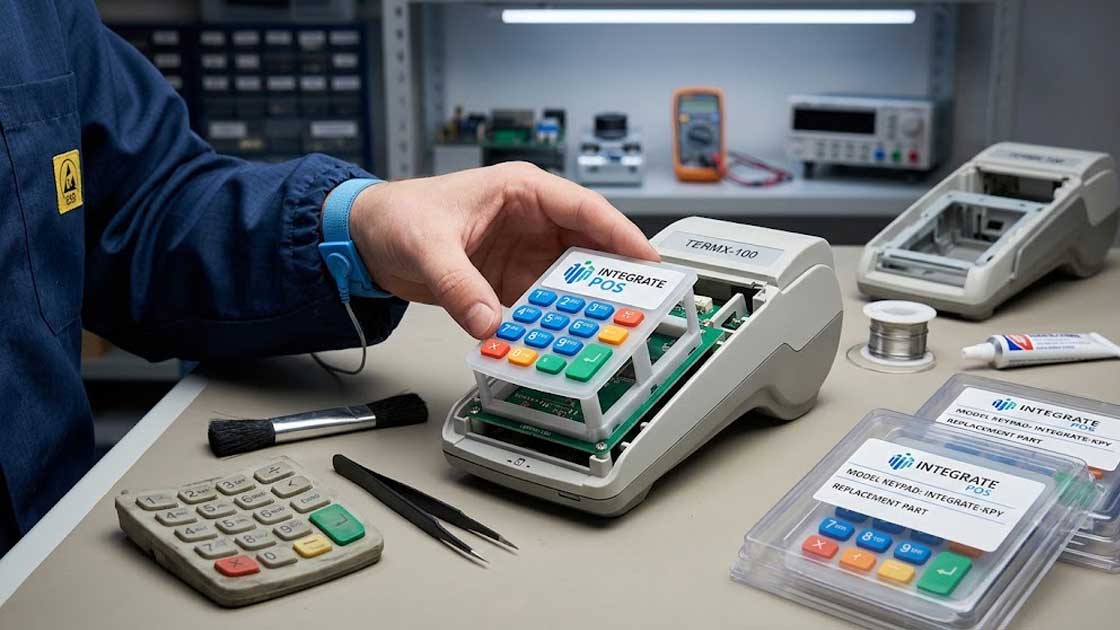
An technician installs a custom replacement silicone keypad into an opened POS terminal housing on a workbench

POS Equipment Distributors & OEM Integrators

Distributors and system integrators may need replacement or private-label keypad components for existing terminal platforms. Existing keypad structures can be reviewed first to determine whether tooling modification or complete new tooling is required. Branding, color, legends and packaging can then be matched to the required terminal model.
POS Machine & Terminal Silicone Keypad Types We Can Develop

POS Machine & Terminal Silicone Keypad Customization

POS keypad customization starts with the terminal interface, then moves into tactile response, graphics, materials and production details.

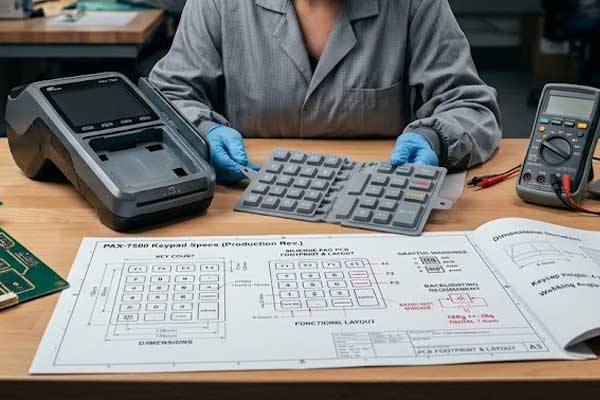
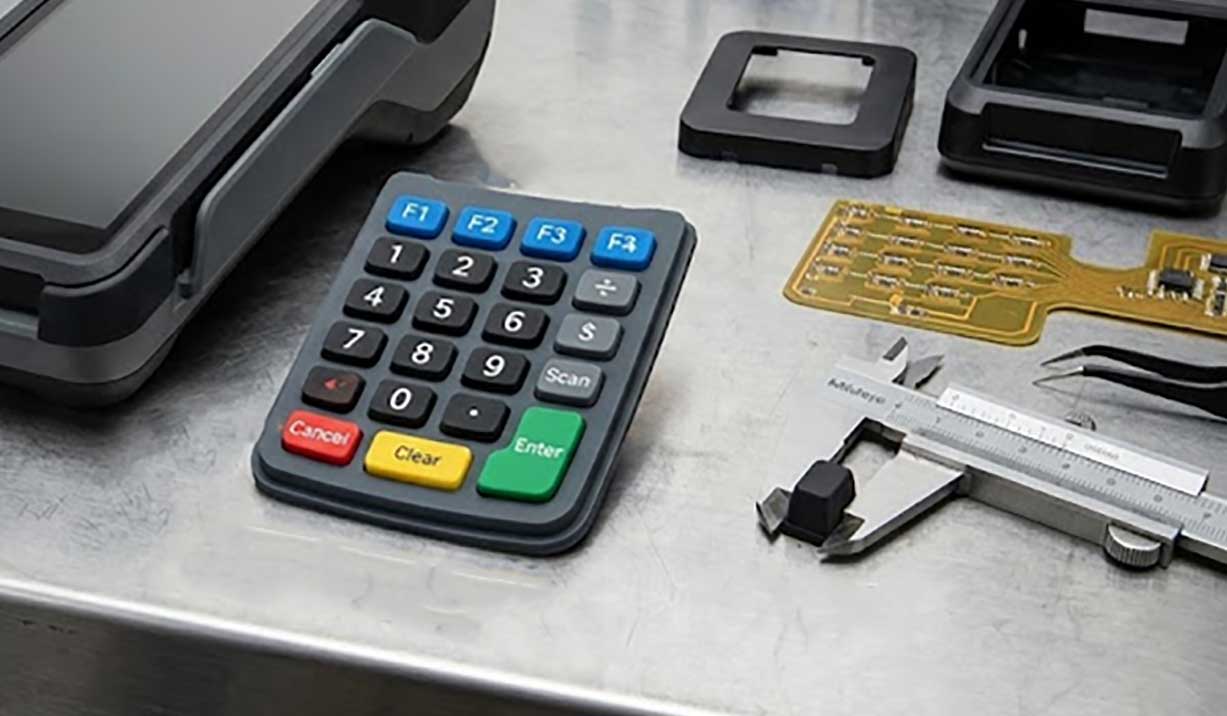
A realistic workstation showing a custom silicone POS keypad alongside a disassembled terminal internal PCB caliper and technical blueprint 1

The keypad dimensions must fit the terminal housing and PCB without creating interference during assembly. Key pitch, key height and overall sheet thickness affect both user comfort and the available space inside the terminal.

Available options include:

  • Custom overall keypad dimensions
  • Numeric and function key layouts
  • Key pitch adjustment
  • Keycap height
  • Keycap shape
  • Web thickness
  • Key spacing
  • Mounting features
  • Housing-compatible perimeter geometry
  • PCB-aligned conductive pill positions

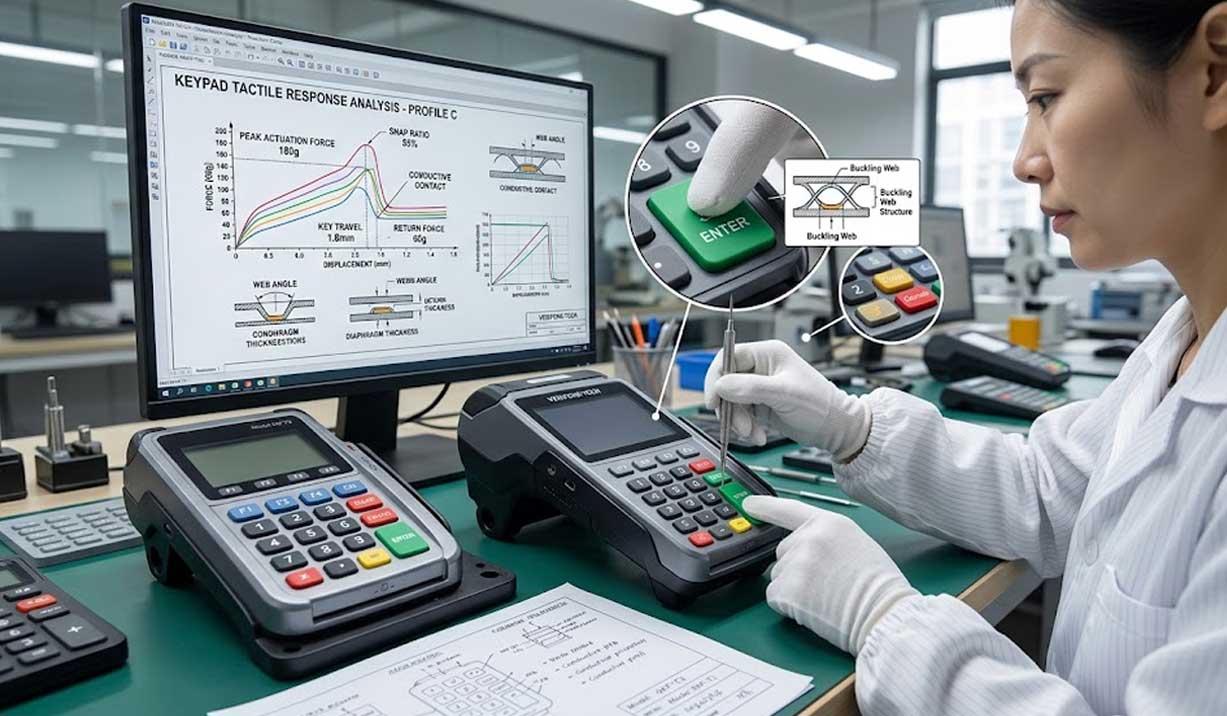
An engineer testing silicone POS keypad tactile response next to a monitor displaying actuation force curves and cross section web diagrams

Tactile response determines how clearly users recognize each key activation. POS terminals often receive repeated presses during every transaction, so force and travel need to remain comfortable while still providing clear confirmation.

SKF adjusts the silicone web structure to control actuation force, snap ratio and return behavior. The design review considers the peak force required to collapse the web, the force at conductive contact and the mechanical travel between those points.

Available options include:

  • Actuation force
  • Key travel
  • Snap ratio
  • Return force
  • Webbing angle
  • Diaphragm thickness profile
  • Buckling radius
  • Conductive pill position
  • Keycap height
  • Different tactile responses for selected keys

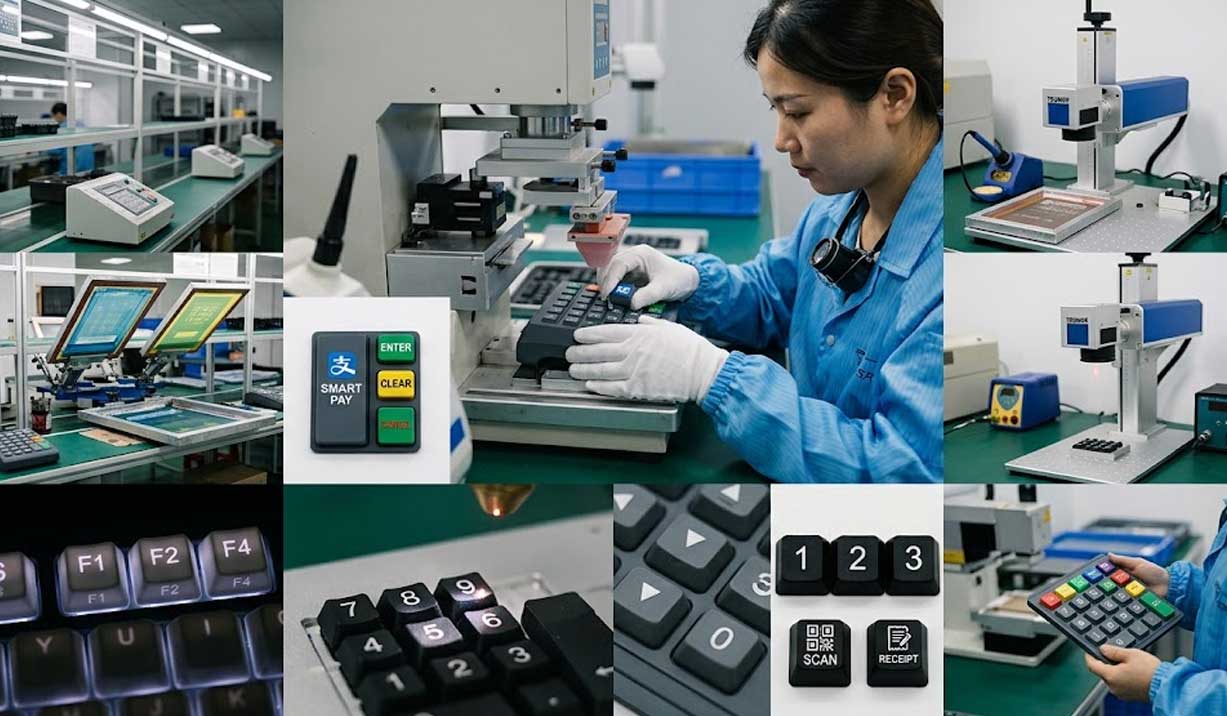
A collage showing workers screen printing pad printing and laser etching customized graphics on silicone POS keypads

POS key legends must remain readable after repeated pressing and cleaning. The graphic method depends on the legend size, surface geometry, color combination and durability requirement.

Available options include:

  • Screen-printed legends
  • Pad-printed graphics
  • Laser-etched legends
  • Molded keycap symbols
  • Multiple graphic colors
  • High-contrast legends
  • Translucent graphics
  • Backlight windows
  • Custom symbols
  • Brand colors

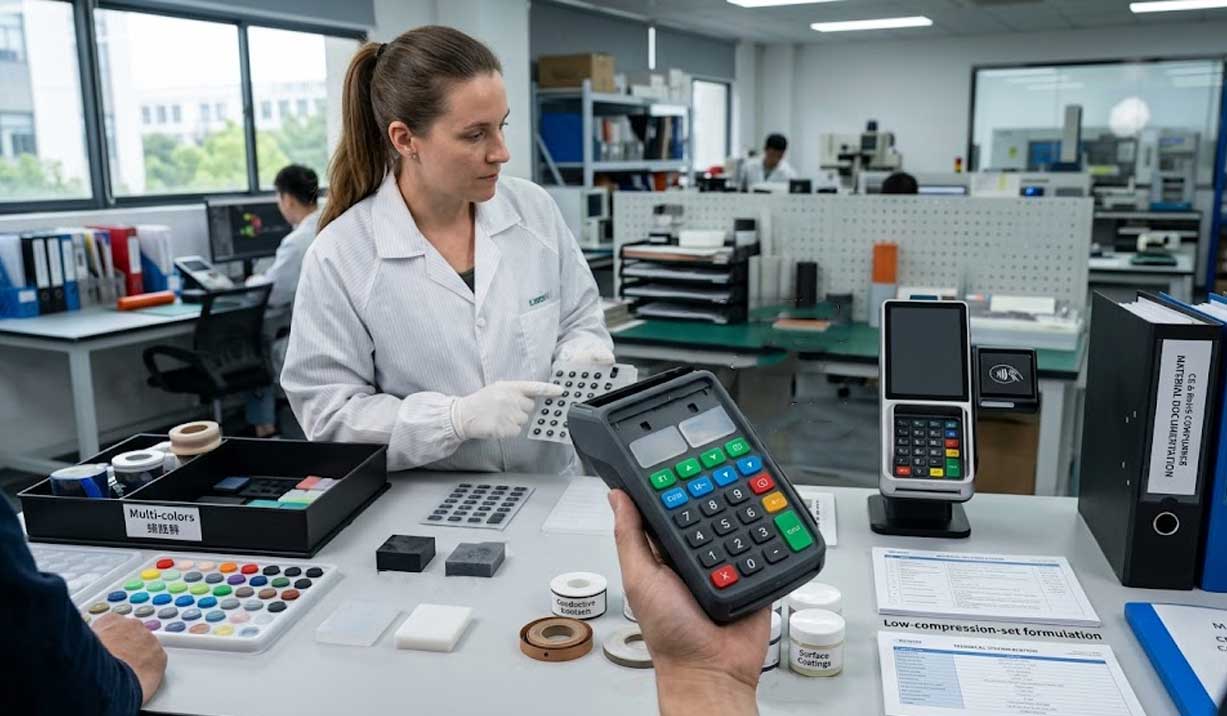
A lab technician holding a POS terminal silicone keypad next to silicone raw material samples hardness blocks and compliance files

Material selection affects tactile response, durability, temperature performance and compatibility with the surrounding terminal construction.

Available options include:

  • Different silicone hardness grades
  • Opaque silicone
  • Translucent silicone
  • Colored silicone
  • Conductive carbon pills
  • Alternative conductive contacts
  • Surface coatings where required
  • Low-compression-set formulations
  • Material documentation for the target market

Start Your Custom POS Silicone Keypad Project

Send your terminal drawing, keypad dimensions, PCB contact layout, target quantity and reference sample if available. SKF can review the key structure, conductive contact design, tactile response, graphics and assembly interface before tooling.

How to Specify a Better POS Machine & Terminal Silicone Keypad

A reliable POS keypad starts with the complete human-machine interface, not only the silicone material. These specifications have the greatest effect on performance:

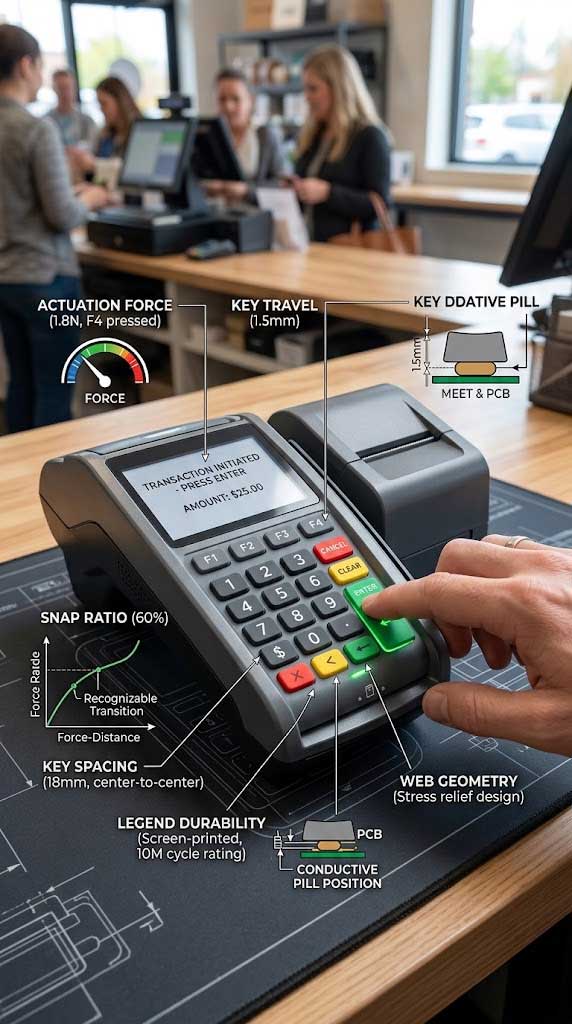
  • Actuation force — selected for the expected pressing frequency and user group.
  • Key travel — enough movement to provide clear tactile feedback without excessive vertical movement.
  • Snap ratio — balanced to create a recognizable transition from loading to activation.
  • Conductive pill position — aligned accurately with the PCB contact center.
  • Key spacing — sufficient to support accurate operation without making the terminal unnecessarily large.
  • Legend durability — matched to repeated pressing and cleaning requirements.
  • Web geometry — designed to avoid excessive stress concentration around frequently used keys.
  • Housing interface — checked to prevent interference during assembly.

A high actuation force does not automatically create better tactile feedback. The peak force, collapse behavior, contact point and return force need to work together.

One practical manufacturing issue appears when the conductive pill is positioned correctly on the drawing but the web structure shifts the key during compression. The pill can then approach the PCB contact at an angle or off-center. SKF checks the mechanical structure and contact position together during design review.

Full specification guide

How to Specify a Better POS Silicone Keypad — covering actuation force, travel, snap ratio, conductive pill design, key spacing, graphics and housing integration.

A user pressing a POS terminal silicone keypad on a counter with technical overlay callouts detailing tactile feedback specifications

POS Machine & Terminal Silicone Keypad Logo and Branding Methods

POS keypads need more than attractive graphics. The legend method must survive repeated finger contact, cleaning and normal terminal use while remaining aligned with the key geometry.

Screen Printing

Suitable for clear, high-contrast legends and multi-color graphics on compatible silicone surfaces.

Pad Printing

Useful for small symbols, characters and graphics on curved or recessed key surfaces where conventional screen printing is difficult.

Laser Etching

Removes selected surface layers to create durable legends and symbols. Laser parameters are adjusted according to the silicone compound, surface treatment and required contrast.

Translucent Backlit Graphics

Translucent silicone and controlled graphic windows allow selected numerals or symbols to transmit light while surrounding areas remain visually controlled.

POS Machine & Terminal Silicone Keypad Material and Performance Options

POS equipment operates in environments where users repeatedly press, clean and handle the terminal. Material and structure therefore need to support tactile consistency, surface durability and reliable electrical contact.

The keypad should maintain recognizable key response through repeated operation.

Silicone hardness and web geometry influence actuation force, snap ratio and return force. SKF reviews the diaphragm structure rather than selecting hardness alone.

For frequently used numeric keys, the design should balance low enough force for repeated entry with enough snap response to make activation clear.

The conductive pill must match the PCB contact geometry.

Carbon pills are commonly used to provide the conductive path between the keypad and PCB. Diameter, thickness, resistance and position affect switching reliability.

The PCB contact pattern also matters. A pill that is too small can reduce contact margin, while excessive pill size may interfere with neighboring contacts or mechanical travel.

Surface and graphic choices should reflect repeated terminal cleaning.

POS terminals are frequently wiped between users or during routine equipment maintenance. Silicone compound, printing system and surface treatment must therefore be considered together.

Cleaning compatibility should be confirmed against the actual agents and concentration used by the customer rather than relying only on generic chemical-resistance claims.

Key surfaces need to withstand repetitive finger contact without losing important legends.

The most frequently used keys can accumulate substantially more wear than secondary function keys. Legend placement, printing method, laser parameters and surface finish should be selected accordingly.

Silicone provides a wide material operating window for terminal environments.

Silicone compounds can maintain flexibility across a broad temperature range, but the actual terminal operating specification depends on the selected compound, keypad structure, housing and electronics.

For indoor POS equipment, the keypad normally experiences less extreme temperatures than automotive or industrial equipment. This allows the design to prioritize tactile response, appearance and cleaning resistance without unnecessarily selecting extreme-temperature compounds.

Light transmission must be controlled through both material and structure.

Translucent silicone can transmit light through selected key areas. SKF can review silicone thickness, graphic windows and keycap structure to help reduce uneven illumination and unwanted light leakage.

Backlit keypad performance also depends on the LED arrangement, light guide or PCB design inside the terminal.

The keypad can contribute to the terminal’s environmental protection when designed as part of the enclosure.

Perimeter sealing ribs, compression features and controlled contact surfaces can reduce pathways around the keypad.

However, the final IP rating belongs to the complete terminal assembly. Silicone keypad design, housing tolerances, gasket compression and PCB protection must all be validated together.

Available documentation may include:

  • Silicone material data sheets
  • Material declarations
  • Applicable FDA-related documentation
  • LFGB-related documentation where relevant
  • REACH-related documentation
  • Project-specific test reports
  • Customer-required material declarations

The exact documentation depends on the selected silicone, pigments, coatings, printing inks and target market.

A raw-material report should not be presented as proof for every finished keypad configuration.

How POS Machine & Terminal Silicone Keypads Are Manufactured

An engineer inspects a silicone keypad against technical drawings and a POS terminal housing on an organized workbench

Terminal Requirement Review

Every project begins with the complete application information. SKF reviews the terminal drawing, keypad dimensions, PCB layout, key count, key functions, target actuation force, graphic requirements, backlighting needs, operating environment and expected order volume.
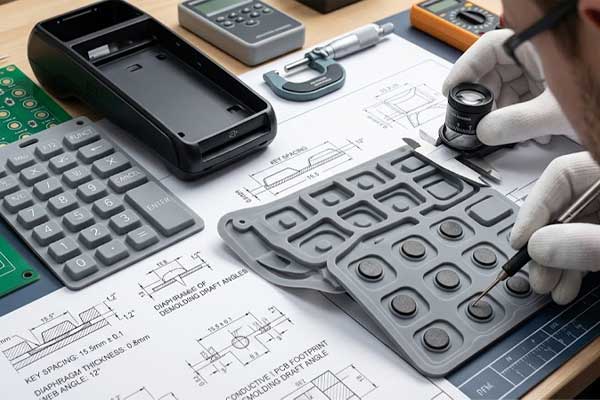
An engineer uses a loupe to inspect conductive carbon pills on a silicone keypad during a DFM evaluation next to blueprints and a PCB

Keypad & DFM Evaluation

The engineering team evaluates key spacing, web geometry, diaphragm thickness, draft, wall transitions and demolding requirements. Conductive pill locations receive special attention because small positional errors can affect the electrical contact margin.
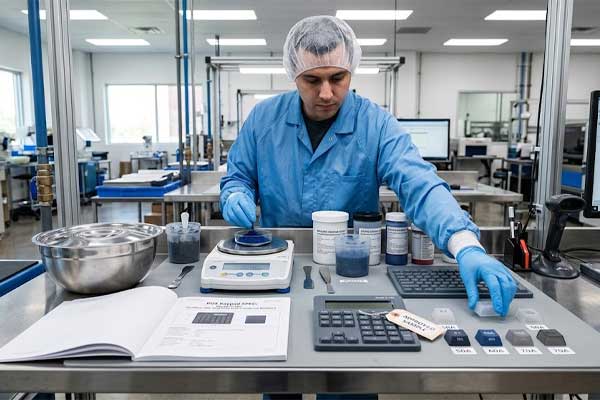
A technician weighs silicone compounds on a digital scale next to keypad samples and technical specifications in a laboratory

Material & Compound Preparation

The approved silicone compound, color and required additives are prepared according to the confirmed specification. Different keypad structures may require different hardness levels or optical characteristics, especially when opaque and translucent areas are combined.
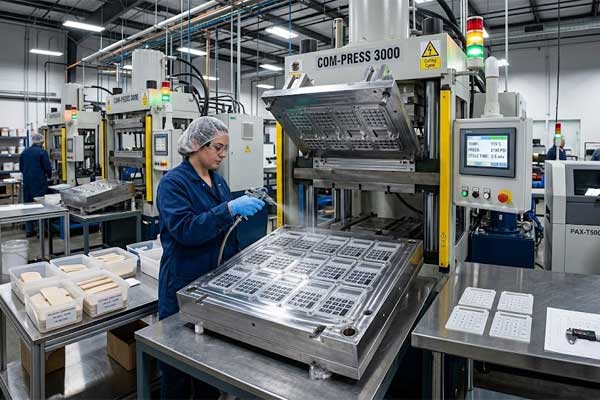
A manufacturing worker in a blue uniform and safety gear sprays a large multi cavity keypad mold on an open compression press

Silicone Molding

The silicone compound is formed using the selected production process, with compression molding commonly used for molded silicone keypad structures. Mold temperature, pressure, curing conditions and cavity design are controlled to produce consistent key geometry.
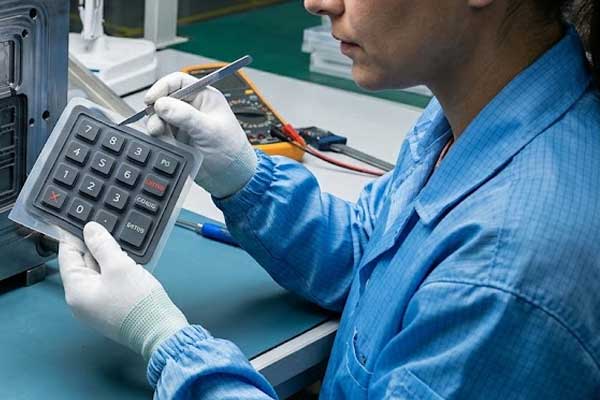
An operator wearing white gloves uses a precise knife to trim flash from a molded silicone keypad near its metal tool

Demolding & Trimming

After curing, the keypad is removed from the tooling and excess flash is trimmed. The perimeter, key webs, keycaps and conductive contact areas are checked for molding defects that could affect assembly or tactile response.
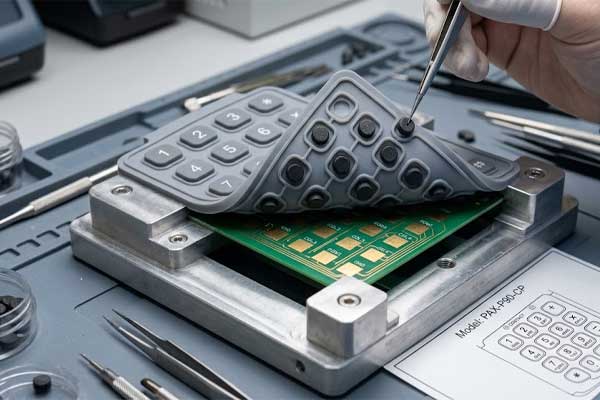
An operator uses tweezers to place black conductive carbon pills onto the underside of a silicone keypad over a PCB

Conductive Pill Application

Conductive carbon pills are positioned according to the approved PCB contact layout. Positioning accuracy is critical because the conductive element must meet the PCB contact at the intended point of key travel.
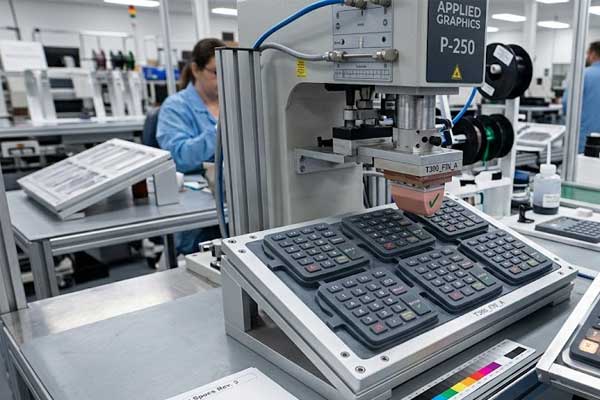
printed legends on silicone keypads mounted in a pad printing

Graphic & Surface Processing

Screen printing, pad printing, laser etching, coating or other approved finishing processes are completed according to the artwork. Backlit designs receive additional checks around translucent windows and graphic alignment.
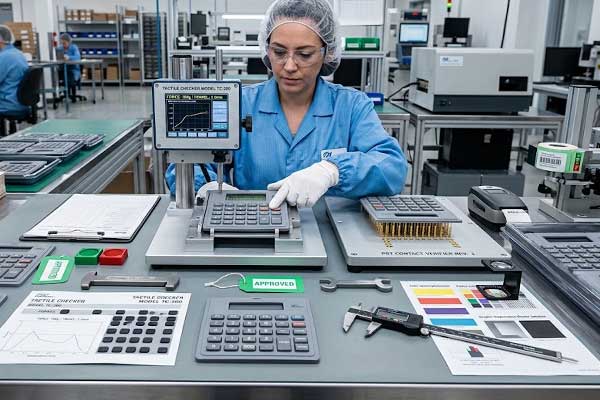
An inspector tests the actuation force of a silicone keypad using a tactile tester on a workstation with quality control tools

Quality Inspection

Finished keypads are checked against the approved sample and production specification. Inspection can cover appearance, dimensions, color, graphics, tactile response, conductive contact performance and packaging requirements.

POS Machine & Terminal Silicone Keypad Quality Control

Quality control covers more than visual appearance. For POS keypads, tactile consistency, conductive contact position and graphic durability directly affect the terminal’s user interface.

AQL 2.5 / 4.0 Standard Inspection

Final random sampling can be arranged using agreed inspection plans:

AQL 2.5

Major Defects

AQL 4.0

Minor Visual Defects

Another inspection standard can be applied when specified in the purchase order.

The approved keypad sample becomes the production reference for:

  • Key shape
  • Key dimensions
  • Overall thickness
  • Color
  • Tactile appearance
  • Graphic position
  • Conductive pill layout
  • Surface finish
  • Packaging

Silicone compounds, pigments, conductive materials and supplier documentation are reviewed against the confirmed project requirements.

Production checks focus on molding completeness, flash, key web structure, color consistency and visible surface defects.

Finished keypads are checked for:

  • Tears
  • Excessive flash
  • Incomplete molding
  • Contamination
  • Surface damage
  • Air-related molding defects
  • Deformed keycaps

Overall keypad dimensions, key height, key pitch, critical wall sections and other agreed dimensions are verified against the drawing.

Key force and travel can be checked against an agreed testing method or customer specification.

The purpose is not simply to confirm that every key has the same number. Frequently used key groups and different key sizes may require different force targets.

Conductive pill position, appearance and electrical response are checked against the approved structure and PCB interface.

Inspection covers:

  • Character position
  • Character size
  • Missing print
  • Blurred edges
  • Color consistency
  • Laser contrast
  • Graphic alignment

Backlit keypads can be checked for graphic alignment, translucent areas and visible light leakage according to the agreed sample standard.

Product quantity, labels, bags, cartons and customer-specific packaging instructions are verified before shipment.

Typical POS Machine & Terminal Silicone Keypad Specifications

SpecificationTypical Reference
ProductCustom POS machine & terminal silicone keypad
ApplicationsPOS terminals, payment terminals, PIN pads, handheld POS and self-service terminals
MaterialSilicone rubber
Hardness40–70 Shore A, depending on structure
Key typeNumeric, function, navigation and custom keys
Actuation forceCustom target, commonly within 100–300 gf depending on key design
Key travelCustom according to web geometry and PCB interface
Snap ratioCustom according to required tactile response
Conductive contactCarbon pill or approved conductive contact
Conductive pill positionMatched to PCB contact layout
ColorsStandard or custom silicone colors
SurfaceMatte, molded texture or approved coating
GraphicsScreen printing, pad printing or laser etching
BacklightingTranslucent silicone and custom light-transmission areas
SealingPerimeter sealing features available
Molding processSilicone compression molding or suitable silicone molding process
OEM / ODMAvailable
Existing-tool quantityFrom 500 pieces for suitable configurations
New custom tooling quantityFrom 3,000 pieces
Sample lead time5–10 working days
Custom tooling10–20 working days
Mass production15–25 working days after approval
InspectionApproved sample plus agreed AQL or customer standard
PackagingBulk bags, production packaging, retail boxes or custom packaging


Final specifications are confirmed according to the terminal design, PCB interface, silicone compound, graphics, tooling and approved sample.

Why Work with SKF for POS Machine & Terminal Silicone Keypads

Silicone Keypad Manufacturing Experience

SKF focuses on custom silicone components and keypad manufacturing for OEM and ODM projects.

Our engineering approach starts with the complete component interface rather than treating keypad dimensions, tactile response and conductive contacts as separate issues.

Engineering Review Before Tooling

POS keypad tooling can become expensive to modify once key webs, conductive pills and graphics are built into the mold.

Before tooling, SKF reviews the keypad drawing and PCB interface to identify potential issues with key travel, web structure, conductive pill positioning, demolding and housing fit.

Tactile Engineering Support

Tactile response is one of the most important differences between generic silicone keypads and application-specific POS keypads.

SKF can review actuation force, snap ratio, travel and return behavior. The webbing angle and diaphragm thickness profile are considered together because changing one dimension can affect the complete force curve.

Conductive Pill Positioning

Conductive pill alignment is another area where manufacturing experience matters.

A keypad can have correct overall dimensions while still producing inconsistent switching if the pill is not centered properly over the PCB contact. SKF checks the mechanical relationship between the key web, pill and PCB contact rather than relying only on the outer keypad dimensions.

Sample-Based Production

Mass production follows the approved sample and confirmed specification.

The approved sample establishes the reference for key appearance, color, graphics, tactile behavior and critical dimensions before the production run proceeds.

Production Capacity

SKF supports scalable silicone production for OEM and repeat orders.

Actual production capacity depends on keypad size, cavity arrangement, molding cycle, secondary processing and inspection requirements.

Export Project Support

SKF supports international OEM and ODM customers with engineering communication, sampling, production coordination, inspection, packaging and shipment preparation.

The project can be developed from drawings, 3D files, physical reference samples or an existing keypad that requires replacement or redesign.

POS Machine & Terminal Silicone Keypad FAQ

The MOQ starts from 500 pieces for suitable existing-tool configurations and from 3,000 pieces for new custom-molded keypad designs. The actual quantity depends on the keypad structure, tooling requirements, colors, graphics, conductive contacts and packaging.

Yes.

SKF develops numeric, function and custom silicone keypads for payment terminals, PIN pads, POS machines and related transaction equipment.

The keypad can be designed around the existing housing and PCB contact layout.

Yes.

Provide an existing sample or target force specification when available. SKF can evaluate actuation force, travel, snap response and return behavior, then adjust the silicone web structure during development.

Yes.

Conductive carbon pills are widely used for silicone keypad switching. Their diameter, thickness, resistance and position are matched to the PCB contact design and required electrical performance.

Yes.

Translucent silicone, selected graphic windows and controlled light-transmission areas can be incorporated into the keypad.

The complete backlight system also depends on the PCB LEDs, light guide structure and terminal housing.

The keypad can contribute to the terminal's sealing structure, but it does not determine the final waterproof or IP rating by itself.

The keypad, housing, sealing interface, PCB protection and assembly tolerances need to be evaluated as one system.

The best method depends on the legend design, surface geometry, expected cleaning, durability requirement and whether the keypad is backlit.

Screen printing suits many standard graphics. Pad printing works well for smaller or curved symbols. Laser etching can provide durable legends, while translucent graphics are suitable for selected backlit designs.

Service life depends on the silicone compound, web geometry, actuation force, pressing frequency, conductive contact design, environment and cleaning conditions.

SKF can develop the keypad around your required operating cycle and validate critical performance using an agreed test method.

Yes.

Custom silicone colors can be developed according to the approved color reference or physical sample. A physical sample is recommended before mass production because silicone thickness, surface finish and surrounding materials can affect visual color perception.

Yes.

SKF can evaluate an existing keypad or physical sample and determine the critical dimensions, key structure, conductive pill arrangement and tooling requirements.

A physical sample is especially useful when the original engineering drawing is unavailable.

Available documentation depends on the selected silicone, pigments, coatings, printing inks and destination market.

Provide the required market and standard so SKF can confirm the applicable documentation for the actual keypad configuration.

Please provide:

  • Target order quantity
  • Terminal model or application
  • Keypad drawing or 3D file
  • Key count and layout
  • Overall dimensions
  • PCB contact layout
  • Target actuation force
  • Conductive pill requirements
  • Silicone hardness if specified
  • Color reference
  • Graphic artwork
  • Backlighting requirements
  • Sealing requirements
  • Existing physical sample if available
  • Packaging requirements
  • Destination country
  • Required documentation or testing
  • Target delivery date

Ask for a quote

Fill out the form below, and we will be in touch shortly.

询盘表单