Silicone keypad performance depends on more than material selection, surface finishing, or external appearance. The internal key structure determines how pressing force is generated, transmitted, and converted into an electrical signal.
Different silicone key designs provide different operating experiences. Some keys rely on the silicone diaphragm itself to create tactile feedback, while others work together with metal domes or tact switches that already provide their own click response. For applications requiring multiple functions from one button, rocker-style silicone keys provide another structural solution.
Choosing the correct silicone key design at the beginning of product development helps engineers achieve consistent tactile response, reliable switching performance, and longer service life. The ideal structure depends on the switching method, required operating force, available space, and expected user experience.
Learn more about silicone keypad design considerations in our Silicone Keypad Design Guide.

Start With the Switching Method
The first step in silicone key design is understanding how the electrical contact is activated and where the tactile response comes from. The silicone structure must match the switching component underneath the key.
Conductive Silicone Keys for Direct PCB Switching
Conductive silicone keys use conductive materials, such as carbon pills, molded into the silicone key. When the user presses the button, the silicone structure moves downward until the conductive contact reaches the PCB and completes the circuit.
In this type of design, the silicone key performs both mechanical and electrical functions. The diaphragm generates the resistance during pressing, controls key travel, and provides the return force after release.
Because the silicone structure directly creates the button response, changes in diaphragm geometry can significantly affect the operating feel. Factors such as silicone hardness, diaphragm thickness, angle, and key travel need to be considered together to achieve the desired tactile performance.
Conductive silicone keys are commonly used in remote controls, industrial control systems, medical equipment interfaces, and electronic devices where integrated switching solutions are required.
Metal Dome and Tact Switch Keys for External Tactile Feedback
Metal domes and tact switches generate their own tactile response. When pressed, these components provide the click sensation that users feel during operation.
In these applications, the silicone key mainly acts as a mechanical interface between the user and the switching component. Its purpose is to transfer force accurately while maintaining stable movement and protecting the internal switch.
The silicone structure should not create additional tactile transitions that compete with the metal dome or tact switch. Otherwise, users may experience unclear activation points, inconsistent feedback, or a double-click sensation.
For this reason, pusher pad structures are often used when the switching component underneath the silicone key already provides the required tactile response.
How Silicone Key Structures Control Force Feedback
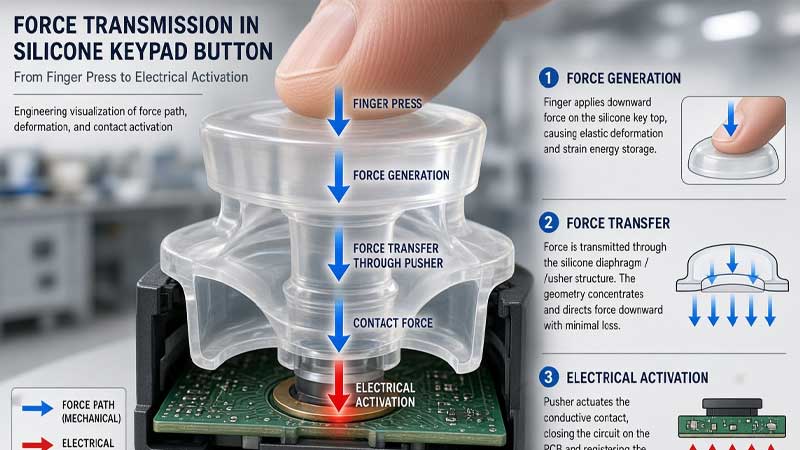
A silicone key works through a complete mechanical force path. The force applied by the user travels from the key surface through the silicone structure and finally activates the electrical contact.
Force Generation Through Silicone Diaphragm
In direct silicone switching designs, the diaphragm surrounding the key generates the required operating force. As the key is pressed, the diaphragm deforms and creates resistance before allowing the contact to activate.
The relationship between initial pressing force, activation force, and return force determines the overall tactile experience. A well-designed diaphragm provides a clear transition point while maintaining comfortable operation.
The silicone material and structural design must work together. Softer materials may provide easier operation, while thicker or stronger structures can increase force and improve durability.
Force Transmission Through Pusher Structures
For metal dome and tact switch applications, the silicone structure mainly transfers force instead of generating tactile feedback.
The pusher pad connects the external key surface with the internal switch actuator. Proper design ensures that user input reaches the switch efficiently without unnecessary silicone deformation.
This approach allows the underlying switch component to control the click feeling while the silicone keypad provides advantages such as sealing, flexible design, and comfortable user interaction.
Diaphragm Keys for Built-In Tactile Feedback
Diaphragm keys are widely used when the silicone structure itself needs to provide tactile feedback and electrical switching.
How Silicone Diaphragm Keys Work
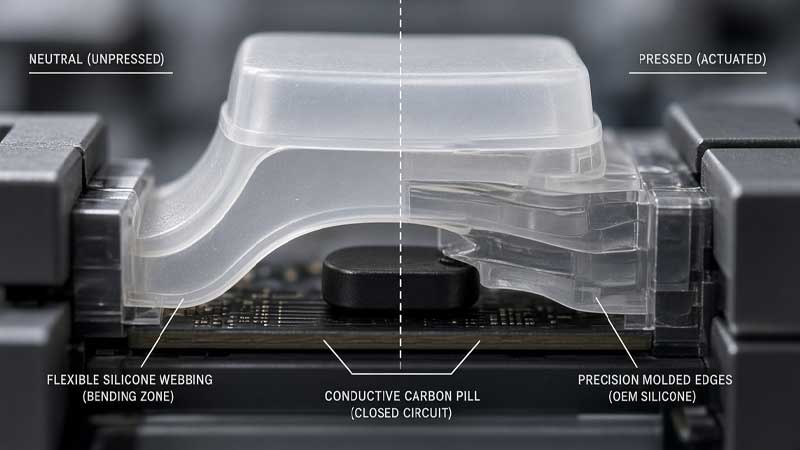
The diaphragm, also called webbing, is the flexible section surrounding the silicone key. It allows the key to move while maintaining a connection with the keypad base.
During pressing, the diaphragm gradually deforms and stores mechanical energy. As the force increases, the structure reaches its designed transition point and allows the key to move downward to activate the conductive contact.
After release, the stored energy in the diaphragm returns the key to its original position.
The tactile feeling of the key depends on how the diaphragm responds during this movement. A carefully designed structure provides a noticeable activation point without creating excessive stress on the silicone material.
How Diaphragm Geometry Changes Key Performance
Diaphragm geometry plays an important role in determining silicone keypad performance. Small changes in structure can influence actuation force, travel distance, tactile response, and durability.
The diaphragm angle affects how easily the silicone structure bends. A smaller angle generally produces a softer response, while a larger angle increases resistance.
The diaphragm thickness also changes the force profile. Increasing thickness can raise operating force and improve structural strength, but excessive thickness may reduce sensitivity.
Key height and travel distance influence both user comfort and mechanical stability. A properly designed key needs enough movement to provide clear feedback while maintaining reliable contact activation.
Spacing between neighboring keys is also important. Adequate clearance allows each diaphragm to move independently and reduces interference between adjacent buttons.
Advantages and Limitations of Diaphragm Key Designs
Diaphragm keys provide a compact solution because the silicone structure performs multiple functions within one molded component. They allow manufacturers to customize operating force, tactile response, and key appearance without adding separate switching components.
However, diaphragm designs require careful engineering control. Small variations in geometry, material properties, or molding conditions can affect the final force response. Prototype testing is often needed to confirm the expected performance before mass production.
Pusher Pad Design for Metal Dome and Tact Switch Applications
Pusher pad structures are commonly used when an external component provides the tactile switching action.
Why Silicone Keypads Use Pusher Pad Structures
When a metal dome or tact switch already creates the click feeling, the silicone key should focus on force transmission rather than generating additional tactile feedback.
A properly designed pusher pad reduces unnecessary movement and keeps the user experience consistent with the underlying switch.
Without this approach, the silicone diaphragm and the switch may create separate force transitions. This can make the button feel less precise and reduce the clarity of activation.
Dead Web Design for Consistent Switch Response
A dead web is a silicone structure designed to minimize the tactile contribution from the surrounding diaphragm.
Unlike traditional tactile silicone keys, the dead web does not aim to create a strong snap response. Instead, it allows the pusher area to move smoothly and lets the metal dome or tact switch provide the main tactile feedback.
This design is especially useful when manufacturers need a predictable switch response across large keypad assemblies.
Pusher Pad Height and Preload Considerations
The height relationship between the silicone pusher pad and the underlying switch is critical. If the distance is too large, users may experience excessive dead travel before activation. If the preload is too high, the switch may experience unnecessary pressure.
A suitable preload helps maintain close contact between the silicone key and the switch while reducing unnecessary movement.
The final design depends on switch specifications, silicone hardness, assembly tolerance, and required operating force. Prototype validation is recommended to confirm the final force-travel performance.
| Component | Main Function |
| Metal dome | Generates tactile response and switching action |
| Tact switch | Provides mechanical click and electrical activation |
| Silicone pusher pad | Transfers user force to the switch |
Rocker Silicone Keys for Multi-Function Controls
Rocker-style silicone keys provide a solution when one physical button needs to control multiple contact points.
How Rocker Key Structures Work
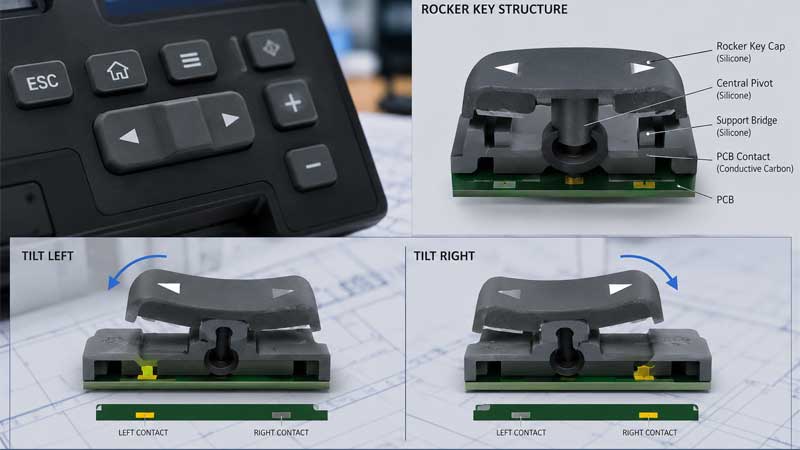
Unlike standard silicone keys that move vertically, rocker keys use a pivot structure that allows directional movement.
When the user presses one side of the key, the structure tilts around the pivot and activates one contact point. Pressing the opposite side activates another contact.
This design allows multiple functions to be integrated into a single button area while maintaining a compact interface.
Applications and Design Considerations for Rocker Keys
Rocker silicone keys are often used for directional controls, adjustment buttons, and interfaces requiring opposite commands from one key.
Compared with standard tactile silicone keys, rocker designs usually provide a softer tactile response because the movement relies on tilting rather than direct compression.
The pivot structure requires careful design. Engineers need to consider contact alignment, key stability, and off-center pressing forces to maintain consistent switching performance.
Key Geometry Considerations for Silicone Key Design
Selecting the correct structure is only the first step. The geometry of the silicone key must also be optimized for the intended application.
Diaphragm Angle and Thickness
Diaphragm angle and thickness are two major factors affecting operating force. Adjusting these parameters allows engineers to balance tactile feedback, sensitivity, and durability.
A design that provides strong feedback during initial testing may require adjustment if repeated operation creates excessive stress on the silicone structure.
Key Travel and Operating Feel
Travel distance affects how users perceive the button response. Short travel can provide a quick response, while longer travel may create a softer and more controlled feeling.
The key structure should provide sufficient movement for reliable activation without reducing stability or increasing unnecessary deformation.
Key Spacing and Mold Design Considerations
Key spacing affects both user interaction and manufacturing feasibility. Neighboring keys require enough clearance to move independently.
During tooling development, manufacturers also consider mold structure, material flow, dimensional tolerance, and production consistency. These factors influence the final quality of the silicone keypad.
How to Select the Right Silicone Key Structure
The correct silicone key design depends on the source of tactile feedback and the required switching method.
| Application Requirement | Recommended Structure |
| Silicone itself creates tactile feedback | Diaphragm key |
| Conductive carbon pill switches PCB | Diaphragm key |
| Metal dome provides the click response | Pusher pad design |
| Tact switch provides tactile feedback | Pusher pad design |
| One key controls multiple functions | Rocker key |
The switching component should be considered before finalizing the silicone key structure. Matching the silicone design with the switching method helps prevent performance problems during production.
Design Validation Before Mass Production
Silicone keypad performance should be confirmed before tooling and mass production. CAD models provide an important starting point, but actual tactile performance depends on material behavior, molding conditions, and assembly tolerance.
Force Travel Testing
Force-travel testing evaluates important performance factors such as actuation force, contact force, return force, and travel distance.
These measurements help engineers confirm whether the key provides the expected operating feel and whether the structure maintains consistent performance over repeated cycles.
Prototype Validation and Manufacturing Review
Prototype testing helps identify potential issues related to key geometry, contact alignment, tooling design, and production tolerance.
At SKF, engineering reviews are performed before manufacturing to evaluate silicone key structure, switching requirements, tooling risks, and production feasibility. This approach helps customers optimize keypad performance before moving into full-scale production.

Frequently Asked Questions About Silicone Key Design
What is the difference between diaphragm keys and pusher pad keys?
Diaphragm keys use the silicone structure itself to generate tactile feedback and return force. The flexible diaphragm surrounding the key controls the movement and force response during pressing.
Pusher pad keys are designed for applications where a metal dome or tact switch already provides tactile feedback. In this structure, the silicone key mainly transfers user force to the underlying switch while minimizing additional silicone-generated response.
The right choice depends on whether the tactile feeling should come from the silicone structure or from an external switching component.
When should a silicone keypad use a metal dome or tact switch?
Metal domes and tact switches are suitable when applications require a clear and consistent click feeling from the switching component itself.
They are commonly selected when engineers need predictable tactile feedback, defined activation points, or higher switching consistency. In these designs, the silicone key is mainly responsible for force transmission, sealing, and user interface performance.
How does diaphragm geometry affect silicone key performance?
Diaphragm geometry directly affects operating force, travel distance, tactile response, and durability. Factors such as diaphragm angle, thickness, height, and surrounding clearance influence how the silicone structure deforms during pressing.
During silicone keypad development, engineers usually adjust these parameters together because changing one dimension may affect the overall force-travel curve and user experience.
What is a dead web in a silicone keypad design?
A dead web is a silicone structure used around pusher pad keys to reduce the contribution of the silicone diaphragm to tactile feedback.
When a metal dome or tact switch already creates the desired click response, the dead web helps prevent additional silicone-generated resistance. This allows the external switch component to control the tactile feeling more effectively.
What are rocker silicone keys used for?
Rocker silicone keys are used when one physical key needs to control multiple contact points. Instead of moving only vertically, the key tilts around a pivot structure to activate different contacts depending on the pressing direction.
They are commonly used for directional controls, adjustment functions, and interfaces where two related commands need to be integrated into one button area.
How are silicone key designs validated before mass production?
Silicone key designs are typically evaluated through prototype testing and force measurement before tooling approval.
Engineers review factors such as actuation force, travel distance, return force, contact alignment, and switching consistency. Prototype validation helps identify potential issues caused by silicone elasticity, mold tolerance, or switch component variation before full-scale production.
Conclusion
Choosing the right silicone key design requires understanding how mechanical structure and electrical switching work together.
Diaphragm keys allow silicone itself to generate tactile feedback. Pusher pad structures transfer force to external switches such as metal domes and tact switches. Rocker keys provide multi-function control through directional movement.
By selecting the appropriate structure early and validating the design before production, engineers can achieve better tactile response, reliable operation, and longer product lifetime.
SKF provides OEM and ODM silicone keypad solutions with engineering support, structural optimization, tooling assistance, and production validation. Our team helps customers develop silicone key designs that match application requirements, performance targets, and manufacturing goals.