Backlit silicone rubber keypads provide both functional advantages and enhanced user interaction for electronic products operating in different environments. Compared with standard silicone keypads, illuminated designs allow users to identify buttons more easily, confirm operation status, and create a more modern product appearance.
For industrial equipment, automotive controls, medical devices, marine electronics, and handheld products, button visibility can directly influence operating efficiency and user experience. A well-designed backlit keypad does more than add LED lighting behind buttons. The final performance depends on the coordination between silicone material, optical structure, coating technology, laser engraving, PCB layout, and tactile design.
When developing custom backlit silicone keypads, engineers need to consider brightness, light distribution, sealing performance, mechanical feedback, and manufacturing feasibility at the early design stage. Proper design planning helps prevent common issues such as uneven illumination, light leakage, unclear symbols, and inconsistent button feel.

Why Use Backlit Silicone Rubber Keypads?
Improved Visibility in Low-Light Environments
One of the main reasons to choose backlit silicone keypads is improved button visibility in dark or low-light environments.
Many electronic products are used in conditions where ambient lighting is limited, including vehicle interiors, industrial workshops, outdoor equipment, and marine control systems. Without illumination, users may need to rely on button position, shape, or trial operation to identify functions. This can increase the possibility of incorrect operation.
Backlighting provides clear visual guidance by highlighting button legends and key positions. Users can quickly recognize important controls without additional lighting equipment.
For example, navigation equipment used at night requires clear identification of functional buttons. Industrial operators working in low-light environments need fast access to emergency controls. In these applications, backlit rubber keypad design improves usability and operational reliability.
Visual Feedback During Button Operation
Backlighting is not only useful before pressing a button. It can also provide feedback after operation.
Many products use illuminated buttons to indicate:
- Power status
- Operating modes
- Warning conditions
- System activation
- Function selection
A short illumination response after pressing a button helps users confirm that the input has been received, especially in products with silent operation.
For example, medical equipment and industrial instruments often require clear confirmation without producing unnecessary sound. LED illumination integrated with silicone keypad structures provides an intuitive feedback method.
Enhanced Product Appearance and User Experience
Besides improving visibility, backlit silicone keypads can increase the visual appeal of electronic products.
Modern product designs often use lighting effects to create a premium appearance. Different backlight colors can separate functions, highlight important controls, or strengthen brand identity.
RGB lighting solutions are also becoming more common in consumer electronics and advanced control interfaces. Different colors can represent different operating conditions, making product interaction more intuitive.
However, attractive lighting requires careful optical design. Excessive brightness, uneven illumination, or uncontrolled light leakage may reduce product quality. A professional backlit keypad design balances visual performance with practical usability.
How Does Backlit Silicone Keypad Design Work?
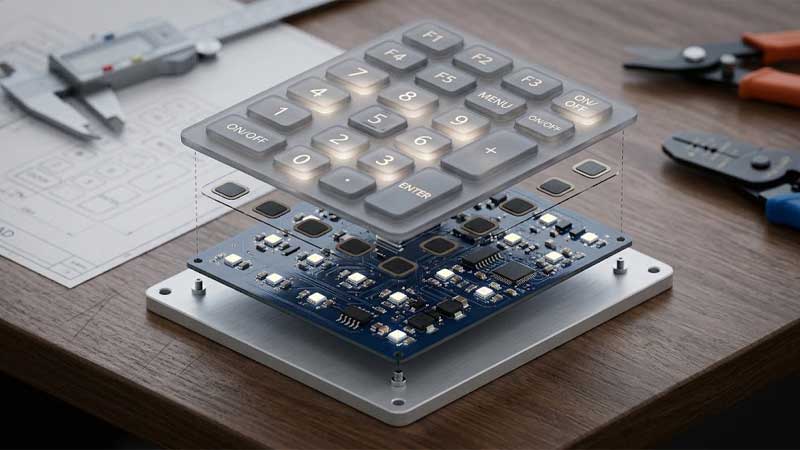
A backlit silicone keypad combines mechanical switching functions with optical components. The structure must allow light to pass through selected areas while maintaining the durability and tactile performance expected from silicone rubber keypads.
A typical illuminated keypad structure includes:
- Silicone rubber keypad body
- Conductive carbon pills or electrical contacts
- LED light source
- PCB or flexible circuit
- Light diffusion area
- Opaque coating layer
- Laser etched legends
Each layer plays an important role in the final performance.
The silicone rubber body provides the flexible structure required for button movement. The web geometry controls actuation force, stroke distance, and tactile response.
The conductive pill creates electrical contact when the button is pressed. At the same time, the optical design must ensure that the internal structure does not block or disturb light transmission.
The coating layer controls where light can escape. Many backlit silicone keypads use an opaque coating combined with laser etching technology. The laser removes selected areas of the coating to create illuminated symbols.
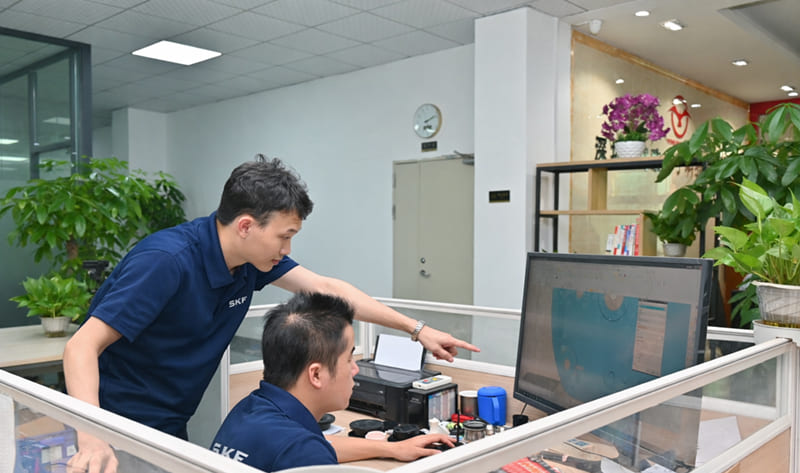
During DFM review, SKF engineers evaluate silicone thickness, LED positioning, coating structure, and light transmission paths to reduce optical problems before tooling begins.
Main Backlighting Methods for Silicone Keypads
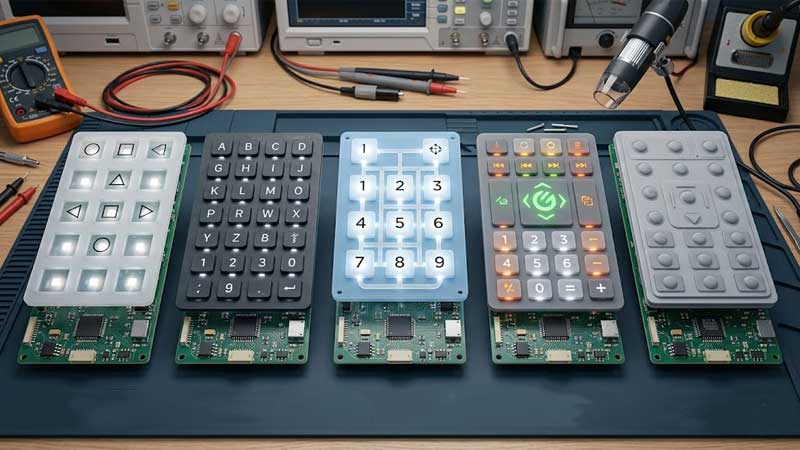
Transparent Silicone Window Design
A transparent or translucent silicone window is one of the simpler approaches for silicone keypad backlighting.
This method allows light from LEDs underneath the keypad to pass through specific areas of the silicone material.
Advantages include:
- Simple structure
- Lower tooling complexity
- Easy integration with basic indicators
This design works well for products requiring simple illumination rather than complex graphics.
However, transparent areas may create challenges in controlling light direction. Without proper optical design, brightness may vary between different button areas.
For products requiring uniform illumination or high-quality appearance, additional light control methods are usually required.
Laser Etched Backlit Silicone Keypads
Laser etched silicone keypads are one of the most widely used solutions for illuminated buttons.
This structure usually includes a silicone keypad covered with an opaque coating layer. During manufacturing, laser equipment removes specific coating areas to expose translucent silicone underneath.
When LEDs are activated, light passes through the etched areas and creates illuminated legends.
The advantages include:
- Clear symbols
- Long-lasting markings
- High contrast appearance
- Excellent customization flexibility
Compared with printed graphics, laser etched legends provide better durability because the illuminated symbols are created within the coating structure rather than added as surface ink.
However, laser parameters require careful control. Incorrect laser power or depth may affect symbol appearance, silicone surface quality, or light transmission performance.
SKF engineers consider coating thickness, laser processing parameters, and graphic design during development to achieve consistent backlighting results.
Silicone Light Guide Structures
For products requiring large illuminated areas or multiple buttons, silicone light guide structures can improve optical performance.
Light guides help distribute LED light more evenly across the keypad surface. This reduces bright spots near LEDs and dark areas in distant regions.
The design usually considers:
- LED location
- Silicone thickness
- Internal reflection paths
- Diffusion characteristics
A well-designed light guide structure can improve brightness uniformity while reducing the number of LEDs required.
This is especially valuable for portable devices where power consumption is an important consideration.
Light Guide Film Integration
Some advanced backlit silicone keypad designs combine silicone structures with light guide films.
Light guide films distribute light from LED sources across larger areas. They are commonly used in compact electronic products where limited space is available.
Benefits include:
- Improved illumination consistency
- Lower power consumption
- More compact designs
However, integration between silicone rubber, film materials, and PCB components requires careful engineering coordination.
Key Design Considerations for Backlit Rubber Keypads
Control Light Uniformity
Uniform lighting is one of the most important factors in backlit keypad design.
Users expect every illuminated symbol to have consistent brightness. Uneven lighting can make products appear low quality and reduce readability.
Common causes of uneven illumination include:
- Incorrect LED placement
- Unequal silicone thickness
- Poor diffusion design
- Improper light path structure
Engineers need to analyze the optical structure before mass production.
SKF uses prototype validation and optical testing to evaluate brightness distribution, symbol visibility, and potential lighting issues before final tooling.
Prevent Light Leakage
Light leakage is a common challenge in backlit silicone keypad manufacturing.
Light leakage occurs when illumination escapes through unwanted areas, causing:
- Glowing around button edges
- Reduced symbol contrast
- Poor visual appearance
- Confusion between adjacent buttons
Several design methods can reduce this problem:
- Optimized opaque coating thickness
- Improved masking structure
- Controlled silicone transparency
- Better separation between illuminated areas
The coating system must block unwanted light while allowing sufficient transmission through laser etched areas.
Finding the correct balance requires experience with silicone materials, coatings, and optical performance.
Balance Backlighting With Tactile Performance
A backlit keypad still needs to provide comfortable mechanical feedback.
Adding optical features should not compromise the original button function.
Important tactile factors include:
- Actuation force
- Key stroke
- Snap ratio
- Web thickness
- Diaphragm geometry
Changes to silicone thickness or internal web structure may influence the force curve.
For example, increasing material thickness may improve light blocking but could increase operating force. Reducing thickness may improve illumination but affect durability.
Experienced silicone keypad manufacturers evaluate both optical and mechanical requirements together during design.
Consider Environmental Requirements
Different applications require different backlit keypad designs.
Industrial equipment may require resistance against dust, chemicals, vibration, and frequent operation.
Marine applications require waterproof sealing and resistance against humidity and salt exposure.
Medical devices require easy cleaning surfaces and reliable performance after repeated use.
Automotive products must withstand temperature changes and long service periods.
Material selection, coating technology, and sealing design should match the final operating environment.

Prototype Testing Before Mass Production
Prototype validation plays an important role in backlit silicone keypad development.
Before investing in production tooling, prototypes help engineers verify whether the design meets expected requirements.
Optical testing can evaluate:
- Brightness level
- Symbol clarity
- Light distribution
- Light leakage
Mechanical testing can confirm:
- Button feel
- Actuation force
- Stroke performance
- Long-term durability
Appearance evaluation also helps confirm whether graphics, colors, and illumination effects match the product concept.
Rapid prototypes are useful for design verification because they simulate product appearance and structure before full-scale manufacturing. However, prototype materials and processes may differ from final compression molding or injection molding production.
SKF supports customers through prototype evaluation, tooling review, and production validation to reduce development risks.
Applications of Backlit Silicone Rubber Keypads
Backlit silicone keypads are used across many industries where reliable operation and clear visual feedback are required.
Common applications include:
Industrial Equipment
Control panels, automation systems, and testing equipment often use illuminated keypads for reliable operation in factories and workshops.
Automotive Controls
Vehicle switches and steering controls use backlighting to improve nighttime visibility and user interaction.
Medical Devices
Portable medical instruments benefit from clear button identification and silent operation feedback.
Marine Electronics
Navigation systems and marine control panels require durable illumination for operation in changing lighting conditions.
Consumer Electronics
Remote controls, smart devices, and gaming equipment use backlit silicone buttons to improve appearance and usability.

FAQ
What are backlit silicone keypads used for?
Backlit silicone keypads are commonly used in industrial controls, automotive systems, medical devices, marine electronics, and consumer products where clear button visibility and user feedback are required.
How do silicone keypads achieve backlighting?
Backlit silicone keypads use LED light sources combined with translucent silicone structures, coating layers, laser etched legends, or light guide designs to create illuminated buttons.
Why does a backlit keypad have uneven lighting?
Uneven lighting can result from poor LED placement, inconsistent silicone thickness, insufficient light diffusion, or incorrect optical structure design.
Are laser etched silicone keypads durable?
Yes. Laser etched silicone keypads provide durable legends because the graphics are created through controlled removal of coating layers instead of relying only on surface printing.
Can backlit silicone keypads use different colors?
Yes. Single-color LEDs and RGB lighting systems can be integrated to create different illumination effects and status indicators.
Working With an Experienced Backlit Silicone Keypad Manufacturer
Successful backlit keypad projects require cooperation between product designers, engineers, and manufacturers.
An experienced silicone keypad manufacturer can support:
- Product structure optimization
- Optical design review
- Silicone material selection
- Prototype testing
- Tooling development
- Mass production validation
SKF works with customers from early concept review to final production. Through DFM analysis, optical evaluation, and manufacturing experience, SKF helps create backlit silicone keypads that combine reliable performance, clear illumination, and long service life.