When sourcing or designing a silicone keypad, price is an essential factor. Although some suppliers offer lower-cost rubber keypads, this seems like a way to decrease expenses. However, the hidden costs of low-quality keypads will catch up to you, whereas premium elastomer keypads are a more cost-effective investment in the long term.
The Influence of Poor-Quality Rubber Keypads
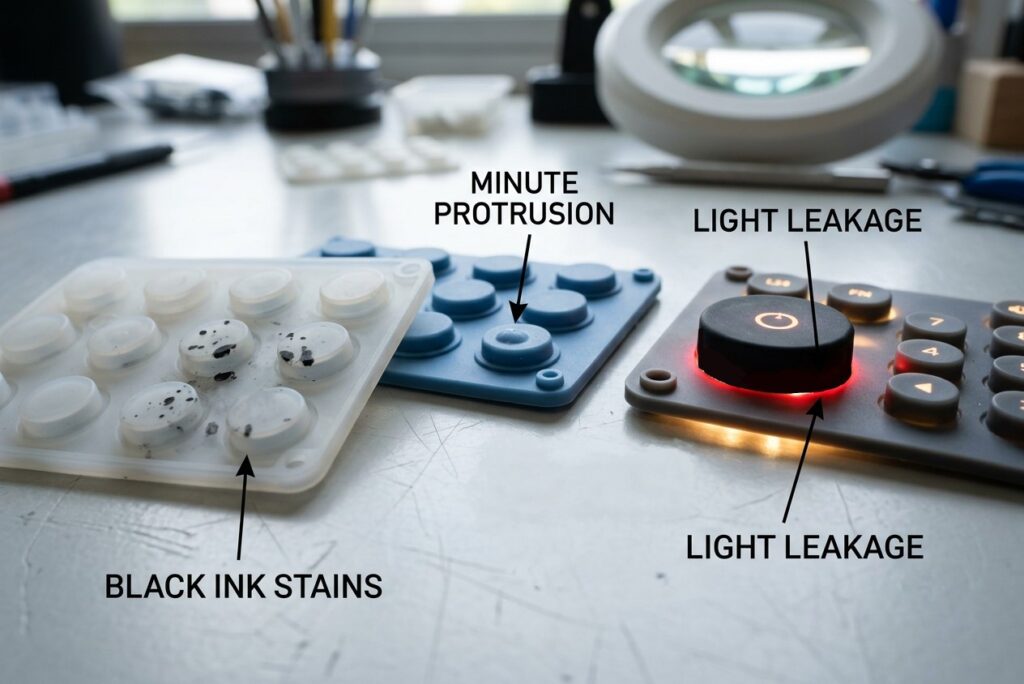
Tactility Failure and Rebound Issues During Operation
Premium silicone rubber keypads maintain stiffness and elasticity during repeated presses, offering consistent tactile feedback and rebound over time. In contrast, poor-quality rubber keypads more easily result in a sticky or mushy touch, a weak tactile response, and a gradual loss of structural integrity due to insufficient strength.
Signal Input Problem
The low quality of the PCB or electrical contacts, or inadequate sealing, may cause internal shorts in your physical buttons. This may result in degraded conductive carbon pills with unstable electrical resistance, insulated contacts due to plasticizer migration, detachment or contact corrosion, or reduced conductivity by liquid ingress.
Increased Risk of Device or Equipment Damage
Rubber keypads made from premium silicone raw materials, reinforcing fillers, and protective coatings can withstand extreme temperatures, UV radiation, chemical exposure, and high humidity.
The poor strength and quality of rubber keypads result in warped or swollen keys, deformed silicone buttons and keymats, and brittleness. Furthermore, dust, liquids, and contaminants will damage your devices and instruments, which are sensitive to environmental factors.
Higher Maintenance and Replacement Costs
You probably don’t want your electronic devices with physical buttons to malfunction and require replacement. These hidden costs may increase overall expenses and affect the expected lead time.
High-quality interactive silicone buttons benefit the user experience by providing consistency in appearance and dimensions of elastomer keypads and durable legends and graphics on the keys, including essential silicone buttons like “power,” “stop,” or “enter.”
Increased Expenses Caused by the Cost of Poor Quality (CoPQ) in Silicone Keypads
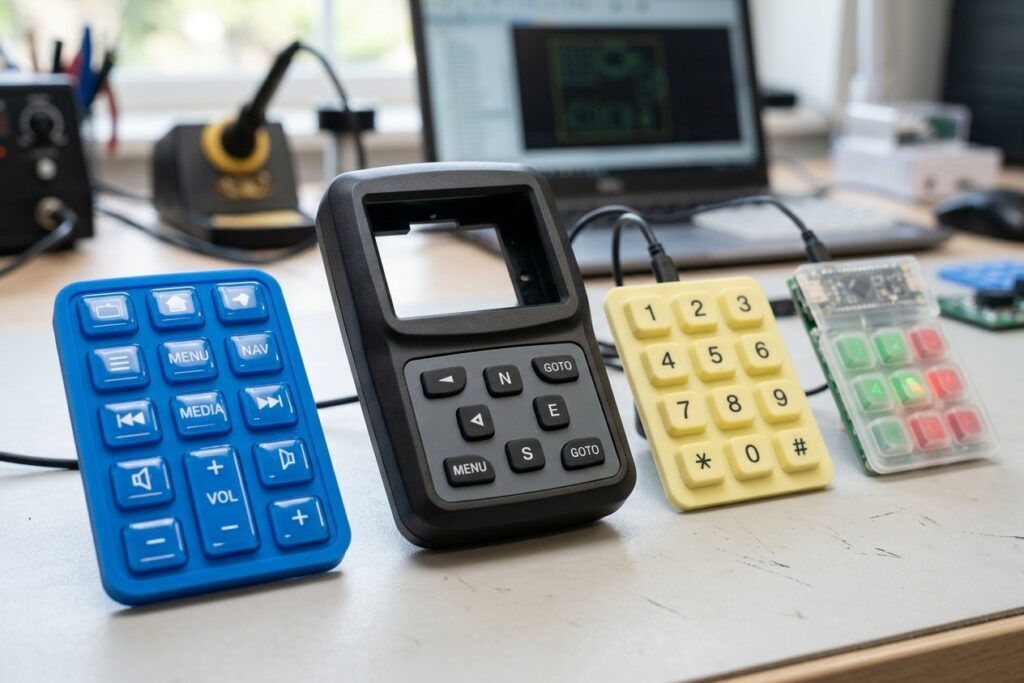
CoPQ involves expenses resulting from defective parts before or after product delivery.
CoPQ also refers to the sum of nonvalue-added costs (which do not offer value to clients) divided by the total revenue generated. This measurement aims to calculate the percentage of revenue lost due to waste. Costs associated with inspections, failures, and efforts should also be considered when entering the market.
Direct Cost Increases
These increased costs due to inferior rubber keypads manifest in the form of obvious lost opportunities:
- Internal failure costs include scrap, rework, retesting, and downtime before rubber keypads are delivered to clients.
- External failure costs: Warranties, product recalls, returns, and complaint handling after delivery to customers.
- Lead time delays due to internal and external failure costs.
- Additional costs from materials, components, energy, and labor.
- Lower revenue.
- Delayed receivables and warranty expenses.
Other Hidden Cost Increases
There are also less obvious opportunity costs, including:
- Missed opportunity for R&D of new silicone keypad products and launch on time.
- Quality problems and the risk of downtime in machines embedded with silicone rubber keypads.
- Expensive maintenance and replacement.
- Extra inspection and testing before shipping as appraisal costs.
- Systematic processing training for failure prevention.
- Extra expenses for staff, inventory, logistics, and customer support due to complaints.
How to Ensure Quality Control for Your Custom Silicone Rubber Keypads?
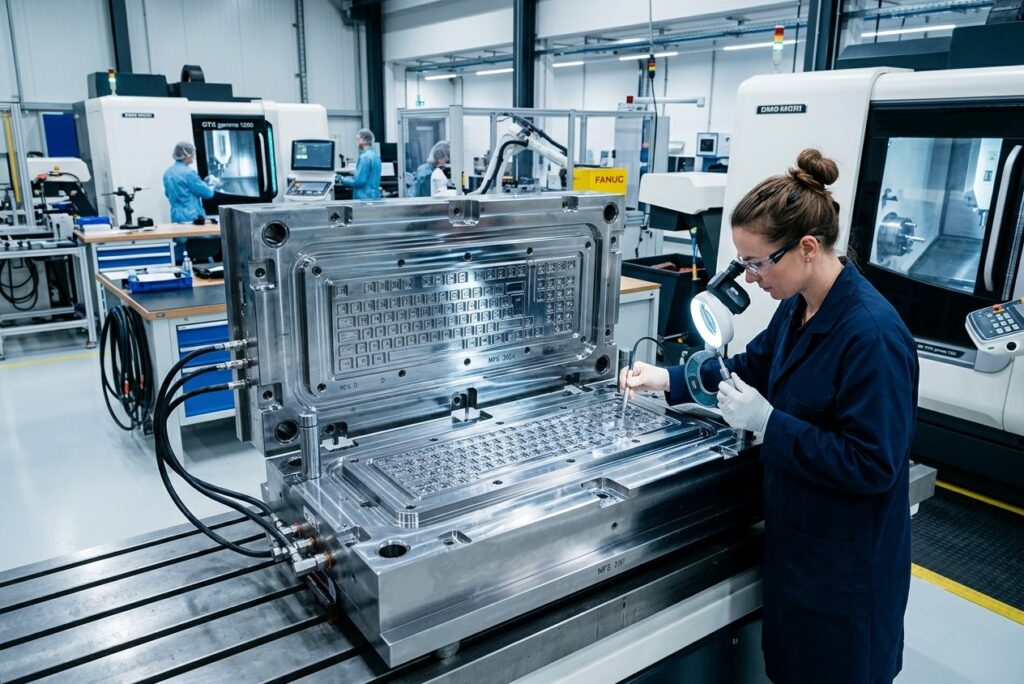
Strict Quality Control of Materials
In the initial stage, SKF implements a series of quality assurance measures for silicone raw materials, backlit assemblies, actuators for switch activation, traces and contacts of PCBs, and inks for screen-printed legends and graphics. These measures ensure that all relevant materials and components meet quality criteria based on robust quality management systems.
We focus on a high-efficiency, effective quality management system to reduce defect rates through strict process control and efficient resource utilization.
Balance between Design and Manufacturing for Your Silicone Rubber Keypads
To decrease avoidable expenses from potential problems and design flaws in your rubber keypad project, SKF follows DFM (Design for Manufacturability), which supports efficient manufacturing and functional requirements.
The DFM process includes gathering information, assessing feasibility, determining the manufacturing process, and estimating costs and lead times. Furthermore, the selection of manufacturing methods for your elastomer keypads takes into account processing complexity, design elements, and production scale requirements.
The DFM process optimizes turnaround times and costs in rubber keypad manufacturing by eliminating rework and unwanted quality issues during subsequent testing or actual operation.
Compatibility of Design Flaws and Manufacturing Technology
In some cases, certain aspects of our clients’ projects cannot be realized due to tolerance limitations, CAD or drawing issues, or modeling artifacts. Our engineers will evaluate and improve the manufacturability through engineering discussions with our clients.
Design Considerations for Rubber Keypad Manufacturing
Design considerations affect the selection of manufacturing methods, process complexity, mechanical strength, and the performance of final silicone keypads during interaction and operation in machines. These considerations include:
- The force, travel, and snap ratio of rubber keypad keys.
- The length, thickness, and angle of the elastic and flexible webbing (sidewall).
- Selection of conductive materials.
- Hardness (30~40 Sh A) of silicone.
- Legends and graphics printing methods.
- Material options and transparency of silicone rubber keypads.
- Backlit effect and relevant components.
FAQs
What makes a silicone rubber keypad “low-quality”?
Poor-quality raw materials, incomplete curing, degraded conductive pills, inconsistent colors, and weak mechanical strength that cannot withstand repeated presses during switch activation are all factors that contribute to low-quality silicone rubber keypads.
How does incomplete curing affect the performance of silicone rubber keypads?
An incomplete curing process results in poor tensile strength and tear resistance in elastomer keypads. Frequent operation may lead to a loss of tactile response or cracks.
At SKF, we produce rubber keypads using qualified silicone raw materials, proper formulations, and complete curing and post-curing processes to offer excellent tactility and integrity.
How can the durability and wear resistance of legends on keytops be enhanced for premium silicone keypads?
SKF provides polyurethane (PU), ultraviolet (UV), epoxy, and parylene coating options, as well as more coatings or textures for robust legends in long-term operation.
Do poor-quality rubber keypads have a lower per-unit cost?
Yes, but poor-quality rubber keypads lead to poor performance and increased overall costs due to expensive returns, maintenance, replacements, and instrument downtime.
Which conductive material supports a reliable lifetime for the long term?
Metal domes and reinforced carbon pills are recommended as an alternative to peeling or raised electrical resistance of carbon ink layers or conductive films.
Final Thoughts
Though premium elastomer keypads incur additional costs, they offer protection for operation and functions in tough environments and isolate sensitive electronic components from potential risks in the environment. They also support DFM between manufacturability and custom silicone keypad design.