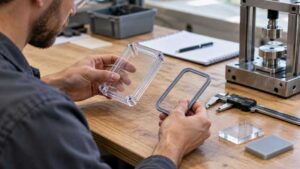
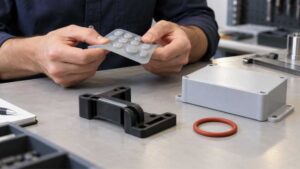
SKF offers fully assembled rubber keypad modules that include silicone rubber keypads, flexible electrical contacts (typically metal domes or carbon pills), FPC or rigid-flex circuits, backlit assemblies (light pipes, light blocks, and lenses), and protective bezels and housings. Moreover, rubber membrane keypads are engineered to enhance functionality and appearance, as well as provide reinforced environmental sealing. This is all achieved through a highly flexible design that serves as a user interface solution.
What Is the Graphics Overlay?
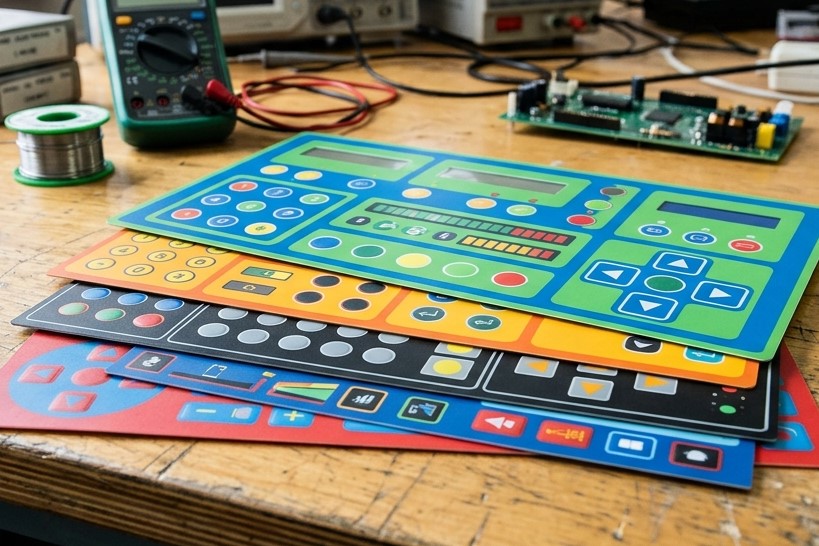
Graphics Overlay in Control Panels and User Interfaces
A graphics overlay is usually the exterior of a complex control console or instrument that can be seen, touched, and operated directly. It provides enough information and interactive buttons to show the operator how to use a machine.
What does a graphics overlay consist of?
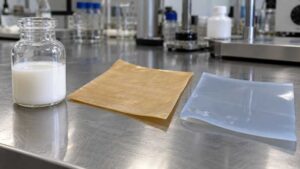
Graphics overlays are made from various materials, such as polyester, polycarbonate, and acrylic.
“Polyester overlay” refers to a material commonly used for graphics overlays due to its chemical and temperature resistance and durability in harsh environments. It is generally used in industrial controls, security, and healthcare settings.
Polycarbonate overlays feature impact resistance and thermal stability, and they are easy to process, including texturing, die cutting, and laser cutting. Additionally, FR (fire-retardant) polycarbonate is ideal for extreme temperatures. Polycarbonate overlays are suitable for use in rubber membrane keypads in aerospace, automotive, and industrial settings.
Lightweight acrylic overlays provide sufficient stiffness and light diffusion with high transparency for long-term HMI operation.
To reinforce durability, chemical resistance, and the lifetime of the user interface during operation, a hard coat can be applied to the surface of polyester and polycarbonate graphics overlays.
High Design Flexibility of Graphics Overlay in Rubber Membrane Keypads
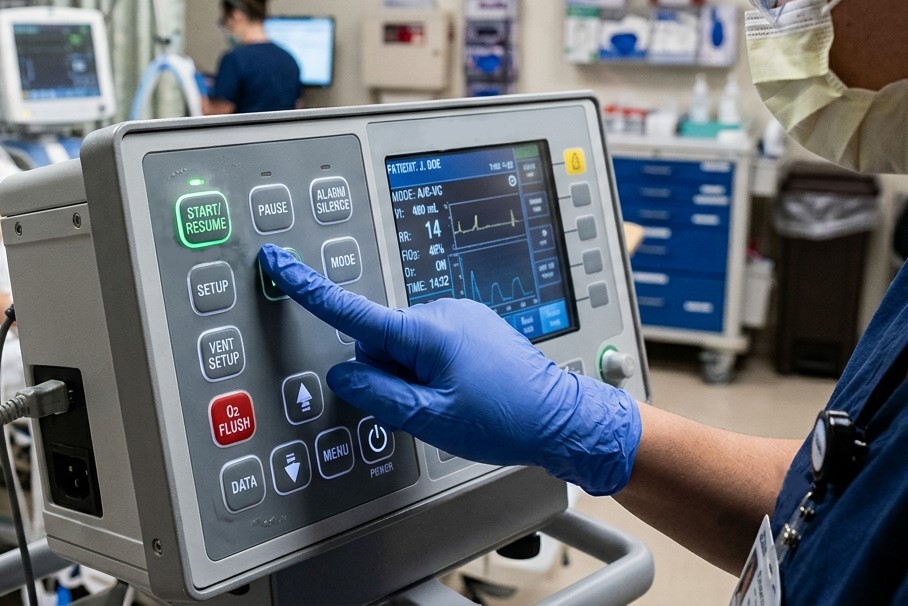
Flexible Aesthetic Design by Diverse Printing Ways
There are three distinct printing methods for graphics overlays: screen printing, digital printing, and subsurface printing.
Screen Printing is ideal for:
- For robust and vibrant graphics and legends.
- Resistance to wear from long-term pressure and heavy use.
- Simple color designs in large batches.
When to choose Digital Printing:
- High-color graphics for designs like full-color patterns, gradient backgrounds, and other customizations for your rubber membrane keypads.
- Cost-effectiveness for rapid prototypes or small batches.
When to select Subsurface Printing:
- Utilizing indirect printing methods, designed graphics and legends are printed on the back of outer overlays.
- Provides abrasion and chemical resistance against mechanical wear and cleaning detergents.
Surface Finishes: Gloss, Textures, & Anti-Glare Options
Our graphics overlays can be customized with a variety of surface finishes, textures, and anti-glare functions. Gloss levels include matte, glossy, velvet, and fine velvet. We can also create textured overlays based on your needs.
The finish you select determines the ease of cleaning, tactile experience, and stain resistance. Matte overlays decrease reflection in security access, agricultural, construction, and outdoor settings. Glossy graphics overlays enhance the clarity of keytop legends and provide a polished appearance for your elastomer keypads. Additionally, the velvet texture hides fingerprints and makes your keypads look clean and high-end.
Embossing Designs for Tactility, Functional Zoning, and Appearance
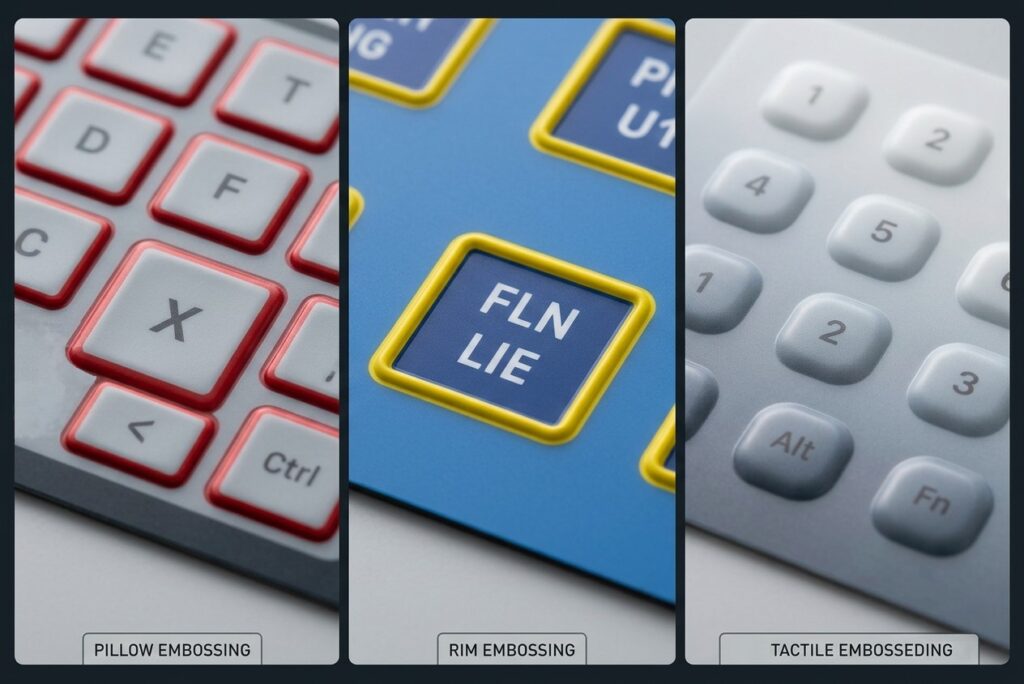
Based on your needs for tactile feedback, appearance, and functional zoning, there are various embossing designs to choose from, including pillow embossing, rim embossing, and tactile embossed graphics.
Pillow embossing raises the entire button for visibility and identification, providing a flat, consistent press surface for keytops. This design is optimal for high actuation force in your rubber membrane keypad project, supporting more dome switches.
Rim embossing highlights specific functional zones on control panels or machine user interfaces by raising the colored frame of an area on the graphics overlay of a silicone rubber membrane keypad. This design is ideal for compact layouts and eyes-free operation in industrial control panels.
Tactile embossed graphics refer to buttons with rounded, spherical shapes, which can improve tactile precision and provide noticeable tactile feedback.
If you want to choose one for your keypads, keep the following in mind:
- Pillow & rim embossing are more cost-effective options.
- Tactile embossing is expensive, requiring a complex process and tooling.
- Like the heading said, embossing keys are engineered for functionality, specific tactile responses, and appearance design. Thus, aesthetics cannot be a single consideration during selection.
- You can view details of the different embossing button styles. A radius key is recommended over a sharp corner.
- Spacing, the material thickness of the graphics overlay, and the requirements of the backlit keypad should also be taken into account in your rubber membrane keypad design.
Your applications of interactive products have determined the emboss type.
- Want an excellent balance of visibility and performance? Pillow embossing is better.
- To achieve cost-efficiency and compact layouts in industrial control consoles, rim embossing is optimal.
- If you care about superior tactile response and operational precision, choose tactile embossing.
FAQs
Can a silicone rubber membrane keypad feature rapid or desired tactile feedback?
Yes. Your keypad project isn’t limited but also reaches the conductive membrane keypad or the non-conductive one with customized tactile responses based on your demands and applications.
How does SKF ensure consistent tactile response across buttons?
We care about quality control of our keypad products by precision tooling machining, strict material formulation, and tactile domes with consistent sizes & shapes.
Will the backlit effect be pro in the silicone rubber membrane keypad?
No, with proper light pipes, or light transmission window design in graphics overlays, and enough transparency of silicone materials, a backlit effect can be excellent in a silicone rubber membrane keypad.
Can I customize a rubber membrane keypad with carbon pills for activation?
Yes, but metal domes (stainless steel domes) or embossed polyester domes (polydomes) are more recommended, maintaining enough tactility and flexible designs with optional shapes, sizes, and actuation force.
Is the actuation method of a rubber membrane keypad similar to that of a silicone rubber keypad?
Yes, they both rely on pressing keytops and make a connection between electrical contact and contact of the circuit board.
How can I reinforce a rubber membrane keypad with EMC shielding?
By utilizing copper- or aluminum-coated polyester films, rubber membrane keypads support sensitive equipment and devices in medically sensitive machines like imaging and diagnostics.
Final Thoughts
As essential components of user interfaces, graphics overlays affect the interactive user experience, the protection of internal electronics, and the functionality of the keypad in specific settings. By combining your applications and demands with robustness and usability, we can enhance your rubber membrane keypad.
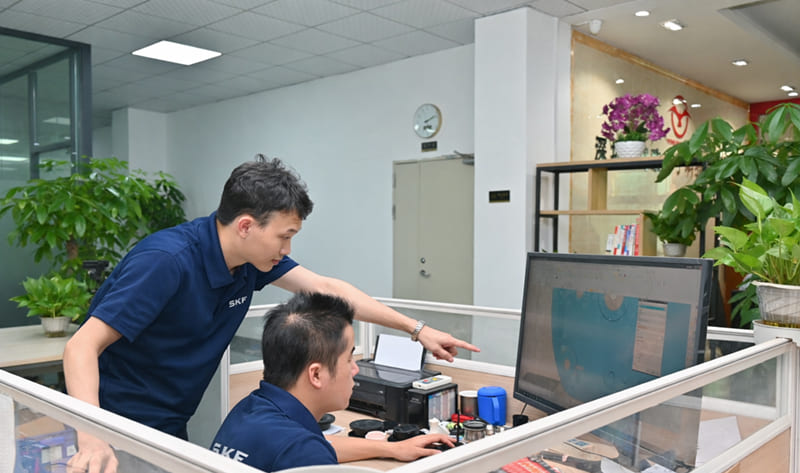
The SKF engineering team is ready to assist with your keypad project.