
Tactile Silicone Buttons Manufacturer
Custom tactile silicone buttons for OEM and ODM products requiring defined tactile feedback, controlled actuation force, and accurate switch or PCB interface.
SKF develops individual silicone button components around your mechanical structure, switching mechanism, and operating requirements.
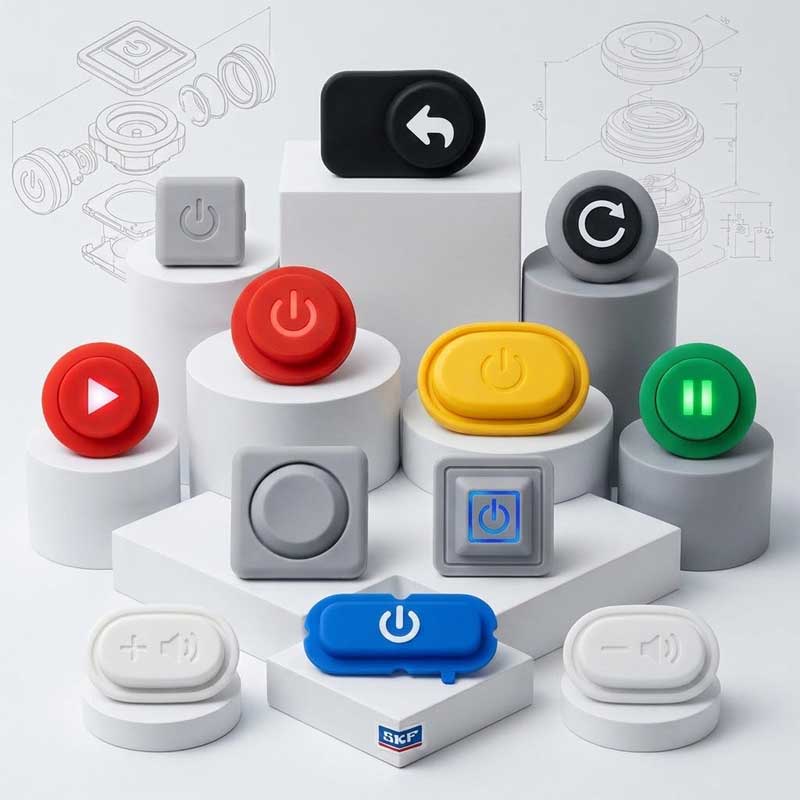
What Are Tactile Silicone Buttons?
Tactile silicone buttons are molded silicone components that provide physical feedback when pressed. Unlike a complete silicone keypad, an individual button is developed as a separate component around the required button size, tactile response, mounting structure, and switching mechanism.
Button geometry affects how pressing force is transferred through the silicone structure. Dome shape, web thickness, silicone hardness, button height, travel, and support structure can all influence the resulting tactile feel.
A tactile silicone button can work with conductive contacts, carbon pills, metal domes, or mechanical switches. The button needs to match the switching point and available movement of the selected mechanism.
SKF develops custom silicone buttons from customer drawings, samples, or application requirements. The engineering review considers the button together with the housing, switch or PCB interface, and available installation space.
Tactile Silicone Button Manufacturing at a Glance
Button Structure
The button geometry is developed around the required force, travel, height, and installation space. Dome and web geometry can be adjusted during design review to achieve the required pressing behavior.
Tactile Response
Actuation force, travel, snap behavior, and return response are considered together. Actuation force alone does not fully define how a silicone button will feel during operation.
Switch Compatibility
The lower contact area and button travel are matched to the selected switching mechanism. For conductive contacts, the contact position also needs to align with the PCB layout.
Production Validation
Samples can be reviewed against agreed dimensional, tactile, switching, and appearance requirements before mass production. The actual inspection criteria depend on the button structure and application.
Where Are Tactile Silicone Buttons Used?
Tactile silicone buttons are suitable for products that use individual controls rather than a complete integrated keypad. The button can be developed around the existing enclosure and switching mechanism.
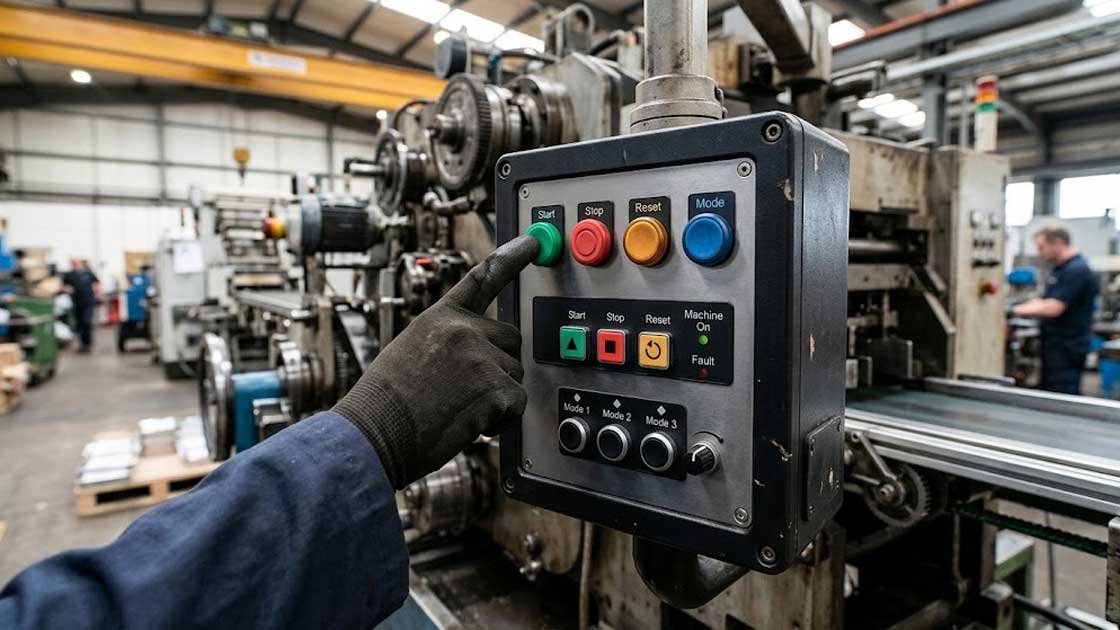
Industrial Equipment
Industrial equipment may use individual buttons for start, stop, reset, mode selection, or machine adjustment. Button size, operating force, travel, and surface geometry need to match the operating environment. SKF reviews the button together with the housing and switch position to reduce problems such as excessive travel, insufficient contact movement, or interference with surrounding components.

Medical and Laboratory Equipment
Individual silicone buttons can be used on control panels, handheld instruments, diagnostic equipment, and laboratory devices where defined physical feedback is required. The design can take into account available panel space, cleaning conditions, operating force, and material requirements. Any medical or regulatory requirements should be confirmed according to the specific device and target market.
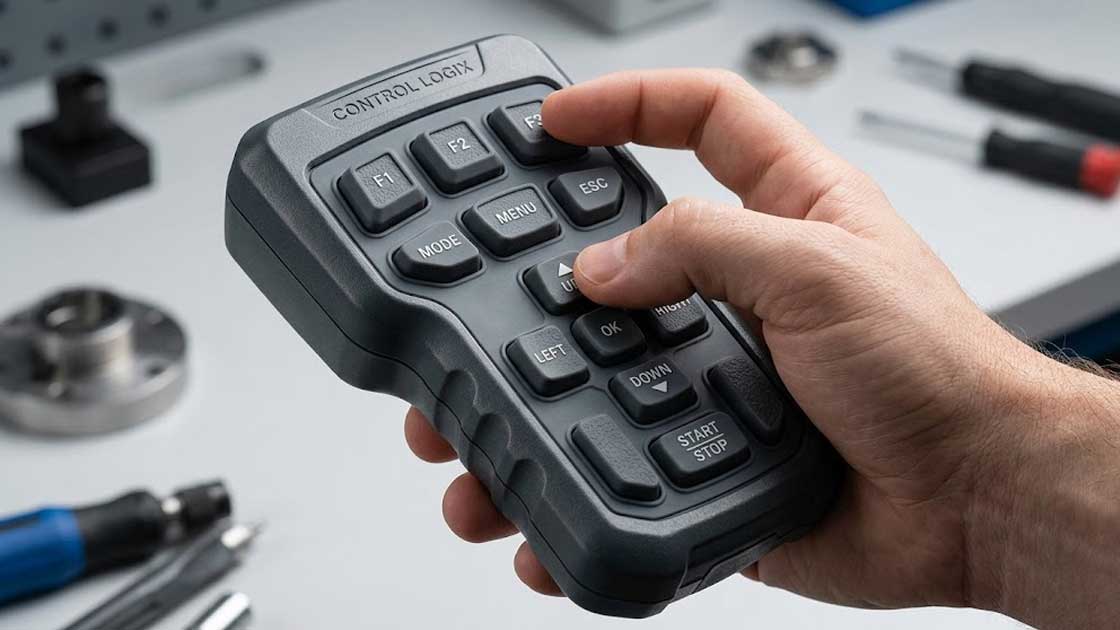
Handheld Electronic Devices
Compact electronic products often have limited space for individual buttons. The silicone button can be shaped around the enclosure opening while maintaining the required travel and tactile response. Low-profile structures can be considered when internal height is restricted. The final geometry depends on the switch type, button dimensions, and available clearance.

Automotive and Vehicle Controls
Individual tactile buttons can be used for auxiliary controls and compact vehicle interfaces. The design review may consider temperature, repeated operation, vibration exposure, button spacing, and installation conditions. Material selection and button geometry should be based on the actual application requirements.
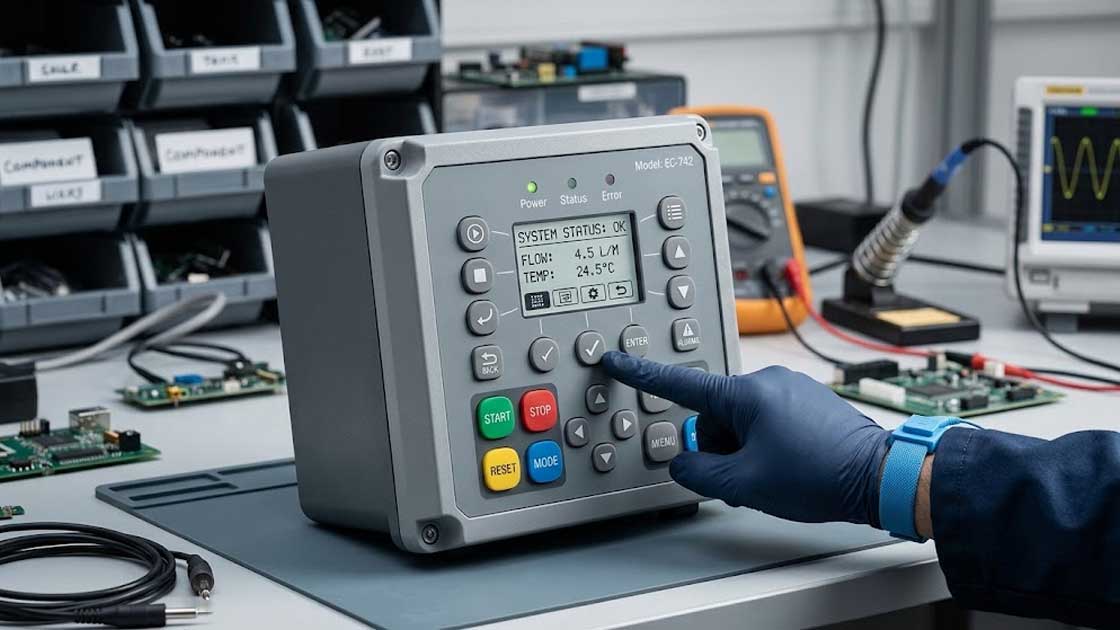
Electronic Control Equipment
Equipment manufacturers may use individual silicone buttons when a standard switch does not provide the required appearance, tactile feel, or mounting arrangement. SKF can develop the silicone button around an existing housing, PCB, switch, or reference component instead of treating the button as an isolated standard part.
Tactile Silicone Button Types
Round Power Icon Tactile Silicone Button
Arrow Navigation Tactile Silicone Button
Raised Dome Power Tactile Silicone Button
Industrial Rotary-Style Tactile Silicone Button
Backlit Square Tactile Silicone Button
Extended Bar Tactile Silicone Button
Custom Tactile Silicone Button Design
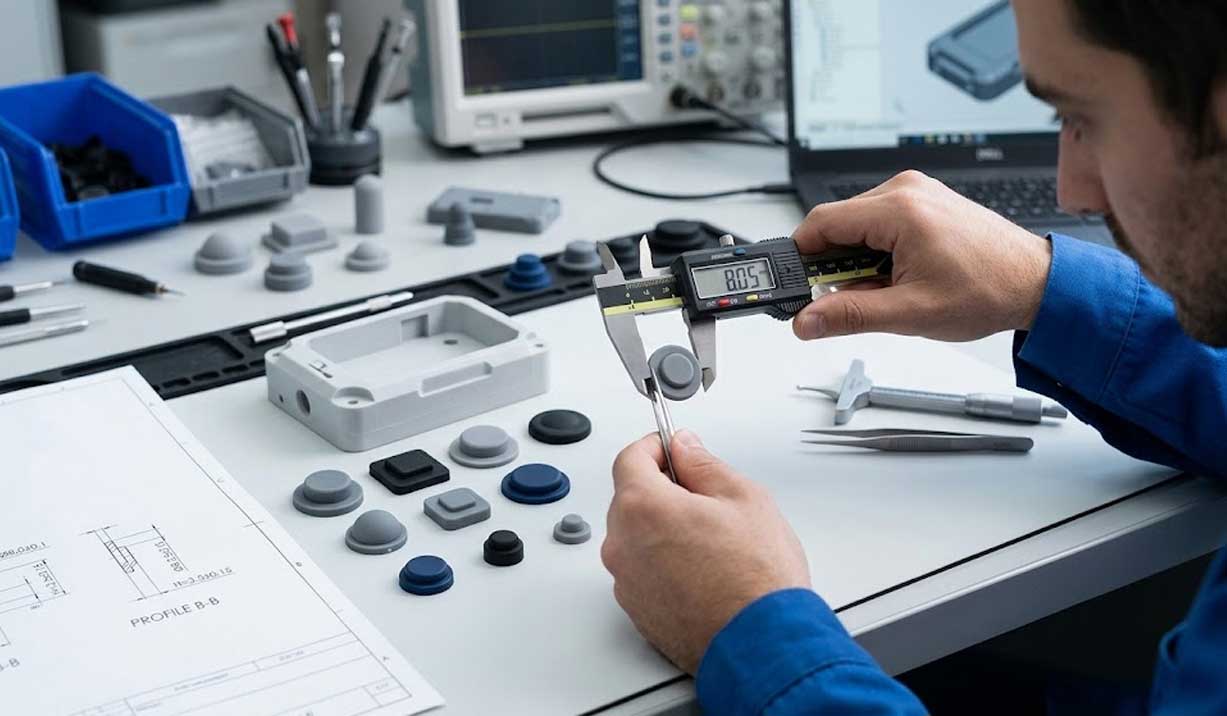
Button diameter, length, height, top profile, edge shape, and lower structure can be designed around the enclosure and user interface.
For compact products, the surrounding clearance is particularly important. The button needs enough space to move without rubbing against the housing.
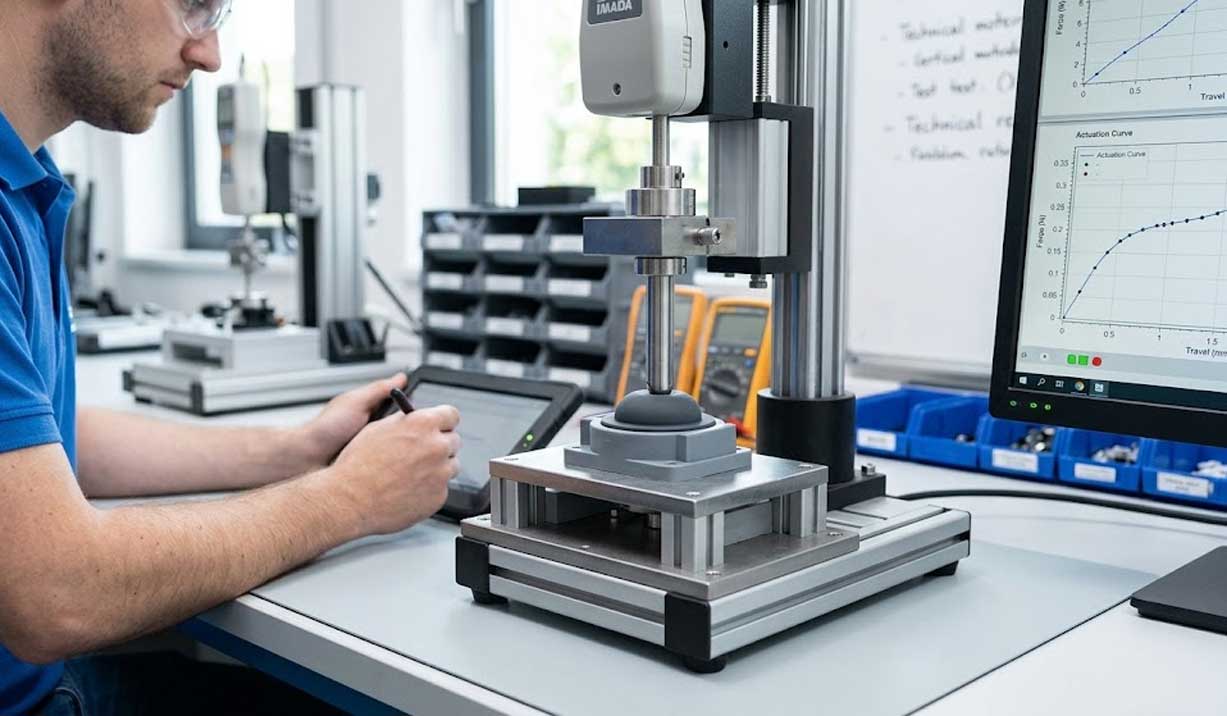
Actuation force defines how much pressure is needed to move the button through its operating point. Travel defines how far the button moves during operation.
These parameters need to be considered together. Changing the dome or web structure can affect both the required force and the resulting travel.
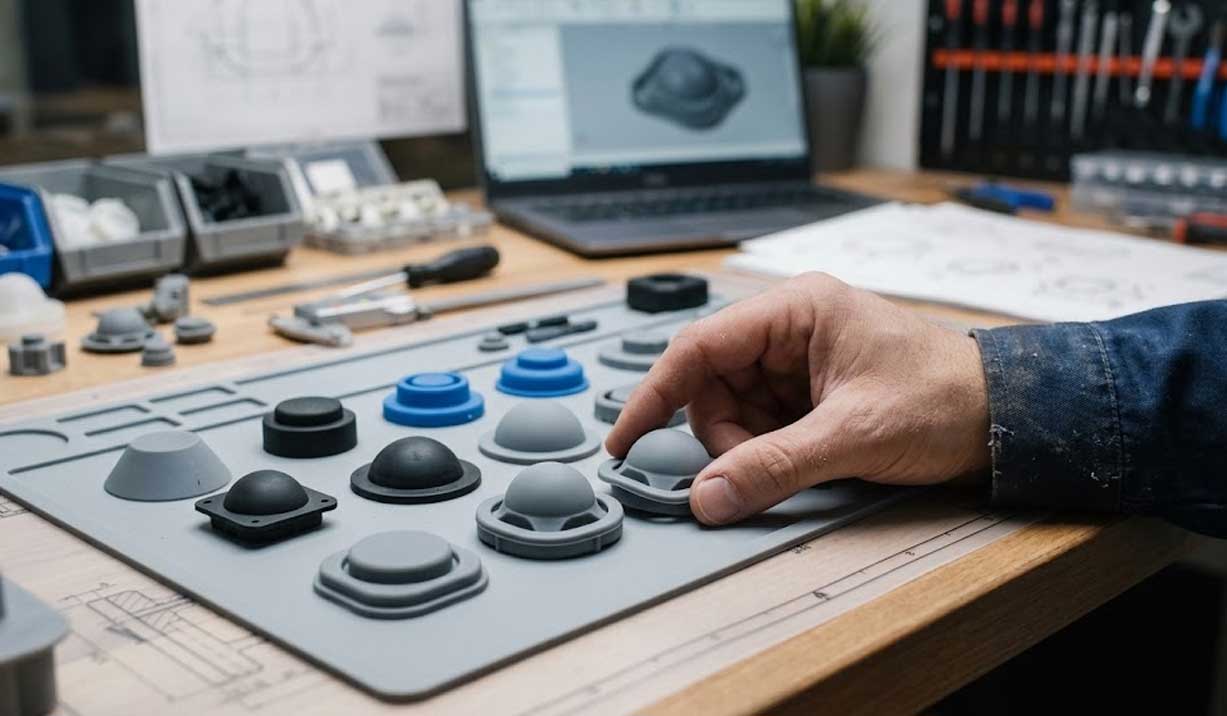
The silicone structure converts the user’s pressing force into controlled movement.
Dome geometry, web thickness, support geometry, and button height can influence the force curve and return behavior. The structure should provide the required tactile response without creating unnecessary stress around the flexible area.
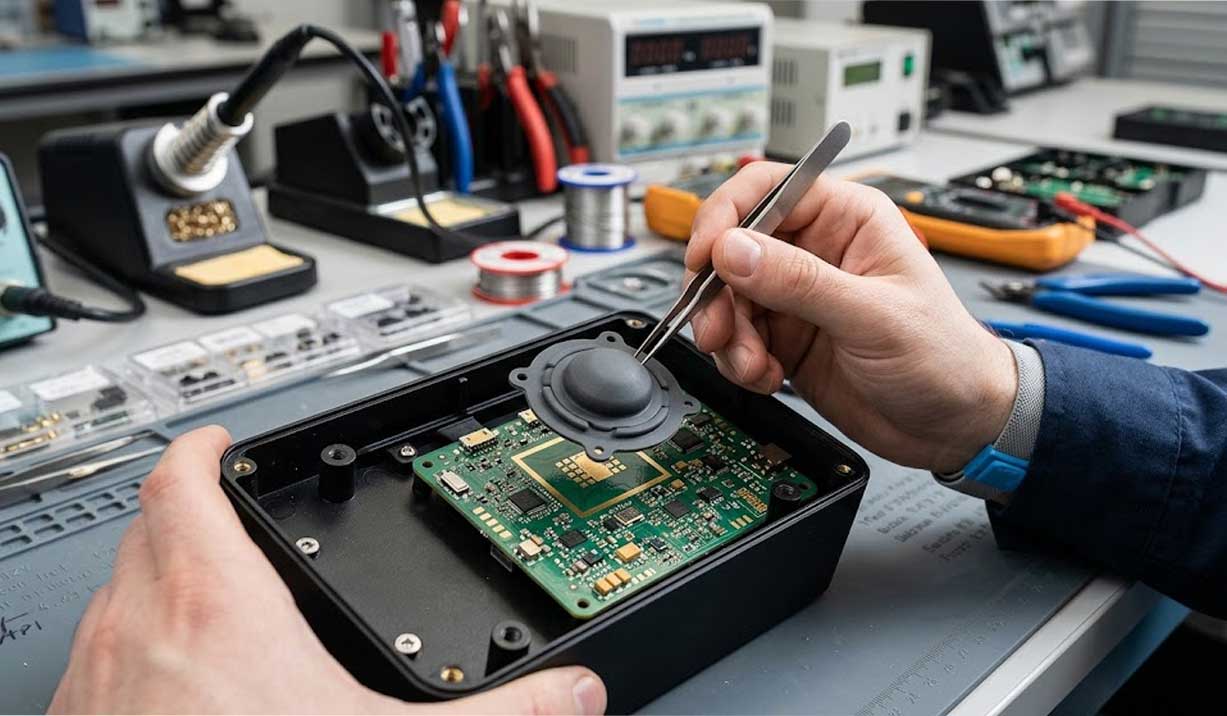
The lower side of the button can be designed for the selected contact mechanism.
Depending on the product, the button may actuate a carbon pill, conductive silicone contact, metal dome, mechanical switch, or another customer-specified mechanism.
The switching point should be considered together with button travel. This helps ensure that the electrical or mechanical activation occurs at the intended point in the button stroke.
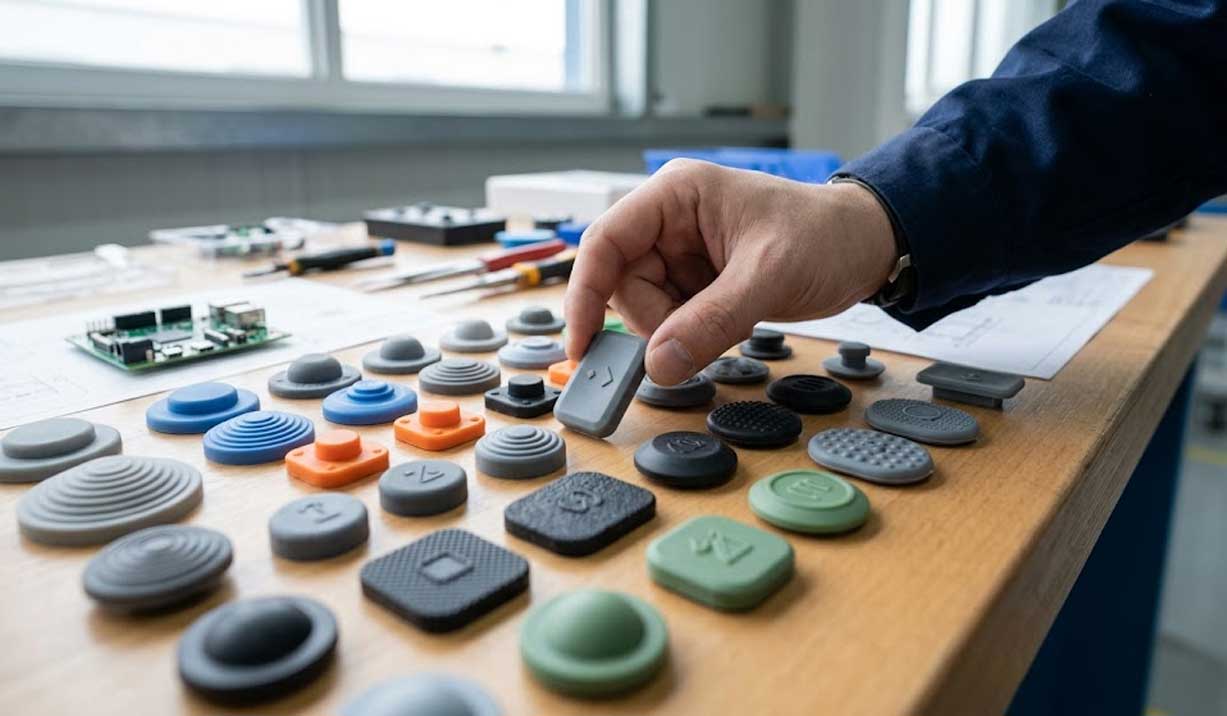
Silicone hardness affects button response, but it should be selected together with the button structure rather than independently.
Color, surface texture, printing, molded markings, and other appearance requirements can also be incorporated when required.
Start Your Custom Tactile Silicone Button Project
Send SKF your button drawing, 3D model, reference sample, switch specification, PCB contact layout, target force, and estimated quantity when available.
SKF can review the button geometry, tactile requirements, switching interface, and housing fit before tooling so that key design risks can be identified during engineering development.
How Should Tactile Silicone Buttons Be Specified?
A tactile silicone button should be specified using a combination of mechanical, tactile, and switching requirements rather than force alone.
Actuation force defines the pressure required to move the button through its main operating point. The appropriate value depends on the user, application, button size, and switching mechanism.
Travel defines the available button movement. It should provide enough movement for the intended tactile response while remaining compatible with the switch and enclosure.
Return behavior affects how the button comes back after release. Silicone material, hardness, dome geometry, and web structure all contribute to this behavior.
Switching point defines where the electrical or mechanical switch is activated within the button stroke. This point should be checked against the tactile transition.
Button geometry affects force, travel, stability, and assembly clearance. Changes in dome shape or web structure can change the resulting force curve.
Installation structure determines how the button is held and guided inside the product. Clearance and alignment should be reviewed before tooling.
A higher actuation force does not automatically produce better tactile feedback. Force, travel, switching point, and return behavior need to work together for the intended user interaction.
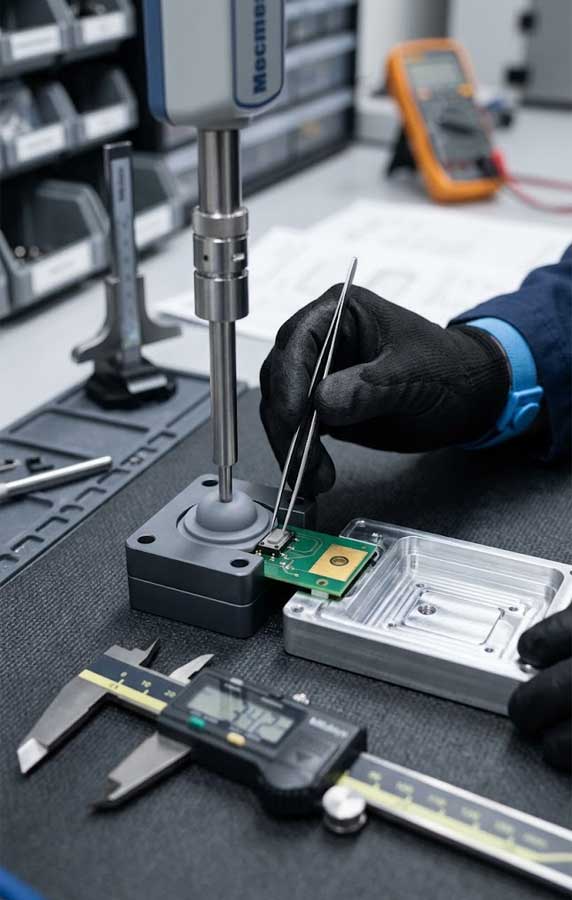
How SKF Develops Custom Tactile Silicone Buttons
Requirement Review
SKF reviews the information available for the button before development. This may include a 2D drawing, 3D model, reference sample, switch specification, PCB layout, housing drawing, target force, or application requirements. When important information is missing, the relevant requirements need to be confirmed before tooling.
Engineering Review Before Tooling
The button geometry is reviewed for moldability, movement, installation clearance, and contact alignment. SKF engineers consider the relationship between the button geometry and the switching structure. A button can meet its external dimensions while still producing an unsuitable force or switching point, so these factors need to be evaluated together.
Tooling and Silicone Molding
Tooling is developed after the button structure and production requirements are confirmed. Molding conditions and material selection can affect dimensional consistency and tactile behavior. The production process therefore needs to maintain the geometry established during engineering development.
Sample Validation
Initial samples can be checked against the agreed requirements. Depending on the project, validation may include dimensions, button force, travel, switching behavior, appearance, and assembly fit. The actual inspection items should be defined according to the product requirements.
Production and Inspection
After sample approval, production follows the confirmed material, tooling, dimensions, and inspection requirements. Quality checks can focus on dimensional consistency, surface appearance, tactile response, contact position, and assembly compatibility according to the project specification.
Tactile Silicone Buttons Technical Specifications
| Parameter | Specification / Options | Engineering Consideration |
|---|---|---|
| Product Type | Individual tactile silicone buttons | Designed as separate button components rather than a complete silicone keypad |
| Button Geometry | Custom shape and dimensions | Determined by enclosure space, switch position, required travel, and user interface |
| Silicone Hardness | Customer-specified or selected during engineering review | Affects button force, return response, and tactile feel |
| Actuation Force | Customer-specified target | Depends on silicone hardness, dome geometry, web structure, button size, and support structure |
| Travel | Customer-specified target | Must provide sufficient movement while remaining compatible with the switching mechanism |
| Tactile Response | Application-specific | Force, travel, snap behavior, and return response are considered together |
| Dome Structure | Custom dome geometry | Used to adjust force response and button movement |
| Web Structure | Custom thickness and geometry | Influences flexibility, force curve, and return behavior |
| Contact Type | Conductive silicone, carbon pill, metal dome, mechanical switch, or customer-specified mechanism | Button geometry must match the selected contact and switching point |
| Contact Position | Based on customer PCB or switch layout | Requires accurate alignment between the button and contact area |
| Mounting | Panel-mounted, housing-supported, or customer-specified structure | Retention and clearance need to be checked during engineering review |
| Surface Finish | Smooth, textured, printed, or molded markings | Selected according to appearance and operating requirements |
| Color | Customer-specified | Silicone compound and color requirements should be confirmed before production |
| Operating Environment | Application-specific | Material and structure should be selected according to temperature, cleaning, chemicals, and other conditions |
| Inspection | Dimensional, appearance, tactile, contact, and assembly checks as required | Inspection criteria are defined according to the project specification |
What Information Should You Provide?
A complete drawing is helpful, but SKF can also begin a design review from a reference sample or preliminary requirements.
The most useful information includes:
- Button dimensions or CAD drawing
- Required actuation force
- Required travel
- Switch or contact type
- PCB contact location, when applicable
- Housing or panel dimensions
- Mounting and retention requirements
- Silicone hardness or material requirements
- Color and surface requirements
- Operating environment
- Target quantity
- Existing sample, if available
If the button is replacing an existing component, providing the original button and its operating conditions can help SKF understand the required tactile response.
Tactile Silicone Buttons FAQ
Can SKF manufacture individual silicone buttons?
Yes. SKF can develop individual molded silicone buttons for OEM and ODM products. The button can be designed around the customer's housing, switch, PCB, and required tactile response.
Can the actuation force be customized?
Yes. Actuation force can be influenced by the silicone material and button geometry, including the dome, web, height, and supporting structure.
The target force should be defined together with the required travel and switching point.
Can silicone buttons work with metal domes or mechanical switches?
Yes. The button geometry can be developed for the selected switching mechanism. The lower contact area and travel need to match the activation position of the switch.
Can SKF design a silicone button for an existing PCB?
Yes. The PCB contact location can be used as part of the design input. For conductive buttons, the contact position and dimensions should match the PCB contact area.
Can SKF match an existing silicone button?
An existing button can be used as a reference for dimensions, tactile response, material, appearance, and mounting requirements.
SKF can review the sample and determine what information is needed for a new production design.
What is needed to start a custom silicone button project?
A drawing or sample is the most useful starting point. If available, also provide the target force, travel, switch type, PCB or housing information, material requirements, and estimated production quantity.
Are tactile silicone buttons available in different colors and finishes?
Color and surface requirements can be incorporated into the button design. Available options depend on the silicone material, geometry, marking method, and application requirements.
Can SKF provide prototypes before mass production?
Prototype development can be discussed during the engineering review. The tooling and sampling approach depends on the button structure, project quantity, and validation requirements.