
Precision Manufacturing
Reliable Silicone Keyboards for Piano
Realistic Tactile Piano Feel
High Cycle Pressing Durability
Custom Key Layout Design
OEM Silicone Manufacturing Support

Challenges in Piano Interfaces
We design silicone keypads based on measurable engineering parameters, not guesswork.
Maintaining Piano-Like Tactile Response
Electronic piano interfaces require consistent key feedback to create a natural playing experience. Variations in silicone hardness, dome structure, or key travel can cause uneven pressing force between different keys, affecting user control and musical expression.
Ensuring Long-Term Performance Under Frequent Playing
Piano keyboards experience thousands of repeated presses during daily practice and professional use. Silicone key structures must maintain elasticity, conductive performance, and tactile response after extended cycling.
Achieving Precise Key Travel and Force Balance
Different electronic piano designs require specific actuation forces and travel distances. Incorrect silicone geometry can create keys that feel too soft, too stiff, or inconsistent across the keyboard.
Integrating Complex Electronic Structures
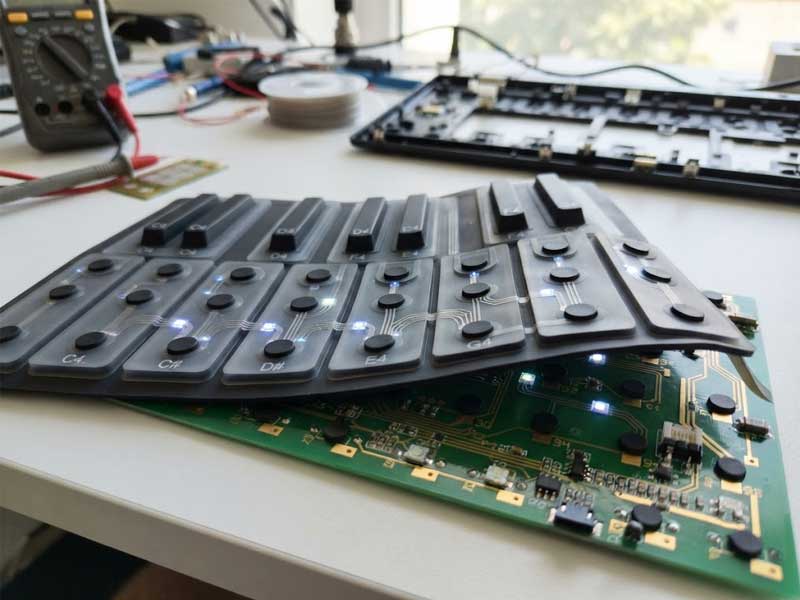
Modern silicone piano keyboards often require integration with PCB circuits, conductive carbon pills, LED indicators, and compact housing designs. Poor dimensional control can affect assembly accuracy and electrical contact reliability.
Engineered Silicone Keyboard Solutions for Piano Applications
Sector 01
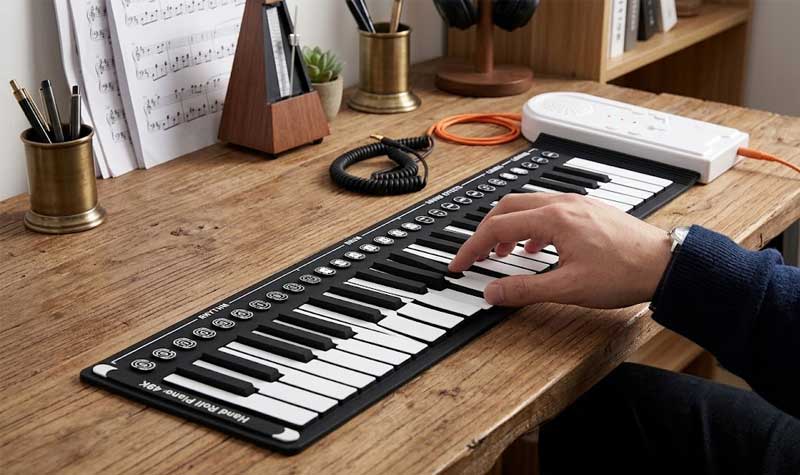
Optimized Silicone Dome Structure
- Custom Shore A silicone hardness selection for different tactile requirements
- Adjustable dome structure for soft, medium, or firm key feedback
- Stable rebound performance for repeated musical input
Sector 02
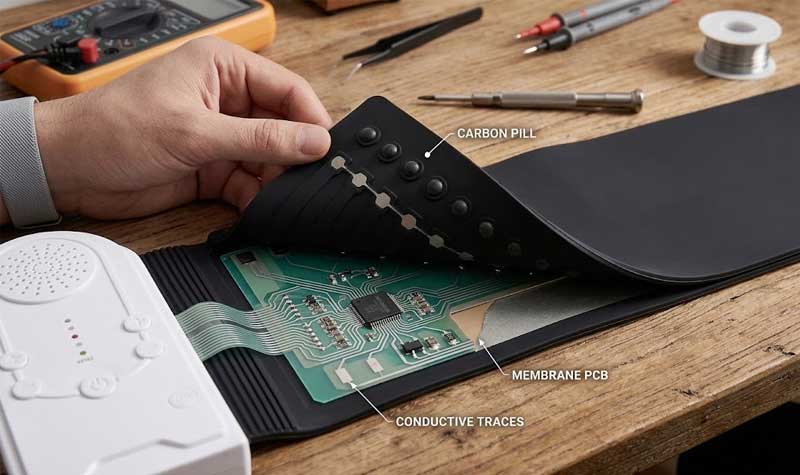
High-Durability Conductive Contact Design
- Carbon pills or conductive coatings available for switch activation
- Stable electrical performance after repeated pressing cycles
- Compatible with membrane PCB and electronic control systems
Sector 03
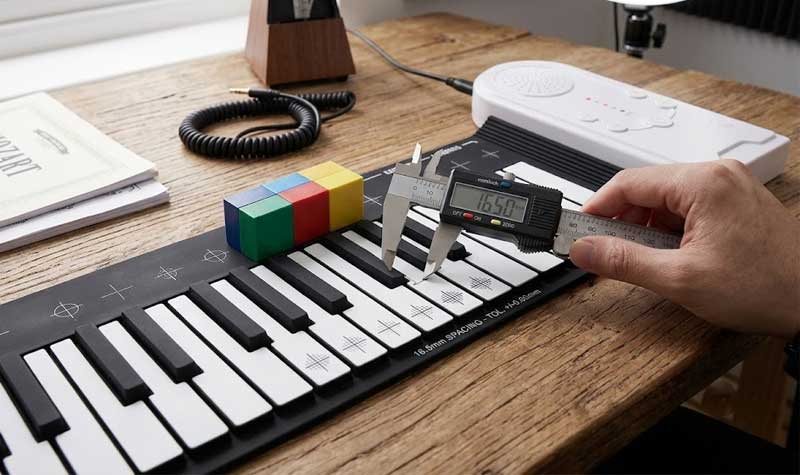
Precision Molded Key Layouts
- Custom key spacing and dimensions
- Integrated mounting features for electronic piano assemblies
- Controlled molding tolerances for multi-key structures
Sector 04
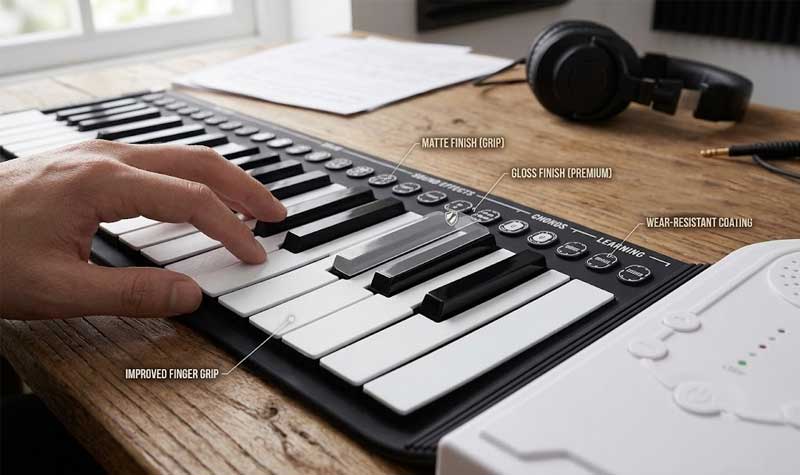
Wear-Resistant Surface Finishing
- Matte texture for improved finger grip
- Gloss or smooth finishes for premium appearance
- Protective coatings for enhanced surface durability
Sector 05
Integrated OEM Manufacturing Support
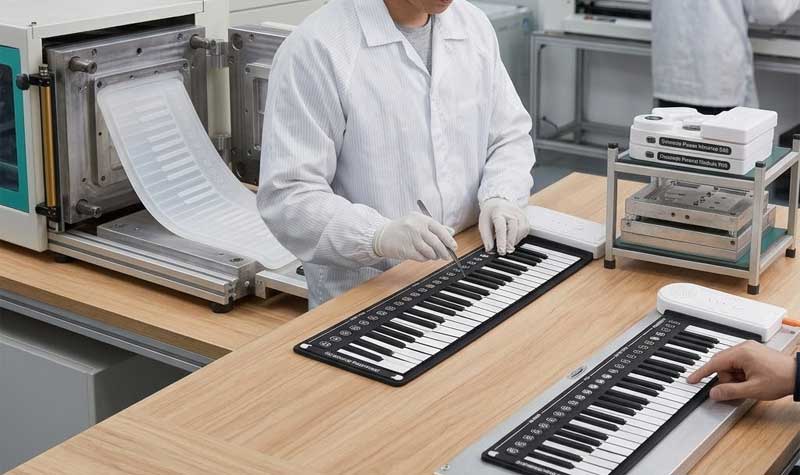
- Prototype development for new electronic piano designs
- Custom printing for key symbols and branding
- Assembly support based on customer device requirements
Typical Piano Applications
Electronic Piano Instruments
Portable Music Learning Devices
MIDI Controllers and Music Production Equipment
Interactive Musical Toys and Smart Devices
Technical Specifications for Silicone Piano Keyboard
| Parameter | Typical Range / Options |
| Material | Silicone Rubber, Conductive Silicone |
| Silicone Hardness | Shore A 30–70 |
| Key Travel | 0.8–3.0 mm |
| Actuation Force | 50–250 gf |
| Operating Temperature | -40°C to 200°C |
| Contact Type | Carbon Pill, Conductive Coating |
| Key Structure | Dome Key, Rubber Key, Integrated Silicone Sheet |
| Surface Finish | Matte, Glossy, Textured |
| Legend Options | Screen Printing, Laser Marking, Pad Printing |
| Backlighting | Optional LED Light Guide Integration |
| Key Layout | Custom Piano Keys, Function Keys, Control Panels |
| Durability | 500,000–1,000,000+ Press Cycles (Design Dependent) |
Custom Silicone Piano Keyboard Design Options
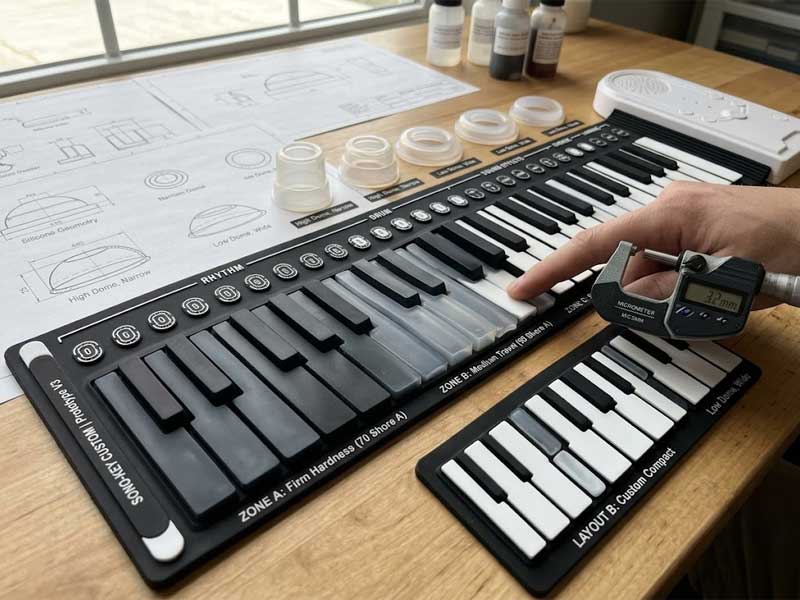
- Adjust silicone hardness, dome geometry, and key travel to achieve different playing feels.
- Optimize actuation force distribution across multiple keys.
- Design custom key sizes and layouts based on electronic piano housing requirements.
- Select carbon pills or conductive silicone solutions according to PCB switch requirements.
- Customize contact resistance and switching response.
- Integrate LEDs, light guides, and electronic components for advanced interfaces.
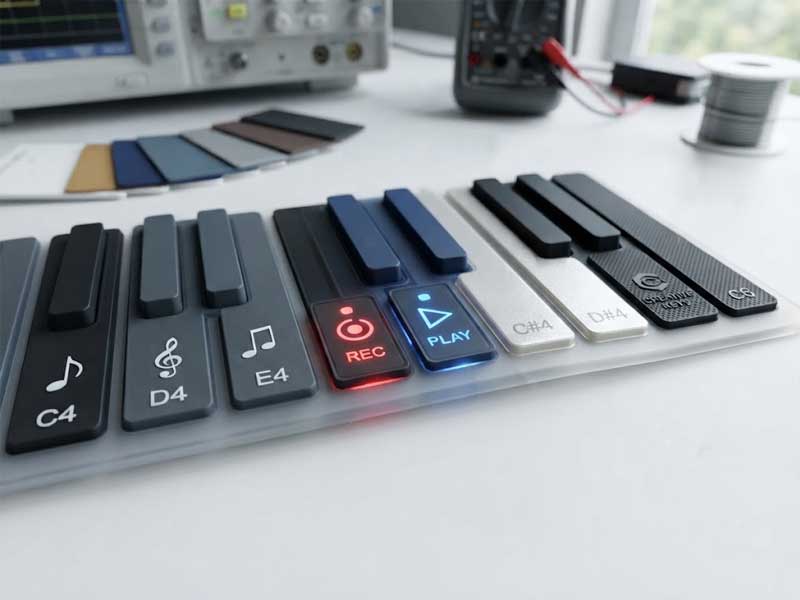
- Add printed notes, symbols, logos, or functional indicators.
- Customize colors and textures to match product design.
- Apply protective coatings to improve wear resistance during long-term use.
Silicone Piano Keyboard Manufacturing
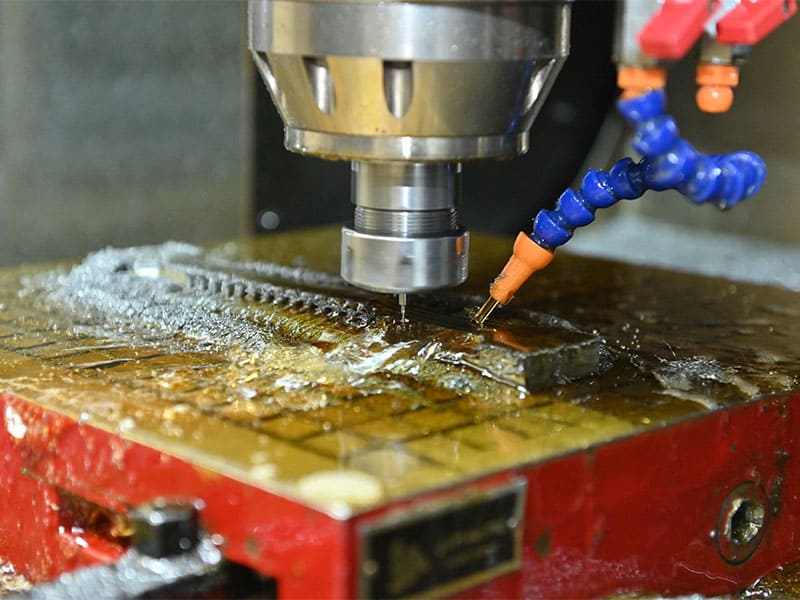
STEP 1: Molding
High-consistency rubber compression for base geometry.
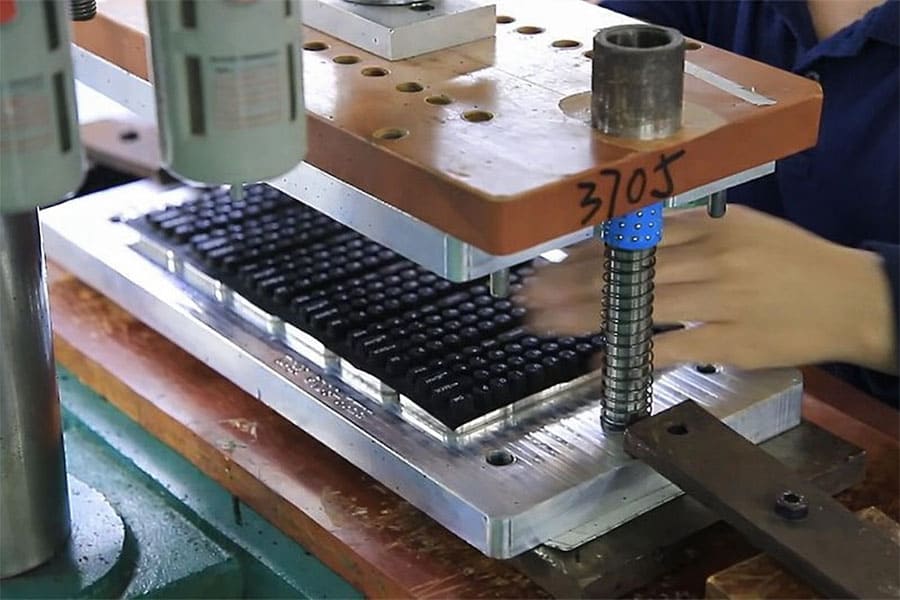
STEP 2:Etching
Laser removal of opaque spray for legend clarity.
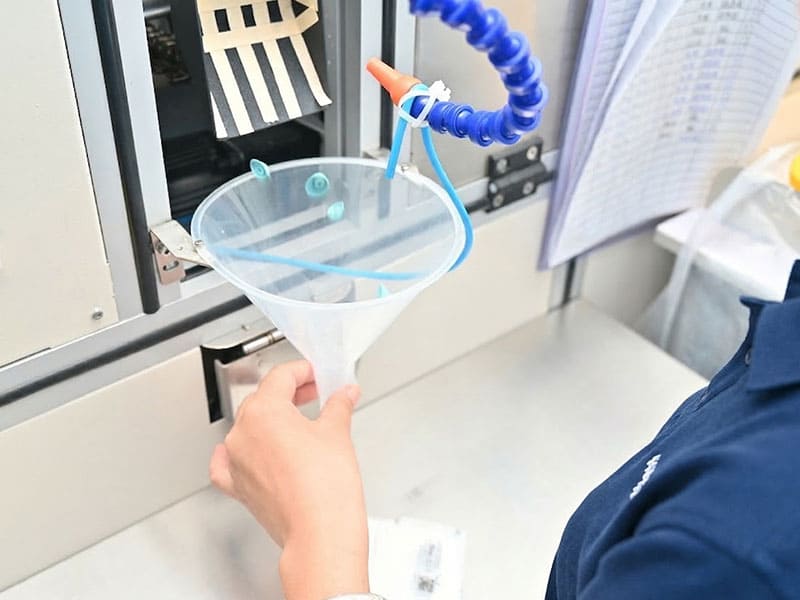
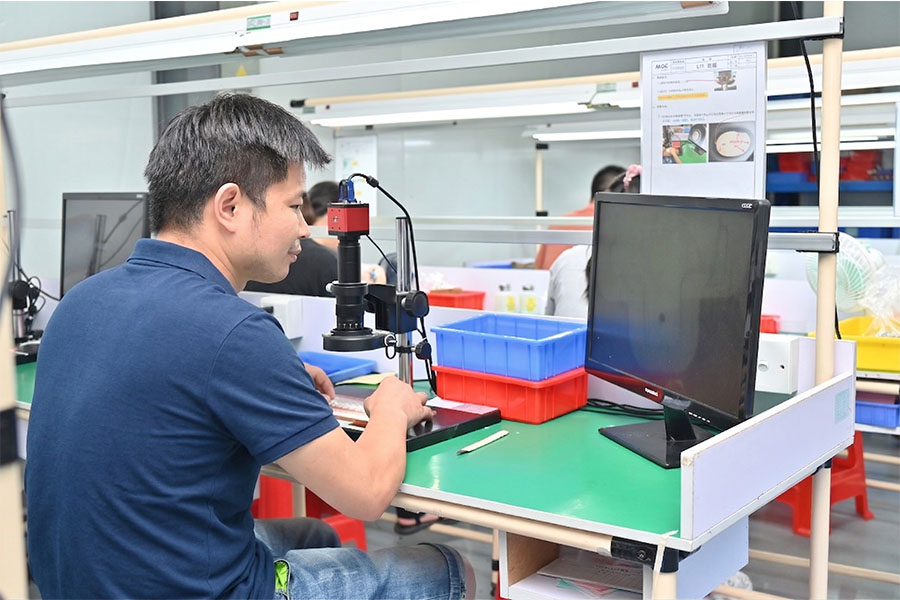
STEP 3:Inspection
Optical check for uniformity and icons.
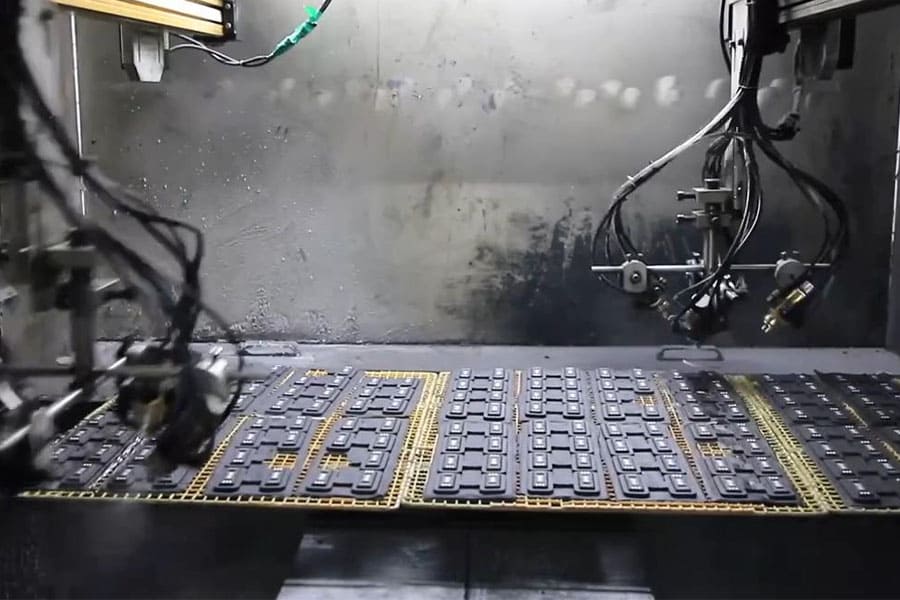
STEP 4:Coating
PU or UV protective layers for abrasion resistance.
STEP 5:Quality Control
Final functional audit and ISO standard approval.
Frequently Asked Questions
What is the MOQ for custom silicone piano keyboards?
Can silicone piano keyboards provide a realistic piano key feeling?
What materials are used for silicone piano keyboards?
Can the keyboard layout be customized?
How long can silicone piano keyboards last?
Can you provide samples before mass production?