Precision Manufacturing

Silicone Keyboard with Touchpad Manufacturer

Silicone keyboards with touchpad combine physical keys and touch navigation in one compact input solution. They are designed for electronic devices that need reliable key operation and smooth cursor control. Our custom silicone keyboard with touchpad solutions integrate molded silicone key structures, capacitive or resistive touch technology, and customized electronic components. They provide responsive tactile feedback, accurate touch control, and reliable sealing protection for OEM and ODM projects. These integrated input assemblies are suitable for industrial equipment, portable terminals, smart devices, and control systems. Custom key layouts, touchpad sizes, surface finishes, and connection methods can be developed to meet specific product requirements.

Durable Silicone Structure

Integrated Touch Navigation

Custom Layout & Function Design

OEM Manufacturing Support

A person using a grey Silicone Keyboard with Touchpad on a wooden desk with a computer monitor in a home office setting

What Are Silicone Keyboard with Touchpad?

A silicone keyboard with touchpad combines a flexible silicone keypad and an integrated touchpad into a single compact input solution, providing reliable key operation and smooth navigation control. Unlike separate plastic keyboards and external touchpads, silicone keyboards with touchpad are designed as a unified component. The silicone layer provides tactile key response through molded silicone domes, while the touchpad area integrates sensing technology such as capacitive touch sensors or resistive touch panels. For OEM projects, the structure must be carefully balanced between key travel, actuation force, touch sensitivity, and mechanical support. The touchpad position, silicone thickness, and internal electronics layout directly affect user experience and long-term reliability. During manufacturing, experienced suppliers pay close attention to the transition area between the silicone keys and touchpad surface. A common design challenge is preventing uneven silicone deformation near the touch zone, which may influence touch sensitivity or create inconsistent key feedback. Prototype testing is often required to optimize the silicone hardness, support ribs, and internal mounting structure before mass production.

Key Features of Silicone Keyboard with Touchpad

Integrated Keyboard and Touchpad Design

Silicone keyboard with touchpad assemblies combine button input and touch navigation into one compact interface. This integrated design reduces the need for multiple components while allowing customized placement of keys, touch areas, indicators, and functional controls. The silicone structure can be molded around electronic layers, support frames, or PCB assemblies to create a complete input module. This approach helps manufacturers achieve cleaner product designs and easier installation during final assembly.

Custom Touchpad Technology Integration

Different touch technologies can be integrated according to application requirements. Capacitive touchpads provide smooth finger navigation and gesture control, while resistive touch solutions can support operation with gloves or stylus input. Touchpad size, sensing area, sensitivity settings, and protective surface layers can be customized. For harsh environments, additional sealing structures and protective coatings can be added to improve resistance against moisture, dust, and surface wear.

Reliable Tactile Silicone Key Performance

The silicone key structure is engineered to provide consistent tactile feedback during repeated operation. Key parameters such as actuation force, travel distance, snap ratio, and silicone hardness influence the overall button feel. Experienced silicone manufacturers optimize dome geometry instead of only adjusting material hardness. A silicone dome with excessive height may create unstable feedback, while insufficient support can reduce tactile response after repeated cycling. Proper mold design helps maintain consistent performance across production batches.

Waterproof and Sealed Input Surface

The one-piece silicone construction creates a continuous protective surface that helps prevent liquid and dust from entering the internal electronics. Compared with mechanical keyboards with exposed gaps, silicone keyboard with touchpad designs provide better protection for portable and industrial equipment. The sealing performance depends on the complete structure, including silicone skirt design, housing compression, adhesive layers, and cable routing. Each element must be considered during engineering development to achieve reliable environmental protection.

Flexible OEM Layout Customization

Silicone keyboards with touchpad can be customized with different key numbers, layouts, symbols, colors, and functional zones to meet specific device requirements. Manufacturers can adjust the keyboard dimensions, touchpad shape, and internal structure to match product housings, PCB designs, and user interface needs. Custom options include key arrangement, touch sensing area, silicone hardness, tactile force, surface texture, protective coating, printed legends, icons, backlighting, and light transmission designs.

Durable Materials for Long-Term Operation

Silicone rubber provides excellent resistance against wear, temperature changes, and environmental exposure. Depending on the application, different silicone formulations can be selected to achieve the required balance between flexibility, durability, and tactile response. For industrial projects, material selection is usually evaluated together with operating temperature, cleaning requirements, chemical exposure, and expected service life. Silicone keyboards with touchpad are commonly designed for millions of operating cycles when the structure and material are properly matched.

Versatile Solutions for Demanding Sectors
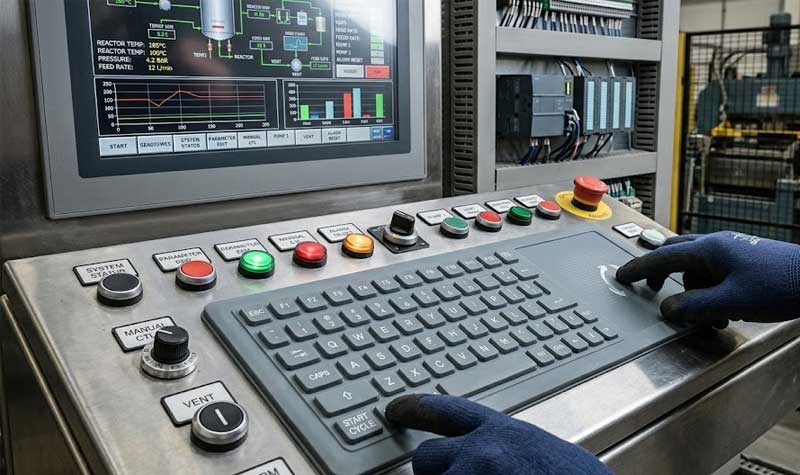
An operator in work gloves using an industrial Silicone Keyboard with Touchpad integrated into a control panel in a factory setup

Sector 01

Industrial Control Equipment

Silicone keyboards with touchpad functions are widely used in industrial control systems that require reliable input under demanding working conditions. The integrated design provides tactile button operation for frequently used commands while allowing touch navigation for menus, settings, and parameter adjustments. Industrial customers often require sealed input surfaces, stable key response, and long operating life. The silicone structure can be engineered with reinforced mounting areas, protective coatings, and customized electrical interfaces to match different control panel designs.

Durable Operation in Harsh Environments

Sealed silicone surfaces help protect internal electronics from dust, moisture, and industrial contaminants.

Combined Control Interface

Physical keys and touch navigation reduce the need for separate input components in compact equipment designs.

Sector 02

Portable Terminals and Handheld Devices

Portable electronic devices require lightweight and space-efficient input solutions. Silicone keyboards with touchpad combine multiple control functions into a single flexible assembly, making them suitable for handheld terminals, mobile data collectors, and portable control devices. The silicone material provides comfortable touch feedback, while the integrated touchpad improves navigation efficiency when screen space or external accessories are limited.

Compact Interface Integration

Improved User Interaction
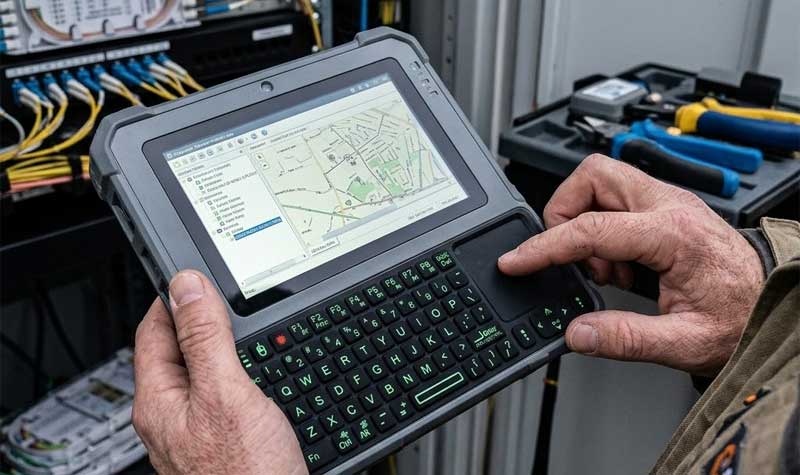
A technician operating a handheld terminal with a built in Silicone Keyboard with Touchpad in a server room setting
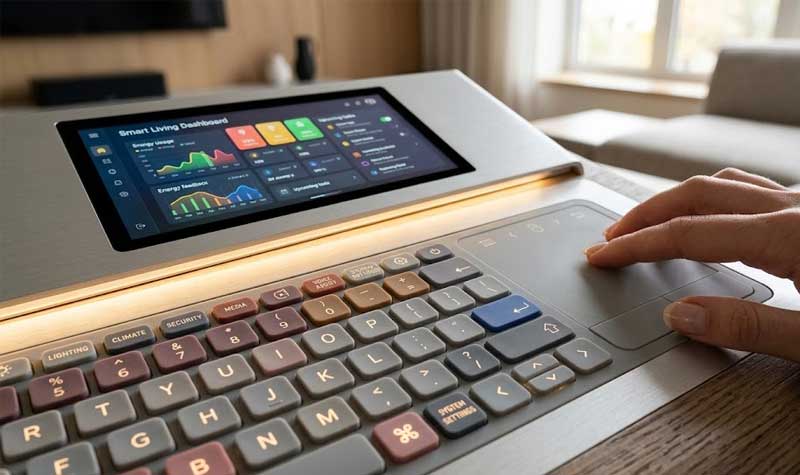
A hand operating a custom Silicone Keyboard with Touchpad built into a modern smart home control console next to a display screen

Sector 03

Smart Devices and Embedded Electronics

Smart devices increasingly require customized input interfaces that balance appearance, durability, and functionality. Silicone keyboard with touchpad assemblies can integrate custom icons, backlighting, multi-color designs, and branding elements for unique product interfaces. The soft-touch silicone surface also provides a premium user experience compared with traditional rigid plastic buttons.

Sector 04

Medical and Laboratory Equipment

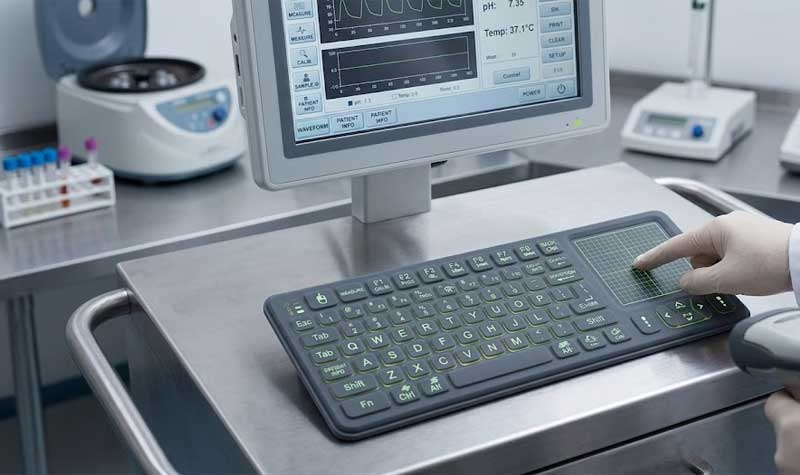
Medical and laboratory devices require input components that are easy to clean, durable, and reliable during repeated operation. Silicone keyboards with touchpad provide smooth surfaces that reduce exposed gaps where contaminants can accumulate. Material selection and surface treatment can be customized according to cleaning requirements and operating conditions. For controlled environments, manufacturers evaluate silicone grade, coating options, and printing durability together rather than selecting materials only by appearance.
Easy-to-Clean Surface Design

Stable Input Performance

A gloved technician uses a medical grade Silicone Keyboard with Touchpad and a barcode scanner in a sterile laboratory environment with equipment

Technical Specifications

SpecificationTypical Options
Product TypeSilicone keyboard with touchpad / integrated silicone keypad assembly
Silicone MaterialSilicone rubber, conductive silicone, medical-grade silicone options
Silicone HardnessShore A 30–80
Key Actuation Force50–300 gf
Key Travel0.5–2.5 mm
Tactile Ratio30%–70% depending on dome design
Touchpad TypeCapacitive touchpad / resistive touchpad
Touchpad SizeCustom according to device housing
Circuit ConnectionPCB, FPC, membrane circuit, wire connection
Surface FinishMatte, textured, glossy, soft-touch coating
Legend OptionsScreen printing, laser engraving, laser etching, backlit legends
BacklightingLED illumination, light guide structure, custom light zones
Waterproof ProtectionSealed silicone construction, IP-rated design available
Operating TemperatureApprox. -40°C to 200°C depending on silicone grade
Service Life1 million+ key cycles depending on structure and operating conditions
CustomizationLayout, color, hardness, touchpad position, electronics integration

Customization

“We provide OEM and ODM customization for silicone keyboards with touchpad, covering mechanical structure, tactile performance, touch technology, and final assembly requirements. Each project is developed according to the device housing, PCB design, operating environment, and user interface expectations. From initial prototype development to mass production, our engineering team focuses on balancing key response, touch sensitivity, sealing performance, and manufacturing efficiency.”

Silicone Keyboard with Touchpad Design Options

Waterproof Silicone Keyboard with Touchpad

Flexible waterproof silicone keyboard with integrated touchpad, featuring sealed silicone construction, durable key legends, and customizable layouts. Designed for OEM projects requiring dust resistance, easy cleaning, and reliable touch input performance.

Custom Silicone Keyboard with Touchpad

Custom silicone keyboard with touchpad designed with flexible silicone material, integrated pointing control, and tailored key layouts. Supports OEM customization of dimensions, key configurations, printing, and connection options for different device designs.

USB Silicone Keyboard with Touchpad

USB silicone keyboard with touchpad combines soft silicone keys with plug-and-play USB connectivity. Features a compact design, comfortable tactile feedback, and customizable key arrangements for manufacturers seeking reliable flexible keyboard solutions.

Backlit Silicone Keyboard with Touchpad

Backlit silicone keyboard with touchpad integrates light-guiding structures and illuminated key legends for low-light operation. Available with custom silicone materials, LED backlighting designs, and surface printing options for OEM applications.

Flexible Silicone Keyboard with Touchpad

Flexible silicone keyboard with touchpad offers a soft, lightweight, and durable input solution with customizable key shapes and layouts. Manufactured with high-quality silicone rubber for excellent flexibility, waterproof protection, and long service life.

Mini Silicone Keyboard with Touchpad

Mini silicone keyboard with touchpad features a compact silicone keypad design with integrated touch control and ergonomic key arrangement. Supports custom molding, key printing, and functional modifications for space-limited device designs.

Silicone Keyboard with Touchpad Manufacturing Process
SKF Silicone kaypad factory 21

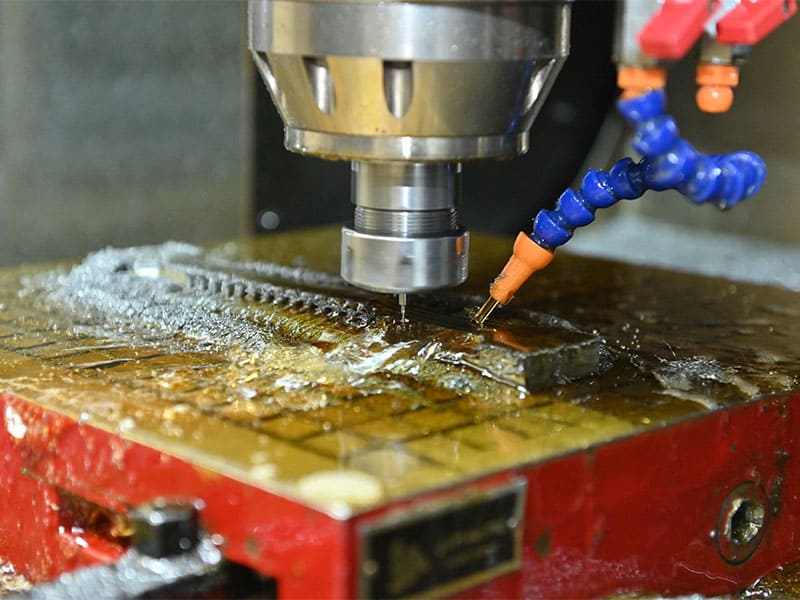
STEP 1: Molding

High-consistency rubber compression for base geometry.
Epoxy Doming

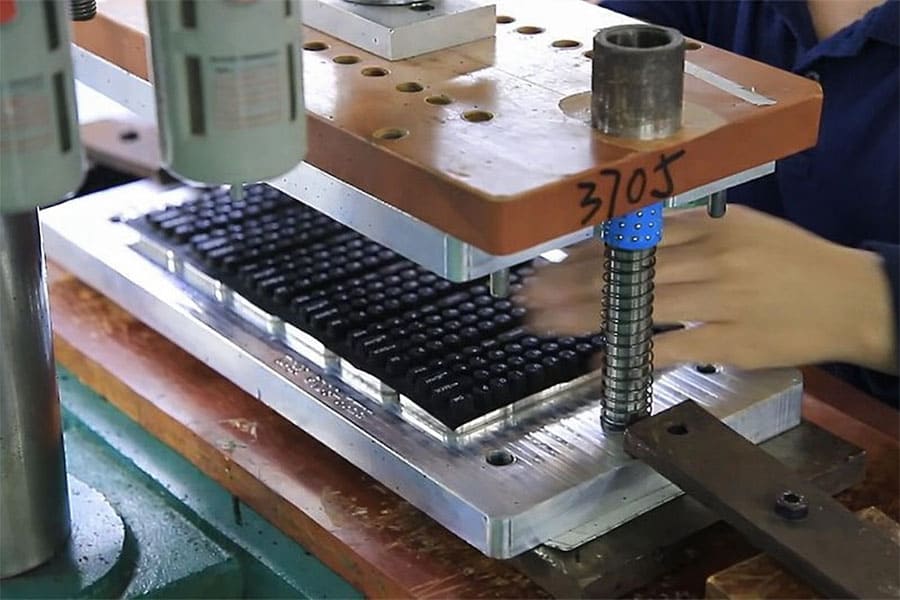
STEP 2:Etching

Laser removal of opaque spray for legend clarity.
SKF Silicone kaypad factory 5 1

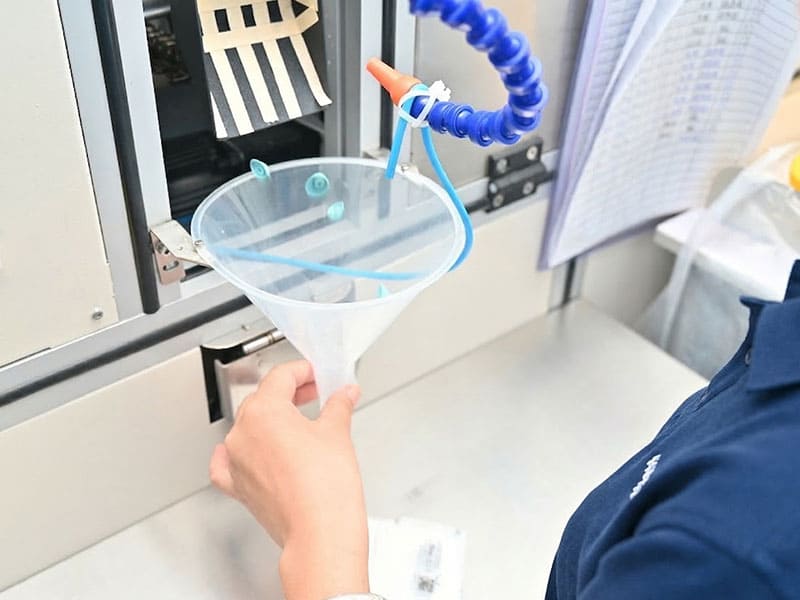
STEP 3:Inspection

Optical check for uniformity and icons.
Spray Coating

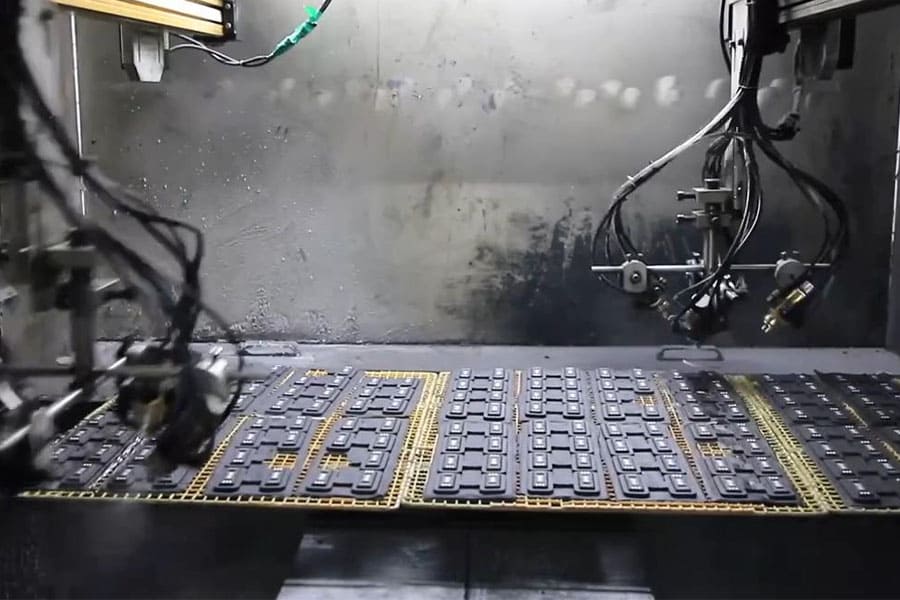
STEP 4:Coating

PU or UV protective layers for abrasion resistance.
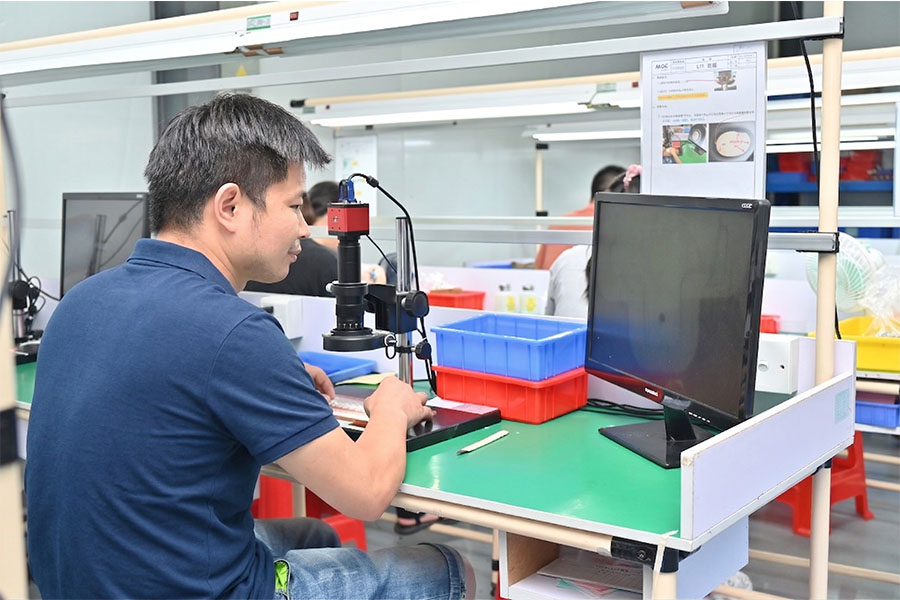
SKF Silicone Control

STEP 5:Quality Control

Final functional audit and ISO standard approval.

Frequently Asked Questions

The MOQ depends on the product structure, tooling requirements, touchpad module selection, and production volume. For new OEM projects, the initial quantity is usually evaluated based on mold complexity, electronic components, and customization level. Prototype samples can be developed before mass production to verify key feel, touch performance, and assembly compatibility.
Yes. The touchpad area can be customized according to your device housing, PCB layout, and user interface requirements. Engineers can adjust the touch zone size, location, sensing area, and surrounding silicone structure to achieve proper integration with the final product design.
Silicone keyboards with touchpad can integrate different touch technologies, including capacitive and resistive touch solutions. Capacitive touchpads are commonly selected for smooth finger navigation, while resistive solutions may be considered when operation with gloves or stylus input is required. The suitable option depends on the operating environment, electronic architecture, and user interaction requirements.
Consistent performance requires careful control of silicone thickness, dome geometry, supporting structures, and assembly tolerances. The touchpad section and key area cannot be designed independently because changes in one area may affect the overall silicone deformation behavior. During development, manufacturers typically evaluate actuation force, key travel, snap ratio, and touch sensitivity together to optimize the complete input experience.
Silicone keyboard with touchpad designs can achieve improved water and dust resistance through sealed silicone construction. However, the final protection level depends on the complete assembly, including housing design, cable openings, adhesive sealing, and electronic protection. For applications requiring specific IP ratings, the entire device structure should be tested as a complete system.
Yes. Custom silicone keyboards with touchpad support multiple visual options, including printed legends, laser-etched symbols, logos, textured surfaces, and LED backlighting. Backlit designs require additional optical engineering because silicone thickness, light-blocking layers, and laser-etched areas influence illumination uniformity.
Common materials include silicone rubber with different hardness levels, conductive silicone options, and application-specific silicone compounds. Material selection depends on tactile requirements, operating temperature, chemical exposure, cleaning conditions, and durability expectations. Compliance documentation such as FDA, LFGB, or RoHS-related requirements can be evaluated according to the selected material, additives, and target market requirements.

Ask for a quote

Fill out the form below, and we will be in touch shortly.

询盘表单